
Five Drops of Falling Water: Wuxie Falls
五泄飞泉天际落,一湖碧水画中游 Wǔxiè fēiquán tiānjì luò, yī hú bìshuǐ huà zhōng yóu – Five cascades of flying spring fall from the sky’s edge; one lake of jade water floats you through a painting
五泄 Wǔxiè the Five Cataracts of 诸暨 Zhūjì Zhuji are a staircase of water: one stream stepping down a folded green gorge in five distinct drops – each 泄 xiè a cascade of its own temperament – with a lake at the top feeding the whole performance. The falls run the wettest and loudest in the spring-early-summer flood season, when the fifth drop hammers spray across the viewing decks and the valley sounds like standing inside a drum.
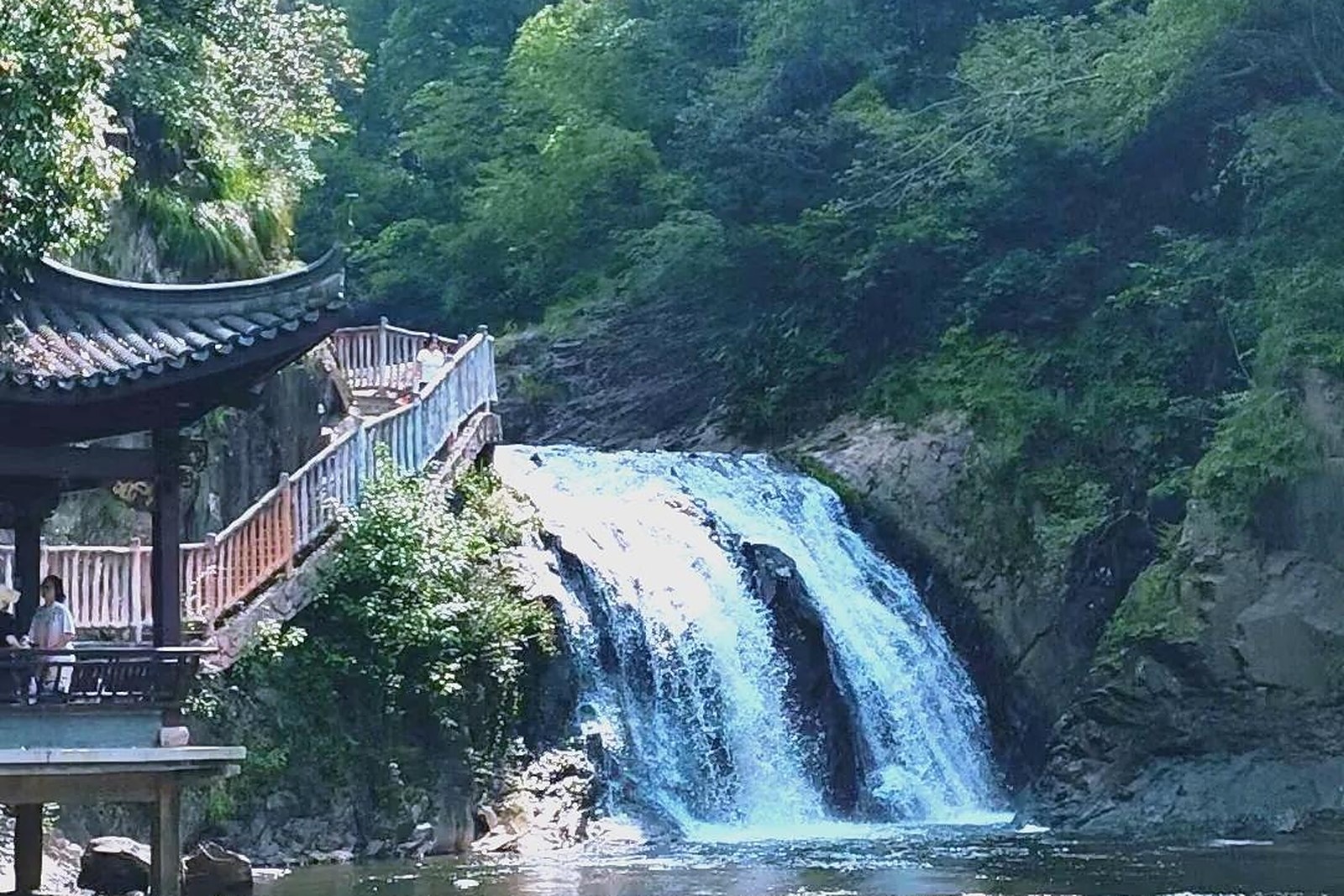
The approach is half the trip: a flat lake cruise to the head of the gorge, then the trail climbing past temple gardens into the sound of water. Each tier has its own stair and deck – the upper drops are tall and thin, the middle ones braid over rock shelves, and the lower falls widen into pools where families wade in summer.
The 五泄禅寺 Wǔxiè Chánsì Wuxie Chan Temple sits at the valley mouth, a Tang-founded monastery whose vegetable gardens and ginkgo courtyard give the gorge its quiet half – monks’ fields line the lower trail, and the temple refectory serves simple vegetarian plates at noon. The gorge’s seventy-two peaks close the horizon; on mist days the ridgelines stack like unrolled paper.
Plan a half day: boat in, climb to the fifth drop at your own pace, lunch at the temple, and take the shuttle-plus-boat back. Zhuji pairs the falls with the city’s 西施故里 Xīshī Gùlǐ Xi Shi heritage quarter – a falls morning and a goddess-afternoon make the county’s standard day.
Practicalities
- The lake boat plus park shuttle is bundled with the ticket; the climb to the fifth drop takes about an hour at family pace.
- Wear grip shoes – the decks beside the middle falls are permanently wet, and the spray zone soaks phones in July.
- The temple refectory closes mid-afternoon; bring snacks for a late visit.
- Spring flood (April-June) is the dramatic season; autumn gives thinner water and emptier decks.
Words and Names
五泄 Wǔxiè the Five Cataracts, one stream in five drops; 泄 xiè a cascade tier, the counting word of the falls; 五泄禅寺 Wǔxiè Chánsì the Tang-founded Chan temple at the valley mouth; 七十二峰 qīshí’èr fēng the Seventy-Two Peaks around the gorge; 诸暨 Zhūjì Zhuji, the county of the falls and of Xishi. Beyond the stairway of water, the same 绍兴市 Shàoxīng Shì Shaoxing City keeps more places worth the detour: 鲁迅故里 Lǔxùn Gùlǐ the writer’s quarter, 沈园 Shèn Yuán the Phoenix-Hairpin garden, 兰亭 Lántíng the Orchid Pavilion, or 天姥山 Tiānmǔ Shān the dream mountain of Xinchang – four more doors into the same 绍兴市 Shàoxīng Shì Shaoxing City. Once the falls have had their drum, our Shaoxing food map fills the table.
flowcloud would say Wuxie is a gorge that rehearses: five drops learning five voices, a lake that ferries the audience in, and a temple garden proving even the loudest water keeps a quiet cousin. All checked November 2026.
Getting there: Wuxie opens from its Zhuji gateway – the lake boat plus shuttle carries visitors to the trailhead in half an hour, Zhuji high-speed station is forty minutes out by taxi, and the five-tier circuit takes a relaxed half day. All checked November 2026.