
The mountain does not rise so much as loom. Five jagged peaks climb out of a sea of green and cut the sky into fingers, and the first time I saw them clear of cloud I understood why the island made this its symbol. Twenty minutes earlier I had been standing in the same spot looking at nothing but mist, wondering whether the drive had been worth it.
五指山 Wǔzhǐshān, “Five Finger Mountain,” is the roof of Hainan: the island’s highest range, home to its highest summit, and the landmark that gives Hainan its identity. It sits in the middle of the island rather than on the coast, which means it is an entirely different Hainan from the beaches — a Hainan of primary tropical rainforest, mist, old logging trails and the 黎族 Lízú communities who have lived under these peaks for centuries. The saying on the sign at the gate is blunt about it: 不到五指山,不算到海南 — you have not really been to Hainan until you have stood here.
The Mountain
The range is a broad massif in the centre of the island, roughly forty kilometres north to south and thirty east to west, with a ridgeline that drops away in steps. The second peak, at 1,867 metres, is the highest point on Hainan Island. The five main summits give the mountain its name — seen from the right angle they read as a hand with five fingers, and locals will patiently point out each one.
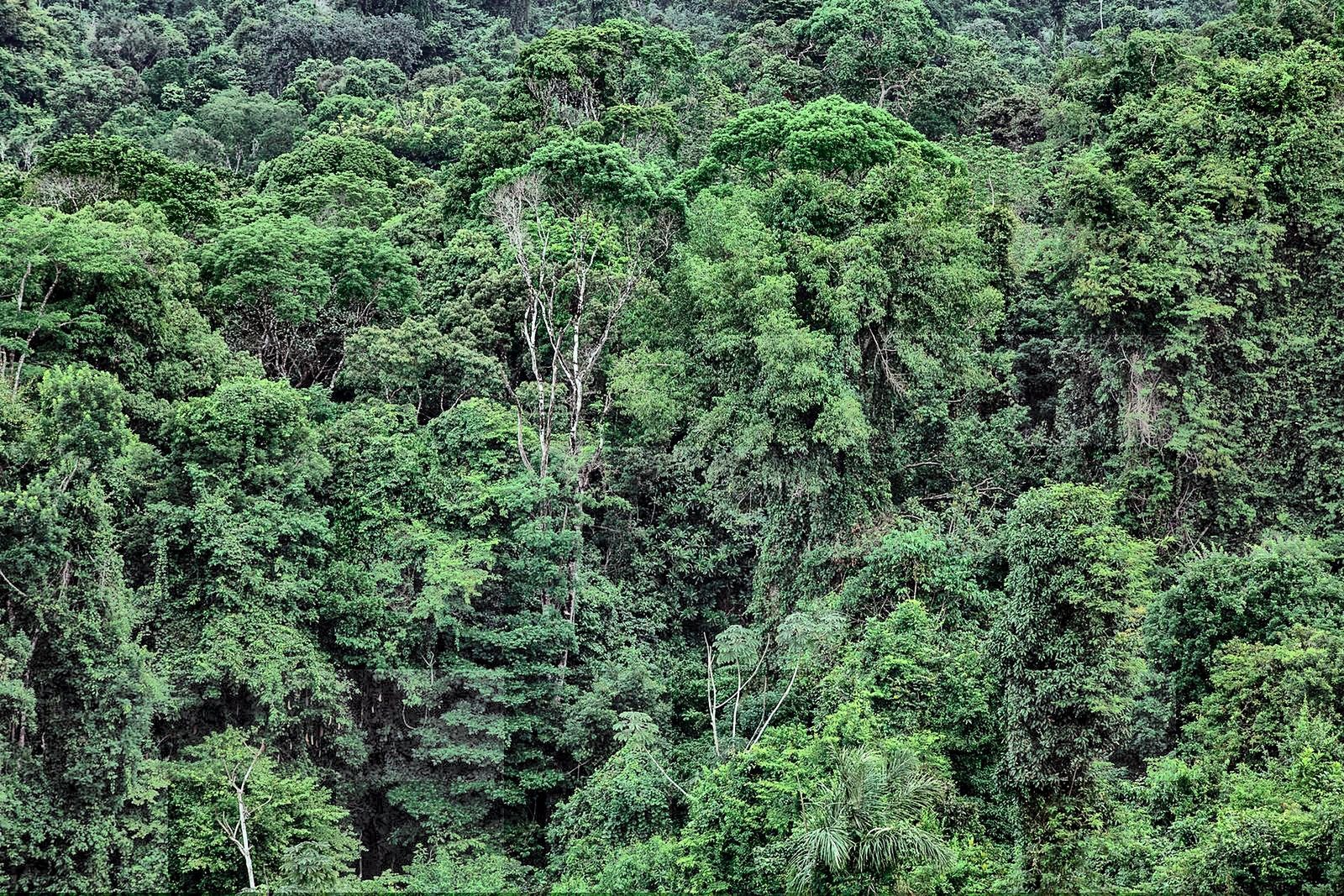
It is part of the Hainan Tropical Rainforest National Park, one of China’s best-preserved and most biodiverse tropical rainforests. This is the piece of the island that was never cleared: ancient trees, giant tree ferns (树蕨 / 桫椤), lianas hanging like ropes, and air that on a humid day feels thick enough to drink. The 负氧离子 fùyǎng lízǐ — negative ion — count up here is among the highest in China, which is why the mountain markets itself as an oxygen bar. It is also the habitat of the Hainan gibbon, one of the rarest primates on Earth; you are unlikely to see one, but it is the reason this forest is protected so fiercely.
The 黎族, Hainan’s original inhabitants, are woven into the mountain. The town at the foot is 水满乡 Shuǐmǎn Xiāng, and in the Li language 水满 means “very ancient” and “supreme.” It is a place of Li legends, of rice terraces, and of culture parks that keep the old songs and weaving alive.
What You Actually Do
You do not climb to the main summit as a casual visitor — that is a serious multi-day route — but the 水满 area gives you the mountain’s front-on face and its rainforest in an achievable half-day.
- The viewing terrace, 观山台 Guānshān Tái — the sightseeing cart lands you at the classic viewpoint, the one place to photograph all five fingers at once, especially in the minutes after the cloud lifts. The wooden sign reading 不到五指山,不算到海南 is the obligatory photograph.
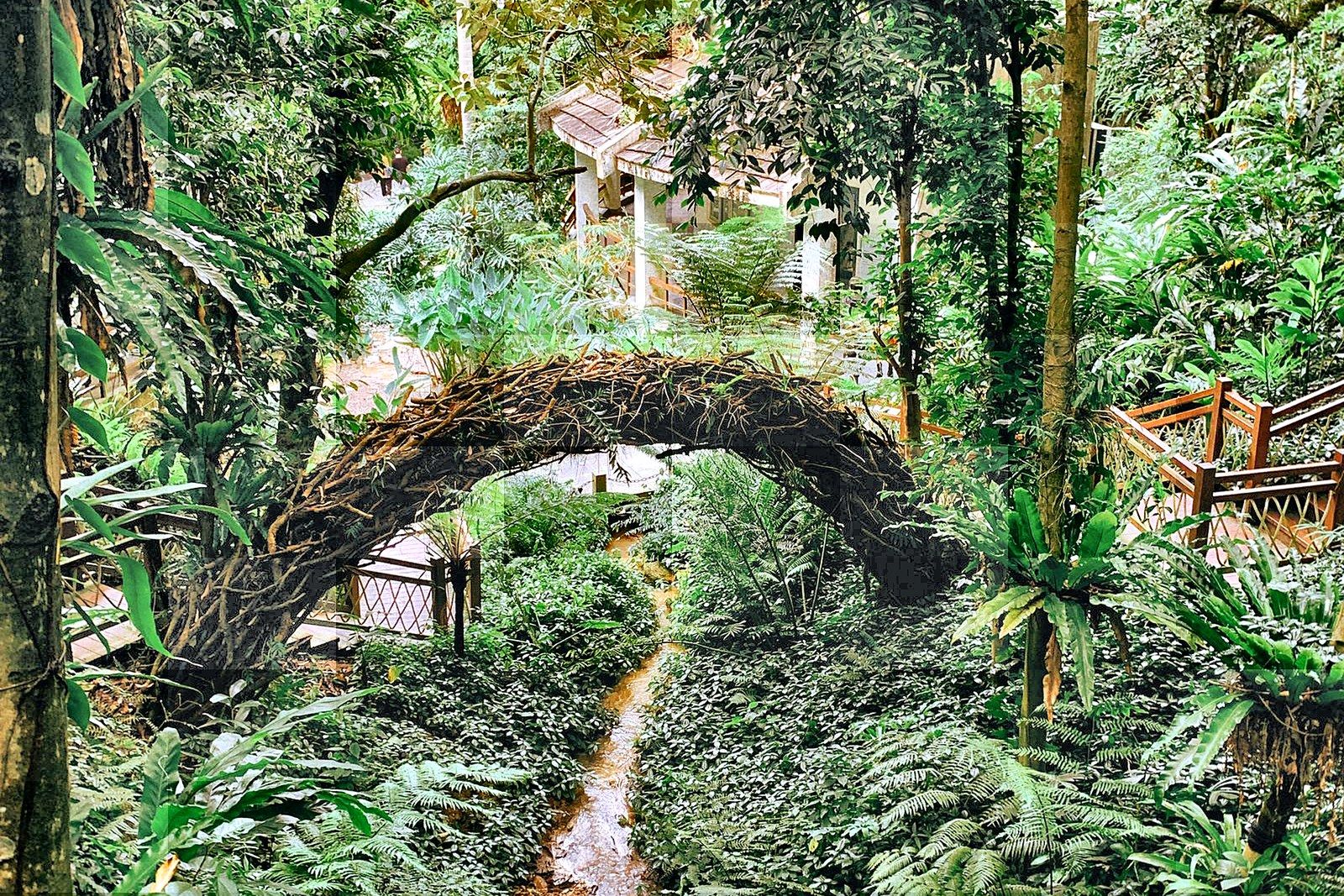
- The vine tunnel — a natural passage of woven vines and creepers arching over a path beside a stream. It is the most magical corner of the site: a dim green corridor that opens onto the water.
- The mountain stream — a tumbling rocky stream of boulders and small layered waterfalls under a canopy dense enough that you can wade and barely touch the sun. In July the temperature here can sit around twenty-four degrees, which is a natural air conditioner.
- The rainforest boardwalk — an easy wooden walk through primary forest past huge ancient trees, hanging lianas and the giant tree ferns, with benches where you can sit and breathe.
For the more energetic there is white-water drift (漂流) in the gorges below, whole-day hikes, and the option of climbing the accessible section of the ridge.
Practicalities
Tickets. The 水满 area package — viewing point, rainforest boardwalk and sightseeing cart — is about ¥50 in the peak season (October to April) and around ¥42 in the low season (May to September). About ¥25 half-price for children, students and 65–69 seniors; the sightseeing cart on its own is around ¥20 return and is strongly recommended, because the site is spread out and the walk up to the terrace is a real climb. Children under 1.2 m, over-70s, serving and disabled military personnel and 三属 go free, cart extra. Clearance-water boating, 漂游, costs about ¥186.
Do you need to book? Tickets are sold by real name, and you can buy them in advance online through a regulated OTA, which saves the window queue. There is no tight daily cap as on the offshore islands, but in holidays the cart queue builds quickly, so buying ahead is the easy move. Phone enquiries: 0898-86550401 (tickets) and 0898-86630131.
Opening hours. The 水满 area runs about 08:30–16:30, with last entry at 16:00. Some sources quote 07:30 for the adjacent main-peak area and 08:00–17:30 for the wider national-park area, but the 水满 section with the viewing terrace starts at 08:30. Plan four to five hours. Set off early: the morning is when the cloud comes off the peaks and the light is best.
Closing days. The site is open daily, including public holidays, with no weekly closing day. The one thing that can shut it is the weather — heavy rain or a typhoon warning closes the cart and the boardwalk, so call ahead on a bad-weather morning rather than driving up on spec.
Getting there. Address: 海南省五指山市水满乡, 海南热带雨林国家公园五指山景区 (水满片区). This is a mountain drive, so allow time.
- From Sanya: about 1.5 hours via the 山海 expressway — a beautiful but winding mountain road. Drive slowly.
- From Haikou: about 2.5–3 hours via the central expressway to 五指山市, then about an hour up to 水满乡.
- By public transport: from 五指山 bus station take the tourist or township bus to 水满乡 — irregular, about ¥11 single and ¥22 return — then walk or take a local three-wheeler up to the gate. From the bus stop it is roughly a ten-minute walk to the entrance.
- Self-drive is the easy option, and there is free parking at the gate.
One warning. This is a mountain in the tropics: the weather turns fast and the peaks are often lost in cloud. Bring a light layer, shoes with tread (the boardwalk and the stream path are wet), insect repellent, and check the visibility before you set out. The peak is at its most photogenic after a night of rain, when the cloud lifts and all five fingers appear at once.
What It Refuses to Be
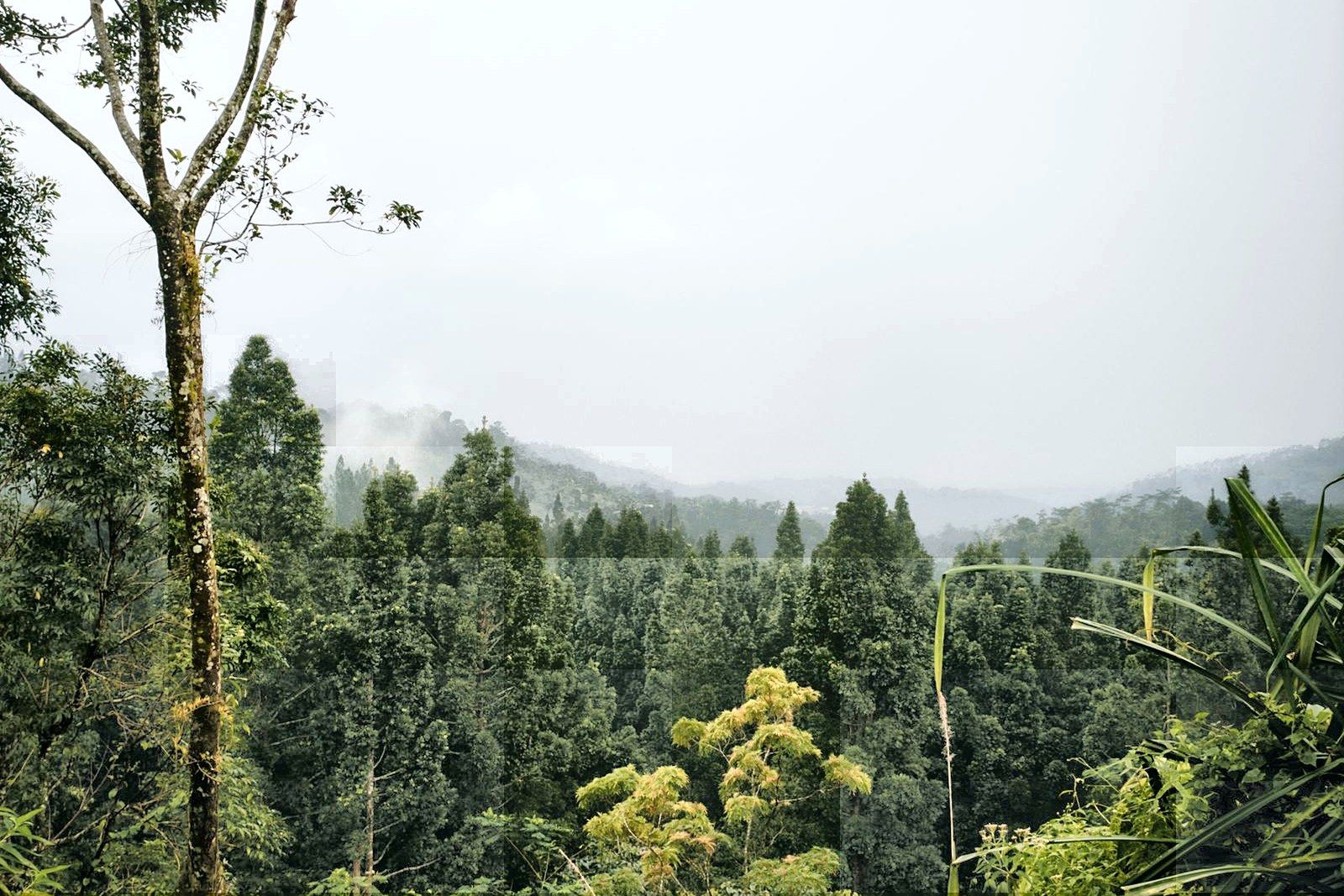
Wuzhishan refuses to be a beach day. There is no sand, no resort strip and no sunset bar — the closest you get to comfort is a wooden bench on the boardwalk, and the water is something you walk beside rather than swim in. It refuses to be a quick stop: the drive alone is three hours of your day from either coast, and the site wants four or five hours on the ground, which is why this is a full day out and not an afternoon. And it refuses to be reliable in the way a ticketed attraction usually is. The mountain is frequently invisible. You may drive up and see mist. You may drive up twice and see mist twice. Then a cloud moves, and the five fingers stand there, and the whole trip settles into place.
The Name of the Place
五指山 Wǔzhǐshān is 五指 wǔzhǐ, five fingers, plus 山 shān, mountain — the plainest possible description of its shape, which is what Hainan calls it. The same name in the Li language belongs to the older culture underneath: 水满 Shuǐmǎn at the foot is not Chinese for “water full” but a Li place-name glossed as “ancient” and “supreme,” and 黎族 Lízú is the name of the island’s indigenous people, who were here long before any of the Chinese names arrived. That double layer — a Chinese mountain name sitting on top of a Li world — is the whole history of Hainan in two words.
flowcloud would say that a mountain shaped like a hand is nature’s way of waving you over, and that the real Hainan is not the beach but this green — and that anyone who drove three hours into the middle of the island and came back with photographs of cloud has still seen something true.
Getting there: 五指山 (Wuzhishan), 水满乡, 五指山市, central Hainan — 海南热带雨林国家公园五指山景区 (水满片区), the island’s highest range and its symbol. 水满 area ticket + boardwalk + cart about ¥50 (¥42 in the May–September low season, about ¥25 half-price for children, students and 65–69 seniors), cart ¥20 return; tickets are sold by real name and can be bought online in advance. Open 08:30–16:30 daily with last entry 16:00 and no closing day except in bad weather; allow 4–5 hours. About 1.5 h from Sanya, 2.5–3 h from Haikou, or a bus from 五指山 bus station to 水满乡 (about ¥11 single, ¥22 return) then a ten-minute walk; free parking at the gate. Phone 0898-86550401. Go early, when the cloud lifts off the five peaks.