
The Stone Pillar of the Immortals: Xiandu, Jinyun
鼎湖峰立亿年身,黄帝祠前古柏春 Dǐnghú Fēng lì yì nián shēn, Huángdì Cí qián gǔ bǎi chūn – The Dinghu pillar has stood a hundred million years; ancient cypresses keep spring before the Yellow Emperor’s shrine
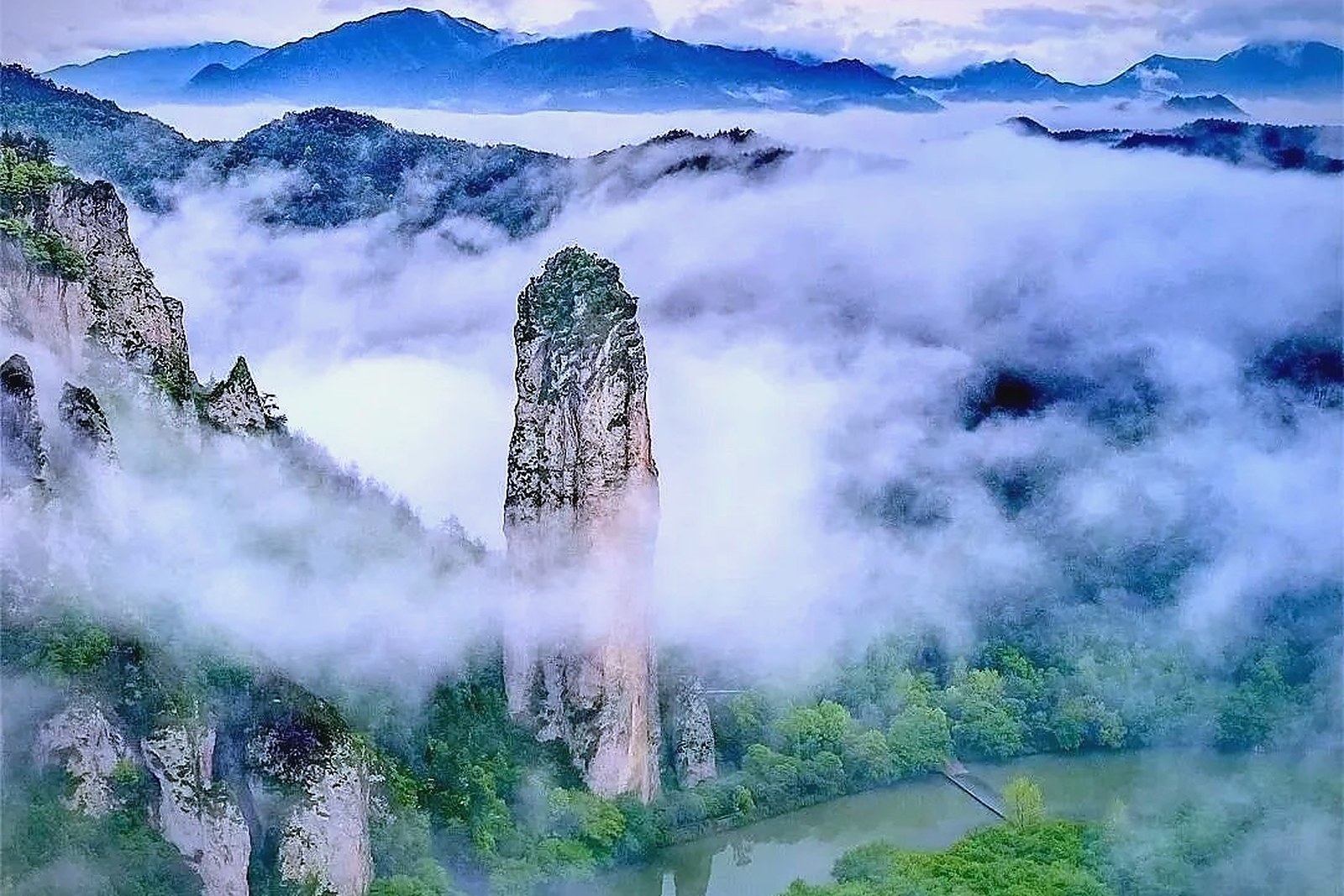
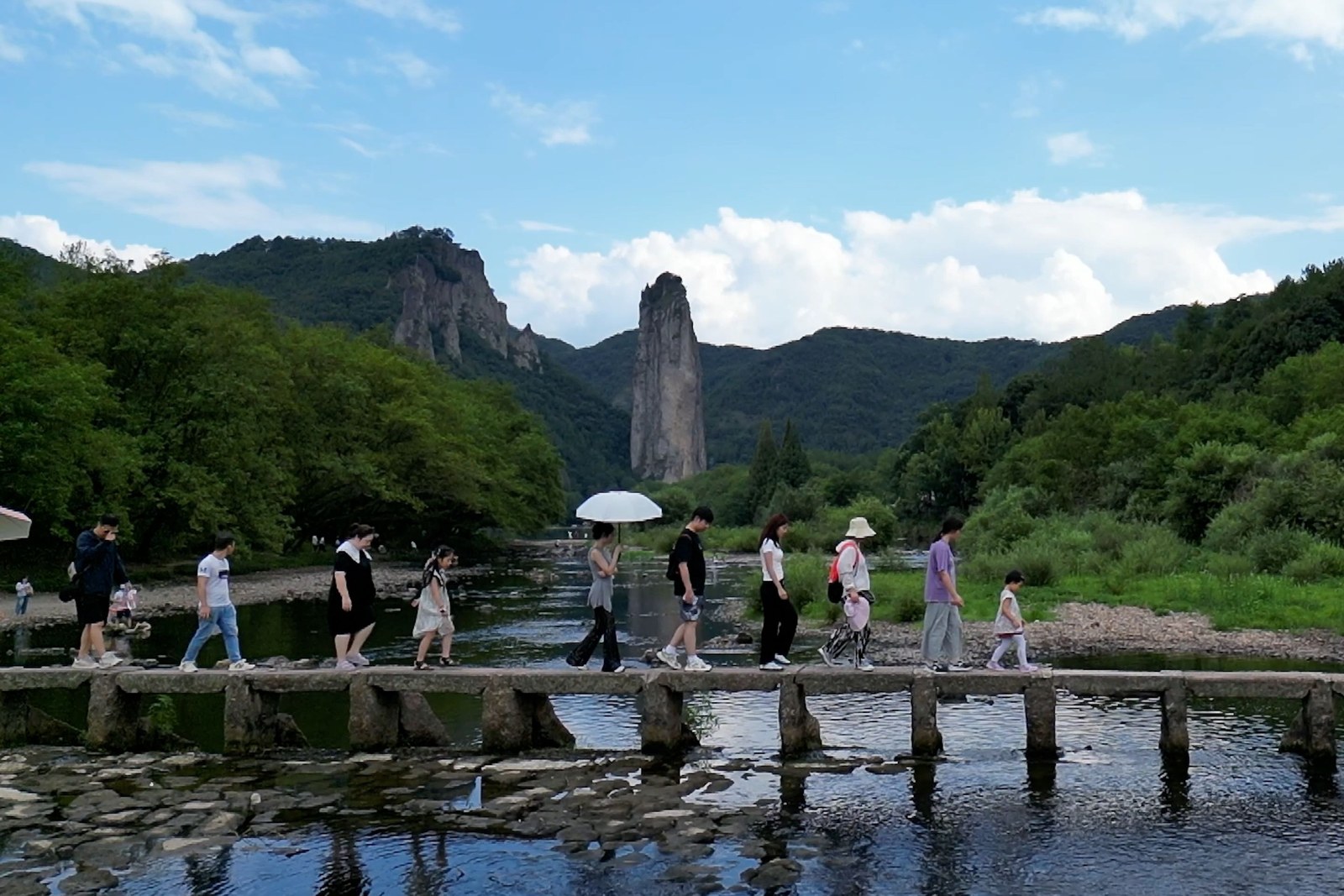
正文:缙云仙都 Jìnyún Xiāndū the Xiandu scenic area is the stone-column landscape that anchors 丽水市 Lìshuǐ Shì Lishui City’s eastern gateway – a ribbon of river, cliff and woodland around Jinyun county town where the Dinghu Peak rises 170 meters straight out of the 好溪 Hàoxī creek in a single unbroken shaft of stone. The name goes imperial: legend sets the Yellow Emperor refining immortality pills here and ascending from the peak’s summit, Tang court records the story, and Emperor Xuanzong granted the title “Xiandu” – the capital of immortals – in 748. Today the complex gathers the Dinghu Peak itself, the grand 黄帝祠宇 Huángdì Cíyǔ shrine hall that hosts the semi-official ancestral rites, the cliff-carved grottoes of Niweng Cave, and the little red-arched crossing at Zhutan Hill where a herdsman and water buffalo still cross at dawn for the classic photograph.
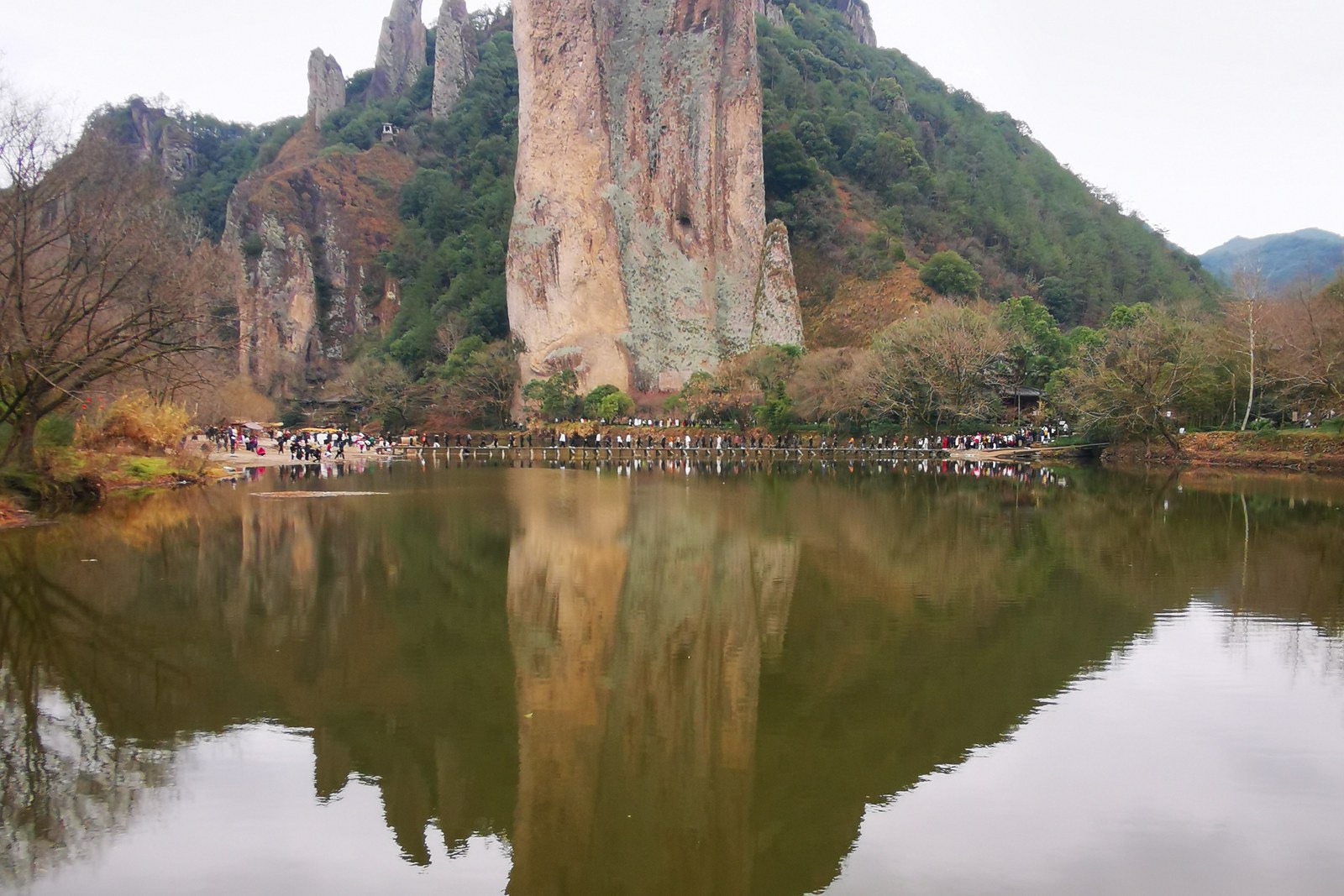
Dinghu Peak is the photograph everyone comes for, and it repays patience: from the Zhuantan crossing at first light the pillar stands doubled in the creek’s mirror, mist unwinding around its base while the buffaloes wade. The stone has been worshipped, painted and filmed for centuries – no other rock in Zhejiang carries a longer scroll of inscriptions.
The 黄帝祠宇 Huángdì Cíyǔ shrine precinct, rebuilt at grand scale above the peak, turns the legend into architecture: courtyard beyond courtyard, bronze incense burners, and each spring festival the largest Yellow Emperor rites in southern China. Even on ordinary days the halls hold a hush that the river below never quite loses.
Plan the day on foot: the scenic loop strings the peak, the shrine, Niweng Cave’s cliff inscriptions and the Little Red Cliff riverside into one walk, and the local shuttle fills the gaps. Morning brings the mist shots, late afternoon the warm light on the pillar’s flank – and the county town’s bakeries send you off with a hot shaobing in hand.
Practicalities
Beyond the immortal pillar, the same 丽水市 Lìshuǐ Shì Lishui City keeps more places worth the detour: 云和梯田 Yúnhé Tītián the stacked mirror of the Yunhe rice terraces, 松阳古村落 Sōngyáng Gǔcūnluò the hundred-village living museum of Songyang, 庆元廊桥 Qìngyuán Lángqiáo the roofed timber bridges of Qingyuan, or 遂昌金矿 Suìchāng Jīnkuàng the Tang-dynasty tunnels of the Suichang gold mine – four more doors into the same 丽水市 Lìshuǐ Shì Lishui City. Once the pillar is paid its respects, our Lishui food map fills the table.
Practicalities
Words and Names
flowcloud would say Xiandu is Zhejiang’s oldest vertical: a stone that legend made a capital of immortals, a creek that still mirrors it every dawn, and a shrine where the south bows to its first ancestor. All checked November 2026.
Getting there: Xiandu lies at Jinyun county’s edge, about 30 minutes from Lishui city by car – the scenic area is ticketed with an internal shuttle, the Dinghu Peak and Emperor temple loop fills half a day, and dawn mist over the stream is the photographers’ slot; weekends fill early. All checked November 2026.