
东山书院 Dōng shān shū yuàn, Dongshan Academy, stands on 书院路 Shū yuàn lù in 湘乡市 Xiāng xiāng shì, and it is a school of the old kind that happens to be famous for one of its pupils. It was founded in 1895, at the very end of the imperial system, with money given by the Xiang army general 刘锦棠 Liú Jǐn táng, and it was set up as a 书院 but ran almost immediately as a modern school, teaching the classics and arithmetic and geography and physical training in the same building. In the autumn of 1910 a sixteen-year-old from 韶山 called 毛泽东 Máo Zé dōng walked here to sit the entrance examination, studied for one academic year, and left in the spring of 1911 for 长沙. It is the school he is quoted as having remembered as the place where he first met books and ideas that were not available to him in the village.
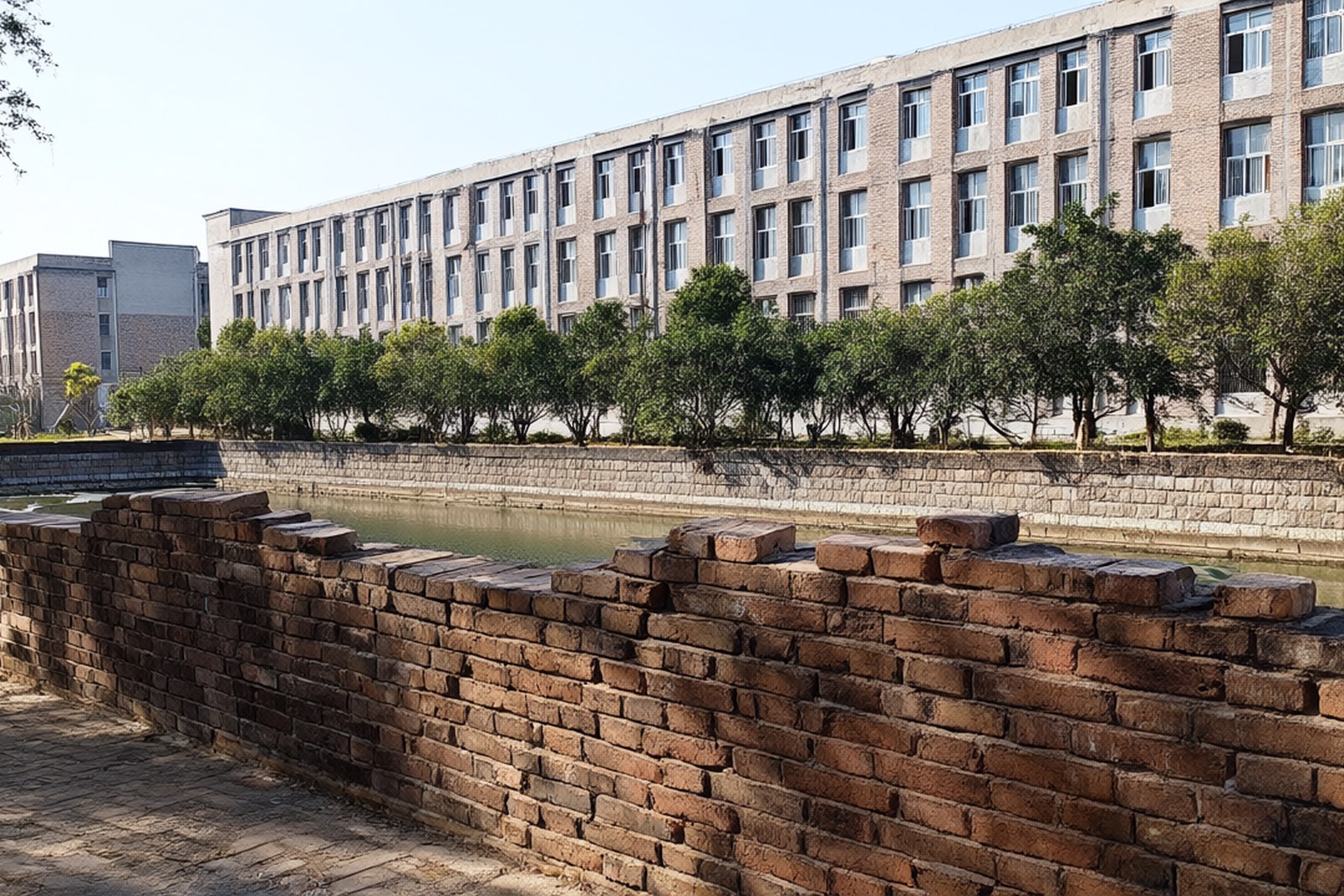
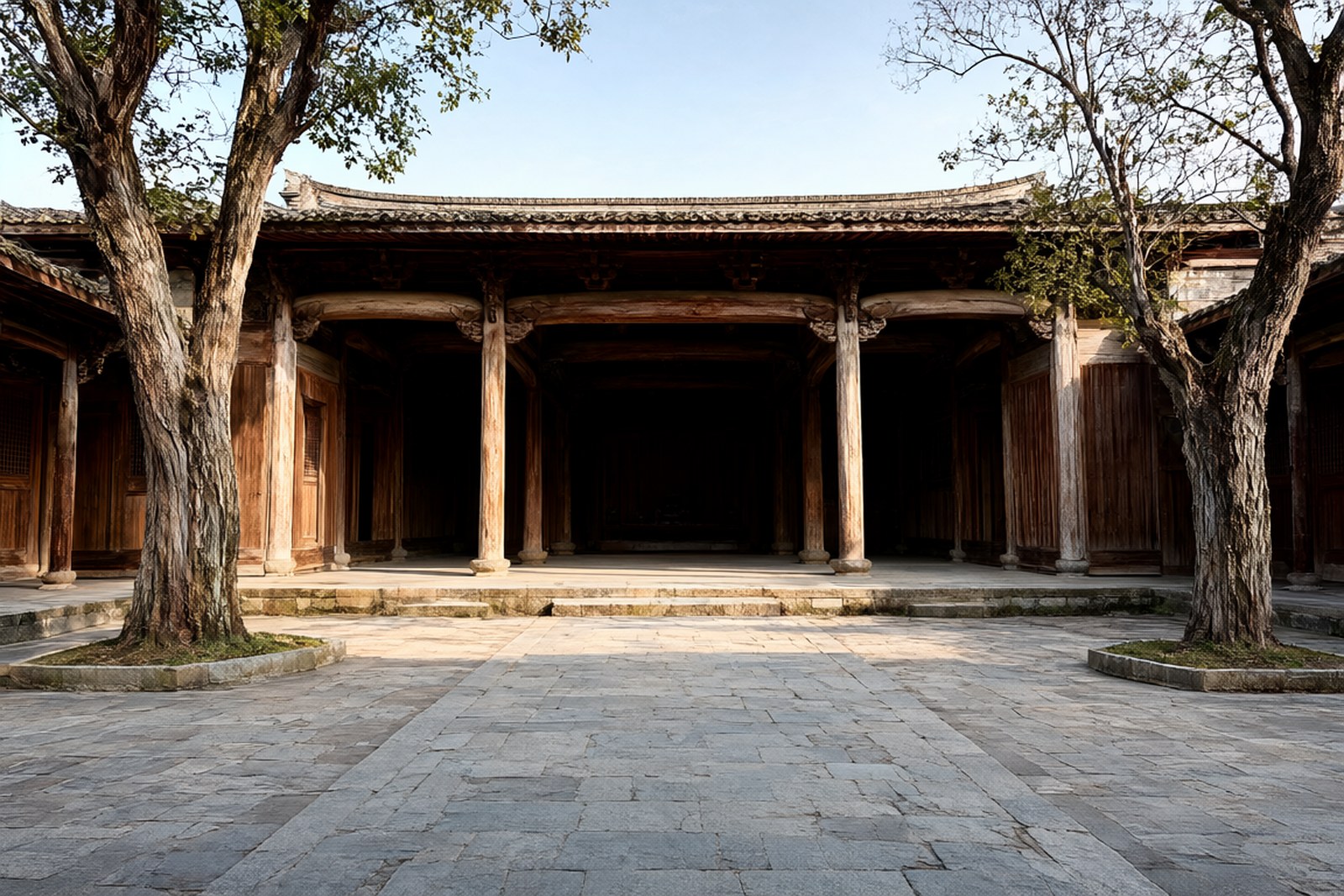
The arrangement of the place is what makes it worth an hour. It is a walled compound with a rectangular pond running along the outside of the wall – the traditional 便河 biàn hé, a channel that served as both boundary and drainage and that gives every one of these academies its reflection. You cross a stone bridge to the gate, and inside there is a courtyard with the lecture hall on the axis, the dormitories and classrooms round it, and a two-storey library at the back. The building is single-storey for the most part, with grey brick, dark timber and tiled roofs, and the whole thing is small enough to see properly in a single visit, which is not true of the bigger and more famous academies. The 讲堂 jiǎng táng, the lecture hall, still has the teacher’s platform and the rows of seats, and the rooms off the courtyard are furnished as dormitories, including the one said to have been the young 毛泽东’s.
The school kept going after the academy system was abolished and became a modern middle school, which is why the buildings survive: it has been in continuous educational use for a hundred and thirty years, and 湘乡 东山学校 is still on the site today, which gives a visit a slightly odd double quality, since the classrooms you are walking round are the ones the current pupils use. Other names came out of it as well as 毛泽东’s – 陈赓 Chén Gēng and 谭政 Tán Zhèng, both of whom became generals of the People’s Liberation Army and both of whom were from 湘乡, were pupils here – and the school also produced a long line of scholars and officials, which for a county-level town in the hills is a considerable haul. The academy is a protected heritage site and has been restored, but the restoration has been conservative, so the scale and the plainness of a provincial Qing school are intact.
Practicalities
Tickets. Entry is free, and the site is small and quiet compared with the province’s famous academies; a passport is worth carrying in case the gate wants identification, though as a functioning school site it rarely insists. There is nothing else to pay for inside.
Opening hours. The site is open through the day, roughly from half past eight in the morning until half past five in the afternoon, and it closes for the school holidays and for examination periods in a way that is not published in advance. Allow an hour for the compound and a further half hour to walk the lane outside, which has the pond on one side and the old town on the other; the light in the courtyard is best in the morning.
Getting there. 东山书院 is on 书院路 Shū yuàn lù in 湘乡市 Xiāng xiāng shì, 湘潭市, on the east side of the city and about ten minutes by taxi from the centre. 湘乡站 Xiāng xiāng zhàn on the 沪昆 high-speed line is a few kilometres away, with 湘潭 about twenty minutes and 长沙 under an hour; by road, 湘乡 is about forty minutes west of 湘潭市.
Closing day. The academy closes on Mondays in common with most museum-managed heritage sites in the province, and it also closes during the school’s own examination periods, which is the one closure that catches visitors out because it is not on any official list. The outdoor lane and the pond outside the wall are always accessible, so, if the compound is shut, the visit is not entirely wasted – but the courtyard is the whole point, so check the day before if you are coming from a distance.
flowcloud would say that a hill town academy founded in the last decade of the empire, which taught the classics and geography in the same room and sent out one pupil who changed the country and two who became generals, has a better claim on the word influential than most institutions ten times its size.
Getting there: 东山书院 Dōng shān shū yuàn is on 书院路 Shū yuàn lù in 湘乡市 Xiāng xiāng shì, 湘潭市, about ten minutes by taxi from the town centre and a few kilometres from 湘乡站 Xiāng xiāng zhàn on the 沪昆 high-speed line; 湘乡 is about forty minutes by road from 湘潭市 and an hour from 长沙 by rail.