
From the top of the ridge you would swear it was a lake. It is flat and pale and enormous, ringed with green, with a scatter of dark shapes on it that resolve, as you look, into fish traps and moored boats and the long low silhouettes of 渔排 yúpái, the raft-farms that people live on. Then you notice the boats moving in a line towards a gap in the far shore, and you understand that this body of water is breathing twice a day with the tide, and that the gap is the only way in or out. 小海 Xiǎohǎi — “the little sea” — is the largest lagoon-type inland sea in China, and it is the reason the food in this part of 海南 Hǎinán is as good as it is.
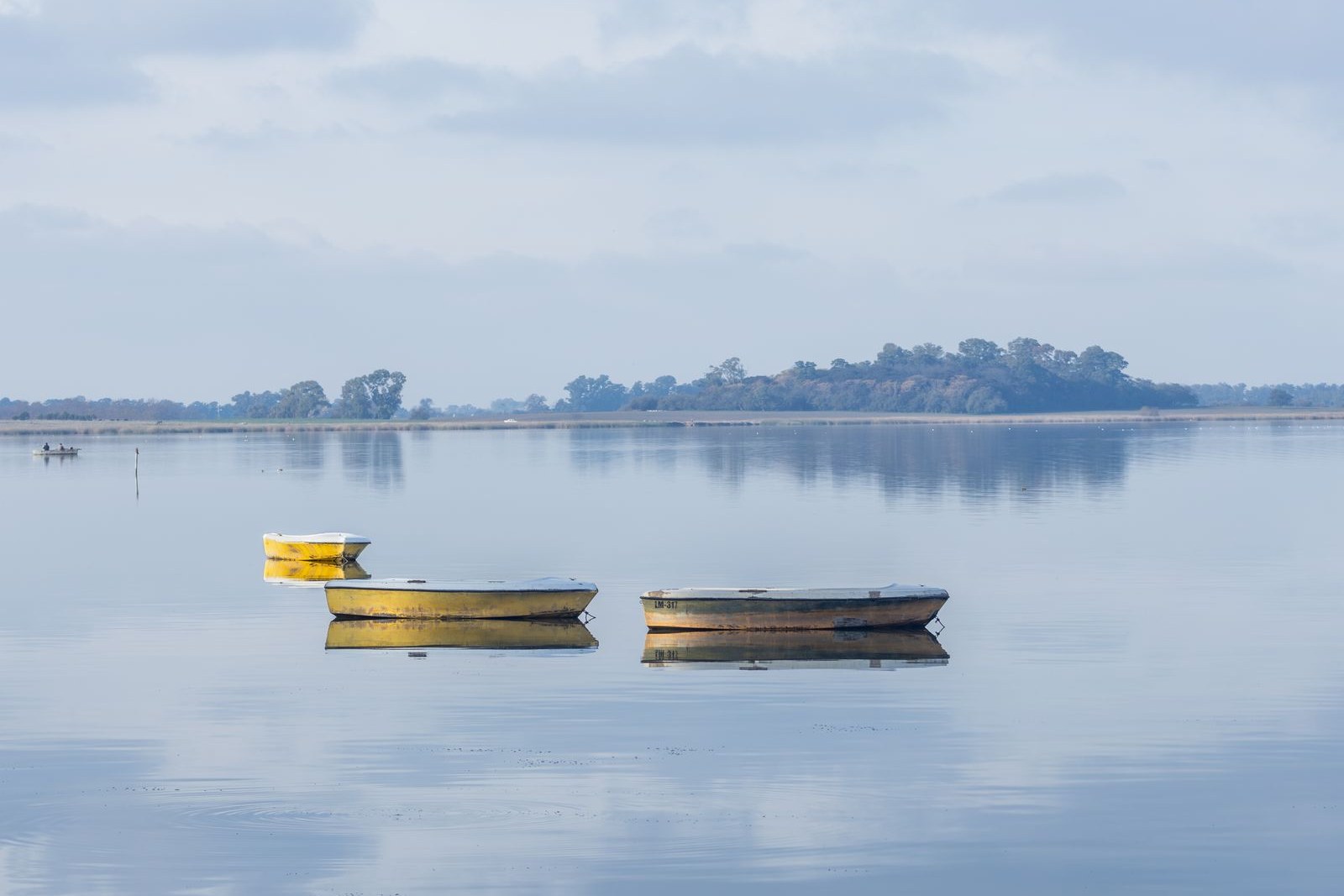
It lies in the east of 万宁 Wànníng, on the island’s east coast, and there is nothing to visit in the ordinary sense — no gate, no ticket, no scenic-area shuttle. What there is, is a working landscape of about fifty square kilometres that you can drive around, eat on, photograph, and if you are lucky get out onto in a boat. It is one of the most rewarding half-days in Hainan, and it is almost entirely unvisited by people from outside the province.
How an Inland Sea Happens
小海 Xiǎohǎi began as an ordinary open bay. Over a long period, sediment carried down by rivers and moved along the coast by longshore drift built a sand barrier across the mouth, leaving a broad body of water behind it connected to the ocean by a single channel. That is the standard recipe for a lagoon, and what makes this one notable is its scale: roughly ten kilometres from north to south, between three and a half and seven and a half kilometres across, and between one and six and a half metres deep. From above it is unmistakably gourd-shaped, wide in the middle and pinched at the ends, with the narrow neck at the north-east.
Eight watercourses empty into it from the landward side, carrying fresh water and, crucially, fine silt. The only tidal exchange is through the 港北口门 Gǎngběi kǒumén, a channel in the north-east that runs about three kilometres and is somewhere between one hundred and three hundred metres wide, and because it is the sole opening, the water inside is a permanent mixture: brackish, warm in the shallows, and slow to turn over. The silt settles on the floor as a soft purple-black mud that is thick with the microscopic life that shellfish, crab and prawn larvae feed on.
The result is a nursery of exceptional productivity. Three of the four dishes traditionally counted as the great specialities of 万宁 Wànníng come out of this one body of water: the 和乐蟹 Hélè xiè, a mangrove crab that carries a butter-coloured roe; the 港北对虾 Gǎngběi duìxiā, the large prawns of the north shore; and the 后安鲻鱼 Hòu’ān zīyú, the grey mullet landed at the next town along. Add 沙虫 shāchóng, the sandworm, which is dug out of the tidal flats and is a local obsession, and you have a food culture that is effectively the lagoon’s biography.
The Mouth, the Rafts and the Boats
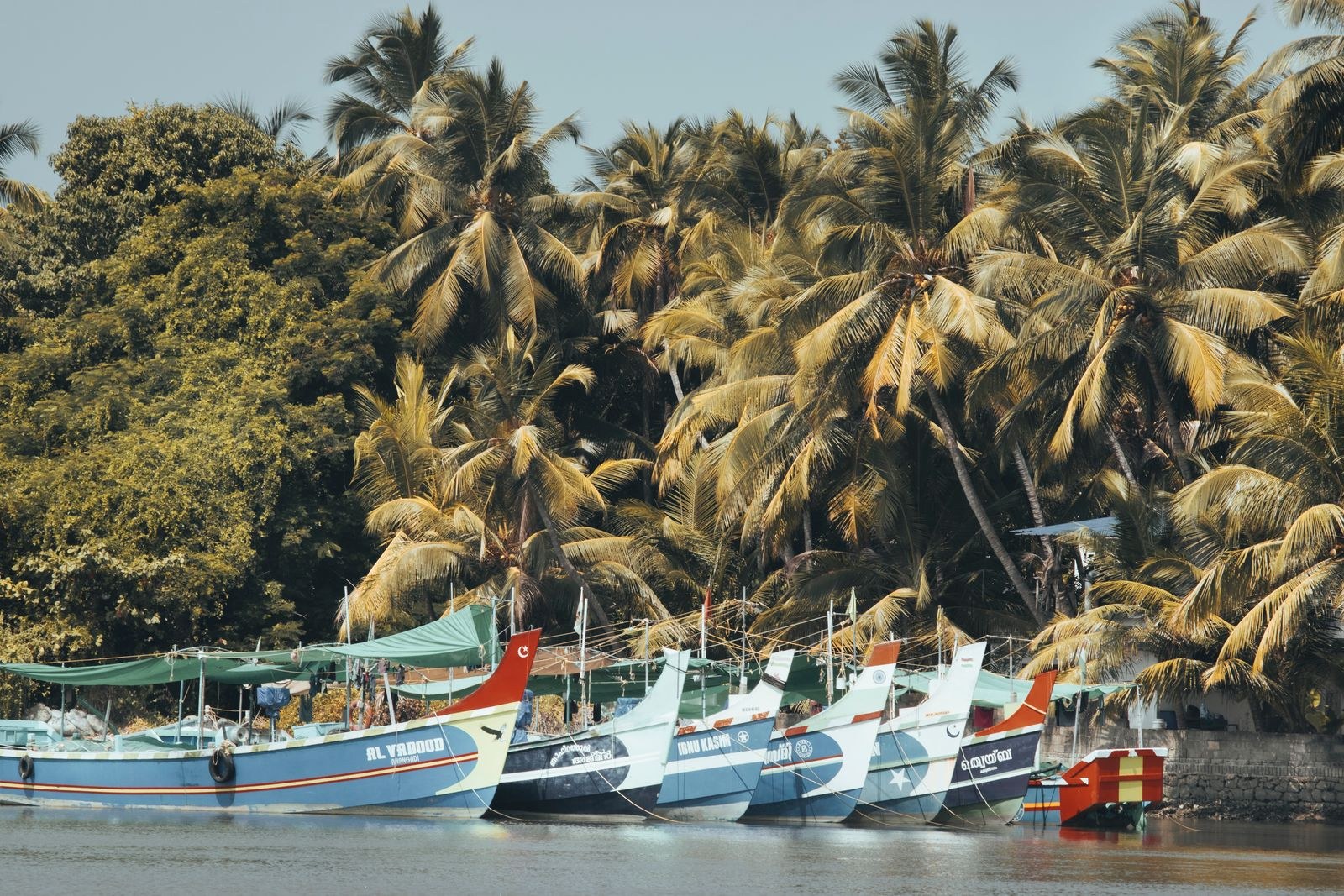
The best place to understand the place is 港北 Gǎngběi, the two fishing settlements of 港上 Gǎngshàng and 港下 Gǎngxià on the northern shore, where the channel meets the sea. It has been a working harbour for centuries and it still is one: the boats go out in the late afternoon and come back in the early morning, and the quay at dawn is the best market you will find anywhere along this coast. Because the mouth is so narrow, every boat has to pass through the same gap, and on a rising tide with the current running hard this is genuinely dramatic to watch.
Out on the water itself there are the 渔排 yúpái, floating platforms of timber and net with huts on them, where families farm fish, keep their gear and often live. Sailing or motoring between them is the way to see the lagoon properly, and there are fishermen at 港北 Gǎngběi who will take you out for an hour or two if you ask around the quay and agree a price first — a small boat and a guide for a morning is a few hundred yuan, which is the best money you will spend in the province.
At the seaward end of the channel sit two small islands, 外峙 Wàizhì outside and 内峙 Nèizhì within, and the water between them is a favoured passage for boats coming and going. 外峙 Wàizhì is a roosting and nesting site for seabirds and is not somewhere to land; the beach and rocks of the inner island, on the other hand, are a well-known fishing spot from the shore, and from August through to the following spring the local anglers work the deeper water offshore.
Looking at It From the Land
If you would rather not get on the water, the lagoon rewards a slow drive and a few stops.
The channel bridge. The 港北大桥 Gǎngběi Dàqiáo, a 1.8-kilometre span across the mouth, is the best single viewpoint: from the middle of it you look north to the open sea and south down the whole length of the lagoon, and at change of tide you can watch the current run under you. Park at the northern end and walk on.
The northern shore road. Following the shore west from 港北 Gǎngběi through 盐墩 Yándūn gives you the view back across the water towards the ridge at 东山岭 Dōngshānlǐng on the far side, which is the postcard shot of the lagoon and much better in the late afternoon.
The western flats. The 后安 Hòu’ān and 和乐 Hélè sides are where the 沙虫 shāchóng digging happens at low tide, and where the 红树林 hóngshùlín, the mangrove, is thickest. This is also where a large-scale restoration programme has been running since 2019: fish ponds have been taken out, tidal flats reopened and several hundred hectares of mangrove replanted, with the stated aim of lifting water quality back to a healthy standard. The water is visibly cleaner than it was a decade ago, and the birds have come back.
A note on the tides. The lagoon is at its most beautiful and least legible at low water, when the exposed flats and the 渔排 yúpái and the channels through them make a whole extra landscape. Check the tide table before you plan a day around it.
Practicalities
Tickets: Free. There is no admission charge anywhere around 小海 (Xiǎohǎi) — the shore, the bridge and the villages are all open. A boat out onto the water is arranged privately with a fisherman at 港北 (Gǎngběi), typically ¥200–400 for a couple of hours depending on the boat and the route.
Opening hours: Open all day, every day. The harbour is at its best and busiest from about five to seven in the morning, when the night boats land; the light on the lagoon is best in the last two hours before sunset.
Closing day: None. Nothing here closes, and nothing here is fenced — which means the usual care around working quays, nets, engines and wet stone applies, and that you should not walk out onto the tidal flats without knowing when the tide turns.
Getting there: 小海 (Xiǎohǎi) and 港北 (Gǎngběi), 和乐镇 (Hélè) township, 万宁 (Wànníng), east 海南 (Hǎinán). 万宁 (Wànníng) high-speed rail station is the nearest stop, about thirty to forty minutes by car from the northern shore; the 港北大桥 (Gǎngběi Dàqiáo) makes the crossing straightforward from either side. Self-driving is the practical option and the best way to see the whole lagoon, since the shore road loops round it. Eat at the restaurants facing the channel in 港北 (Gǎngběi), order the prawns and the crab, and get there in the morning. flowcloud would say that the most interesting places are rarely the ones with an entrance, and that a lagoon doing the quiet work of feeding three townships is more worth an afternoon than any ticketed view of it. Drive the northern shore in the late afternoon, stop on the bridge, and eat in 港北 before you leave.