
The Thousand-Year Wharf Turned Rice Village: Xiaoxin Matou
千年古渡稻花香,漕运遗风入画来 Qiānnián gǔdù dàohuā xiāng, cáoyùn yífēng rù huà lái – A thousand-year wharf smells of rice flowers; the grain-trade heritage drifts in like a painting
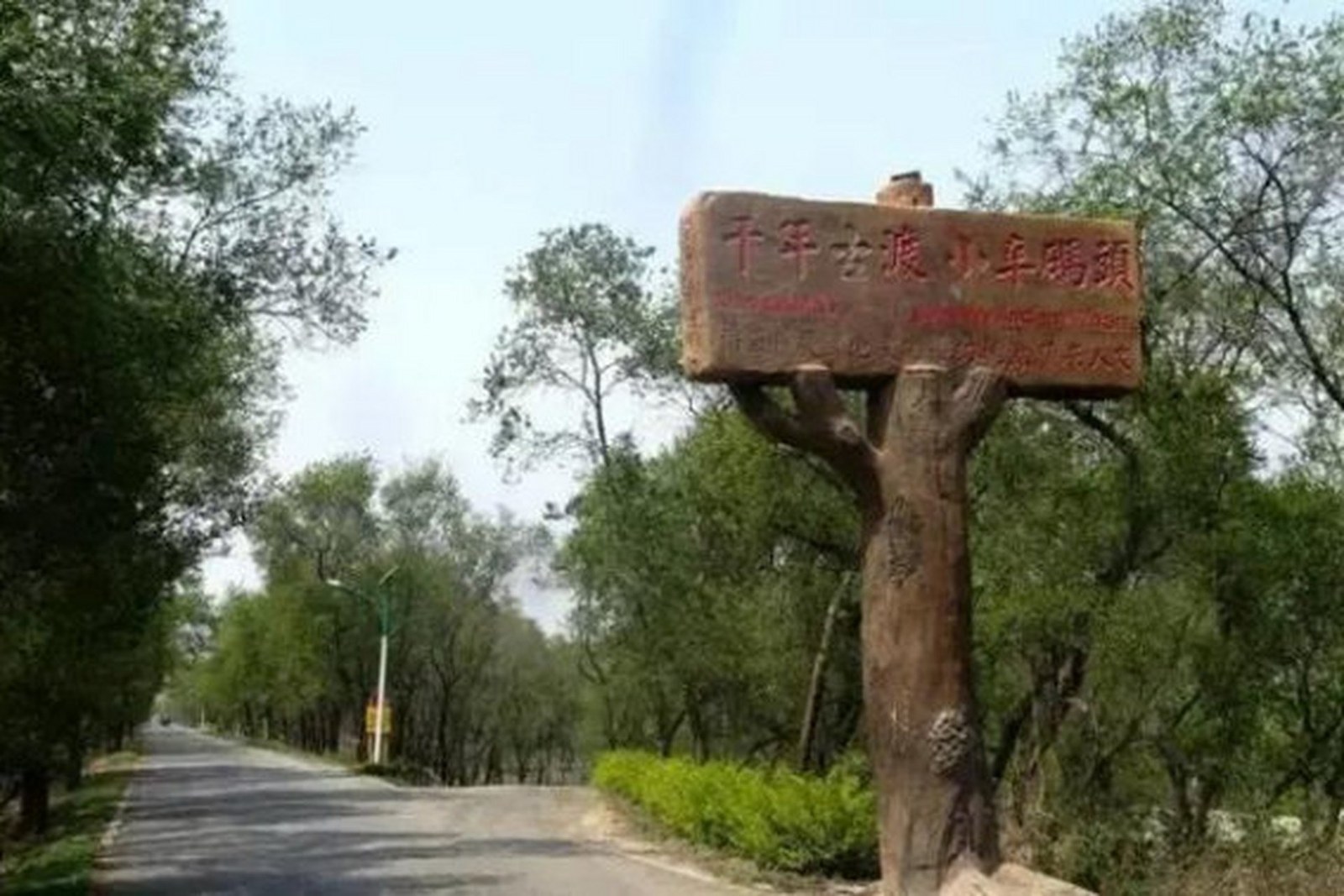
小辛码头村 Xiǎoxīn Mǎtóu Cūn keeps its thousand-year wharf memory alive on the Chaobai banks southeast of 天津市宝坻区 Tiānjīn Shì Bǎodǐ Qū Baodi District – the landing where, the village chronicle says, the Liao empress dowager’s grain fleets once tied up, now a fish-ecology hamlet of rice-paddy playgrounds, paddy-field cafes and boat loops. The name itself is the pitch: “matou” means wharf, and the village has spent a decade turning canal lore into the district’s model countryside day.
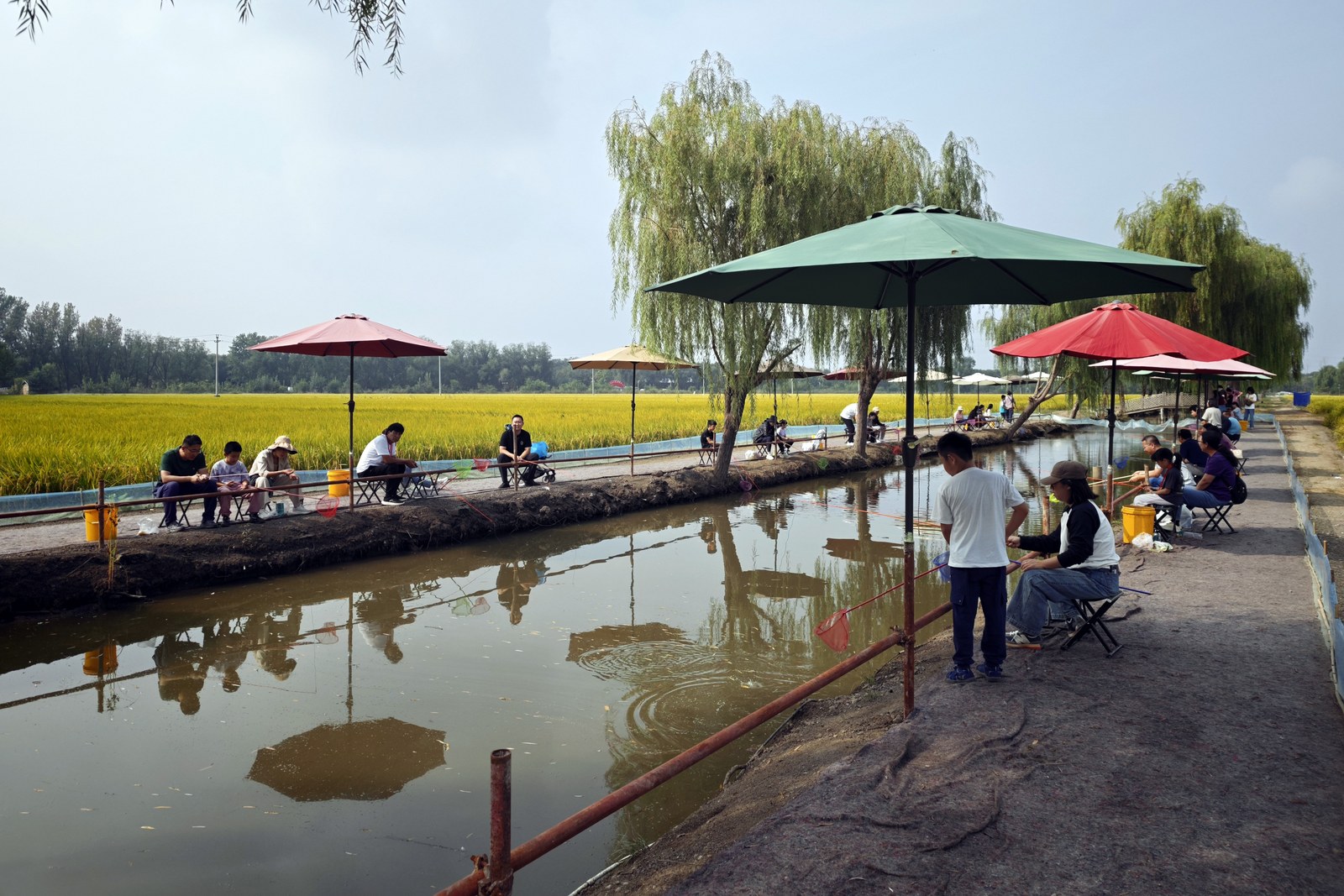
The water frame comes first. The village system loops the lanes in a canal ribbon, with punts working the short circuit between the rice paddies, and the wharf arch and anchor sculptures marking where the grain once landed. In the growing season the paddies run waist-high green to the horizon – the “rice-sea fishing-song” postcard that the village’s own signage has adopted wholesale.
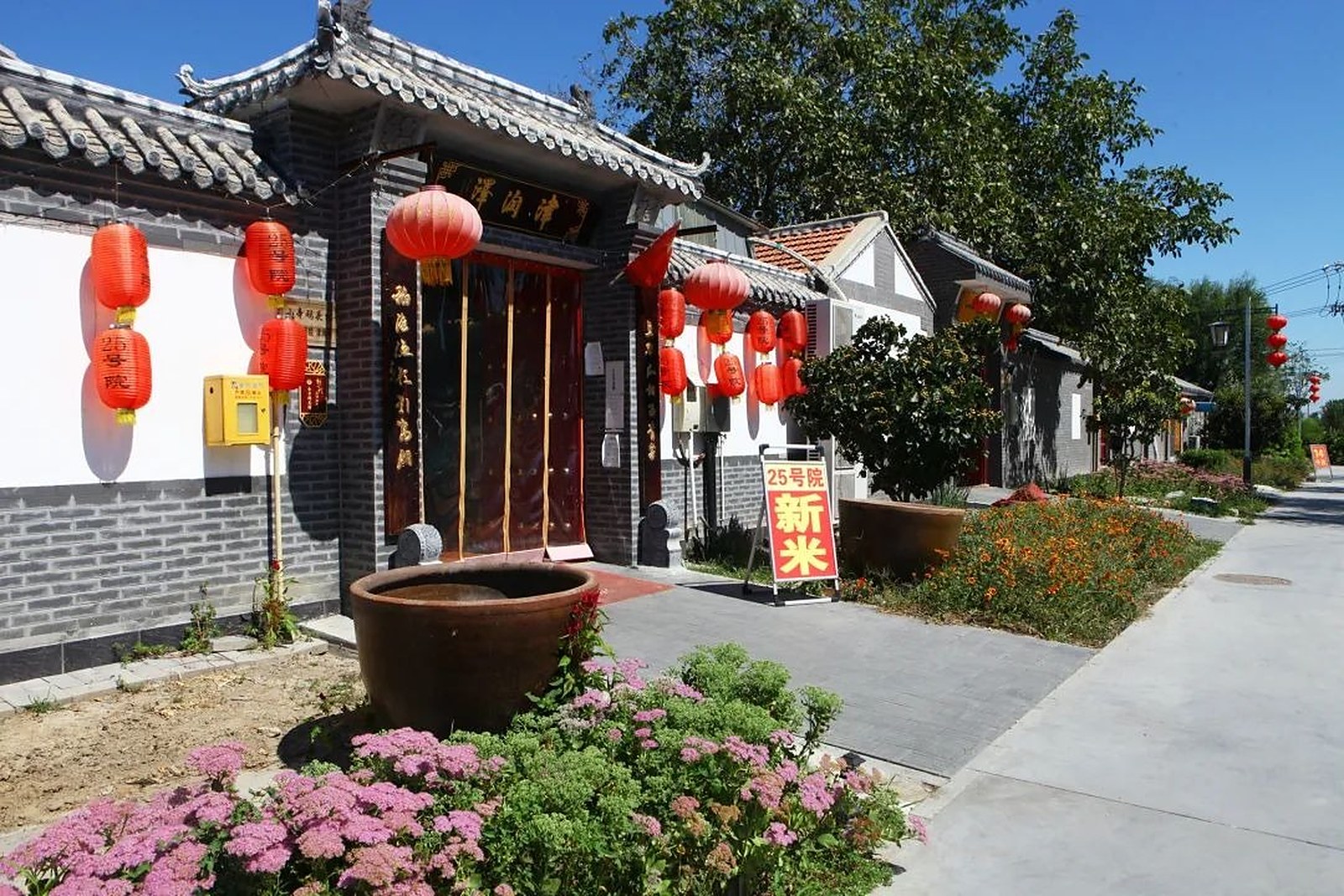
The play side is agricultural and hands-on. The rice-paddy playground runs muddy treasure hunts and harvesting days through the farm calendar; the coffee camp pours single cups beside the fields; and the catch-and-cook sessions will fry your own netted fish at the farmhouse tables by evening. School groups own the weekdays; weekends belong to the capital-region families who drive down for the mud.
The village keeps its culture layered. Canal-transport lore sits in the small exhibition rooms, the Liaofan connection runs through the rice-farming stories (the magistrate wrote the book on local agriculture too), and the homestay rows – some thirty farmhouses across the hamlet – host the fish-feast evenings that end every proper visit. The village is small; a full slow day is exactly right.
Practicalities
- The paddy playground and boat loops run seasonally – high summer and harvest autumn are the peaks.
- Wear shoes you can wash; the mud is the point, not the accident.
- Farmhouse fish feasts want booking on weekends – the guesthouses fill with Beijing families.
- Pair the village with the Chaobai wetland park upstream for a full river day.
Words and Names
码头 mǎtóu the wharf that named the village; 漕运 cáoyùn the grain-transport canal trade; 稻海 dàohǎi the “rice sea” of the paddies; 萧太后 Xiāo Tàihòu the Liao empress dowager of the landing lore; 农家院 nóngjiāyuàn the farmhouse guesthouses. Beyond the paddies, the same 天津市宝坻区 Tiānjīn Shì Bǎodǐ Qū Baodi District keeps more places worth the detour: 潮白河国家湿地公园 Cháobái Hé Guójiā Shīdì Gōngyuán the Chaobai River Wetland Park, 了凡公园 Liǎofán Gōngyuán the Liaofan Park, 广济寺 Guǎngjì Sì the Guangji Temple, or 晶宝温泉农庄 Jīngbǎo Wēnquán Nóngzhuāng the Jingbao Hot Spring Farm – four more doors into the same Baodi District. After the fish feast, our Baodi food map fills the table.
flowcloud would say Xiaoxin Matou is canal history running a rice farm: empress-dowager landings, paddy cafes and fish suppers, all within sight of the levee that made the town. All checked November 2026.
Getting there: The village sits by the Chaobai in Huangzhen town – drive the river-road southeast about half an hour from the center, parking at the village green by the wharf arch. All checked November 2026.