
Where China’s Modern Army Was Born: Xiaozhan Drill Ground
小站屯兵百年事,营盘草木识秋风 Xiǎozhàn tún bīng bǎi nián shì, yíngpán cǎomù shí qiūfēng – A century of soldiers quartered at Xiaozhan; the camp’s grass and trees still know the autumn wind
小站练兵园 Xiǎozhàn Liànbīng Yuán Xiaozhan Drill Ground is 天津市津南区 Tiānjīn Shì Jīnnàn Qū Jinnan District’s claim on modern Chinese history – the southern town where 袁世凯 Yuán Shìkǎi Yuan Shikai raised and drilled the 新建陆军 Xīn jiàn lùjūn New Army in 1895, the training program that produced the officers who would run China’s next half-century. The rebuilt camp town lays it out plainly: gated walls, drill yards wide enough for a regiment, officers’ quarters and the museum that walks you from Qing banners to modern khaki in a dozen rooms.
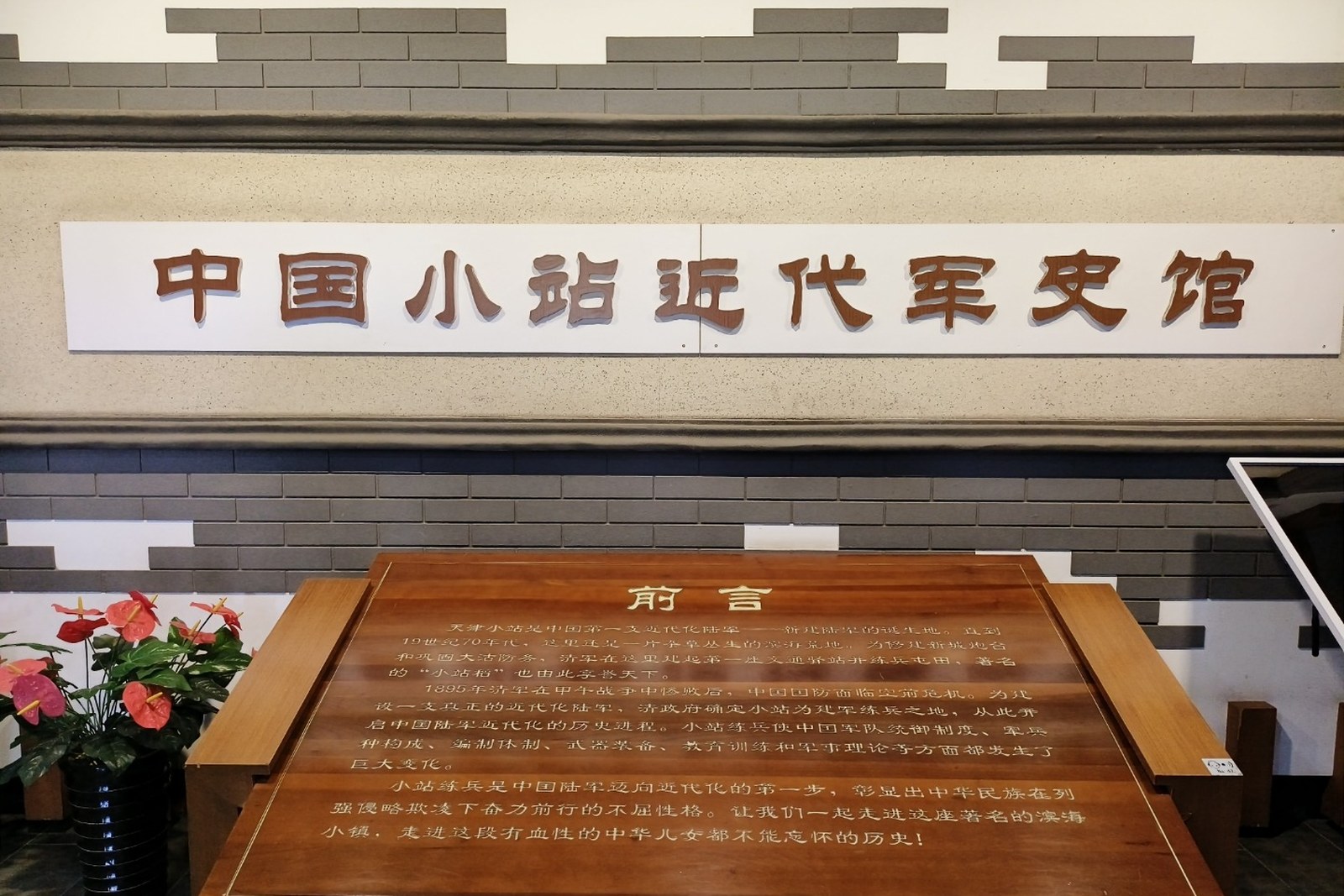
The drill yard is the heart of it. Standing on the parade ground, you get the geometry of the reform – the straight lines, the measured pace, the flags marking where companies wheeled – all of it designed to replace banners and braids with discipline and drill. Exhibits lay out the uniforms, rifles and textbooks of the first modern Chinese force, and the wall boards name the men who passed through: presidents, warlords, and the generals of a dozen later wars.
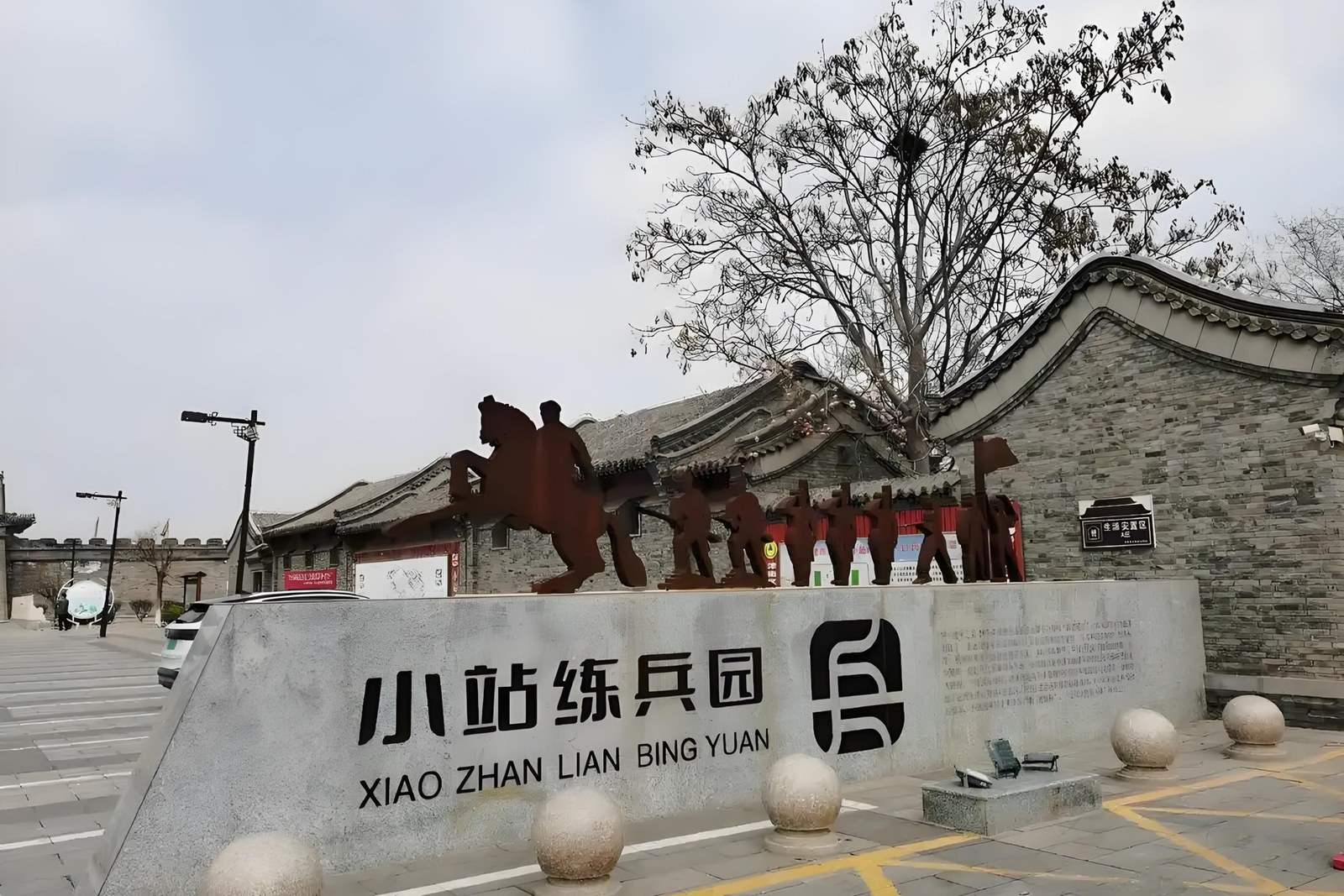
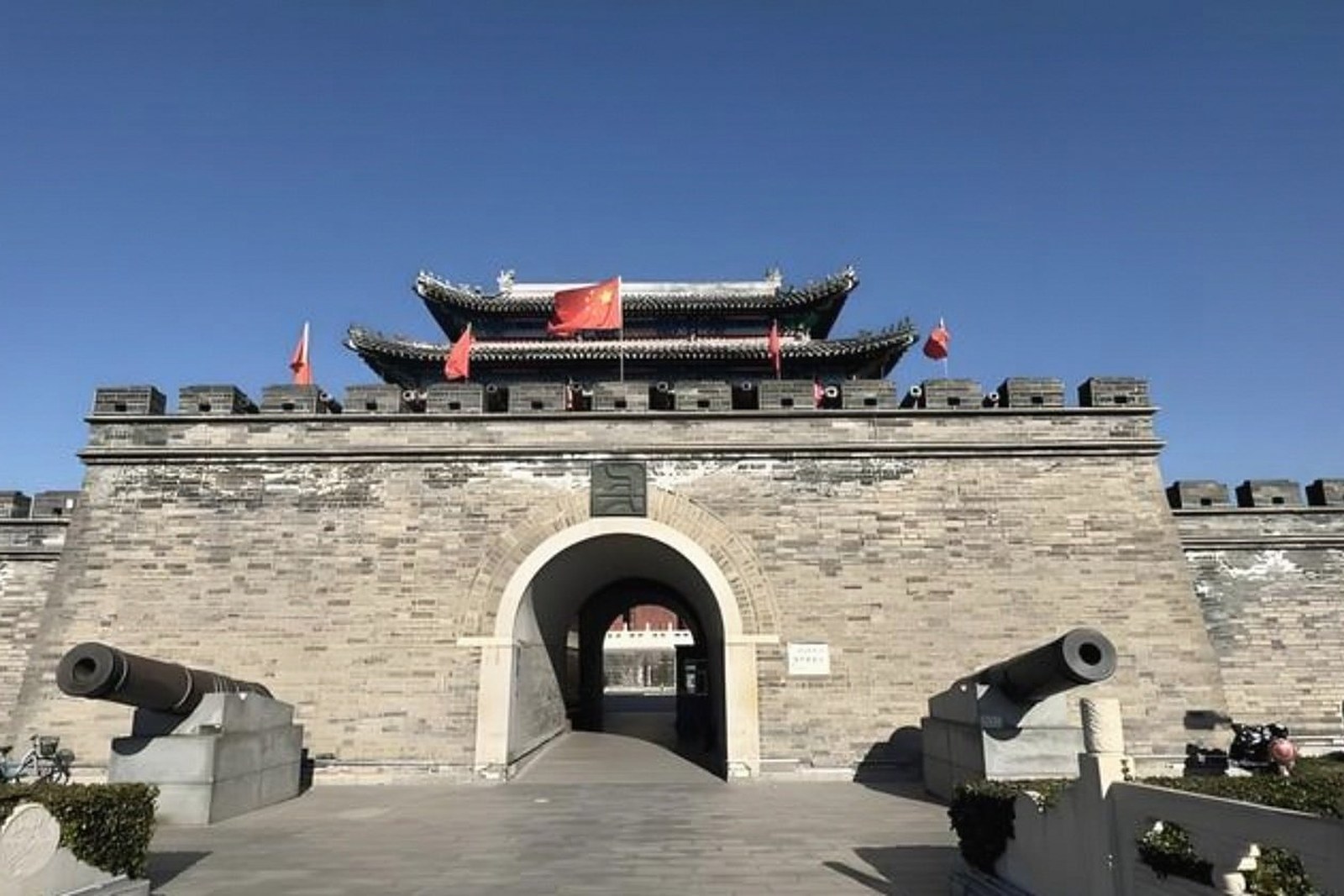
The entry stone and the gate tower give the place its theater. Carved characters announce the camp in the old style, and the rebuilt walls carry corner towers and cannon positions that photograph exactly as a frontier camp should – an interesting mix, since the original was less a fortress than a classroom with ramparts.
Around the camp, Xiaozhan town keeps its rice-canal character: the paddy ditches the soldiers dug are still watered, the town’s famous rice still carries the garrison’s name, and the small streets still run on village time. Come in the morning, walk the walls while the light is low, and let the museum fill the middle of the day.
Practicalities
- The drill-ground complex charges modest admission; the museum is included.
- Trains and buses from Tianjin South station reach Xiaozhan town in under an hour.
- Mornings give the best wall light; the museum halls are dim but fully captioned.
- Pair the visit with 小站稻 Xiǎozhàn dào Xiaozhan rice country – the paddies start at the town edge.
Words and Names
小站 Xiǎozhàn “the small station,” the town’s postal-relay name; 练兵 liànbīng to drill troops; 新建陆军 Xīn jiàn Lùjūn the New Army of 1895; 行辕 xíngyuán the field headquarters; 小站稻 Xiǎozhàn dào the rice the garrison planted and made famous. Beyond the camps, the same 天津市津南区 Tiānjīn Shì Jīnnàn Qū Jinnan District keeps more places worth the detour: 天嘉湖 Tiānjiāhú Tianjiahu Lake, 米立方 Mǐlìfāng the Mitsui Cube water park, 华盛寺 Huáshèng Sì Huasheng Temple, or 葛沽妈祖文化园 Gēgū Māzǔ Wénhuà Yuán the Gegu Mazu Culture Park – four more doors into the same Jinnan District. Once the camps have had their hour, our Jinnan food map fills the table.
flowcloud would say Xiaozhan is the district’s parade square: history drilled here in straight lines, and the rice fields marching around the town keep step to this day. All checked November 2026.
Getting there: The town sits at Jinnan’s southern end – trains and buses from Tianjin South station reach Xiaozhan in under an hour, and the drill-ground gates sign themselves from the main street. All checked November 2026.