
西涌 Xīchōng is the longest beach in Shenzhen, a crescent of sand and shingle roughly four and a half kilometres from end to end, on the southern coast of the 大鹏半岛 Dàpéng Bàndǎo facing the open water of 大亚湾 Dàyà Wān. What makes it worth the trip is not the sand, which is grey rather than white and shelving rather than flat, but the fact that it is genuinely marginal: the peninsula is the least built-up part of the city, the beach sits at the end of a single road, and behind it the land rises straight into hills that are still farmed in patches and topped by the white domes of the 深圳天文台 Shēnzhèn Tiānwén Tái on the ridge above the western end.

The bay’s other identity is as the start of the 东西涌穿越 Dōng-Xī Chōng chuān yuè, the east-west coast traverse, which is the best-known hike in the region and one of the few genuinely demanding ones. The route runs from 西涌 to 东涌 along the rocks rather than above them, scrambling around headlands, crossing the boulder beaches and climbing the fixed ropes and ladders at the points where the shoreline has no passage, and it takes four to five hours in dry weather and considerably longer after rain. It is not a walk for anyone who is unsure on exposed rock, and every year there are rescues. The reward is a stretch of coast with almost nothing on it: no road, no buildings, and on a weekday no other people, which is not something Shenzhen is generally able to offer.
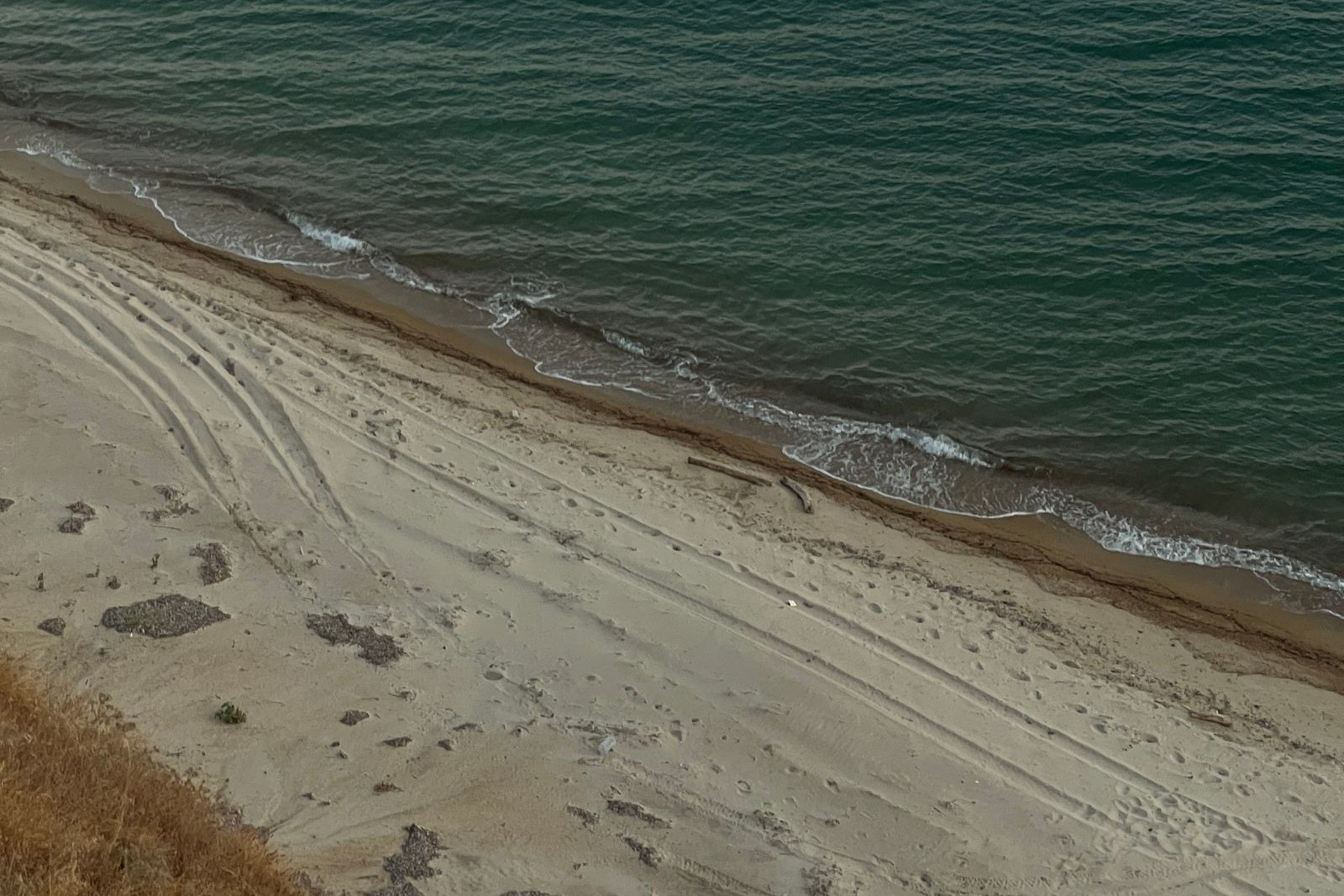
Swimming is allowed in the marked sections near the main 西涌 entrances, where the beach is lifeguarded in season, and is not allowed along most of the traverse because the currents off the headlands are strong. The bay took a direct hit from 台风山竹 Táifēng Shānzhú, Typhoon Mangkhut, in September 2018, which destroyed the boardwalks and most of the beachfront structures and stripped the sand down to the rock in places; the rebuild that followed is why the access is now regulated, with a quota on vehicles in high season and shuttle buses from the car park at the 南澳 end. That regulation has been good for the beach and mildly annoying for drivers, who now often park at 南澳 or 大鹏 and take the bus in. The 官湖 Guānhú headland at the eastern end and the small fishing hamlet behind the western end are the two places to eat, and both are cheap and unpretentious.
Practicalities
Tickets. The beach itself is free. The 西涌 section charges a small environmental fee of around ¥30 per adult in high season, and vehicle access is by reservation with a daily quota, which is enforced at the checkpoint on the approach road from roughly May to October. The fee is collected at the entrance barrier and there is no way around it, since the alternative road does not reach the sand.
Opening hours. Open access around the clock, subject to the vehicle quota, which runs from about 08:00 to 18:00 with entry closed once the day’s allocation is full. The lifeguard stations on the main bathing sections operate from roughly 09:00 to 18:00 between May and October. The 东西涌 traverse has no hours of its own but should not be started after about 11:00, because finishing it in the dark is the single most common way people get into trouble here.
Closing day. There is no closing day. The beach and the traverse are open all year, and winter is in some ways the better season, since the light is cleaner, the temperature is right for walking and the crowds are gone. The one exception is the days after a typhoon, when access is closed entirely until the boardwalks and the cliff ladders have been checked.
Getting there. From central Shenzhen take Metro Line 3 or Line 14 to 大运 Dàyùn or 坪山围 Píngshān Wéi and change to the 大鹏假日专线 or bus M232 towards 西涌 Xīchōng; the journey is about two hours and the last stretch is the slow part. By car it is roughly ninety minutes from 福田 Fútián, with the quota checkpoint on the 南西路 approach. If you are doing the traverse, the standard arrangement is to leave a car at 东涌 and start from 西涌, or to take the bus between the two.
Words and Names
西涌 Xīchōng means the western stream and 东涌 Dōngchōng the eastern one; the two bays sit either side of the 大鹏半岛 Dàpéng Bàndǎo and the traverse 东西涌穿越 Dōng-Xī Chōng chuān yuè runs between them. 南澳 Nán’ào is the sub-district that administers the area, 大亚湾 Dàyà Wān the bay the beach faces, and 深圳天文台 Shēnzhèn Tiānwén Tái is the observatory on the ridge above. 台风山竹 Táifēng Shānzhú is Typhoon Mangkhut, which reshaped the beach in 2018, and 官湖 Guānhú is the headland at the eastern end where the seafood restaurants are.
Getting there: bus M232 or the 大鹏假日专线 to 西涌 Xīchōng from 大鹏中心 Dàpéng zhōng xīn, or drive with a vehicle reservation in season; if you are walking the 东西涌穿越, start at the eastern car park and go west to east with the sun behind you, wear shoes with grip rather than trainers, and tell someone at the hostel which direction you are going.