
One Look, a Thousand Years: Xijindu Ancient Ferry Street in Zhenjiang
一眼千年石板路,昭关塔下渡春秋 Yī yǎn qiān nián shíbǎn lù, Zhāoguān tǎ xià dù chūnqiū – One look down a thousand years of flagstones; beneath the Zhaoguan Pagoda, springs and autumns crossed
正文:西津渡 Xījīndù Xijindu is the lane where Zhenjiang crossed the Yangtze for more than a thousand years – a hillside street of flagstones and grey brick running from the old town up toward Yuntai Hill, layered so deep with its own history that the local slogan “one glance, a thousand years” is literal: a glass panel in the paving shows the street’s successive surfaces, Tang to Qing, stacked like sediment. Boat travellers from the Grand Canal met the river here; 救生会 Jiùshēnghuì the Rescue Society, one of the world’s earliest organised river-lifeboat services, launched from this shore; and above the lane the Yuan dynasty built 昭关石塔 Zhāoguān Shítǎ the Zhaoguan Stone Pagoda, a white crossing-tower arch that passengers passed beneath for luck – and that pedestrians still walk under today, the oldest street-level stone pagoda of its kind anywhere.
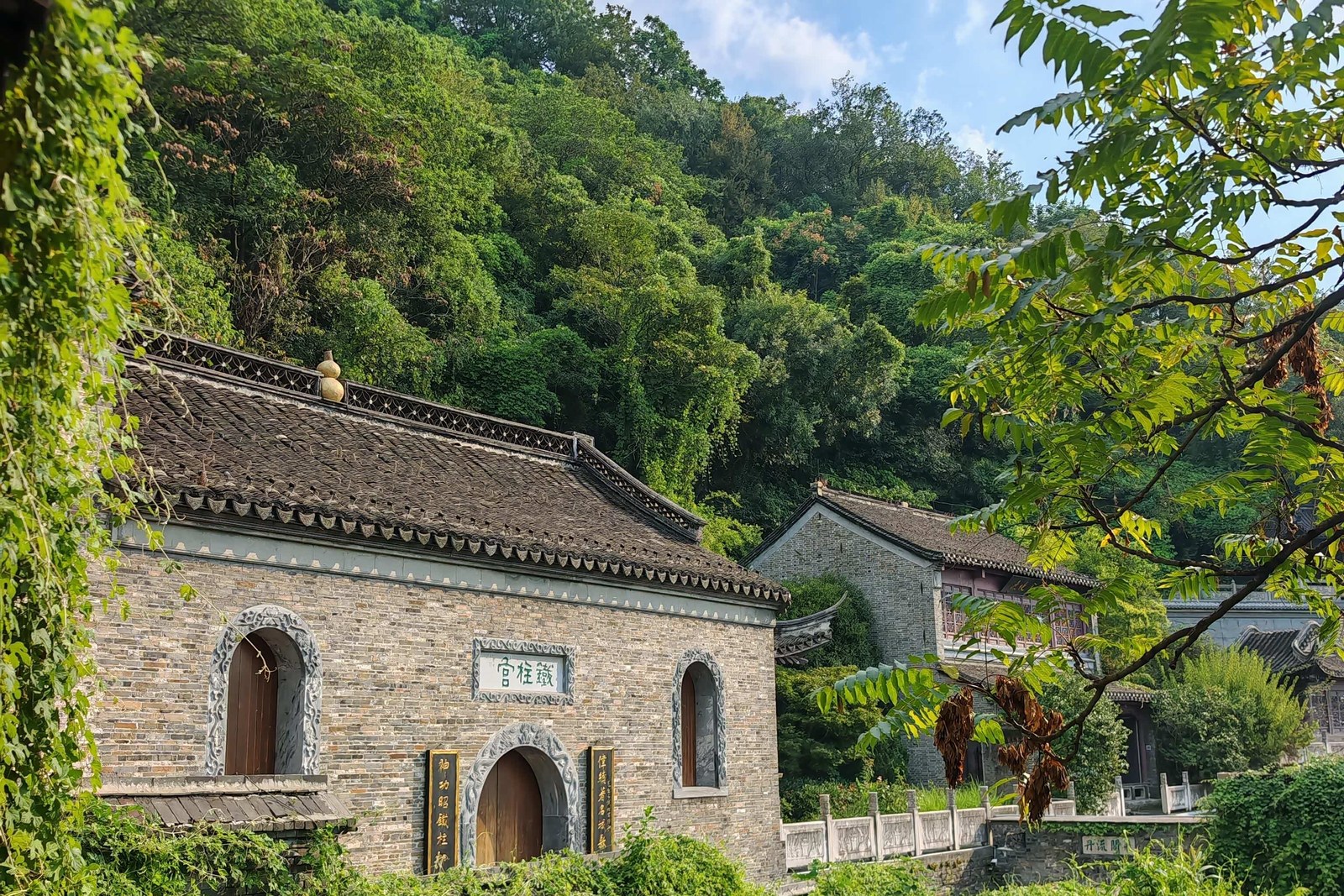
The lane is short but dense. From the old town end, the flagstones rise past the Waiting-for-the-Ferry Pavilion, under the Zhaoguan arch with its “Tong Deng Jue Lu” – Together We Reach the Other Shore – inscription, and along a queue of Ming-and-Qing shopfronts whose timber lintels have been repaired so many times the wood reads like a document. The preserved 元代 Yuándài Yuan-dynasty stone pilings of the old ferry pier sit excavated behind glass, and the brick 观音洞 Guānyīn Dòng Guanyin Shrine caves hold the small altars of travellers who never learned whether their crossing would go well.
Beyond the pagoda the street climbs into its British chapter. 镇江开埠 Zhènjiāng kāibù Zhenjiang’s treaty-port opening in 1861 planted consulates and companies along the hilltop, and the red-brick former British Consulate – now the main hall of the Zhenjiang Museum – stands over the lane in careful colonial brickwork. The combination is the street’s whole argument: in five hundred metres you pass a Yuan pagoda, a Tang-era well, a Song ferry-station ruin and a Victorian consulate, and none of it has been rearranged for the camera.
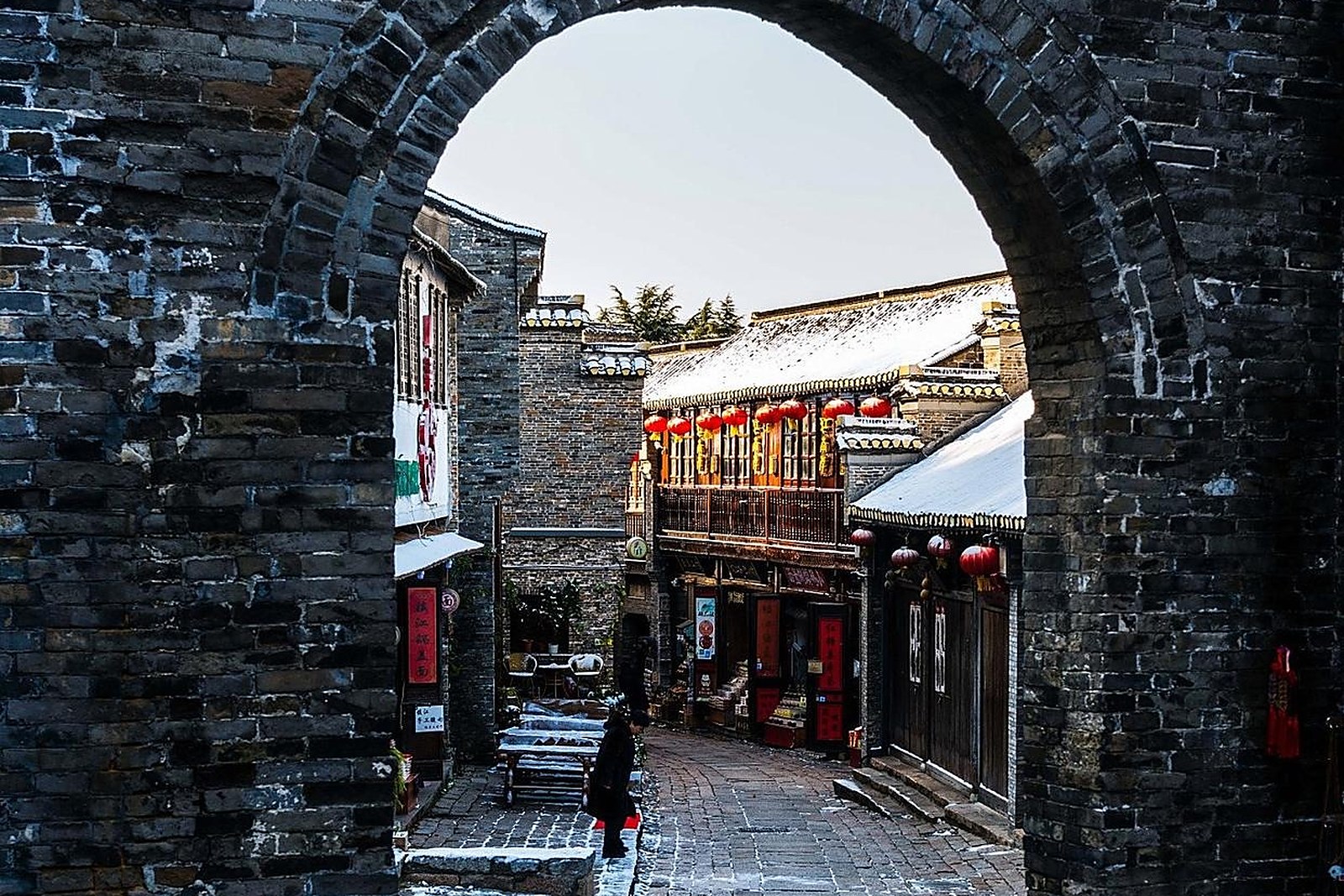
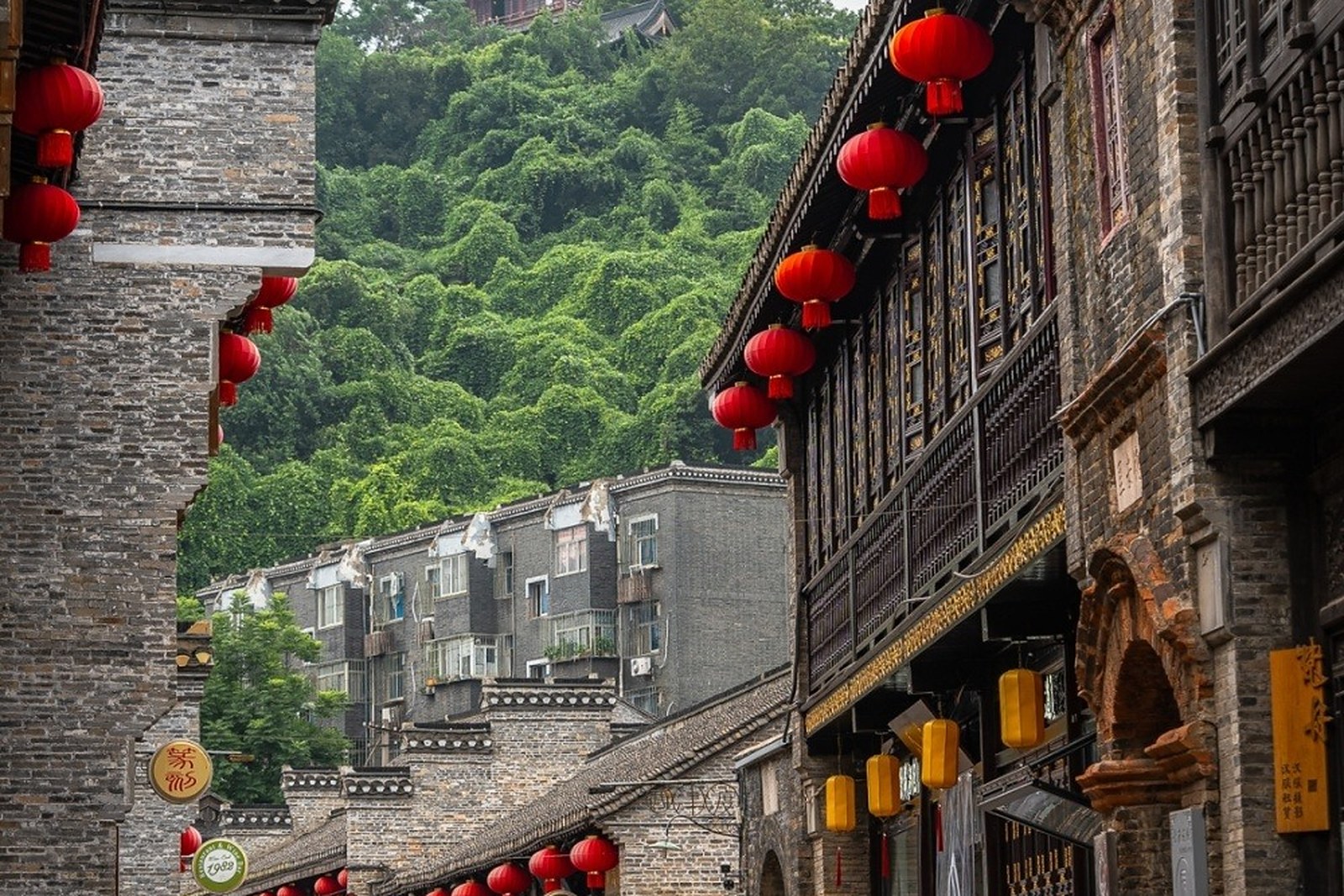
Evening is the street’s best performance. Lanterns come on along the eaves, the tea shops and small museums stay open, and the flagstones empty enough that the hill’s quiet returns – the same quiet a Song traveller would have recognised waiting for the dawn ferry. Come hungry: the lanes at the bottom of the hill are full of the city’s noodle and vinegar-scented kitchens, and the walk back into town takes ten minutes downhill.
Practicalities
Beyond the ferry lane, the same 镇江市 Zhènjiāng Shì Zhenjiang City keeps more doors on the itinerary: 金山风景区 Jīnshān Fēngjǐngqū Jinshan Scenic Area the wrapped temple hill, 北固山 Běigù Shān Beigu Mountain the kingdoms crag, 焦山 Jiāoshān Jiaoshan the river island, or 茅山 Máoshān Maoshan the Taoist mountain in Jurong – four more doors into the same 镇江市 Zhènjiāng Shì Zhenjiang City. Once the lane is walked, our Zhenjiang food map fills the table.
Practicalities
Words and Names
flowcloud would say Xijindu is Zhenjiang’s basement memory: a street that kept every layer it ever wore, from ferry pier to consulate, and lets you walk down the stratigraphy in ten minutes. All checked November 2026.
Getting there: The old street runs along the hillside just west of the centre – walkable from Dashi-kou in half an hour or five minutes by taxi, open around the clock and free to enter; the Zhaoguan Stone Pagoda, the preserved ferry-station relics and the small museums fill an hour or two, and evening lanterns are the best hour. All checked November 2026.