
一坝截金江,千里送东南。Yī bà jié Jīnjiāng, qiānlǐ sòng dōngnán – One dam cuts the Jinsha; a thousand li it sends southeast.
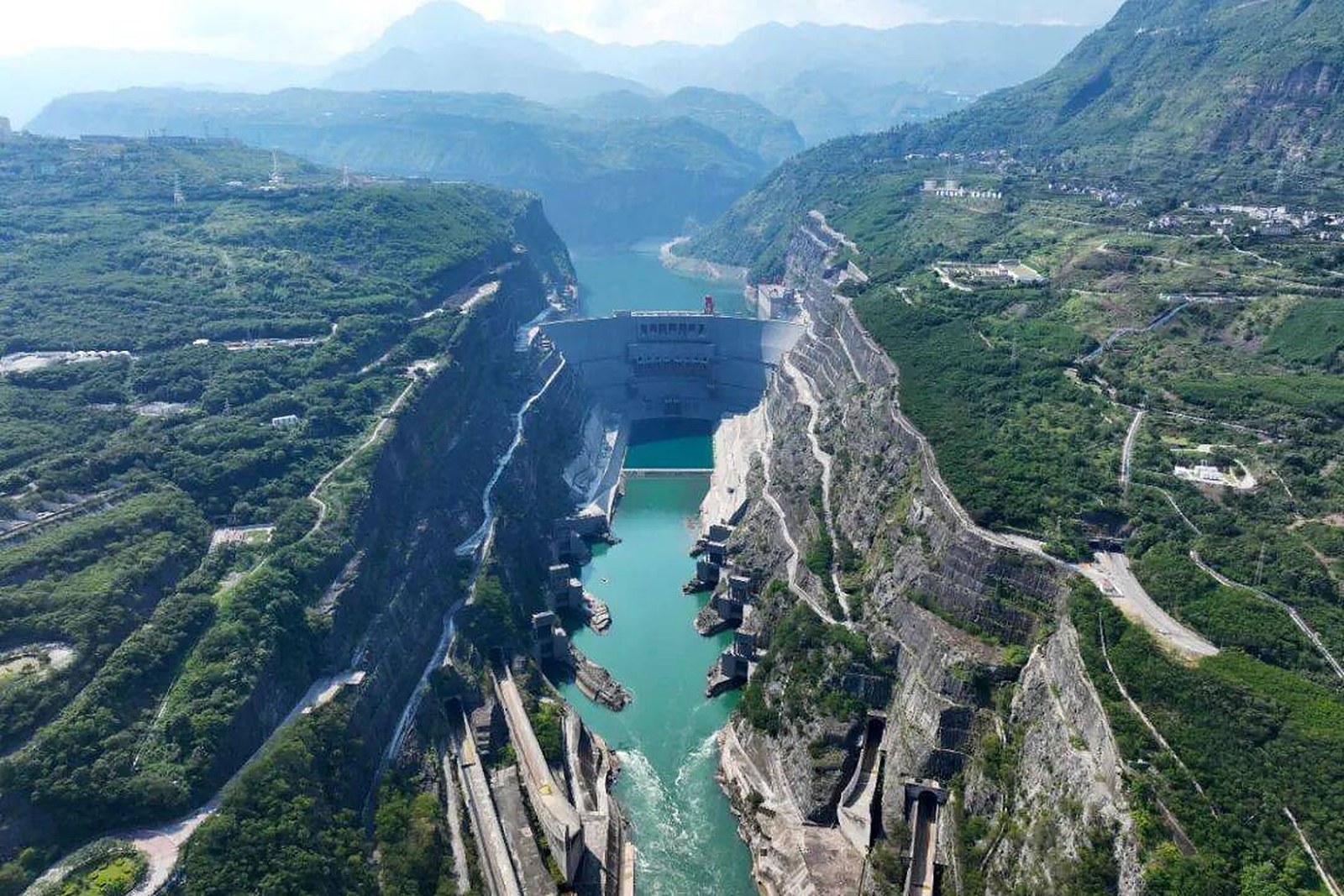
溪洛渡大坝 Xīluòdù Dàbà Xiluodu Dam is not a viewpoint with a path and a bench — it is, to be plain, a 双曲拱坝 shuāngqū gǒngbà double-curvature arch dam thrown across the 金沙江 Jīnshā Jiāng Jinsha River (the upper Yangtze) on the border of 永善县 Yǒngshàn Xiàn Yongshan County in 昭通 Zhāotōng and 雷波县 Léibō Xiàn Sichuan. It is one of the largest hydropower stations on earth, a concrete wall hundreds of metres tall that pins the gorge shut and feeds the 西电东送 Xī Diàn Dōng Sòng West-to-East Power Transmission with a slab of the country’s electricity. What you are actually looking at is operating infrastructure, not a park: the “scenic value” is the scale, and the scale is the only thing on offer, because the dam and its 库区 kùqū reservoir are secured, fenced and watched, not open to a Sunday stroll.
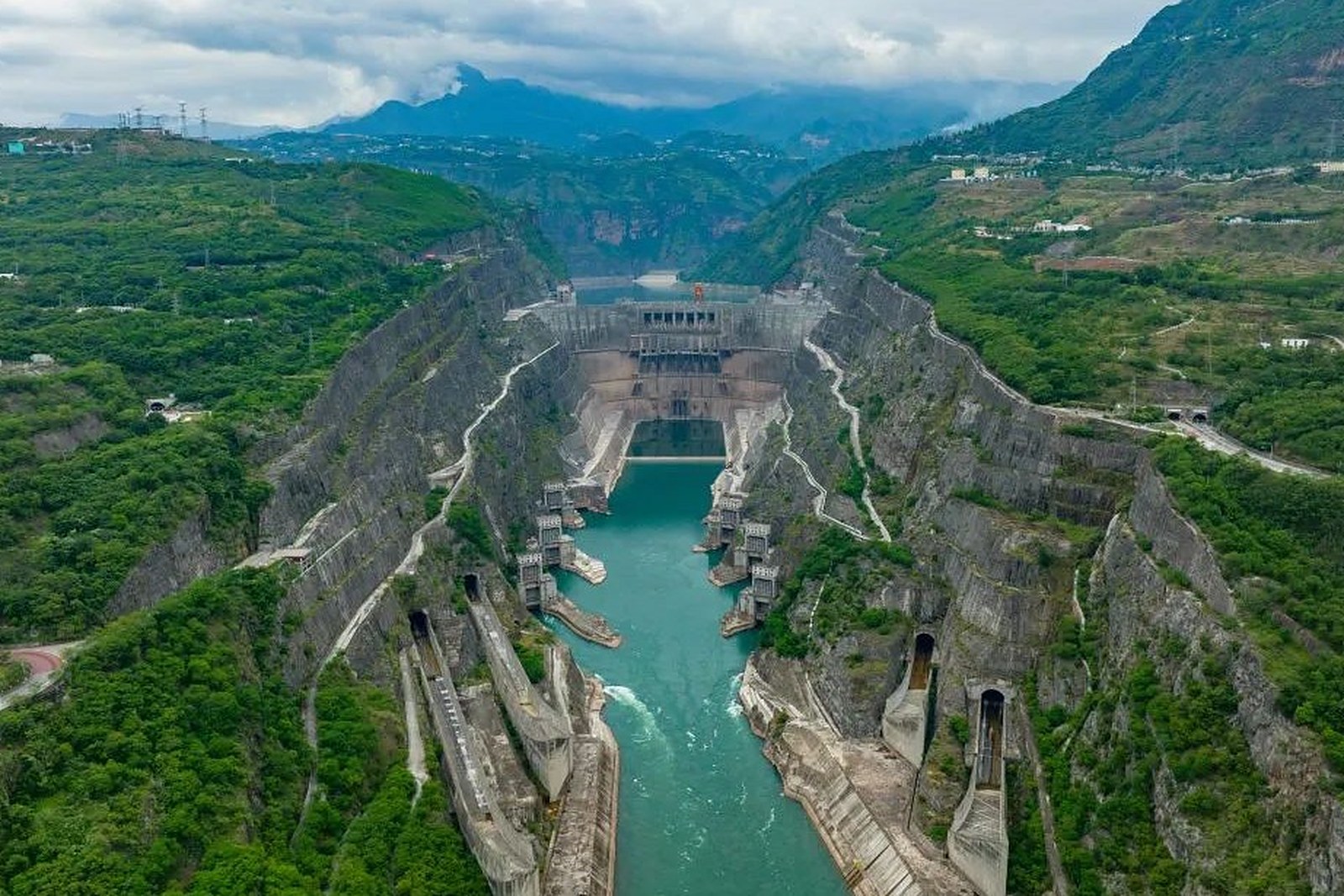
The honest grade is “a feat of engineering you mostly read about, not a place you enter,” and that is the truth worth holding before you drive out. The numbers are real and absurd: a installed capacity often quoted around 13–14 GW (worth confirming the exact figure — the official rating has been stated in the 13.86 GW range, but confirm the latest published capacity), an arch dam roughly 278 m tall, and a reservoir that backs up the 金沙江 Jīnshā Jiāng for a long way into the gorge. It was built across the 2000s and into the mid-2010s (worth confirming the commissioning years of the first and last units), and it sits in the same upper-Yangtze cascade as 白鹤滩 Báihètān Baihetan and below 三峡 Sānxiá Three Gorges in the national league table of big dams. Getting a look is the catch: there may be a 观景台 guānjǐngtái viewing platform or a visitor centre on one bank (worth confirming whether tourists can visit, from which side — the 永善 Yǒngshàn Yunnan bank or the 雷波 Léibō Sichuan bank — and whether a permit or a guided visit is asked, because this is sensitive infrastructure and the rules are not tourist-friendly).
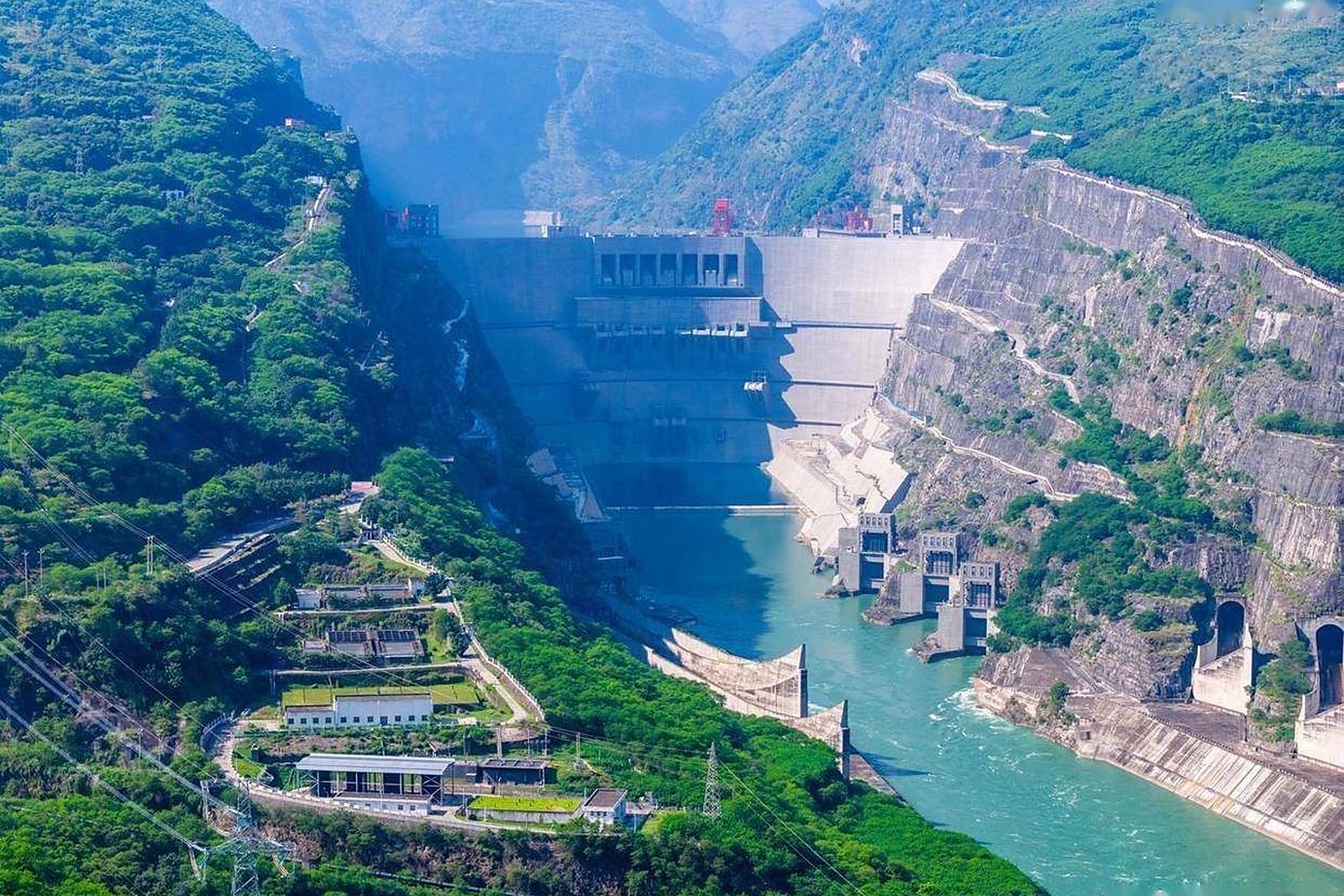
The wry take is that Xiluodu is sold as “a wonder you must see,” and the wonder is real but the “see” is thin. What is overrated is any expectation of a dam tour with walkways and a turbine hall — you will at best stand at a rim or a platform and take in the wall and the water, and the 库区 kùqū behind it is off-limits, as it should be. What is worth it is genuine, if modest: the sheer fact that a curve of concrete can hold back a gorge, and the odd satisfaction of meeting one of the machines that lights distant cities. Best treated as a quick stop if you are already in the 永善 Yǒngshàn / 溪洛渡 Xīluòdù corner or passing the border, not a pilgrimage — the honest visitor comes, looks, nods, and drives on, because there is no second act here, only the first, very large, impression. Carry ID, expect checks, and do not treat the secured site as a freedom-to-roam lookout; the dam does not owe you a tour, and it will not give you one.
The self-deprecating footnote: I drove two hours to “see the dam” and saw a wall, a lot of water, and a fence — and felt, absurdly, that it was worth it, because a wall that size earns the silence. 溪洛渡大坝 Xīluòdù Dàbà rewards the engineer’s eye and the curious, and quietly bores the person who came for a show. Go knowing it is infrastructure, not an attraction, and you will leave correctly impressed instead of correctly disappointed.
Practicalities
- Rating: A double-curvature arch dam across the Jinsha River on the Zhaotong–Sichuan border, one of the world’s largest hydropower stations; operating infrastructure, not a graded scenic area.
- Tickets: There is no ordinary tourist ticket; access is limited and may require a platform visit or a guided arrangement (worth confirming whether any viewing platform is open to visitors and from which bank — the Yunnan side at 永善 Yǒngshàn or the Sichuan side at 雷波 Léibō). The reservoir and the works are secured.
- Address: 溪洛渡 Xīluòdù on the 金沙江 Jīnshā Jiāng, 永善县 Yǒngshàn Xiàn Yongshan County, 昭通市 Zhāotōng Shì Zhaotong — at the Sichuan border; reached by road, no rail to the dam itself.
- Time needed: An hour or two for a rim or platform look if access is granted; not an overnight, and not a destination unless you are passing the border corner.
Words and Names
溪洛渡大坝 Xīluòdù Dàbà Xiluodu Dam · the giant arch dam on the Zhaotong–Sichuan Jinsha border 金沙江 Jīnshā Jiāng Jinsha River · the upper Yangtze the dam pins shut 永善县 Yǒngshàn Xiàn Yongshan County · the Zhaotong county that holds the Yunnan bank 双曲拱坝 shuāngqū gǒngbà double-curvature arch dam · the dam type that holds the gorge 西电东送 Xī Diàn Dōng Sòng West-to-East Power Transmission · the grid the dam feeds 库区 kùqū reservoir area · the backed-up water behind the dam, off-limits 白鹤滩 Báihètān Baihetan · the neighbouring upper-Yangtze mega-dam in the same cascade 三峡 Sānxiá Three Gorges · the larger dam Xiluodu is ranked below nationally 雷波县 Léibō Xiàn Leibo County · the Sichuan county on the opposite bank 观景台 guānjǐngtái viewing platform · the limited vantage a visitor might reach
flowcloud would say that 溪洛渡大坝 Xīluòdù Dàbà is Zhaotong’s slice of the Jinsha — a 双曲拱坝 shuāngqū gǒngbà arch wall on the 永善 Yǒngshàn border feeding the 西电东送 Xī Diàn Dōng Sòng grid — and that the honest move is a quick rim look if access is granted, because it is operating infrastructure not a park, the 库区 kùqū is off-limits, and the dam rewards the engineer’s eye and the curious while quietly boring anyone who came for a show. All checked October 2026.
Getting there: Xiluodu in Yongshan county on the Jinsha River, reached by road from Zhaotong (worth confirming the viewing-access and whether the dam crest is open); the honest plan is a viewpoint stop, not a walk across the crest. All checked October 2026.