
Xinchang Old Town: A Thousand-Year Water Town Hailed as Pudong’s “Last Water Village”, with Hongfu Bridge, the First Building Teahouse and Film Locations for “Lust, Caution” along Old Canals Lined with Ming-and-Qing Houses on Metro Line 16 in Pudong New Area, Shanghai
洪福桥头千载水,第一楼上百年茶。Hóngfú qiáotóu qiānzǎi shuǐ, dì yī lóu shàng bǎinián chá – A thousand years of water flow beneath Hongfu Bridge; a hundred years of tea steep in the First Building.
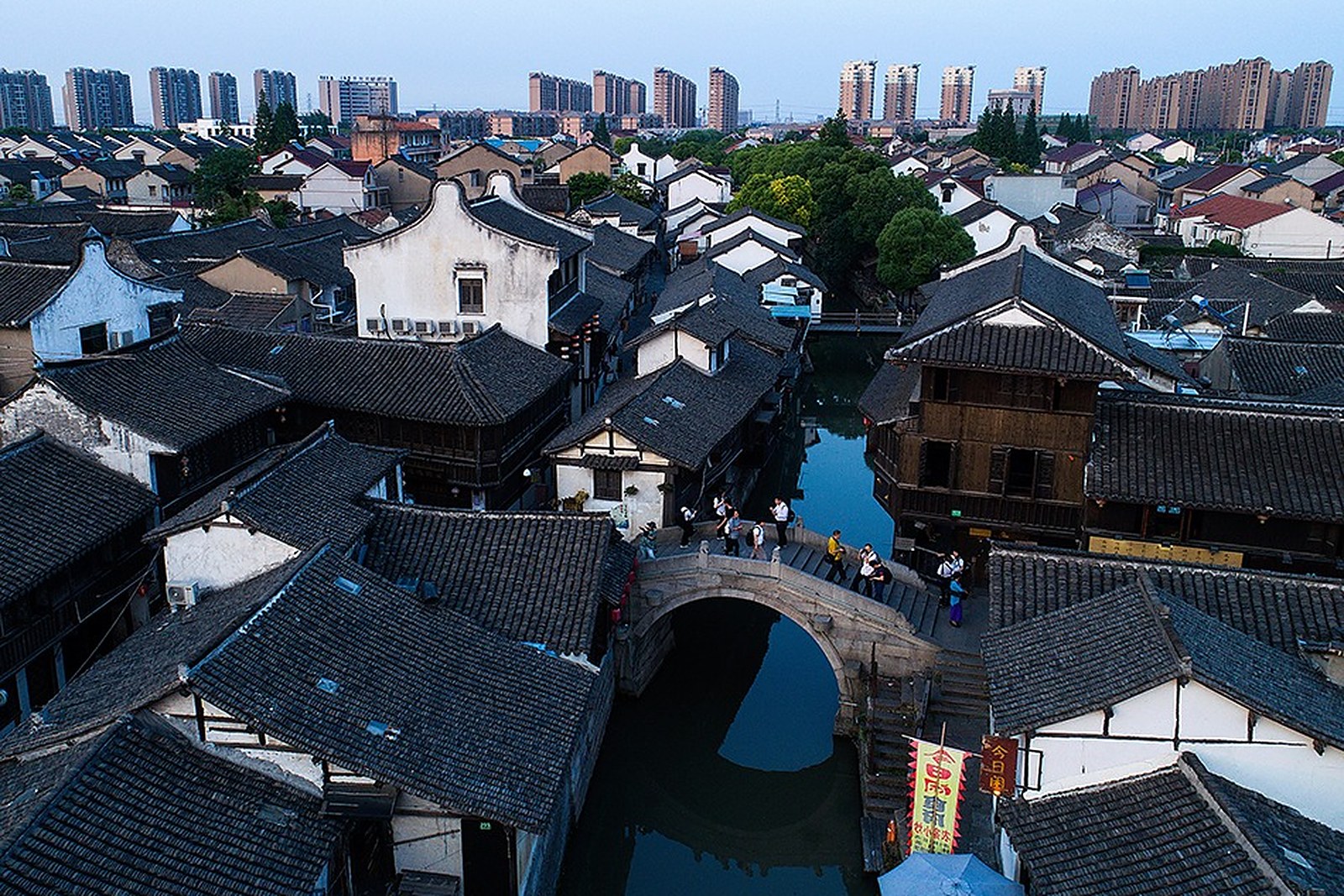
新场古镇 Xīnchǎng Gǔzhèn Xinchang Old Town is not a ticketed heritage stage set — it is, plainly put, the water town Pudong somehow forgot to pave: the old lanes follow 包桥港 Bāoqiáo Gǎng and its sister 河道 hédào canals through 新场镇 Xīnchǎng Zhèn Xinchang Town in southern 浦东新区 Pǔdōng Xīn Qū Pudong New Area, a market town founded in the Song dynasty and still wearing its eight-hundred-year street plan — hence the proud local title 浦东最后的江南水乡 Pǔdōng zuìhòu de Jiāngnán shuǐxiāng “Pudong’s last Jiangnan water village”. 河道两岸老宅 hédào liǎng’àn lǎozhái old merchant houses line both banks in unbroken ranks, their timber fronts and stone-row quays reflected straight down into the water, while 洪福桥 Hóngfú Qiáo Hongfu Bridge arches over the busiest bend and 第一楼茶园 Dì yī Lóu Cháyuán the “First Building” Teahouse pours tea above the water exactly where the 2007 film 《色·戒》Sè·Jiè Lust, Caution sent its camera crew. What you actually visit is a working town that Ang Lee found photogenic and the neighbourhood never renovated for him.
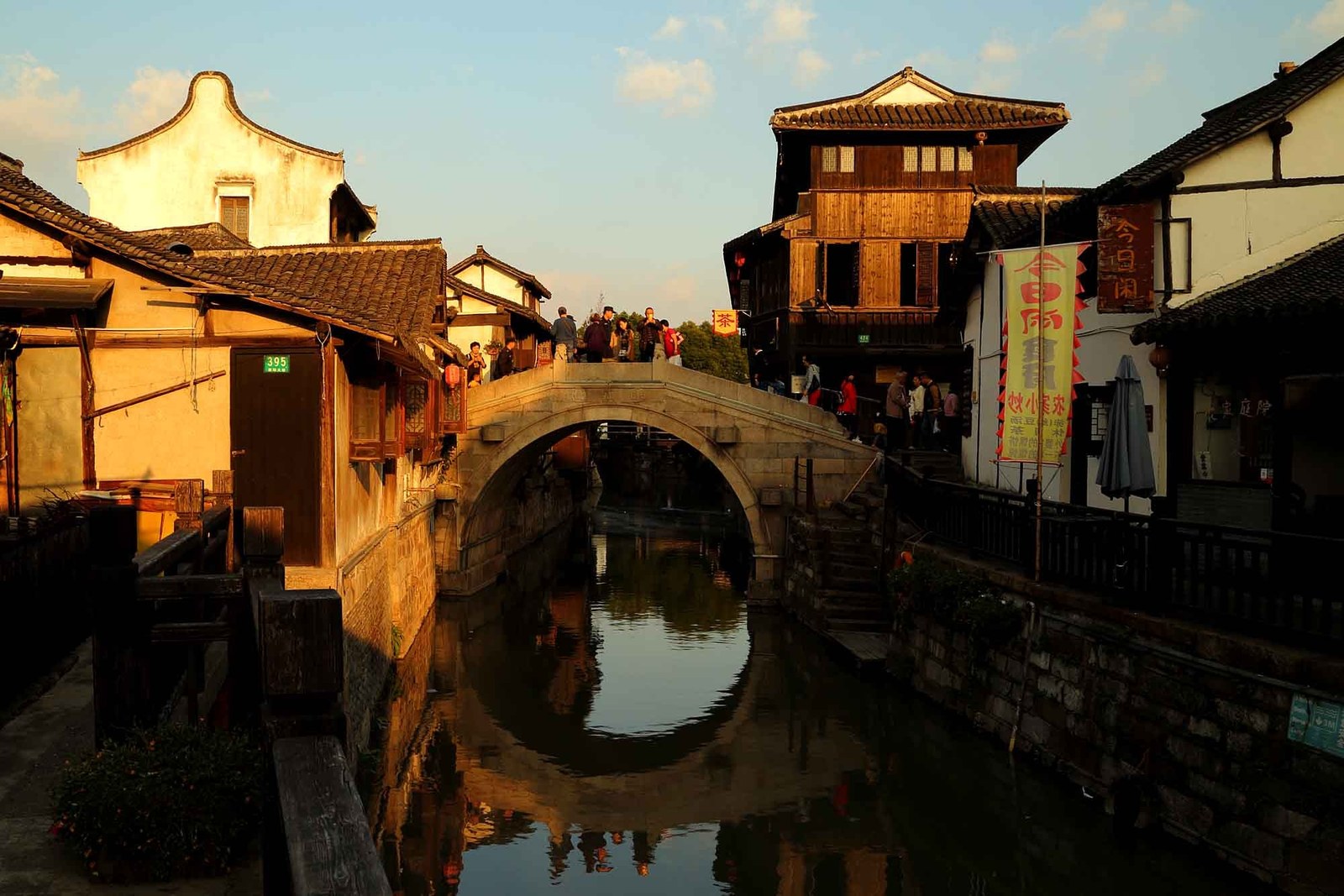
Call it honestly: the lanes are free and open all day, while a small combined ticket covers the interior courtyards, exhibition rooms and heritage houses along the main axis (worth confirming the details for current combination-ticket prices and which interiors are open before you set out), and 新场站 Xīnchǎng Zhàn Xinchang station on Metro Line 16 sets you down for a short taxi or bus hop into the old grid. The honest warning is expectations: this is a lived-in town, quieter and rougher-edged than the polished canal brands of Zhujiajiao or Qibao — laundry over the water, hardware shops between teahouses, and at most hours more residents than visitors, which is either the point or the disappointment depending on what you came for. Weekday mornings belong to the residents; weekends bring Shanghai day-trippers and snack queues. Give the town two to three hours with a canal-side lunch, half a day if the teahouse catches you.
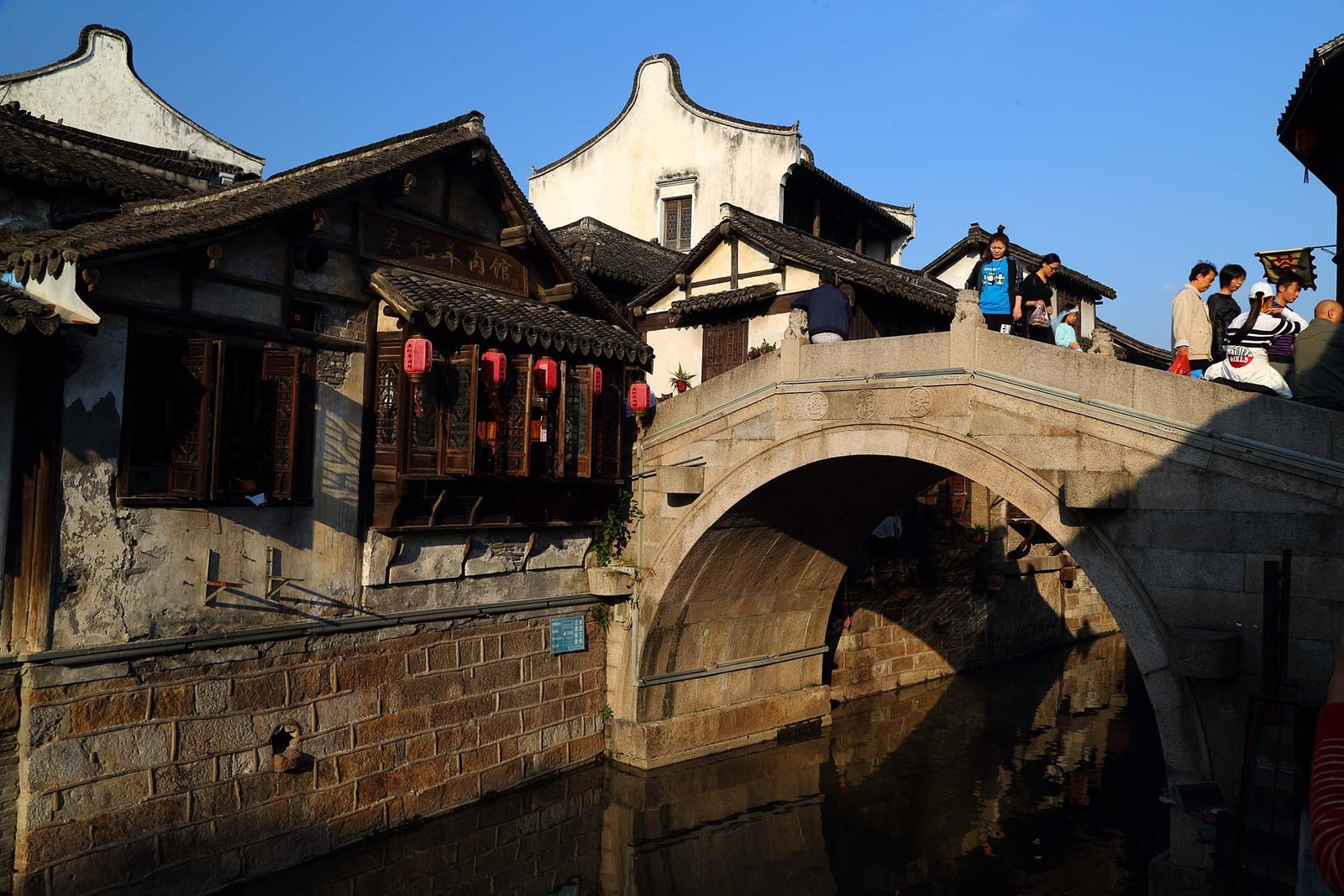
The honest star is the canal axis itself — the stretch of water between 洪福桥 Hóngfú Qiáo Hongfu Bridge and the lower stone bridges, where 河道两岸老宅 hédào liǎng’àn lǎozhái old houses lean over stone quays and the whole Ming-and-Qing streetscape stacks into one reflection. What gets oversold is the film connection: visitors arriving expecting a 《色·戒》 Sè·Jiè Lust, Caution theme park find a town where the movie shot briefly and left — 第一楼茶园 Dì yī Lóu Cháyuán the First Building Teahouse is the true survivor, a century-old tower of tea tables and street windows above the water, still pouring for anyone who climbs its creaking stairs (worth confirming the details for the teahouse’s current hours and any small-site tickets before you go). What repays the effort is walking one bridge further than the crowd: the quays quiet within a hundred metres, door gods fade on plaster, and the private Pudong of fishing nets, bamboo poles and window boxes opens up. Stand on Hongfu Bridge first, then walk south. Come for the layering of the place: bridge, then tea, then the water’s memory.
The self-aware postscript: I was drinking chrysanthemum tea at a First Building window one weekday morning when the tea steward, refilling the pot, volunteered the local view. “The film people came for one street,” she said, nodding at the water, “but we kept the rest — every door behind the front row still opens onto its own small life; that is what the camera cannot buy back”. That is the visit in miniature. From Hongfu Bridge at noon, looking down the canal at whitewash, timber and reflection fused into a single watercolour, the town holds its whole argument in one frame — authenticity kept by being unremarkable. 新场古镇 Xīnchǎng Gǔzhèn suits whoever treats it as a real, unhurried water town with one great teahouse first and a film-location pilgrimage second, and disappoints anyone expecting light shows, boat fleets and boutique lanes. The rest of this Pudong list runs the district’s extremes: the towers of 陆家嘴天际线 Lùjiāzuǐ Tiānjìxiàn the Lujiazui Skyline wait far to the north, the castle of 上海迪士尼乐园 Shànghǎi Díshìní Lèyuán Shanghai Disneyland and the lawns of 世纪公园 Shìjì Gōngyuán Century Park lie mid-line, and the beasts of the 上海野生动物园 Shànghǎi Yěshēng Dòngwù Yuán Shanghai Wild Animal Park wait one Line 16 stop away in 南汇 Nánhuì Nanhui — all inside the same 浦东新区 Pǔdōng Xīn Qū Pudong New Area whose quietest water this town keeps.
Practicalities
- Rating: ★★★★☆ — Pudong’s “last water village”, a free-lived thousand-year canal town with a century-old teahouse and a film pedigree; walk one bridge further than the crowd.
- Tickets: Free open lanes; small combination ticket for interior courtyards and exhibition houses (worth confirming the details for current prices and openings).
- Address: 新场古镇 Xīnchǎng Gǔzhèn, 新场镇 Xīnchǎng Zhèn Xinchang Town, 浦东新区 Pǔdōng Xīn Qū Pudong New Area, Shanghai — from Xinchang station on Metro Line 16 plus a short taxi or bus hop.
- Time needed: Two to three hours with a canal-side lunch; half a day if the First Building Teahouse holds you.
Words and Names
新场古镇 Xīnchǎng Gǔzhèn Xinchang Old Town · 浦东最后的江南水乡 Pǔdōng zuìhòu de Jiāngnán shuǐxiāng “Pudong’s last Jiangnan water village” · 洪福桥 Hóngfú Qiáo Hongfu Bridge, the canal’s centre arch · 第一楼茶园 Dì yī Lóu Cháyuán the First Building Teahouse, a century of tea above the water · 《色·戒》Sè·Jiè Lust, Caution, the 2007 film shot here · 河道两岸老宅 hédào liǎng’àn lǎozhái old houses lining both canal banks · 石驳岸 shí bó’àn stone-row quays · 新场站 Xīnchǎng Zhàn Xinchang station, Metro Line 16 · 浦东新区 Pǔdōng Xīn Qū Pudong New Area
flowcloud would say that 新场古镇 Xīnchǎng Gǔzhèn is the water town that stayed real by staying unrenovated — a Song-founded canal grid in 新场镇 Xīnchǎng Zhèn Xinchang Town in southern 浦东新区 Pǔdōng Xīn Qū Pudong New Area, titled 浦东最后的江南水乡 Pǔdōng zuìhòu de Jiāngnán shuǐxiāng “Pudong’s last Jiangnan water village”, where 洪福桥 Hóngfú Qiáo Hongfu Bridge arches the busiest bend, 第一楼茶园 Dì yī Lóu Cháyuán the First Building Teahouse keeps a century of tea tables above the water, the camera crew of 《色·戒》 Sè·Jiè Lust, Caution came and went, and 河道两岸老宅 hédào liǎng’àn lǎozhái old houses still hold both banks in unbroken ranks (worth confirming the details for combination-ticket prices and teahouse hours before you go) — and that the honest move is a weekday tea-and-walk entered through 新场站 Xīnchǎng Zhàn Xinchang station on Metro Line 16, because the film-set expectation is the poster half and the laundry over the water, the door gods on plaster and the one-bridge-further quiet are the real half, and the town repays whoever lets it stay ordinary. All checked October 2026.
Getting there: Metro Line 16 to 新场 Xīnchǎng Xinchang station, then a short ride to the old street and 洪福桥 Hóngfú Qiáo Hongfu Bridge (worth confirming the details for weekend boat-run times, which the town posts seasonally); the canal tea houses keep the old clocks. All checked October 2026.