
The Xinjiang Uygur Autonomous Region Museum: Silk Road Relics, the Loulan Beauty and the Galleries of Costume and Oasis Civilisation on Northwest Road in Urumqi, Xinjiang
楼兰眠沙三千岁,一馆收尽丝路尘。Lóulán mián shā sānqiān suì, yī guǎn shōu jìn sīlù chén – Loulan sleeps in the sand three thousand years; one hall gathers the Silk Road’s dust entire.
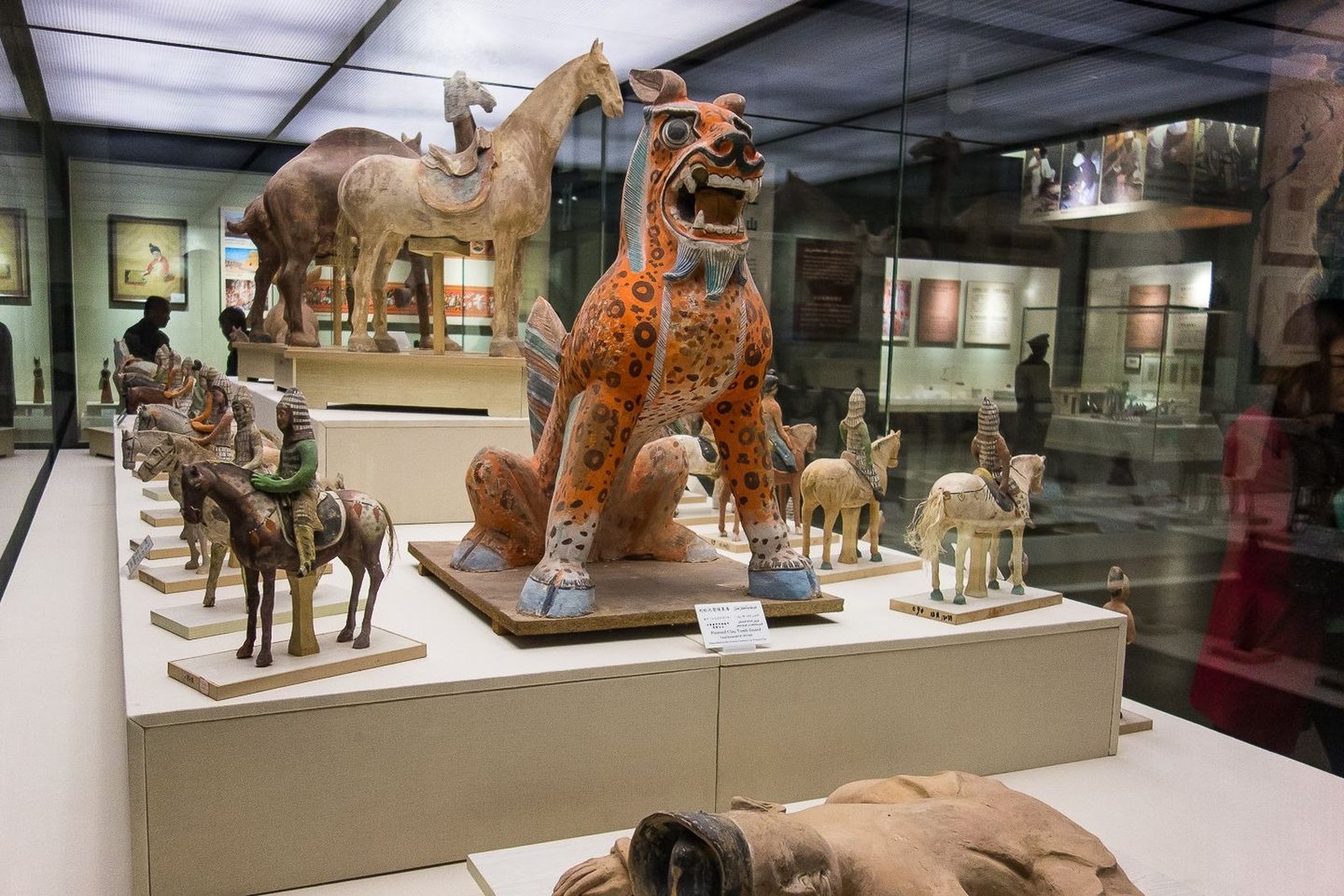
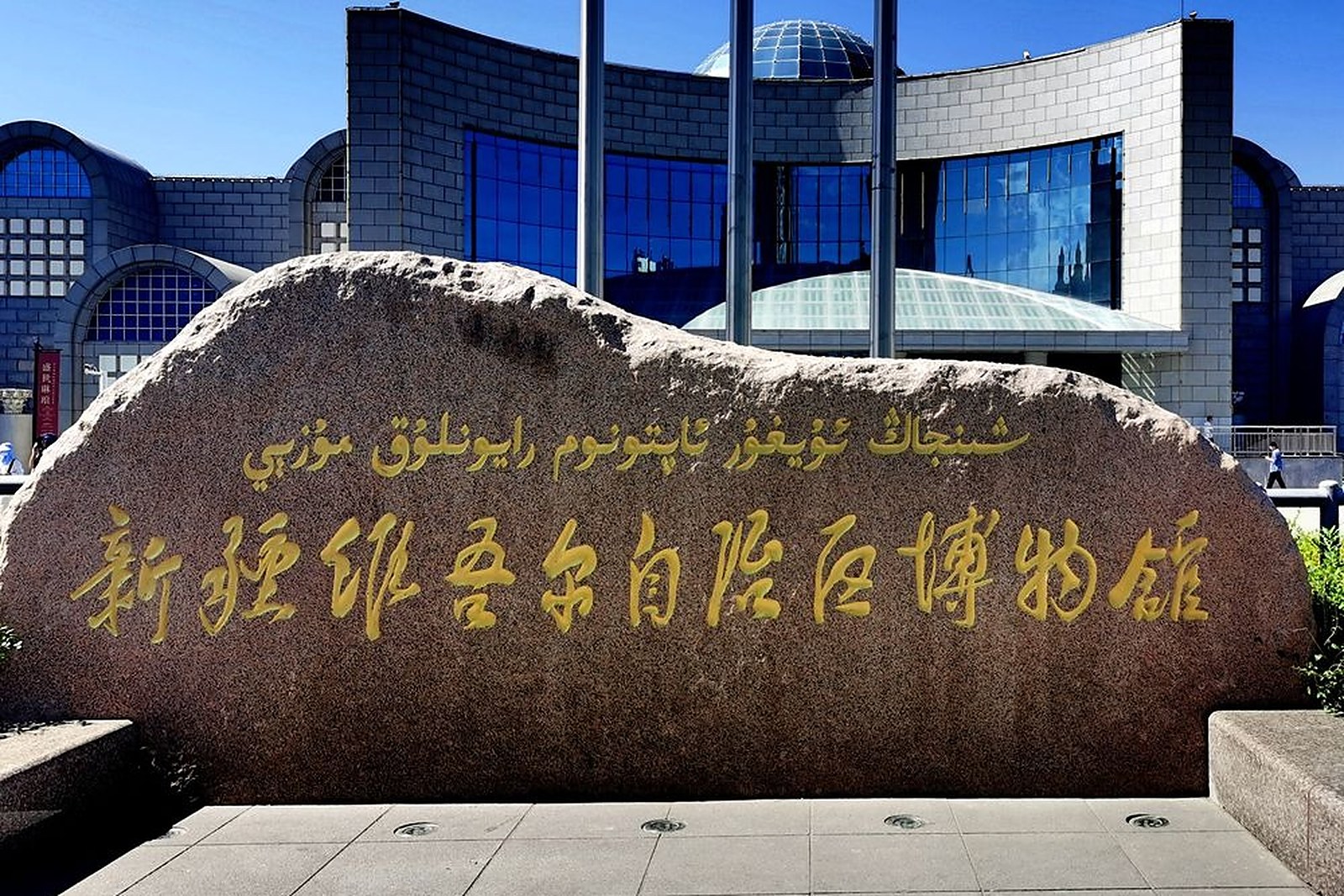
新疆维吾尔自治区博物馆 Xīnjiāng Wéiwú’ěr Zìzhìqū Bówùguǎn the Xinjiang Uygur Autonomous Region Museum stands on 西北路 Xīběi Lù Northwest Road in the north-west quarter of 乌鲁木齐市 Wǔlǔmùqí Shì Urumqi City, and it is the free, reservation-booked key to everything the road signs outside town merely gesture at – the oases, the caravans and the buried cities of the Tarim. Its galleries read like the Silk Road filed properly: Han-dynasty slips and silks, Tang figurines with Central Asian faces, rugs, documents and coins in a dozen scripts, and galleries of 民族服饰 mínzú fúshì ethnic costume that put the bazaar’s silk racks into a thousand-year context. The museum’s most famous resident is the 楼兰美女 Lóulán Měinǚ Loulan Beauty, a naturally mummified woman from the Tarim basin whose face has outlasted the civilisation around her by millennia, and the dry-climate preservation halls around her –织物 zhīwù textiles still holding their dye, food still recognisable on funerary tables – are unlike anything a humid-coast museum can show (worth confirming the details for the reservation system and which galleries are open, since halls rotate and renovations shift the layout). Entry is by free timed reservation with passport or ID, and the exhibition signage runs bilingual through the main halls.
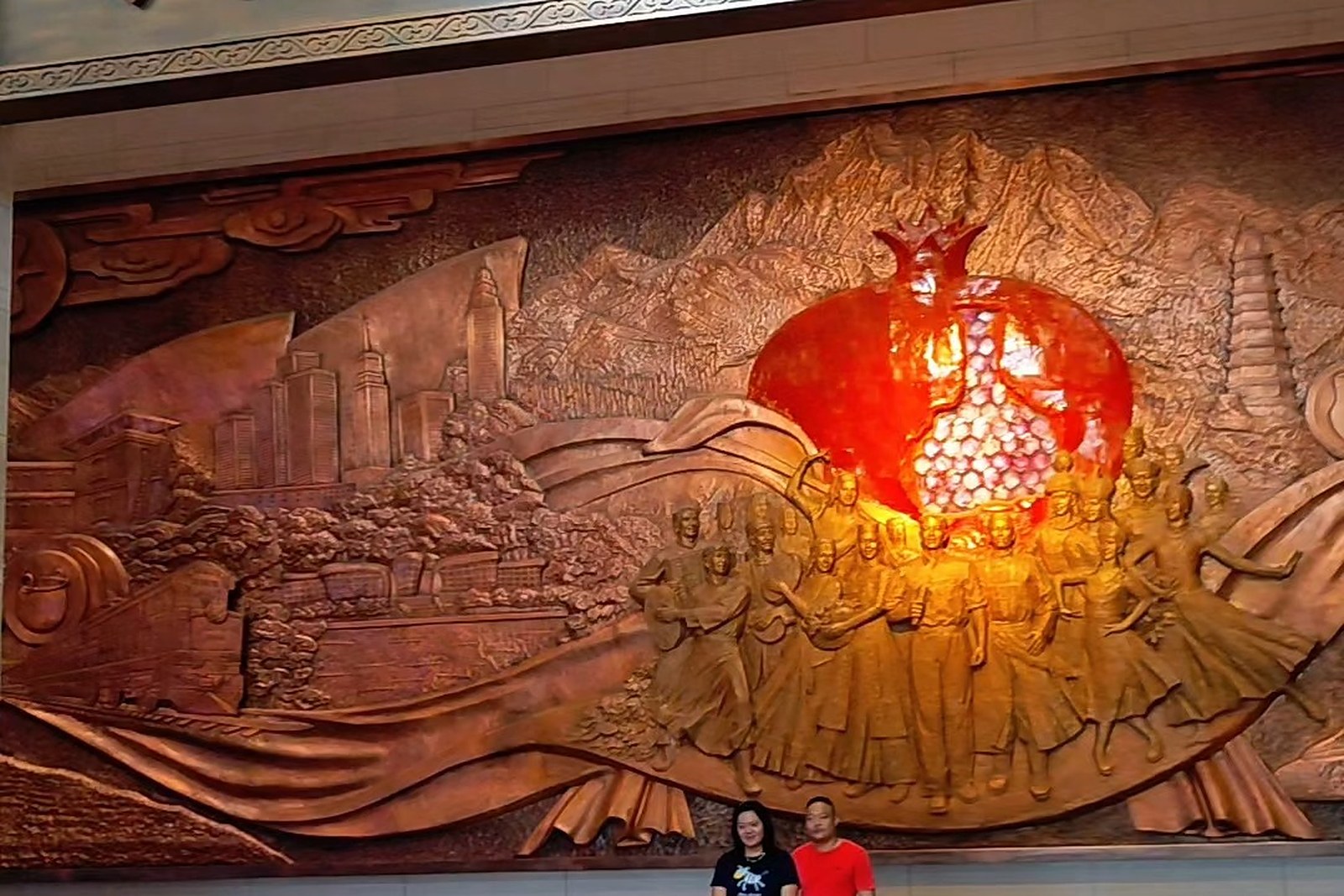
Two crowds file past the cases: passing travellers making a museum morning between train and flight, who come for the mummies and leave startled by the textiles, and serious students of the Silk Road who give the oasis-civilisation galleries a full day and still ask for more. The stock answer in kind: an air-conditioned half day out of the sun, one of the best ancient-textile collections anywhere, and the quiet shock of looking at a face older than the Great Wall’s best sections.
Call it honestly: the museum is a scholar’s treasure in a provincial package – canteens and gift shops are modest, some interpretation panels lean on summary rather than depth, and the most famous halls can queue on weekends as tightly as any attraction in town (worth confirming the details for English audio guides and current hall openings before planning the day around a specific gallery). What repays the visit: the preservation halls, which have no equivalent on the Chinese coast, the costume galleries that make the whole region legible in cloth, and the Loulan Beauty herself, whom no photograph quite prepares you for. Come on a weekday morning, book the reservation ahead, and bring a spare hour – the building eats time quietly and generously.
Practicalities
Nearly everything else on this Urumqi list trades a different mood on the same city: choose 红山公园 Hóngshān Gōngyuán Hongshan Park for the stairway skyline, 新疆国际大巴扎 Xīnjiāng Guójì Dàbāzhā the Xinjiang International Grand Bazaar for the bazaar energy, 天山大峡谷 Tiānshān Dàxiágǔ Tianshan Grand Canyon for the high-country day out and 水磨沟公园 Shuǐmògōu Gōngyuán Shuimogou Park for the spring-valley walk – four more doors into the same 乌鲁木齐市 Wǔlǔmùqí Shì Urumqi City. Once the day is planned, our Urumqi food map fills the eating hours.
Practicalities
Words and Names
flowcloud would say that the museum is where Urumqi explains itself – silks, scripts and a sleeping Tarim face under one roof on 西北路 Xīběi Lù – and that the honest move is to book the morning slot and give the textile halls the time the mummy queues steal, because the region’s real biography is stitched rather than sealed. All checked November 2026.
Getting there: The museum stands on 西北路 Xīběi Lù Northwest Road in the city’s 新市区 Xīnshì Qū New Urban District – buses along the avenue stop at the gates, and entry is free with reservation (worth confirming the details for the free-ticket booking, which the museum requires ahead of busy weekends); the 丝路 Sīlù Silk Road galleries fill the upper floors. All checked November 2026.