
Xintiandi: The Restored Shikumen Quarter of Stone-Gate Lane Houses Turned Cafés and Boutiques by Taiping Lake in Huangpu District, Shanghai
石库门开迎旧梦,梧桐影里入新时。Shíkùmén kāi yíng jiù mèng, wútóng yǐng lǐ rù xīn shí – The stone-gate doors open to greet old dreams; under the plane trees’ shadow one steps into a new hour.
新天地 Xīntiāndì Xintiandi is not a lane quarter that slowly grew its cafés — it is, plainly put, a designed conversion of shikumen housing: in the 太平桥 Tàipíngqiáo Taipingqiao area of 黄浦区 Huángpǔ Qū Huangpu District, the grey-brick 石库门 shíkùmén stone-gate terrace blocks were stripped back in the late 1990s and reopened around 2001 as a low-rise district of restaurants, boutiques and courtyards, the lane walls kept and the interiors rebuilt in glass. On 兴业路 Xīngyè Lù Xingye Road at number 76, the 树德里 Shùdélǐ house where the First National Congress met in 1921 now runs as a history museum. What you actually visit is an open-air mall in period costume — free to walk, priced to sit.
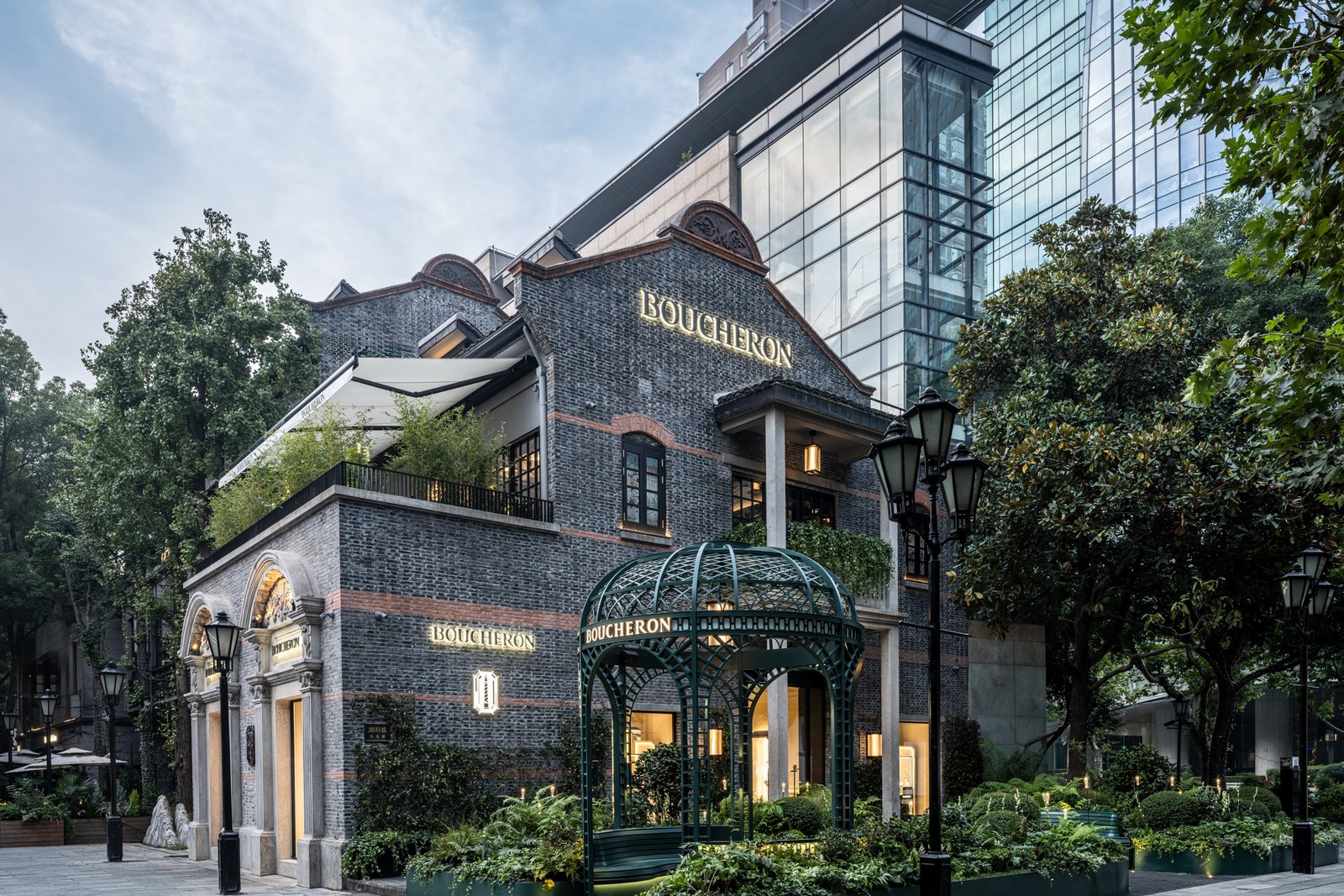
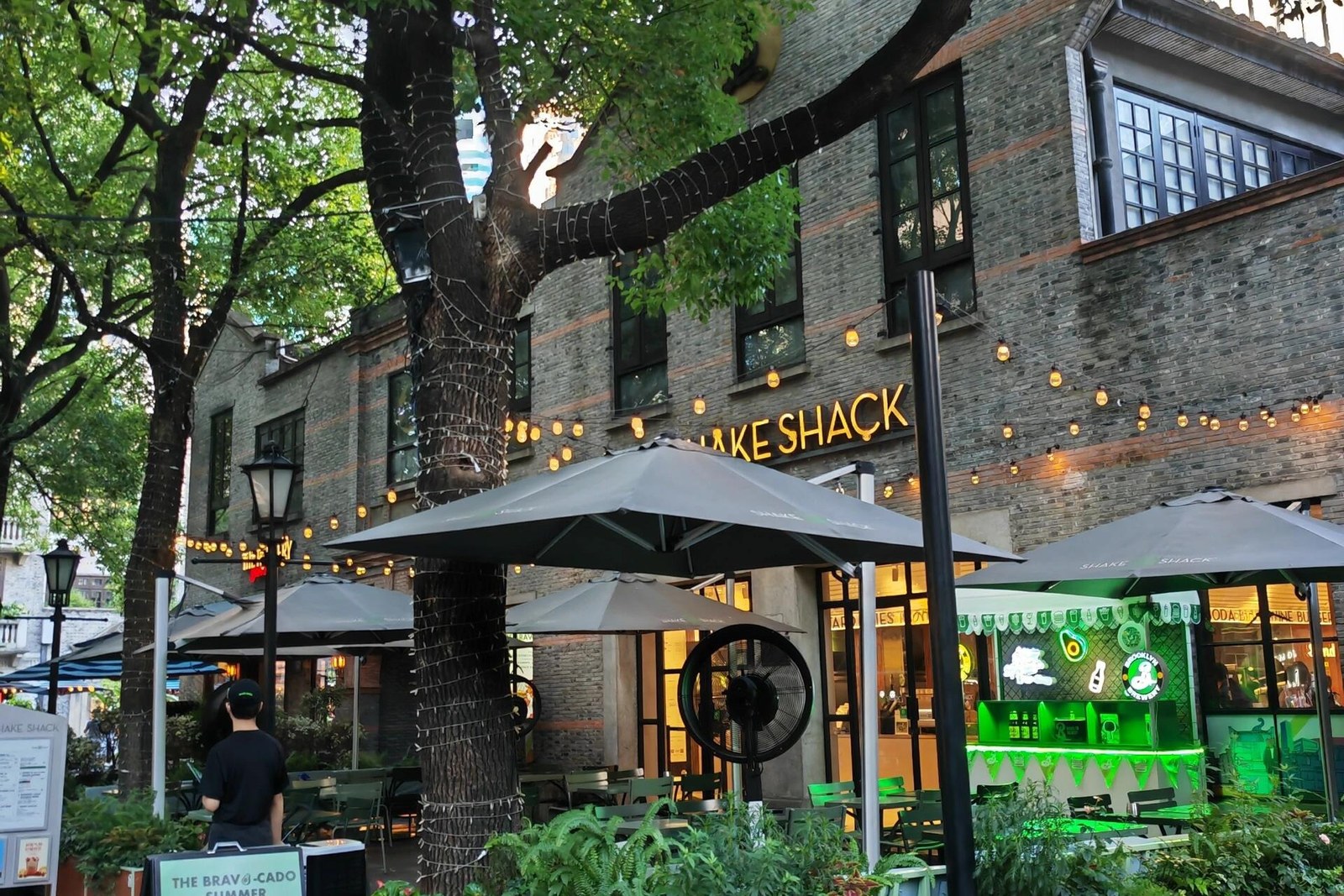
Call it honestly: walking the lanes costs nothing, and 新天地站 Xīntiāndì Zhàn Xintiandi station on Metro Lines 10 and 13 empties you straight into the north block; what costs is everything indoors — coffee, brunch and cocktails at premium-city prices, with queues at mealtimes. The brick shows best in spring and autumn daylight, while the social side starts after 19:00, when lantern strings and shopfront lights take over. The 1921 congress museum beside the south block keeps its own admission rules and often asks for a reservation (worth confirming the details). Give it an hour to circle both blocks, half a day if you sit down to eat.
The honest star is the detail at eye level — grey brick, red lintels, carved stone gateframes and dark timber shutters, the parts of shikumen architecture you could never study this closely in a living lane. What gets oversold is the phrase “old Shanghai”: the patina here is a restoration, and the authentic anchor is the 1921 museum rather than the brunch courtyards. What repays the effort is contrast — walk ten minutes east into the 老城厢 Lǎochéngxiāng old town and the same 1920s brick appears unrenovated and inhabited. Come for the layering of the place: gateframe, then the water at 太平湖 Tàipíng Hú Taiping Lake, then the tower skyline beyond.
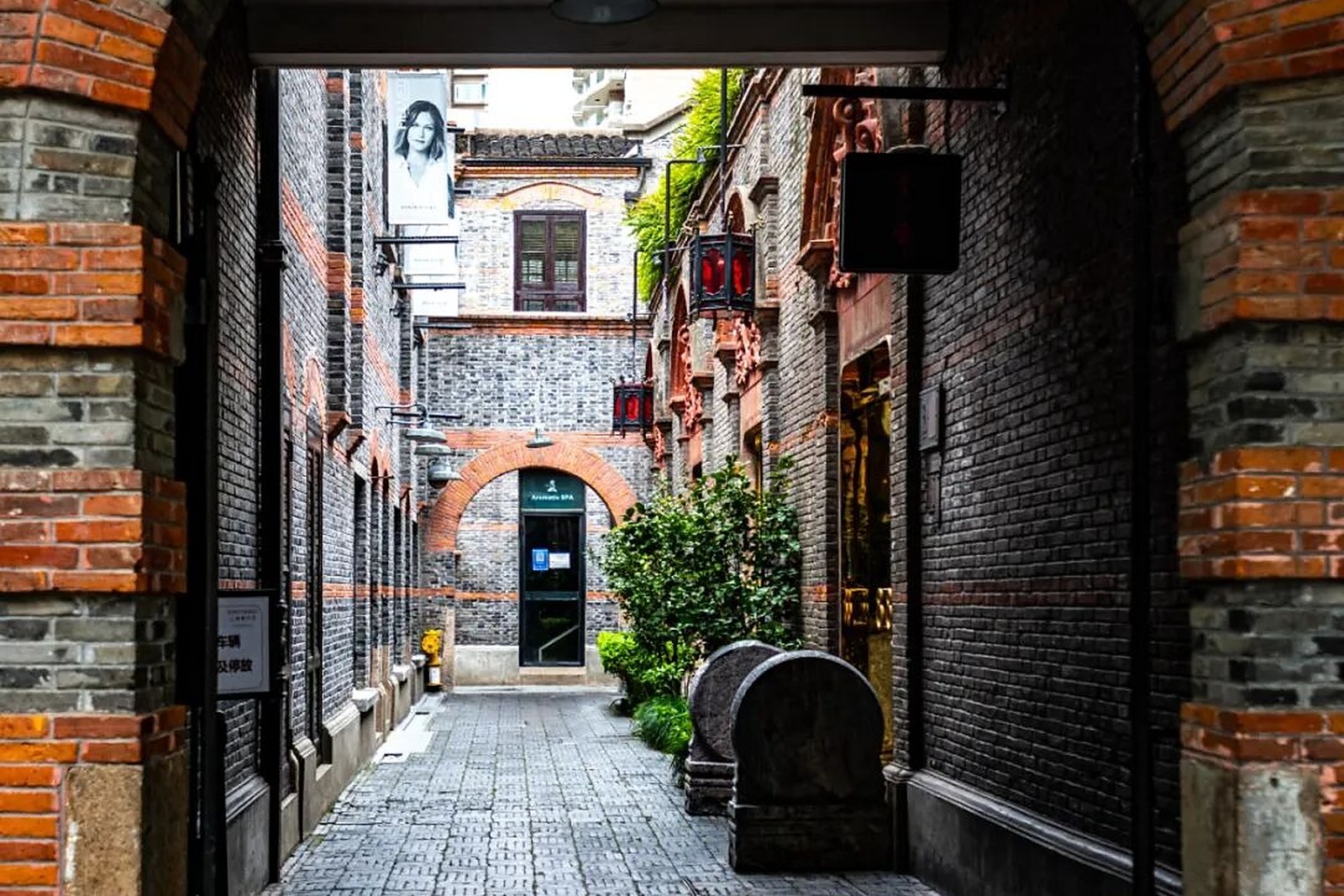
The self-aware postscript: I shared a long table with a young Shanghai architect who pointed her cup at a shophouse and said, “my grandfather grew up in a house like this with seven relatives and one tap — I am glad it is saved, and I flinch that nobody lives in it any more; both feelings fit in one coffee”. That is the visit in miniature. 新天地 Xīntiāndì suits whoever treats it as a comfortable, well-lit walk through rebuilt lane architecture first and a meal second, and exhausts anyone hunting unmediated street life or a quiet corner on a Saturday.
The rest of the district sits close: the bank façades of 外滩 Wàitān The Bund lie east toward the river, the Ming garden of 豫园 Yùyuán Yuyuan Garden and its bazaar northeast in the 老城厢 Lǎochéngxiāng old town, the neon of 南京东路步行街 Nánjīng Dōnglù Bùxíngjiē Nanjing Road East runs north between People’s Square and the Bund, and the studio maze of 田子坊 Tiánzǐfāng Tianzifang waits south off 泰康路 Tàikāng Lù Taikang Road — all stitched into the same 黄浦区 Huángpǔ Qū Huangpu District.
Practicalities
- Rating: ★★★☆☆ — shikumen brick at eye level with a museum anchor and a lake beside it; the architecture detail outranks the shopping; come in daylight, stay for dinner if the budget allows.
- Tickets: Free to enter and walk; food, drink and the 1921 congress museum charge or reserve separately (worth confirming the details for museum hours and reservations).
- Address: 新天地 Xīntiāndì, 兴业路 Xīngyè Lù Xingye Road 76 and the surrounding blocks, 黄浦区 Huángpǔ Qū, Shanghai — the Taipingqiao blocks beside 太平湖 Tàipíng Hú Taiping Lake.
- Time needed: One to two hours to circle both blocks and the lake; half a day adding a meal or the museum.
Words and Names
新天地 Xīntiāndì Xintiandi · 石库门 shíkùmén stone-gate terrace house · 太平桥 Tàipíngqiáo Taipingqiao · 太平湖 Tàipíng Hú Taiping Lake · 兴业路 Xīngyè Lù Xingye Road · 树德里 Shùdélǐ the Shudeli houses · 老城厢 Lǎochéngxiāng the old town · 新天地站 Xīntiāndì Zhàn Xintiandi station · 弄堂 nòngtáng lane · 黄浦区 Huángpǔ Qū Huangpu District
flowcloud would say that 新天地 Xīntiāndì is shikumen architecture with the interiors swapped for glass — a rebuilt 太平桥 Tàipíngqiáo lane quarter of 黄浦区 Huángpǔ Qū where grey brick and stone gateframes frame cafés and boutiques, with the 1921 congress house on 兴业路 Xīngyè Lù as the genuinely historical anchor — and that the honest move is a spring or autumn daylight loop out to 太平湖 Tàipíng Hú Taiping Lake before dinner, because the courtyards price like a premium city and the old-Shanghai label oversells the restoration (worth confirming the details for museum reservations), the postcard patina is the poster half and the eye-level brickwork is the real half, and the quarter repays whoever reads it as design history rather than antiquity. All checked October 2026.
Getting there: Metro Line 10 or 13 to 新天地 Xīntiāndì Xintiandi station, exits 1 to 3, opens directly onto the block (worth confirming the details for which exit has step-free access); from People’s Square it is a twenty-minute walk south through the old French Concession side streets, with the 中共一大会址 Zhōnggòng Yīdà Huìzhǐ First CPC Congress Site at the block’s north edge. All checked October 2026.