
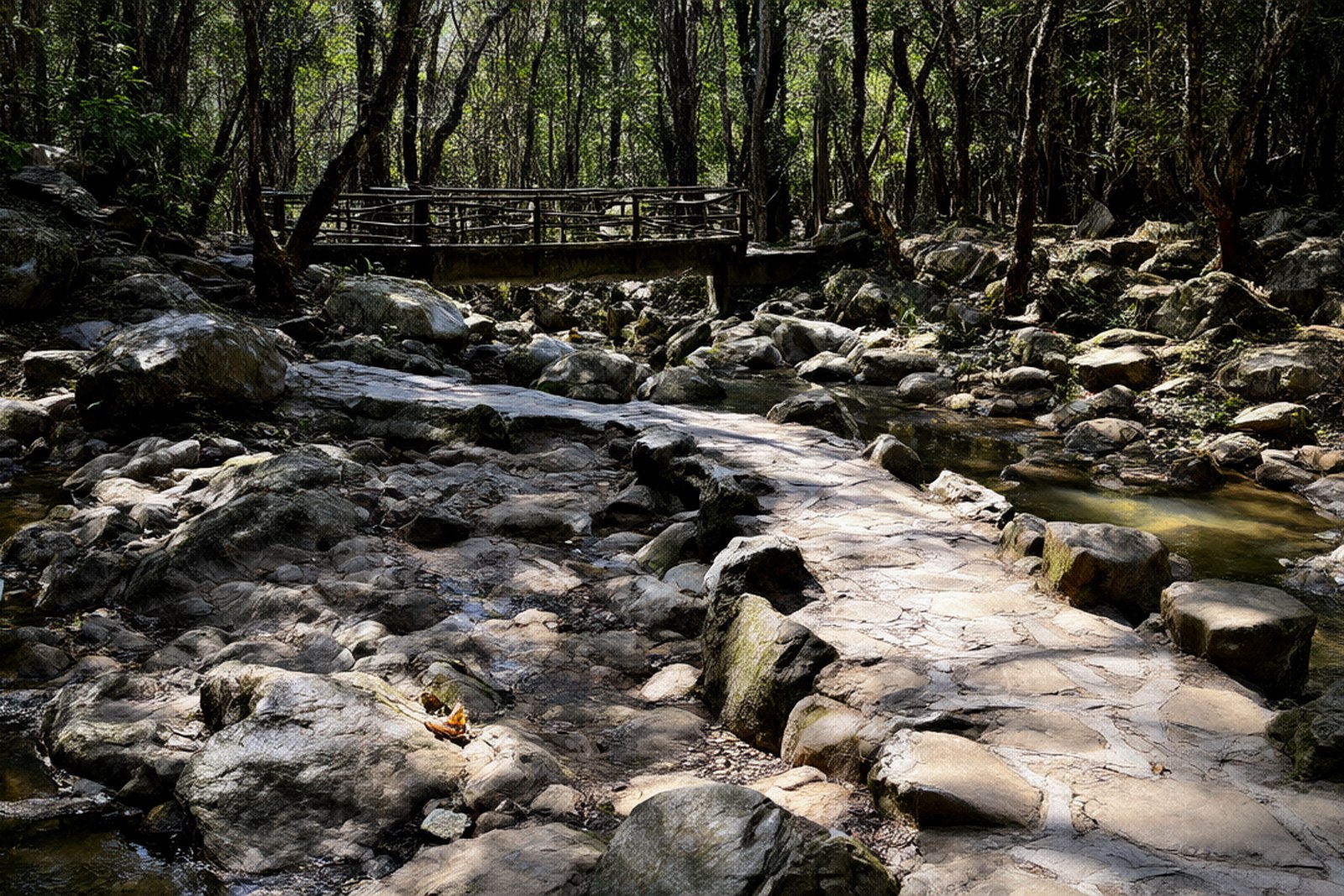
天马山 Tiān mǎ shān, the Mountain of the Heavenly Horse, is a ridge of about a thousand and eighty metres on the border between 信宜市 Xìn yí shì and 广西, in the far north of 茂名市 Mào míng shì, and the village inside the scenic area holds a few hundred people. The name is what the county puts on the map; what the place actually is, is a valley system under secondary forest on the frontier of two provinces, with a hill village in it, a river running out of it, and a set of streams and pools along the walking routes. It is a 3A-level scenic area, which in Chinese terms means it is a proper site with a gate and a path rather than a wild mountain, and the entrance is at 旺将村 Wàng jiàng cūn in 北界镇 Běi jiè zhèn, about twenty kilometres north-west of the county town.
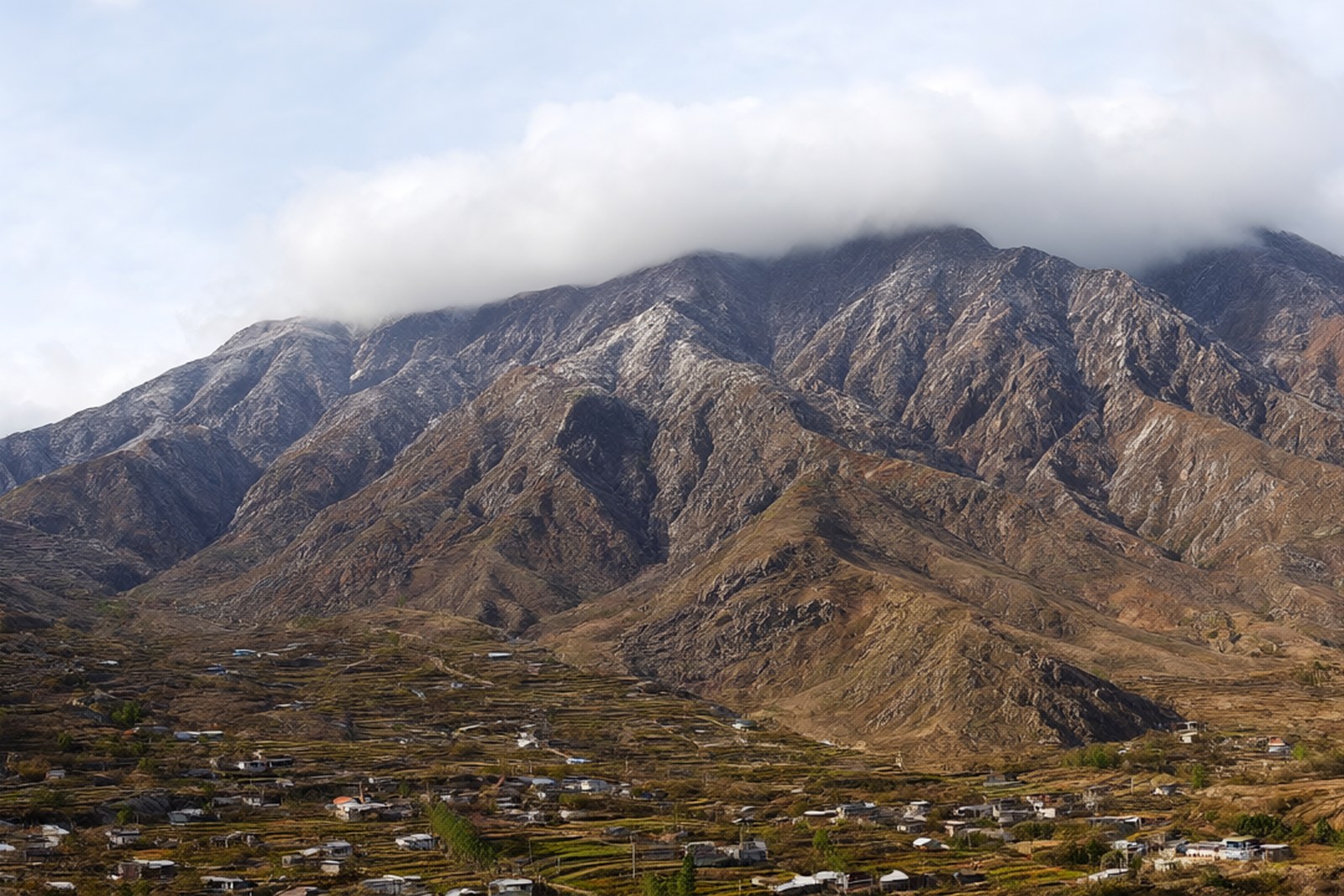
The thing the county talks about most is the climate, and it has a case. The ridge sits at the meeting point of two weather systems and is high enough to hold its own conditions, and the result, in the county’s phrasing, is 夏无酷暑、冬无严寒 xià wú kù shǔ, dōng wú yán hán – no killing heat in summer, no hard frost in winter – which is a real claim in a province that is otherwise brutally hot from May to September. The forest is secondary rather than primary but it is dense and continuous, the streams run cold all year, and the air at the top is measurably cooler than the valley floor. The village’s reputation for long life is part of the county’s literature rather than a statistic, but it is a village of a few hundred people at altitude with clean water, and the local name for it is 寿星村 shòu xīng cūn, the village of long life.
The county’s products come down off this ridge and the surrounding ones: 八角 bā jiǎo, star anise, which is the flavour the whole of the hill cooking is built on; 鸡骨草 jī gǔ cǎo, the herb that goes into the local soups; 鸭脚粟 yā jiǎo sù, a small-seeded millet; 氹仔鱼 dàng zǎi yú, the grass carp raised in ponds beside the houses, a practice the county’s records date to the Tang; green tea from the slopes; and the black pigs and the 怀乡鸡 huái xiāng jī that walk around the farmyards. None of it is a restaurant menu and all of it turns up on one if you ask, which is the argument for eating in the village rather than driving back down for dinner.
The county’s other mountains are within an hour of this one and make a natural pairing. 石根山 Shí gēn shān, at nine hundred and eighty-eight metres, is described as the highest stone massif in western 广东, a single bare peak rising out of the 云开 Yún kāi range with a wild maple grove on it, a suspended glass walkway and a cable car; the county quotes a negative-ion count of eight thousand five hundred per cubic centimetre, which is the highest figure it has. 马安竹海 Mǎ ān zhú hǎi is ten thousand mu of bamboo, and 虎跳峡 Hǔ tiào xiá is a gorge on the 黄华江 Huáng huá jiāng at 怀乡镇 Huái xiāng zhèn with a boat trip and a water park. The old county town at 镇隆镇 Zhèn lóng zhèn has the walled lanes of the 窦州古城 Dòu zhōu gǔ chéng and the 镇隆杨桃鸭 zhèn lóng yáng táo yā, the six-hundred-year-old starfruit duck that is the county’s other signature dish. All of it needs a car.
Practicalities
Tickets. 天马山 charges an admission fee of around ¥50 for an adult, with the other mountains and the bamboo sea in the same range of ¥30 to ¥60; the glass walkways, cable cars and rafting on the individual sites are charged separately, and combination tickets are usually the better buy if you are doing more than one.
Opening hours. The scenic areas keep roughly eight in the morning to half past five in the evening, and the walking routes take three to five hours depending on how far up you go; the streams and pools are at their best after rain, and the paths get slippery in a downpour, so the site closes during heavy weather. The village’s own guesthouses take overnight guests, which is the only way to be on the mountain early.
Getting there. 天马山 is at 旺将村 in 北界镇, 信宜市, in the north of 茂名市, about twenty kilometres from the county town and an hour and a half to two hours by road from 茂名; the nearest railhead is 茂名站 Mào míng zhàn on the 深湛 railway and the county sits on the 包茂 expressway corridor. There is no public transport to the individual trailheads, so a car or a hired driver is the practical way in, and the same car is needed to link it with 石根山 and the bamboo sea.
Closing day. There is no weekly closing day; the area is open every day in season and closes only for heavy weather, and out of season some of the facilities, the cable car and the rafting in particular, run at weekends rather than daily. The plum harvest in June is the one time the roads and the car parks fill up, and the county’s own advice is to come on a weekday and outside the holidays.
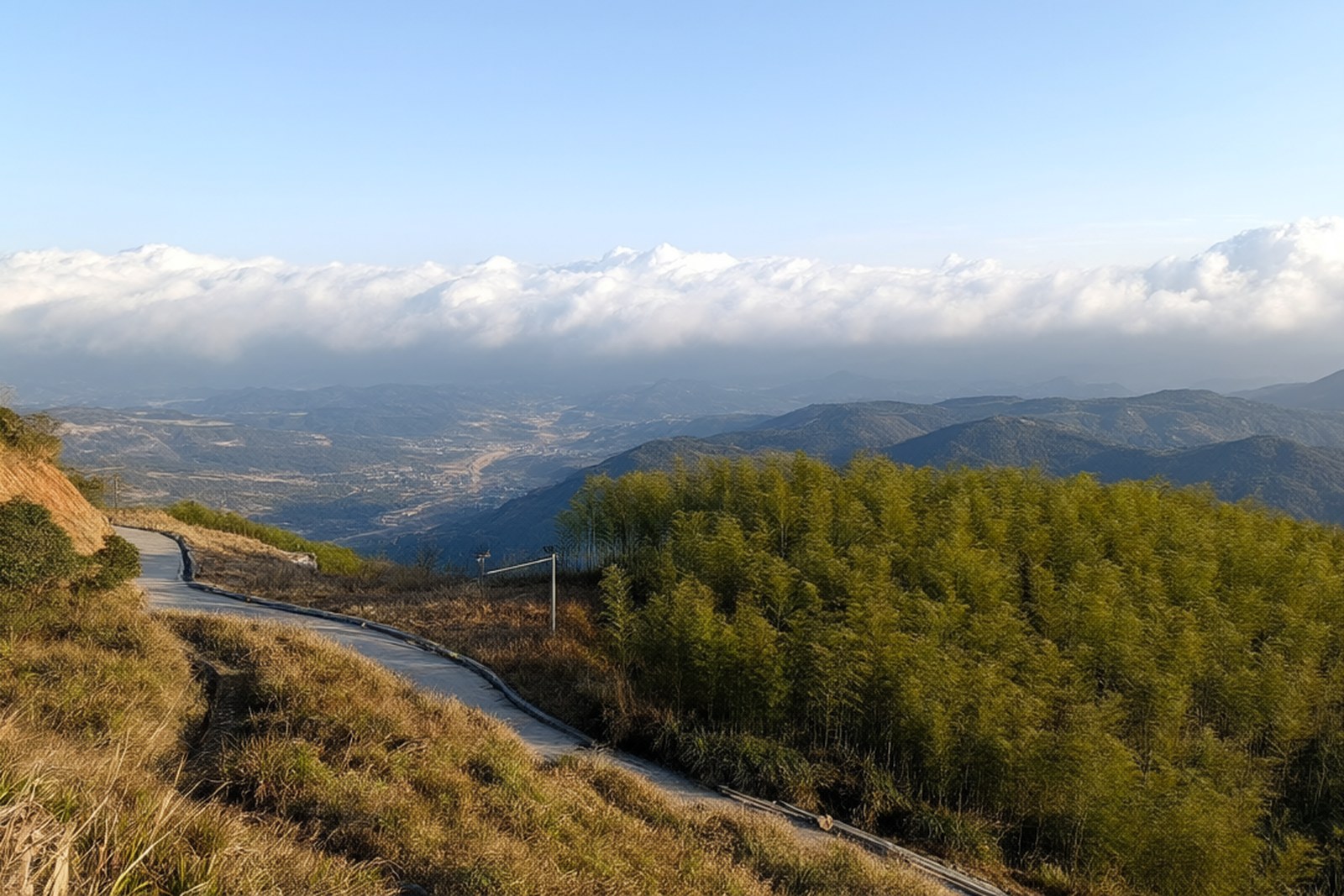
flowcloud would say that a province which spends five months of the year being uninhabitable without air conditioning keeps a corner of itself at a thousand metres where the streams run cold, and calls the place after a horse that never landed there.
Getting there: 天马山 is at 旺将村 Wàng jiàng cūn in 北界镇 Běi jiè zhèn, in the north of 信宜市 and of 茂名市, about twenty kilometres from the county town and an hour and a half to two hours by road from 茂名; 茂名站 Mào míng zhàn on the 深湛 railway is the nearest railhead, the county is on the 包茂 expressway, and a car is needed for the last stretch and for 石根山, 马安竹海 and the old town at 镇隆镇.