
秀湖公园 Xiùhú Gōngyuán, Xiuhu Park, is the free park on 黛山大道 Dàishān Dàdào Daishan Avenue at the west edge of the county town of 璧山区 Bìshān Qū, Bishan District, and it is the district’s showpiece: around five hundred mu of lake and wetland under a skyline of antiqued pavilions and covered bridges, built on ground the writer Guo Moruo once captioned with the phrase 黛山秀湖 – dark hills, elegant lake – that the district has since adopted as its own. The park carries the district’s history as scenery: the 状元桥 Zhuangyuan Bridge, the antiqued building group that stages the county’s twelve centuries, and the night fountain. This page is written as what the park actually is – the district’s main sight, its evening programme and its identity at once.
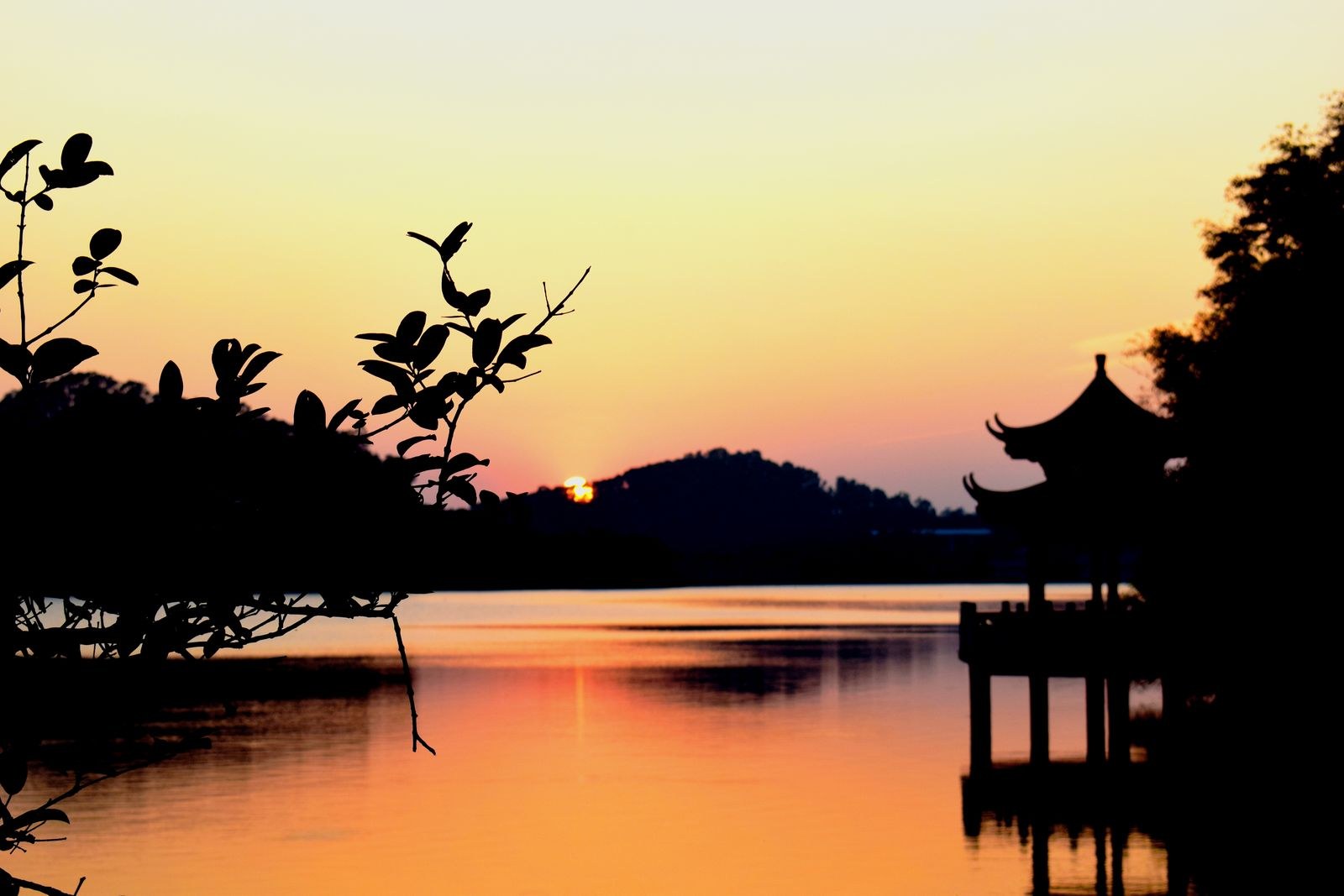
The lake is the ground floor of the design. Five hundred mu of water and wetland sit in a shallow bowl the town wraps around, and the path system – the district counts some twenty kilometres of waterside, forest and elevated walkways – stitches the shores into loops a visitor can shorten or extend at will. The antiqued building group is the park’s second layer: some forty-three thousand square metres of pavilions, galleries and courtyards built in the antique manner to stage the county’s history, from the 757 founding to the two Song-dynasty examination champions, 冯时行 Feng Shixing and 蒲国宝 Pu Guobao, whose names the park carries on its signature bridge. The phrase 黛山秀湖 does the naming work for all of it – the district quotes Guo Moruo’s caption on its signage literature as the park’s founding idea, and the park is the phrase built in water and timber.
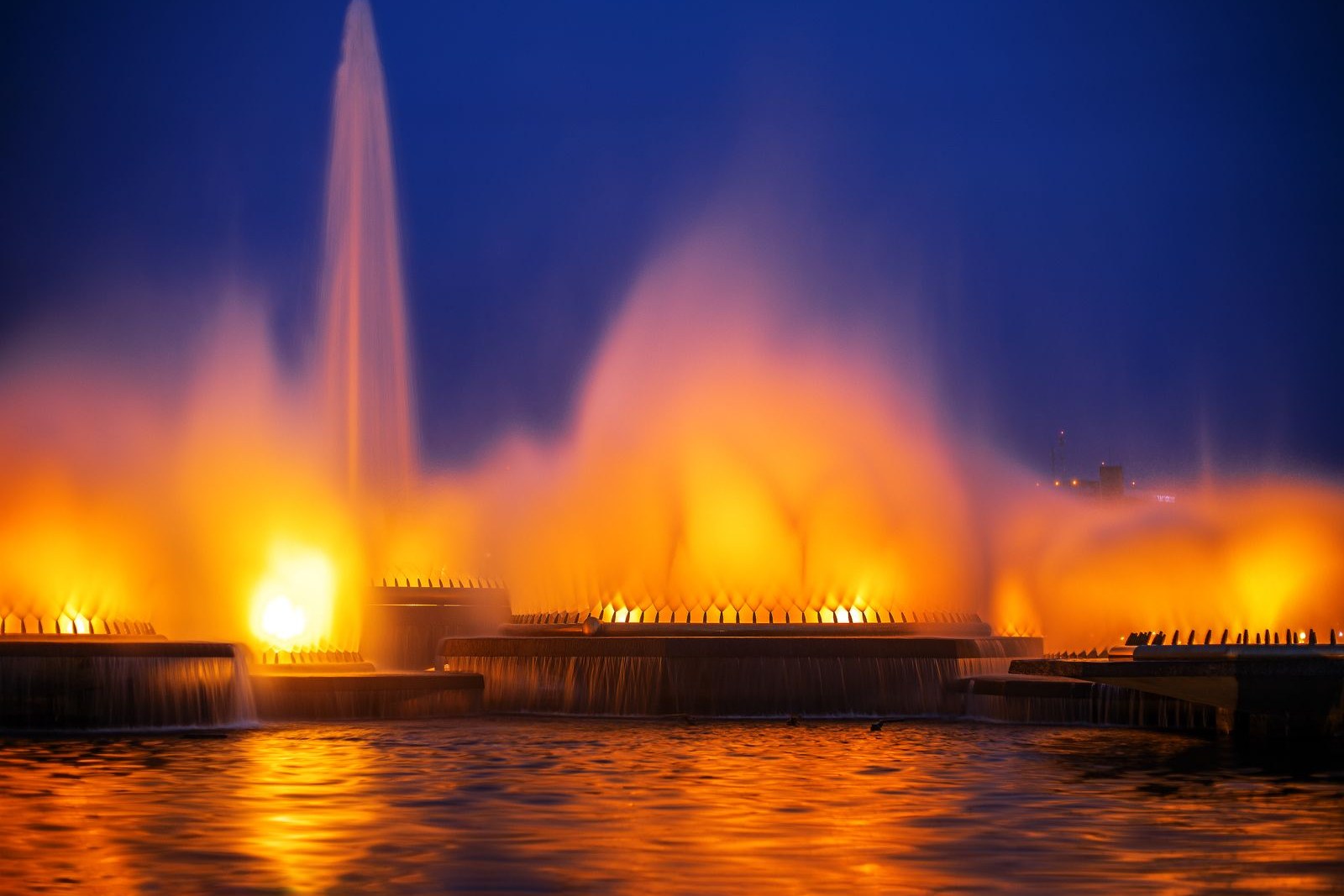
The evening is the park’s second shift. After dark the lake runs the laser music fountain – a sixty-eight-metre jet array choreographed to light and sound – and the antiqued roofs light along the waterline, which converts the park from a day walk into the county town’s night programme; the locals treat the fountain nights as the weekend’s public event, and the bridges and terraces fill for it. The family trade has its own anchor nearby – the 枫香湖 children’s park on the far side of the water is the free play-equipment park that makes the district a family day out – and the park’s calendar, the lantern festivals and the seasonal flower plantings, keeps the repeat traffic the metro delivers. A park this central to a district’s self-description is rare; a park this central that is also free is the county-town bargain the page is describing.
What the record supports is the park, the avenue, the water figure, the path total, the antiqued floor area, the fountain height, the two champions’ names and the Guo Moruo caption; what it does not support is any ticket figure (the park is free and the page says so), any ranking, or any claim about the fountain’s schedule beyond “night shows”, and none is invented here. The 状元桥 name carries the examination-champion story the district leads with, and the bridge is where the county’s self-image – 巴渝名邑, the famous town of Ba – is standing in timber over the water. A visitor reads the park in one loop: bridge, pavilions, wetland edge, and the fountain at dark.
The park also anchors the batch. The wetland down the road is the botanical half of the same civic idea, the lake on the northern mountain is the wild version of the same water, and the church and the museum are the two sights the county’s ordinary parks cannot supply. Xiuhu is the district’s front room, and the rest of the travel pages are the rooms behind it. All checked October 2026.
Words and Names
秀湖公园 Xiùhú Gōngyuán, Xiuhu Park, on 黛山大道 Dàishān Dàdào Daishan Avenue in 璧山区 Bìshān Qū, Bishan District: about five hundred mu of lake and wetland, some twenty kilometres of waterside and forest paths, and around forty-three thousand square metres of antiqued buildings including the 状元桥 Zhuàngyuán Qiáo Zhuangyuan Bridge carrying the names of the Song-dynasty examination champions 冯时行 Feng Shixing and 蒲国宝 Pu Guobao. The district quotes 郭沫若 Guo Moruo’s phrase 黛山秀湖 dài shān xiù hú, dark hills and elegant lake, as the park’s founding caption, and the park runs a sixty-eight-metre laser music fountain at night. Entry is free; the 枫香湖 children’s park is the family neighbour on the water’s far side. No ticket figure or fountain timetable is on the record consulted beyond the night shows, and none is invented here.
What the Locals Know
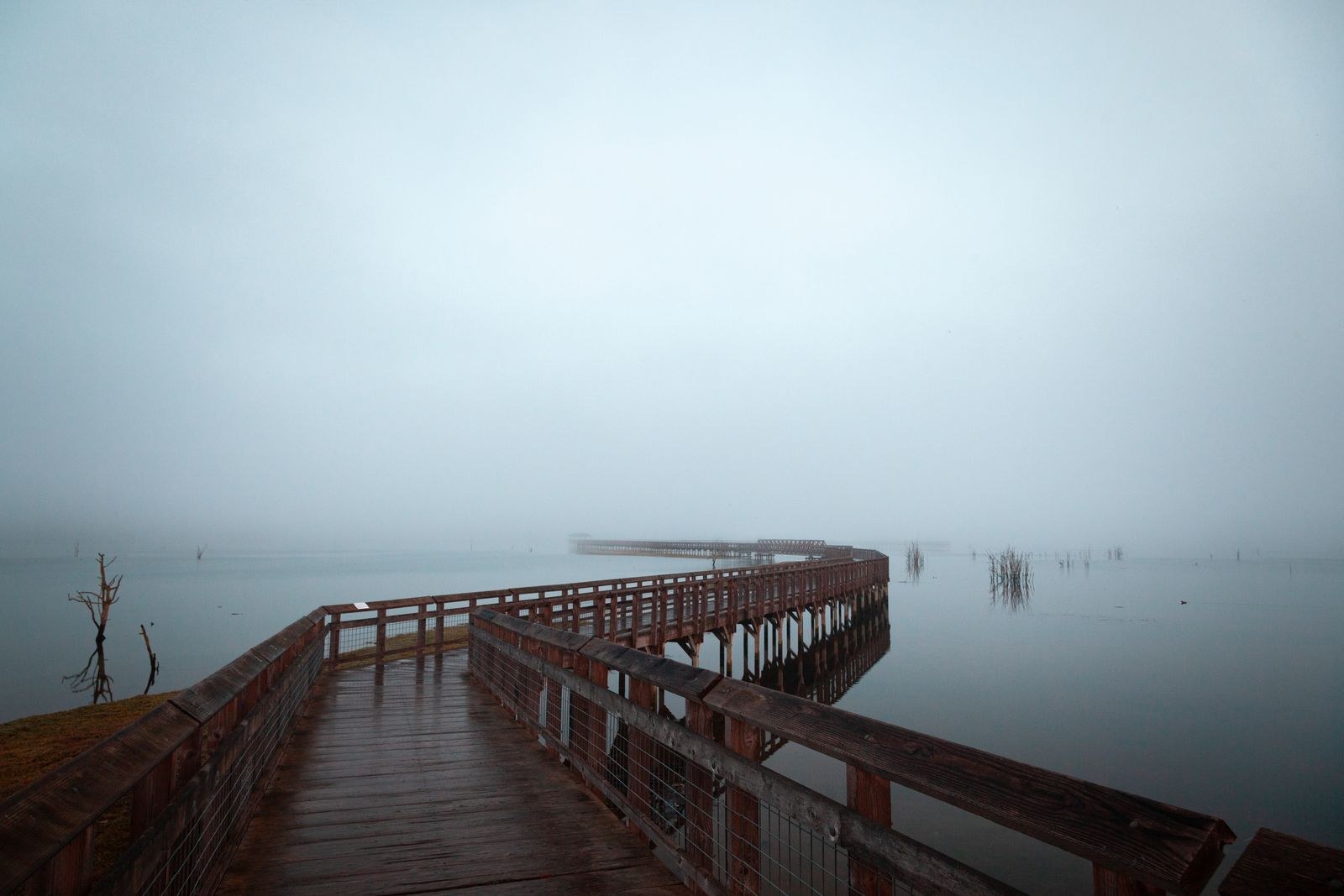
The local knowledge is the loop and the clock. The park rewards the local’s timing: early morning is the tai-chi and walking hour with the mist still on the water, late afternoon is the golden-light hour for the bridges, and the fountain night is its own trip – the terraces fill, the kids claim the front rail, and the walk back through the lit antiqued streets is half the evening. The second piece is the wet-weather swap: rain closes the ridge paths but opens the galleries and corridors of the antiqued group, and locals simply move the loop indoors. The family day runs park in the morning, children’s park through the middle, fish dinner in the old streets, fountain at dark – and the metro makes all four legs car-free. What the record does not carry is any fountain timetable or event calendar worth quoting, and the page declines both; the district posts the show nights, and the show is worth planning a weekend around.
Practicalities
Tickets: None – the park is free at the gate, and the fountain nights are free public programme rather than a ticketed show; no charge, deck fee or timetable price is on the record consulted beyond the night-show schedule the district posts, so none is invented. The family neighbour, the 枫香湖 children’s park across the water, is likewise a free gate, which is what makes the district a family day out.
Opening hours: All day as a municipal park, with the lake paths and the antiqued group open through daylight and the laser music fountain running after dark on the district’s posted show nights. The practical clock is the local’s: early morning for the mist and the tai-chi hour, golden hour for the bridges, and the fountain night as its own trip – the terraces fill for it and the walk back through the lit streets is half the evening.
Closing day: None posted – a municipal park of this rank does not close on a weekday, and no weekly rest is on the record consulted. The weather swaps rather than the calendar are the real limit: rain closes the ridge paths but opens the galleries and corridors of the antiqued group, and locals simply move the loop indoors, which is why a wet weekend in Bishan is a reorganised itinerary rather than a cancelled one.
Getting there: The park is on 黛山大道 Dàishān Dàdào Daishan Avenue at the west edge of the county town, 璧山区 Bìshān Qū, Bishan District – free to enter and reachable by Metro Line 1 plus a short ride, with everything from the 状元桥 Zhuangyuan Bridge to the wetland edge inside one walking loop. All four legs of the family day – park, children’s park, fish dinner, fountain – run car-free off the metro, which is the access fact the whole page rests on.
flowcloud would say that Xiuhu Park is the district’s front room – five hundred mu of lake on 黛山大道 Daishan Avenue carrying 郭沫若 Guo Moruo’s 黛山秀湖 caption, the 状元桥 Zhuangyuan Bridge with Feng Shixing and Pu Guobao’s names, forty-three thousand square metres of antiqued buildings and a sixty-eight-metre laser fountain at night, free at the gate in 璧山区 Bishan District – and that the correct visit is a loop at golden hour and a return for the fountain, because the park is both the day’s walk and the town’s night out. All checked October 2026.