
青瓦白墙,照壁荷香。Qīngwǎ báiqiáng, zhàobì héxiāng – Grey tile and white wall, the screen wall scented with lotus.
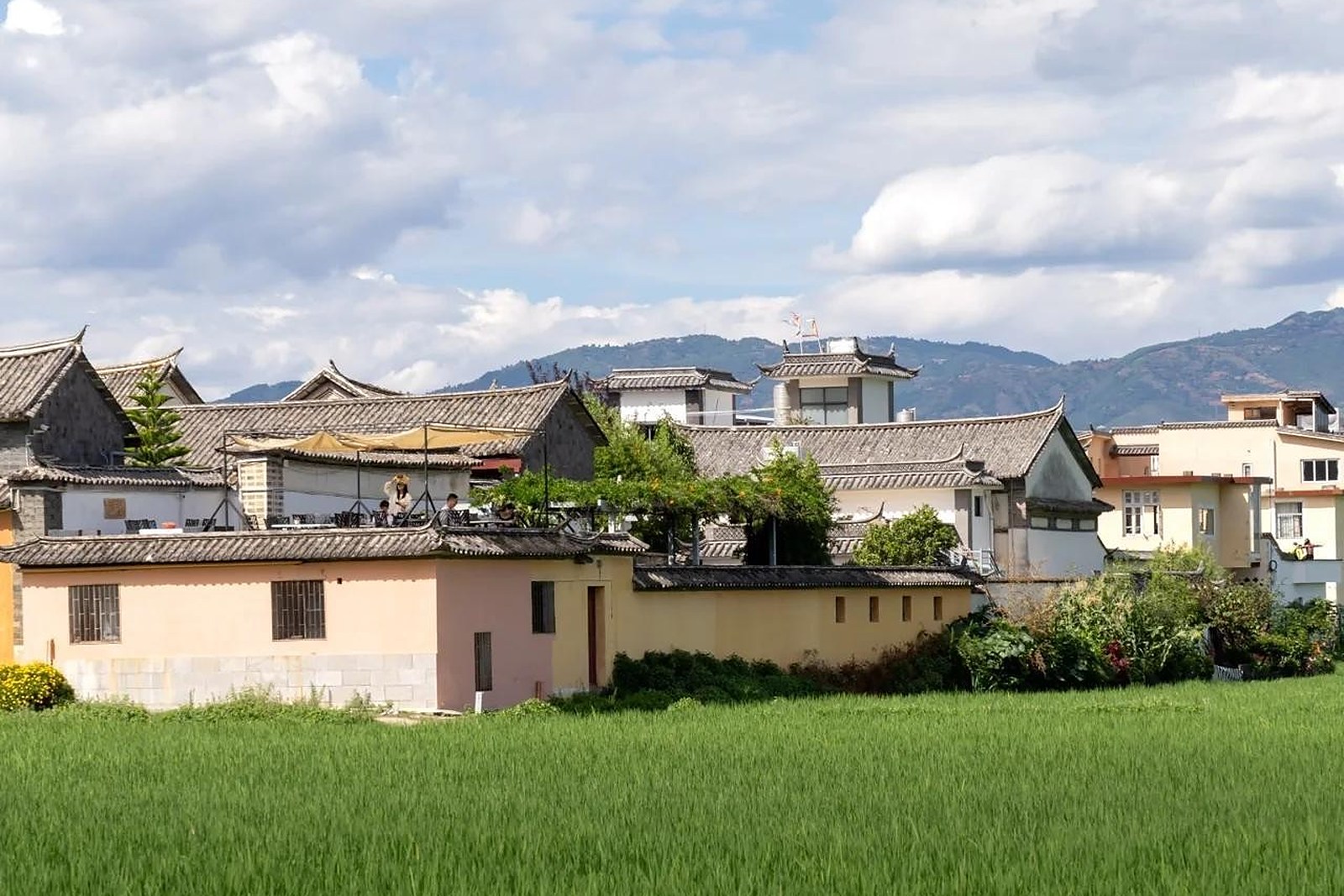
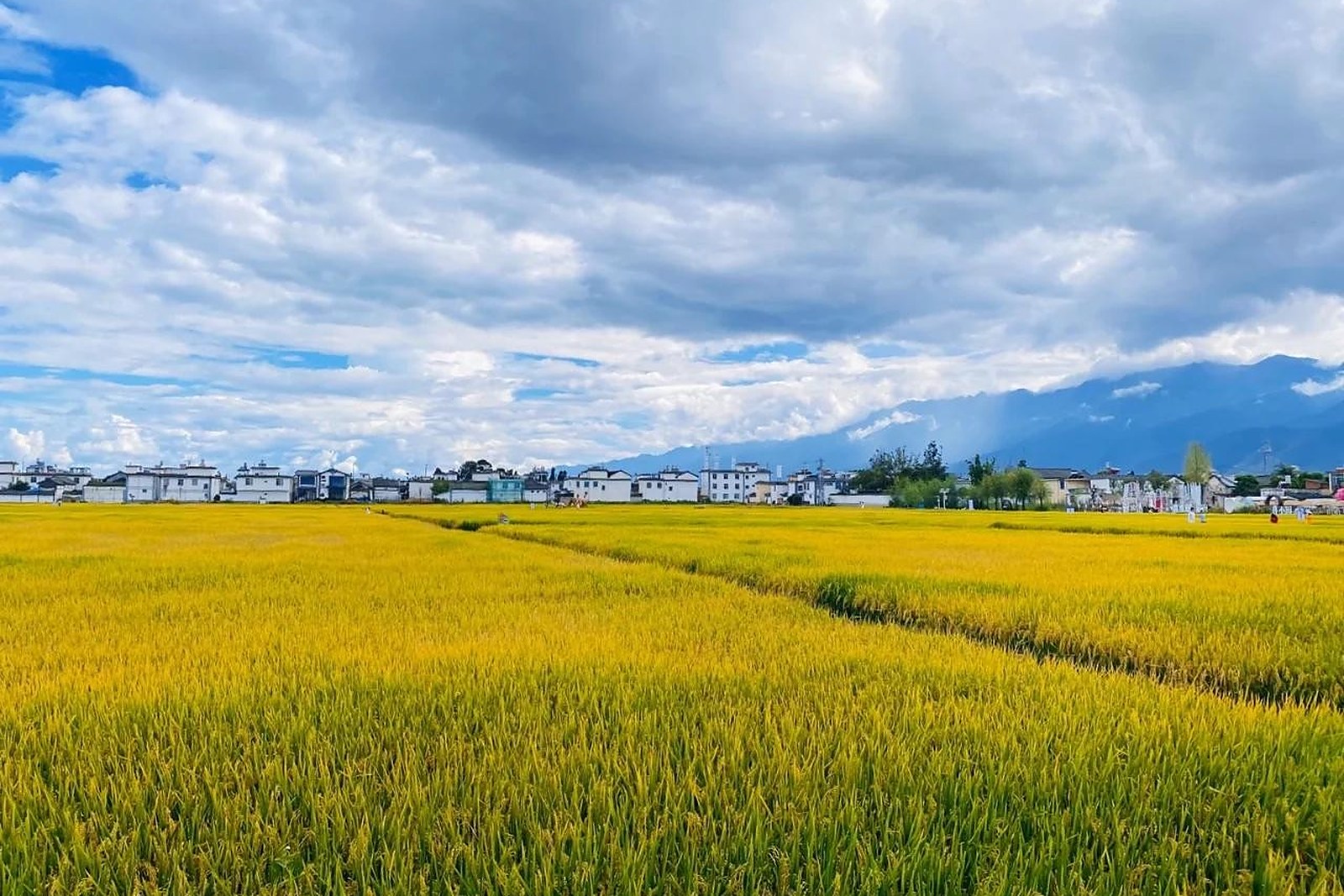
喜洲古镇 Xǐzhōu Gǔzhèn Xizhou Old Town is the Bai town the plain grew rich on – about 18 km north of the old town on Erhai’s west shore, free and open around the clock, built of 三坊一照壁 Sānfáng Yīzhàobì and 四合五天井 Sìhé Wǔtiānjǐng courtyard houses with grey tile, white wall and painted 照壁 zhàobì screen walls. The town itself is the exhibit; the houses inside it charge. 严家大院 Yánjiā Dàyuàn the Yan compound – the showpiece courtyard, with 三道茶 Sāndàochá the three-course tea ritual – runs about 22 yuan (platforms quote 21-25; combo tickets with tea and 扎染 zārǎn tie-dye experiences run 60-90), 08:30-18:00. Behind the last lane the fields begin: rice and wheat under the Cangshan wall, green in early summer and gold by autumn, with the 海舌 Hǎishé “sea tongue” peninsula pushing into the lake two km north. The honest shape is a working town with an address, not a gate with a queue.
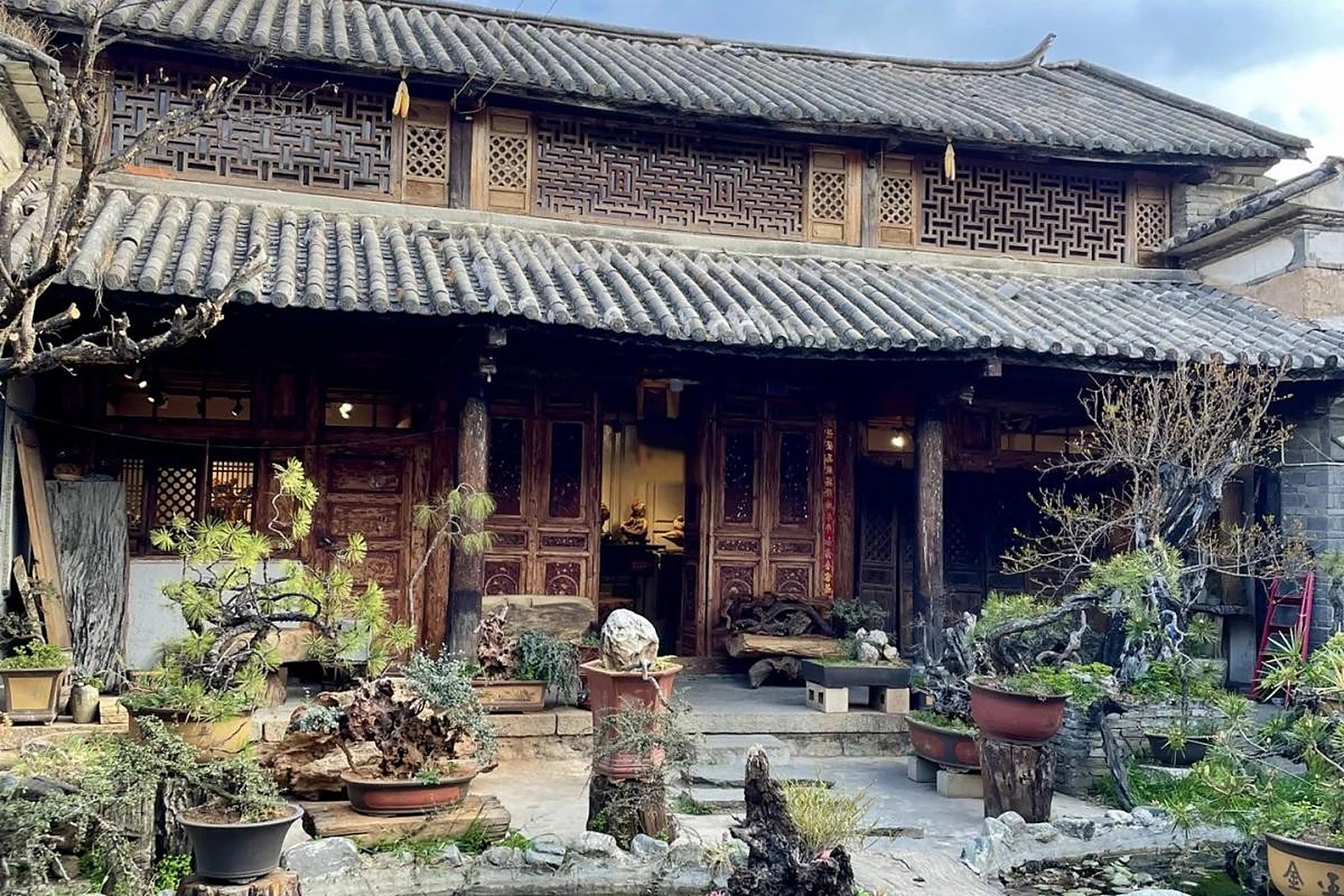
The money was Republican. Xizhou’s 商帮 Shāngbāng merchant houses traded up and down the old tea-and-horse roads – the 严 Yán and 董 Dǒng families are the compounds that survived – and the architecture is that wealth banked in stone and paint: 木雕 mùdiāo woodcarving, 彩绘 cǎihuì polychrome, glass windows imported when the caravans came back from further away. The town occupies the site of the Nanzhao-era 大厘城 Dàlíchéng, one of the kingdom’s ten 赕 dǎn districts, and the working core is the 四方街 Sìfāng Jiē old market square with its 题名坊 Tímíng Fāng honour arch, where the coal ovens for 喜洲粑粑 Xǐzhōu Bāba have not moved. The comparison with the old town is exact: Dali’s wall is a stage, Xizhou’s lanes are still a street plan people live on.
Locals go early and eat standing. The 中巴 zhōngbā minibus from the old town’s 苍山门 Cāngshān Mén runs 8 yuan and half an hour (a taxi is about 35), and the honest move is to be at the square by eight, when the baba ovens are hot and the tour buses are not. Walk the lanes, pay for one compound, then rent a bike along the lake road or take the 20-yuan ride out to 海舌公园 Hǎishé Gōngyuán for the 夫妻树 Fūqī Shù twin trees on the sandbar (free with an online reservation released each evening at 18:00; the carts and shuttles around the park are paid). 周城 Zhōuchéng, the next village north, is the tie-dye town, its workshops charging by the piece – check the current rate at the door. Do not step into the fields – there are marked shooting lanes for a reason.
Practicalities
Tickets: Free for the town: 喜洲古镇 Xǐzhōu Gǔzhèn Xizhou Old Town is an open working town with no national scenic grade, and its Bai house clusters are protected heritage – 喜洲白族古建筑群 Xǐzhōu Báizú Gǔjiànzhùqún, fifth-batch (2001) national key cultural relics, with 严家大院 Yánjiā Dàyuàn separately listed. The houses inside charge: the Yan compound runs about 22 yuan (platforms quote 21-25; combo tickets with the three-course tea and tie-dye run 60-90), 08:30-18:00; the 麦田小火车 Màitián Xiǎohuǒchē field train is 35 yuan; 海舌公园 Hǎishé Gōngyuán is free with an online reservation. The honest shape is a town you walk for nothing and pay for one courtyard.
Opening hours: The town is open around the clock – it is a street plan people live on – and the only clocks belong to the paid stops: 严家大院 Yánjiā Dàyuàn keeps 08:30-18:00, the 海舌公园 Hǎishé Gōngyuán free slot is 09:00-12:00 with a daily quota, and the ovens for 喜洲粑粑 Xǐzhōu Bāba are hot from early morning. The honest move is to be at the 四方街 Sìfāng Jiē square by eight, when the market is working and the tour buses are not.
Closing day: None published for the town itself, which has no gate to close; the only rhythms are the market’s and the reservation’s – 海舌公园 Hǎishé Gōngyuán releases its free slots each evening at 18:00 for the next morning and caps the day at 200 visitors, which is the honest caveat: book the night before, or pay the park’s collection service at the gate.
Getting there: 喜洲镇 Xǐzhōu Zhèn, 大理市 Dàlǐ Shì, Yunnan – about 18 km north of the old town on the lake’s west shore, with the 大丽线 Dàlì Xiàn road passing the town. The 中巴 zhōngbā minibus from the old town’s 苍山门 Cāngshān Mén runs 8-10 yuan and about half an hour; a taxi is about 35. Driving: navigate to 正义门 Zhèngyì Mén the south-gate car park (10 yuan, cars stop there), because the town’s stone lanes take no wheels.
Words and Names
喜洲 Xǐzhōu Xizhou · the Bai merchant town 18 km north of the old town, on the 大厘城 Dàlíchéng site
白族民居 Báizú Mínjū Bai vernacular houses · the grey-tile, white-wall courtyard architecture the town is built of
三坊一照壁 Sānfáng Yīzhàobì three wings and a screen wall · the basic Bai courtyard plan, painted 照壁 zhàobì and all
四合五天井 Sìhé Wǔtiānjǐng four wings and five courtyards · the larger Bai compound form of the merchant houses
严家大院 Yánjiā Dàyuàn the Yan family compound · the showpiece courtyard, 三道茶 Sāndàochá tea ritual inside, about 22 yuan
海舌 Hǎishé the “sea tongue” peninsula · the sandbar two km north, 夫妻树 Fūqī Shù twin trees at its tip
四方街 Sìfāng Jiē the old market square · the working core, with its 题名坊 Tímíng Fāng honour arch and baba ovens
三道茶 Sāndàochá the Bai three-course tea · the bitter-sweet-after taste ritual served in the compounds
flowcloud would say that Xizhou is where Bai money built its houses – compounds, screen walls, rice at the wall’s foot, 18 km up the lake – and that the honest move is to walk it at eight in the morning before the buses, because the town is a working town and the fields are its front yard. All checked October 2026.