
A hillside above the Jialing River’s north bank at 盘溪 Pánxī, Panxi, in 江北区 Jiāngběi Qū, Jiangbei District, holds a building that has lived several lives: a merchant’s garden villa, a wartime studio, and since 2020 a museum that does not look like one. 石家花园 Shíjiā Huāyuán, the Shi Family Garden, was built in 1931 by 石荣廷 Shí Róngtíng, Shi Rongting, a wealthy Chongqing merchant then heading the Sichuan chamber of commerce – a garden house of about two thousand square metres that sets Chinese grey-brick masonry, carved stonework and courtyards against Western lines and arches. Chongqing is a municipality of southwest China, and this quiet slope is where one of its strangest cultural accidents happened: the war years made a private garden one of the working addresses of modern Chinese painting.
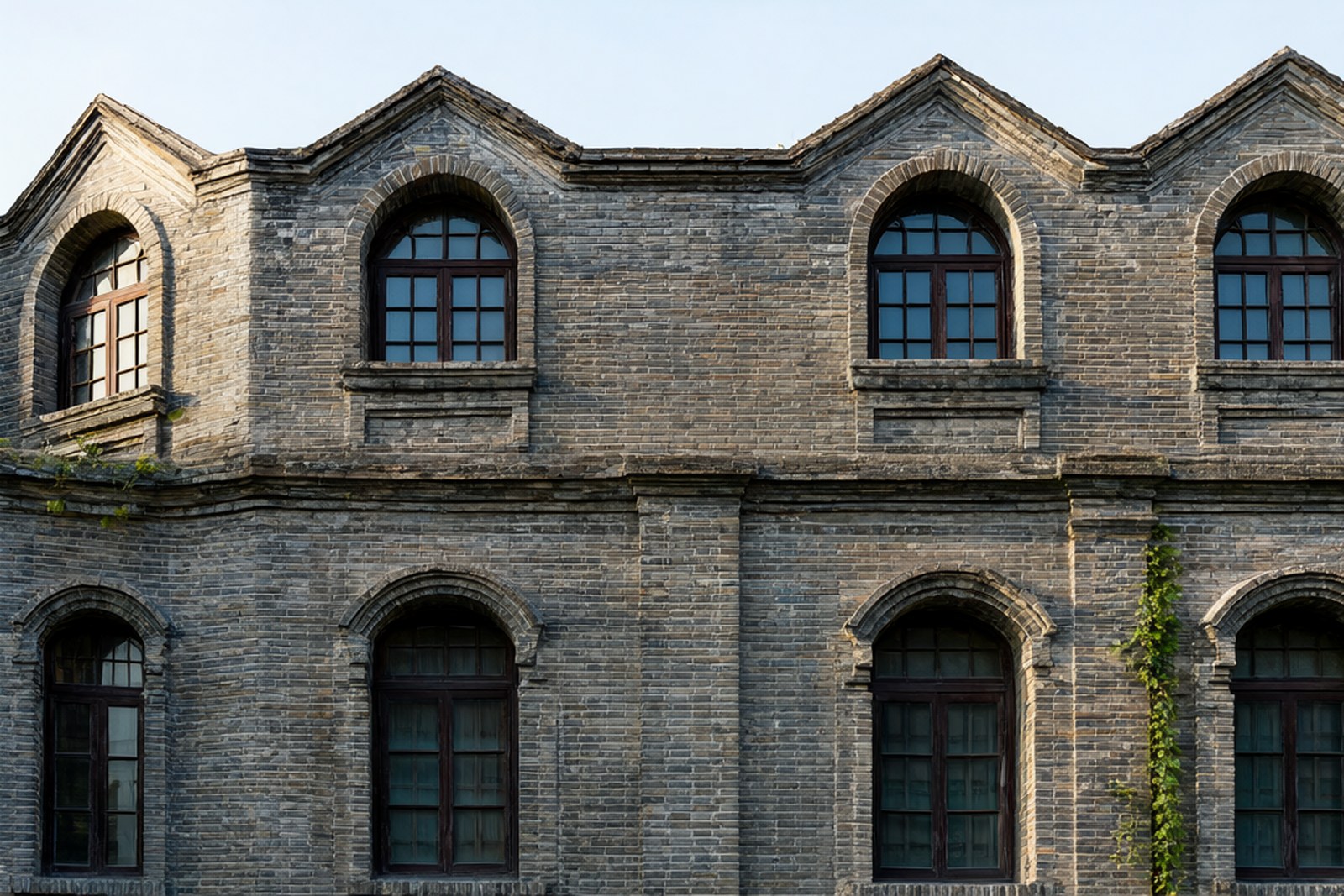
徐悲鸿 Xú Bēihóng, Xu Beihong, 1895 to 1953, stands among the most celebrated of modern Chinese painters, famed above all for his galloping ink horses. When war reached his world in 1937 he moved to Chongqing with 中央大学 Zhōngyāng Dàxué, Central University, teaching in its art department through the relocation years, and in 1942, invited by Shi Rongting, he moved into the Shi Family Garden and stayed until 1946. The garden’s most remarkable room is underground: an all-stone chamber cut into the hillside, vaulted, cool and quiet, where he went on painting through the air-raid years while the city above emptied into shelters. It is to these years that the great scroll 巴人汲水 Bārén Jíshuǐ, Drawing Water in Sichuan – his long ribbon of river-port porters hauling water up stone steps – belongs: that work was born here on the Jialing. Other canvases of the same period are associated with these rooms in the literature, but the chamber’s claim is made with certainty for this one scroll, and the honest text keeps it that way.
The second thing that happened here is institutional. In 1942 Xu Beihong set up at the garden the preparatory office of a research-oriented 中国美术学院, a Chinese Academy of Fine Arts, and engaged a circle of painters then in Chongqing as research fellows, among them 张大千 Zhāng Dàqiān, Zhang Daqian, 吴作人 Wú Zuòrén, Wu Zuoren, 李瑞年 Lǐ Ruìnián, Li Ruinian, 冯法祀 Féng Fǎsì, Feng Fasi, 孙宗慰 Sūn Zōngwèi, Sun Zongwei and 宗其香 Zōng Qíxiāng, Zong Qixiang. That wartime initiative is often described as one of the roots later traced to today’s Central Academy of Fine Arts in Beijing – and, to forestall a common confusion, it has no connection with the academy of the same name in Hangzhou, which is a separate institution wearing the same modern name. The garden’s public moment came on 19 March 1943, when an exhibition of Xu’s work opened at the Chongqing Central Library and drew more than thirty thousand visitors in three days, a sensation in the wartime capital.
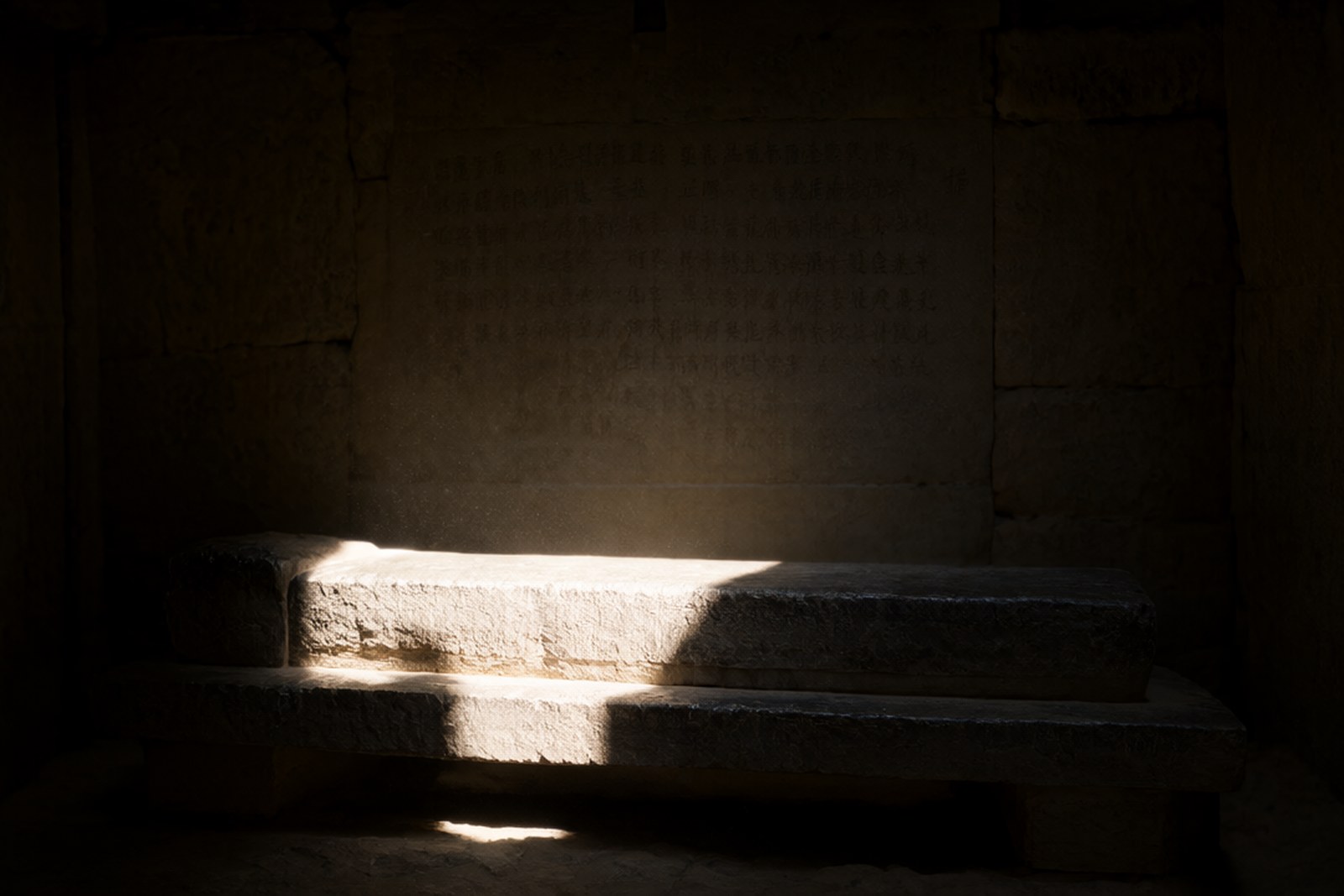
The afterlife took its time. The villa was listed as a municipal protected site in 2009, restored in the late 2010s, and on 19 June 2020 it reopened as 徐悲鸿美术馆(重庆馆), the Xu Beihong Museum, Chongqing branch – free to enter, and arranged on two floors: the original-scene rooms where the household and the studio are reconstructed in place, and a gallery of genuine works. The exhibition programme rotates, and 2025 brought a show marking the 130th anniversary of the painter’s birth, with originals such as his galloping horses on the walls. The stone chamber keeps its own quiet fittings – incised inscriptions on the rock, a stone bed, a stone table – and the courtyards still hold the light the way a garden rather than a museum intends. For a free hour above the Jialing, it is among the most underrated stops on the north bank.
Practicalities
Tickets. Entry is free; some current notices describe a reservation-based arrangement, so follow the museum’s own announcement for the day. Special exhibitions are likewise free unless announced otherwise. As of October 2026, subject to change – check before you go.
Opening hours. The museum keeps Tuesday to Sunday, 10:00 to 16:00, a short day that rewards an early arrival. Allow about an hour for the two floors and the garden, more if a special exhibition is on.
Closing day. The museum closes on Mondays, and it can also shut during exhibition changeovers or under temporary notices, so if the trip hinges on a particular show, confirm the dates with the museum first.
Getting there. Metro line 5 to 大石坝 Dàshíbà, Dashiba station, then a taxi ride of about five minutes uphill is the easy way – the walk from the station is long and steep. Buses to 石门 Shímén, Shimen, leave a walk of about five minutes; transport information here is thinner than for the big sights, so build in slack and verify the last stretch locally.
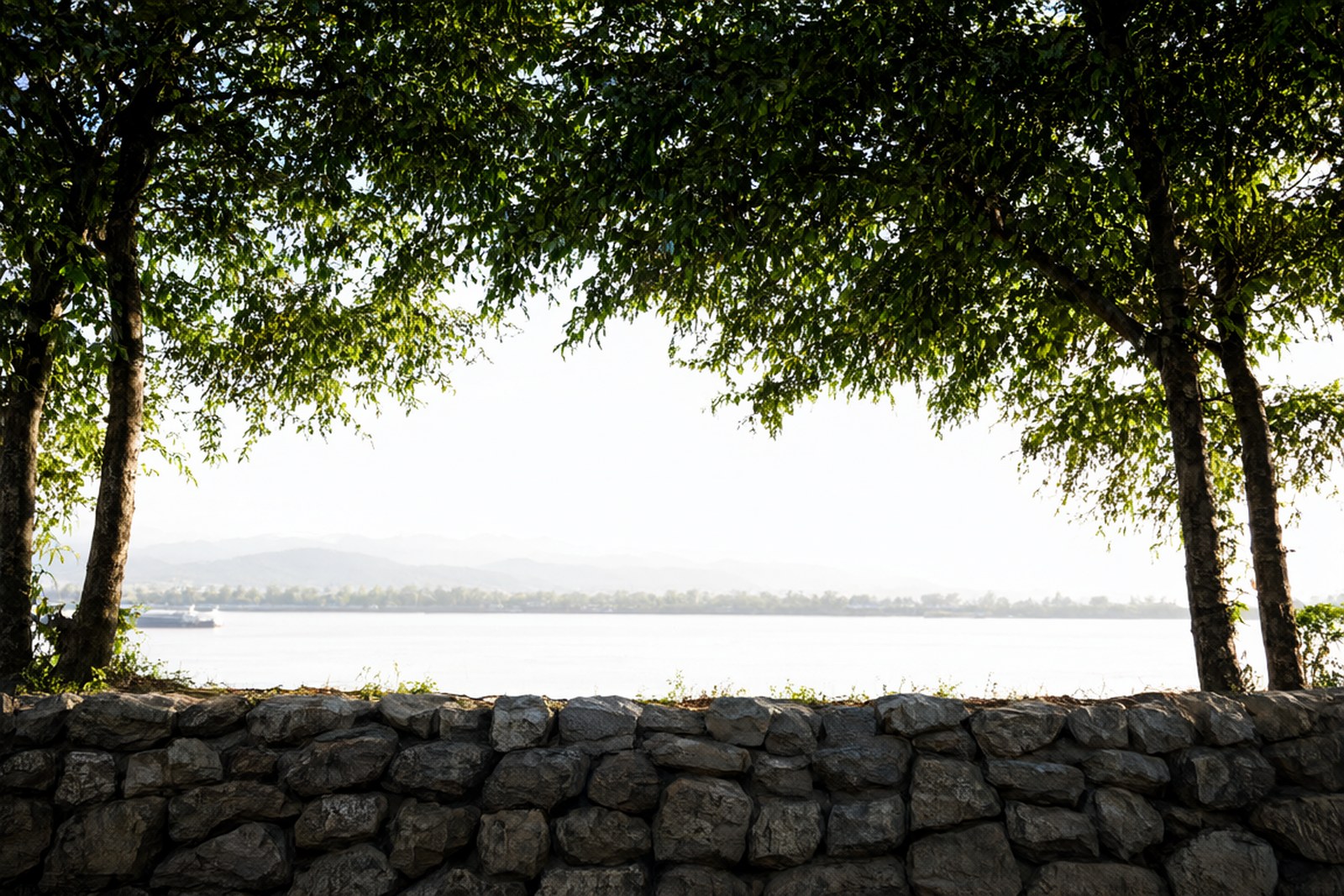
flowcloud would say that the Shi Family Garden is proof that culture sometimes needs only a room with good light and a stubborn host – a merchant’s folly that sheltered a scroll, the seed of an academy and thirty thousand curious visitors – and that the north bank has kept the receipt for eighty years.
Getting there: The Shi Family Garden, now the free Xu Beihong Museum, Chongqing branch, stands on the hillside at Panxi above the Jialing River in Jiangbei District, Chongqing, a municipality of southwest China; built in 1931 by the merchant Shi Rongting, it housed Xu Beihong, 1895 to 1953, from 1942 to 1946, where he painted through the air-raid years in the all-stone underground chamber – the scroll Drawing Water in Sichuan was born here – and set up the 1942 preparatory office of a research-oriented Chinese Academy of Fine Arts, an initiative often described as one of the roots of today’s Central Academy of Fine Arts and unrelated to the same-named academy in Hangzhou; listed for municipal protection in 2009 and reopened on 19 June 2020 after a late-2010s restoration, it opens Tuesday to Sunday 10:00 to 16:00, closes on Mondays, and is reached by metro line 5 to Dashiba plus a short taxi ride, or by buses to Shimen (checked October 2026, subject to change).