
Stand at the water’s edge and the sand under your feet is finer and paler than it has any right to be on this coast. The shallows are warm, ankle-deep for thirty metres, and clear enough to see your own feet and the small fish that have come in with them. Further out the water shifts from pale green to a flat blue-grey, and on the horizon there are two or three islands and the low shape of a headland. To your left the beach runs away in a long curve, and to the right it ends in a jumble of huge rounded granite boulders the size of cars, worn into shapes that people have been naming for as long as anyone has been coming here. This is 巽寮湾 Xùnliáo Wān, Xunliao Bay, on the 稔平半岛 Rěnpíng Bàndǎo in 惠东县 Huìdōng Xiàn, and it is the best beach in Huizhou and one of the better ones in Guangdong.
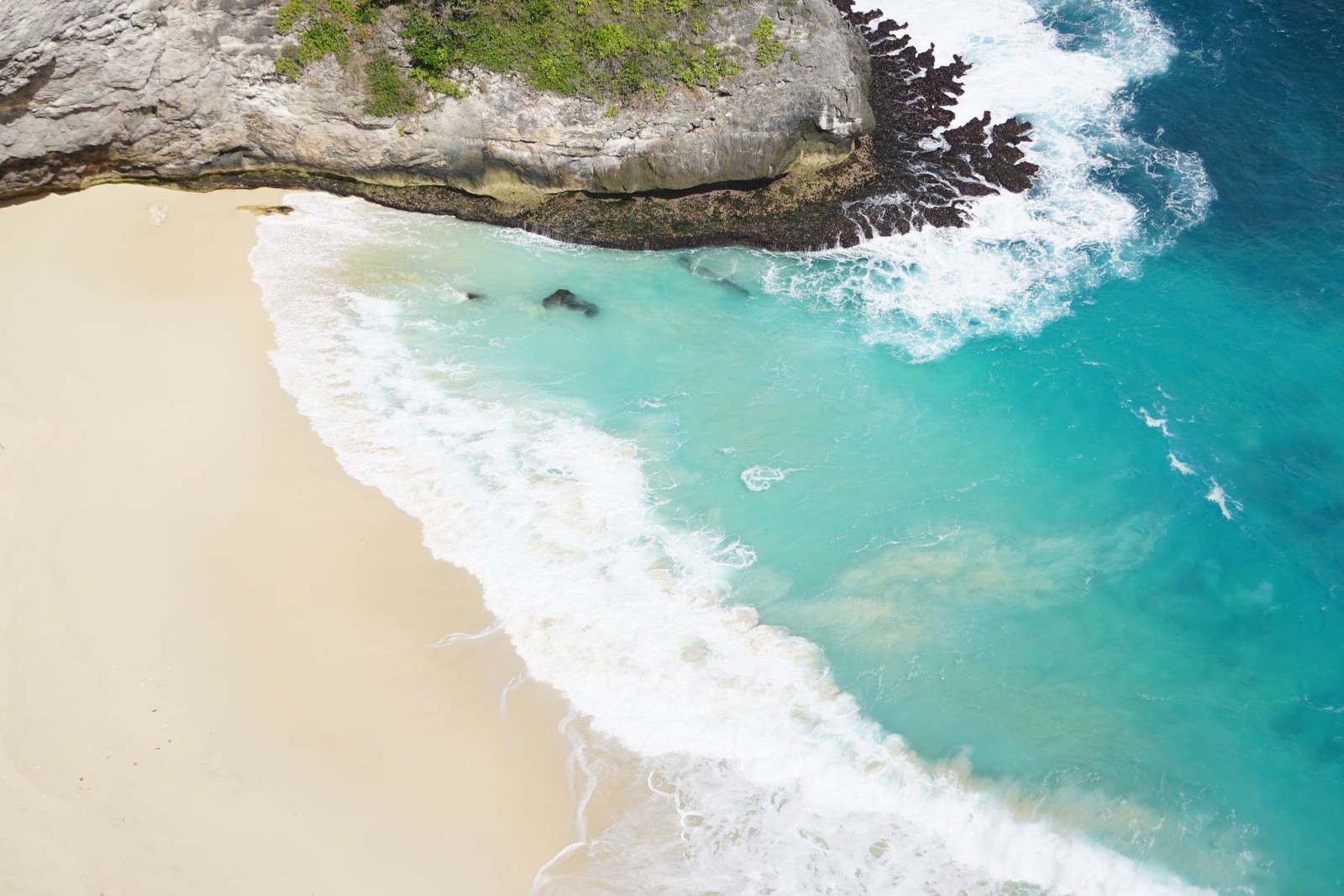
The local promotional names for the place have a certain confidence to them. The water is 蓝色翡翠 lánsè fěicuì, blue jade. The sand is the 天赐白金堤 tiāncì báijīn dī, the gift of a white-gold dyke. The rock formations at the western end are an 动物石景公园 dòngwù shíjǐng gōngyuán, an animal-shaped stone park, because the granite has weathered into things that look like tortoises, mushrooms and, with a certain amount of willing, lions. Behind the boasting is a real geographical fact: the peninsula turns this coast south-east, away from the sediment plumes of the Pearl River estuary, so the water here is genuinely clearer and the sand genuinely paler than at the beaches closer to Guangzhou and Shenzhen. The name itself is usually read as 巽 xùn, the trigram that stands for the south-east, and 寮 liáo, a hut or shed — a south-eastern shore of fishermen’s shelters, which is a fair description of what it was before the hotels arrived.
What to See and Do
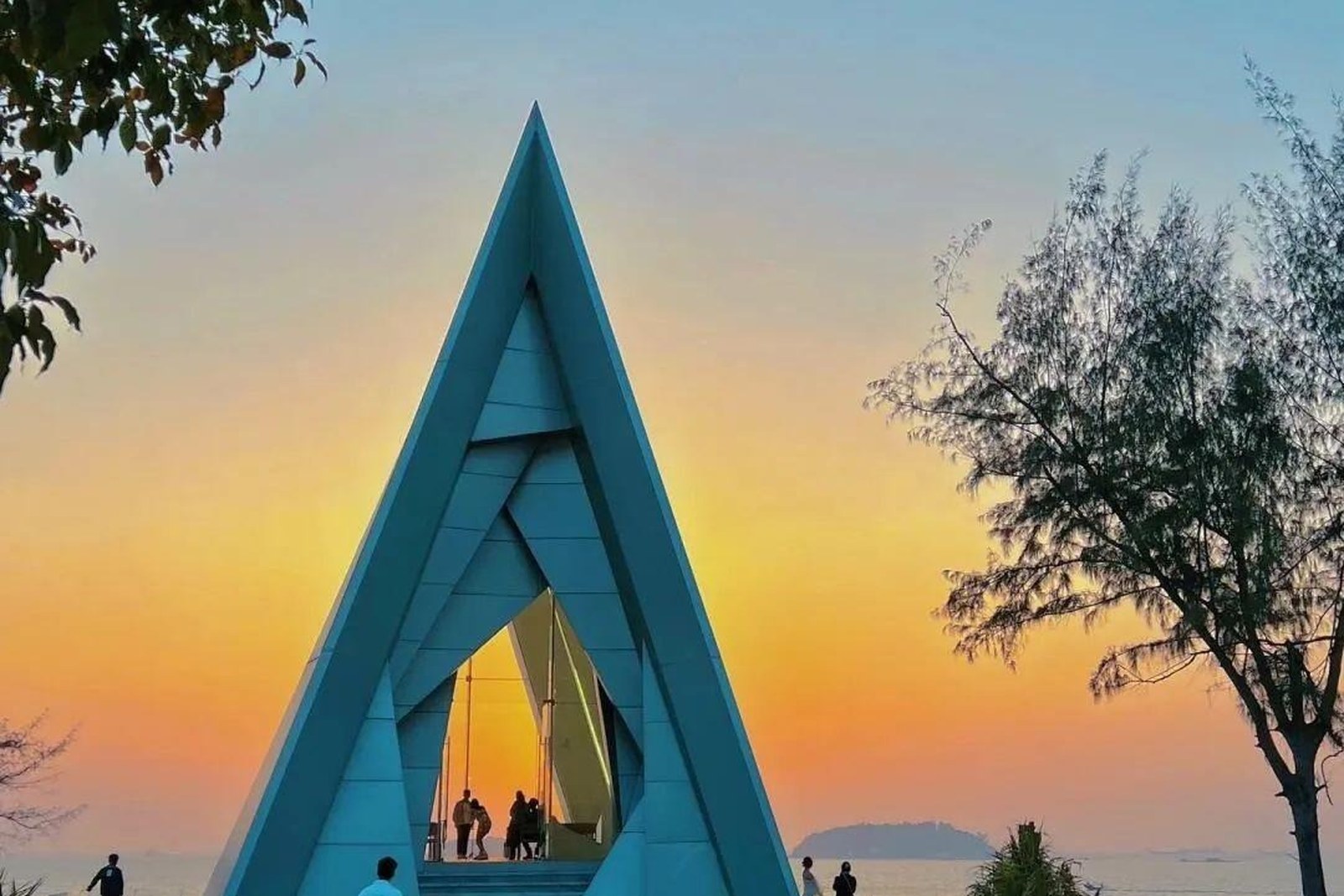
Two stretches of coast, effectively. The main beach at 巽寮 Xùnliáo is the long, sandy, developed one, fronted by the resort hotels and with the usual water sports, banana boats and speedboat rides. 磨子石公园 Mòzǐshí Gōngyuán, the boulder beach at the western end, is the more interesting walk and the place to be at sunset, when the granite goes orange and the sea behind it turns silver. Swimming is safe in the shallows along most of the bay in calm weather, but this is open sea and the shape of the bay means it takes the swell when a typhoon is anywhere in the South China Sea, so pay attention to the flags. Offshore there are fishing trips, and the villages behind the bay still run them for visitors. Beyond the bay, the same peninsula holds 双月湾 Shuāngyuè Wān, the twin crescent bays seen from the 大星山 Dàxīng Shān viewpoint, and 海龟湾 Hǎiguī Wān, the turtle beach that is the only place in China where green turtles still come ashore in numbers to lay, and which is a protected reserve with a cliff walk above it.
Practicalities
Tickets. The bay itself is free and has no gate, no ticket and no closing time; you pay only for whatever you hire. Boat trips out from the beach are negotiable and typically ¥100 to ¥300 for a small boat, the sunset and fishing trips rather more. The turtle reserve charges a modest admission — around ¥30 — and sells packages including a shuttle and a ranger session that cost considerably more.
Opening hours. The beach is open around the clock. The resorts and their pools keep their own hours. The turtle reserve and the viewpoint at Double Moon Bay are daytime attractions, roughly 08:30 to 17:30, and the viewpoint is at its best for sunset.
Closing day. There is no closing day, and swimming continues through the winter, though the sea is cold enough from December to March that almost nobody does. The one thing that closes the coast is a typhoon: between July and September the bay shuts down completely, swimming is banned, and the boats stay on the sand.
Getting there. By car, roughly 1.5 hours from 深圳 Shēnzhèn and 2 hours from 广州 Guǎngzhōu, leaving the coastal expressway at the 惠东 Huìdōng exits and continuing down the peninsula. High-speed rail to 惠东站 Huìdōng Zhàn puts you about 40 minutes away by taxi, which is the easiest route from outside the province; there are also buses from 惠州 Huìzhōu city and from 惠东 Huìdōng town. Distances along the bay are longer than they look, so a car, a scooter or a taxi arranged in advance makes a real difference.
flowcloud would say that Xunliao Bay is one of the few beaches in Guangdong where the water itself is the attraction rather than the bars behind it, and that the marketing names, however much they strain, are not actually exaggerating.
Getting there: come midweek and out of season if you want the sand to yourself, arrive in the late afternoon, and walk west towards the boulders as the light drops. Eat at one of the 海鲜 hǎixiān restaurants a street back from the beach rather than on it, buy your fish by weight and confirm the price before it is cooked, and take a taxi or a car for the twenty-minute run to Double Moon Bay for the viewpoint the following morning.