
Yaji Mountain: The Taoist Sacred Hill of Twin Peaks Like a Maiden’s Hair Buns, the Temple of Bixia Yuanjun and the Great Fourth-Month Fair in Pinggu District, Beijing
双峰如髻插云表,四月香烟满古坛。Shuāngfēng rújì chā yúnbiǎo, sìyuè xiāngyān mǎn gǔtán – Twin peaks like a maiden’s hair buns stab above the clouds; in the fourth month the incense smoke fills the old altar.
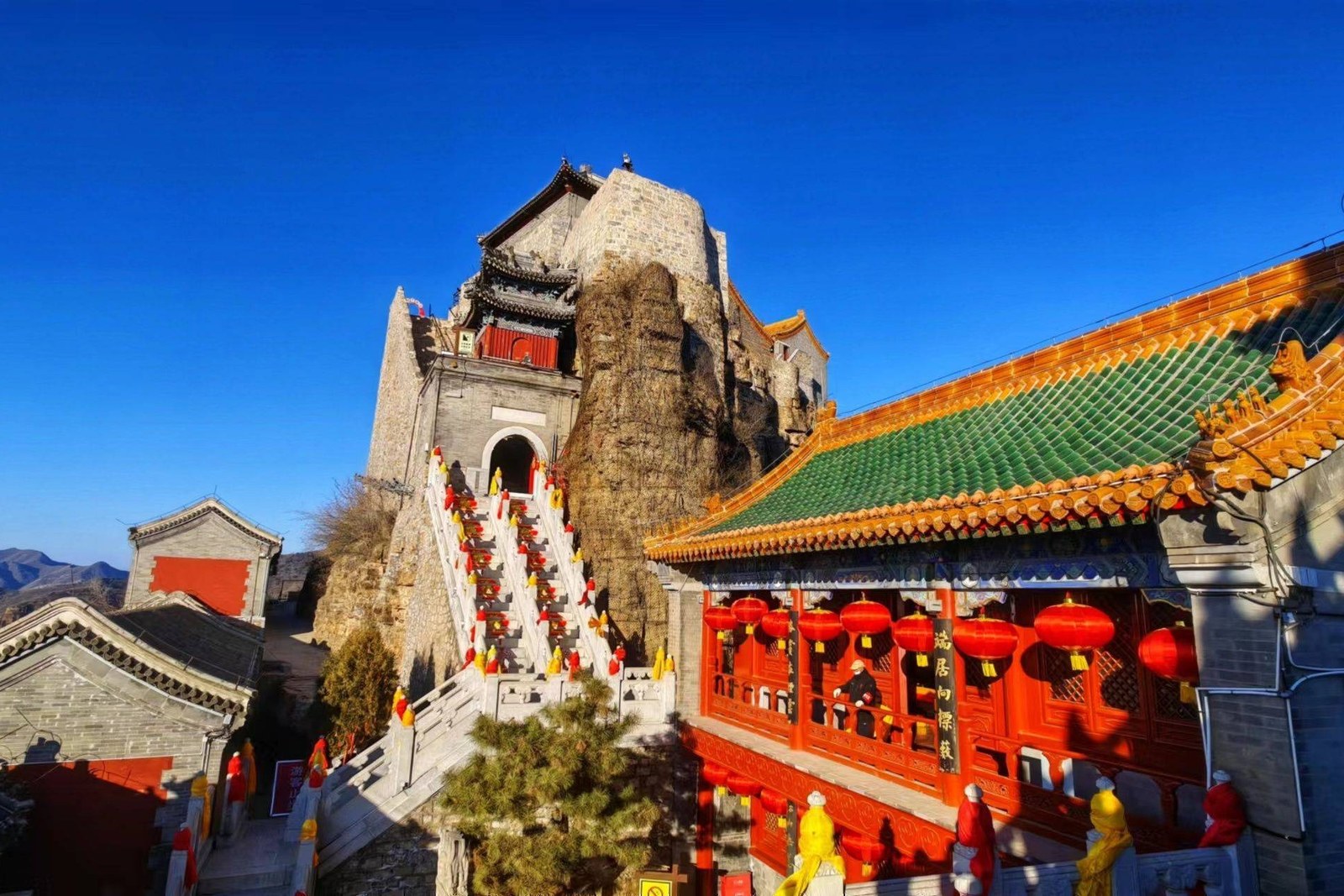
丫髻山 Yājì Shān Yaji Mountain is not a scenic area with a lookout deck — it is, plainly put, the district’s oldest sacred address: a Taoist pilgrimage hill in the northwest of 平谷区 Pínggǔ Qū Pinggu District, named for the way its 双峰 shuāngfēng twin peaks rise side by side like the 丫髻 yājì hair buns of a maiden, and crowned by halls dedicated to 碧霞元君 Bìxiá Yuánjūn Bixia Yuanjun, the Goddess of Mount Tai whose cult once drew pilgrims from across the plain east of Beijing. For centuries the mountain’s spring 庙会 miàohuì temple fair, held through the fourth month of the 农历 nónglì lunar calendar, turned these slopes into one of the great market-prayers of the region, and the fair still runs today. What you actually visit is a steep, incense-scented climb between small stone halls to a saddle and two summits, not a manicured monument park.
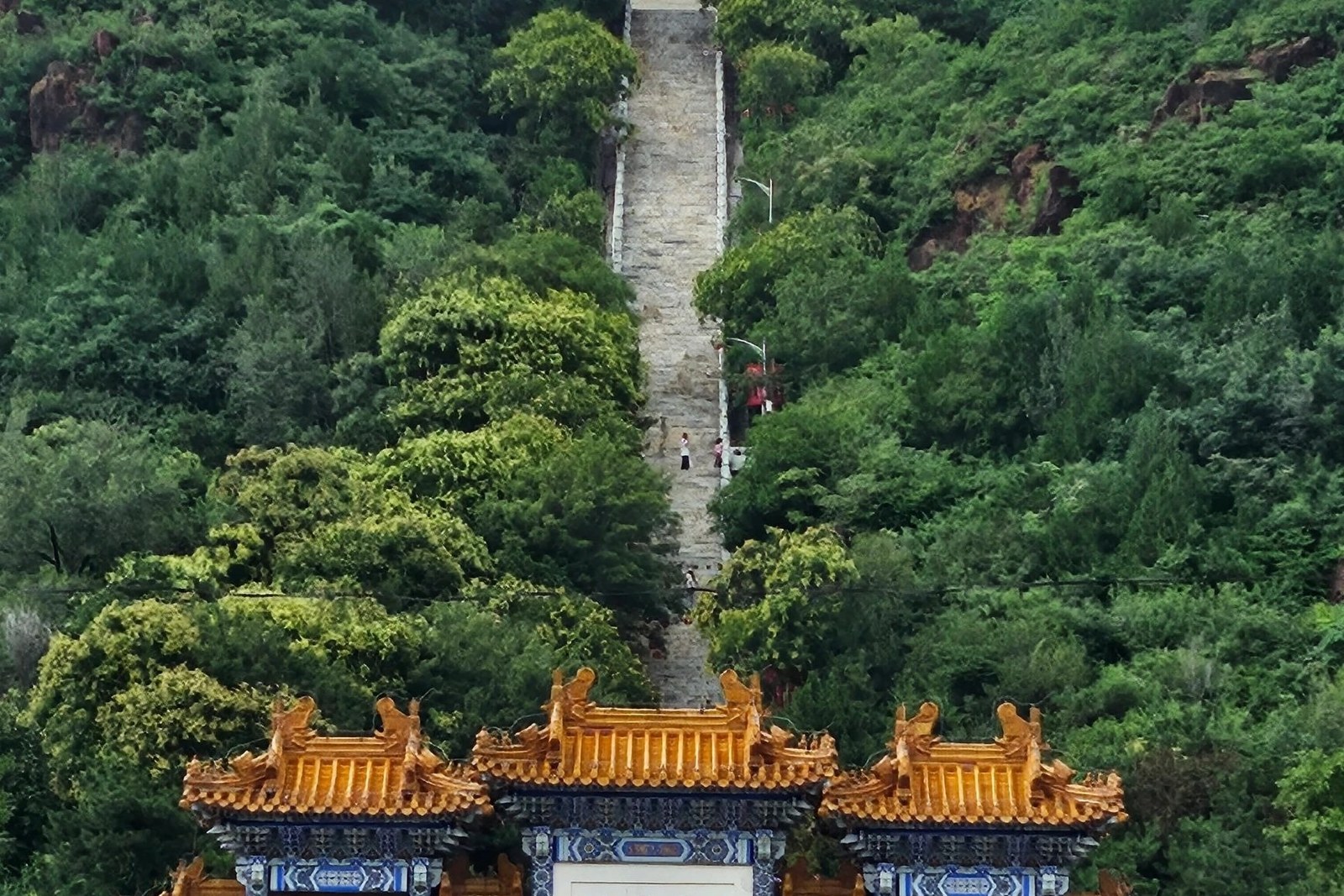
Call it honestly: the site charges a modest gate fee, with hours that follow the daylight pattern and fair-season exceptions (worth confirming the details for current admission, opening days and fair dates, which follow the lunar calendar rather than the printed one). The honest warning is the stairs, not the money — the climb is a genuine stone staircase up a working sacred hill, so give yourself the pace of a pilgrim rather than a tourist, and if you want the fair, aim for the fourth lunar month and expect crowds, smoke and vendor rows; if you want silence, go on a weekday morning the rest of the year. Spring brings the pilgrims and the blossoms below, autumn clears the long view over the plain, and the best moments are the quiet courtyards between the summits. Bring water, and a layer for the wind on the saddle.
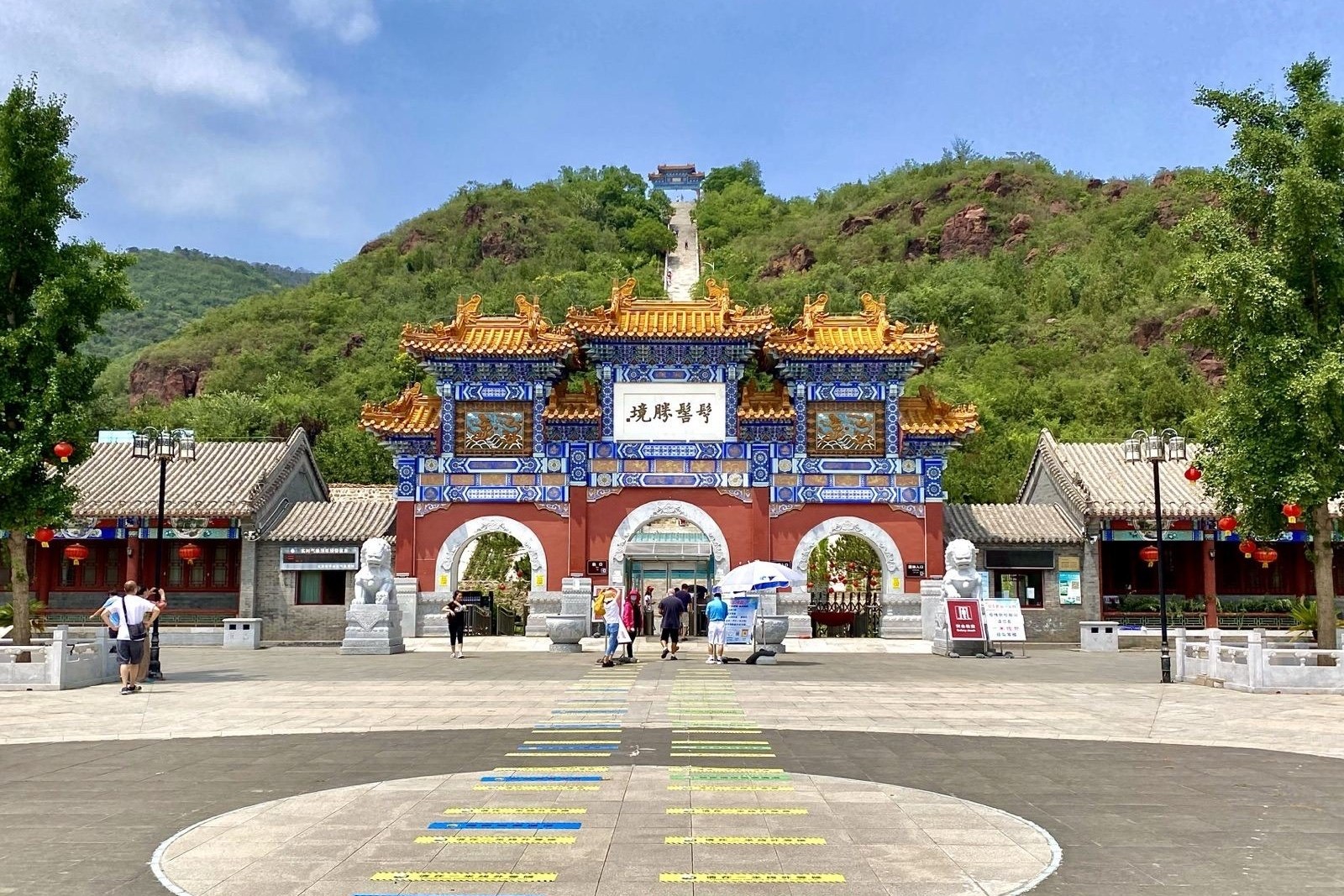
The honest star is the silhouette itself — the twin peaks holding their paired temples, the incense drifting up through the stone steps, the plain of Beijing spreading flat and wide at your feet (worth confirming the details for which halls and shrines are open on your day). What gets oversold is the word “sacred mountain” read as a vast palace complex: the buildings here are small, worn and rebuilt many times, and their power is in the continuity of worship, not in scale. What repays the effort is the reading of the name — a hill that took its shape from a girl’s hair buns and made it a theology, with a goddess of mothers and mercy keeping her hilltop for four hundred years and more. Come for the layering of the place: step, then hall, then the plain beyond.
The self-aware postscript: I climbed beside an old woman resting on every landing who told me she had come up every spring since she was a bride, and when I asked why she kept returning she said, “the goddess counts the steps with you — but she lets you do the walking”. That is the visit in miniature. 丫髻山 Yājì Shān suits whoever treats it as a living Taoist climb first and a scenic lookout second, and exhausts anyone expecting a grand imperial complex or a cable-car ride to the top. Everything else on this Pinggu list lies within the same district: the open water of 金海湖 Jīnhǎi Hú Jinhai Lake to the southeast, the waterfall gorge of 京东大峡谷 Jīngdōng Dà Xiágǔ Jingdong Grand Canyon in the northern hills, the stone pillars and glass walkway of 石林峡 Shílín Xiá Shilinxia and the cool chambers of 京东大溶洞 Jīngdōng Dà Róngdòng Jingdong Cave — all in the same 平谷区 Pínggǔ Qū that keeps a goddess on a twin-peaked hill above its orchards.
Practicalities
- Rating: ★★★★☆ — the Taoist twin-peak pilgrimage hill of the district; the stairway of halls and the plain-wide view outrank the fair crowds; climb slowly, climb early.
- Tickets: Modest gate fee, with daylight hours and fair-season exceptions (worth confirming the details for current admission, opening days and lunar-calendar fair dates).
- Address: 丫髻山 Yājì Shān, 刘家店镇 Liújiādiàn Zhèn Liujiadian town, 平谷区 Pínggǔ Qū, Beijing — on the northwestern edge of the district, twin peaks above the orchard plain.
- Time needed: Two to three hours for the climb, the saddle and both summits; half a day adding the fair grounds in season.
Words and Names
丫髻山 Yājì Shān Yaji Mountain · the twin-peak Taoist sacred hill of the district 丫髻 yājì maiden’s hair buns · the paired summits the name remembers 碧霞元君祠 Bìxiá Yuánjūn Cí Temple of Bixia Yuanjun · the goddess’s halls on the summit 道教 Dàojiào Taoism · the tradition the mountain has served for centuries 庙会 miàohuì temple fair · the great spring market-prayer of the mountain 农历四月 nónglì sìyuè fourth lunar month · the season the fair fills the slopes
flowcloud would say that 丫髻山 Yājì Shān is a hill that turned a hairstyle into a theology — two peaks like a maiden’s 丫髻 yājì hair buns in northwest 平谷区 Pínggǔ Qū, where centuries of pilgrims have climbed to the 碧霞元君祠 Bìxiá Yuánjūn Cí and the fourth-lunar-month 庙会 miàohuì fair still fills the steps with smoke and sellers — and that the honest move is a weekday morning outside fair season when the courtyards are quiet, because admission, fair dates and which halls are open all shift (worth confirming the details), the sacred-mountain title is the poster half and the worn stairway under a working faith is the real half, and the mountain repays whoever climbs at a pilgrim’s pace. All checked October 2026.
Getting there: Bus 852 to 平谷城区 Pínggǔ chéngqū Pinggu town, then a taxi or local bus north-west toward 刘家店 Liújiādiàn Liujiadian, beneath the twin summits (worth confirming the details for current rural bus numbers); self-drive leaves the 京平高速 Jīngpíng gāosù S32 and follows the 密三路 Mìsān Lù corridor to the trailhead lots. All checked October 2026.