
The grave is a mound of earth in a wooded hollow, and the shrine in front of it has been rebuilt so many times that the oldest thing about it is the ritual. 炎帝陵 Yándì Líng, the mausoleum of the Yan Emperor, stands at 鹿原镇 Lùyuán Zhèn in 炎陵县 Yánlíng Xiàn, in the far east of 株洲市 Zhūzhōushì against the Jiangxi border, and it is the tomb of 神农 Shénnóng — the Divine Farmer, the legendary emperor said to have taught the Chinese to plant grain and to have tested the medicinal properties of a hundred herbs by eating them, several of which killed him. Whether anybody is buried here is not a question the site engages with. It has been a place of state sacrifice since the tenth century and it is, by the standard formula, 神州第一陵 Shénzhōu dì yī líng — the first mausoleum under heaven.
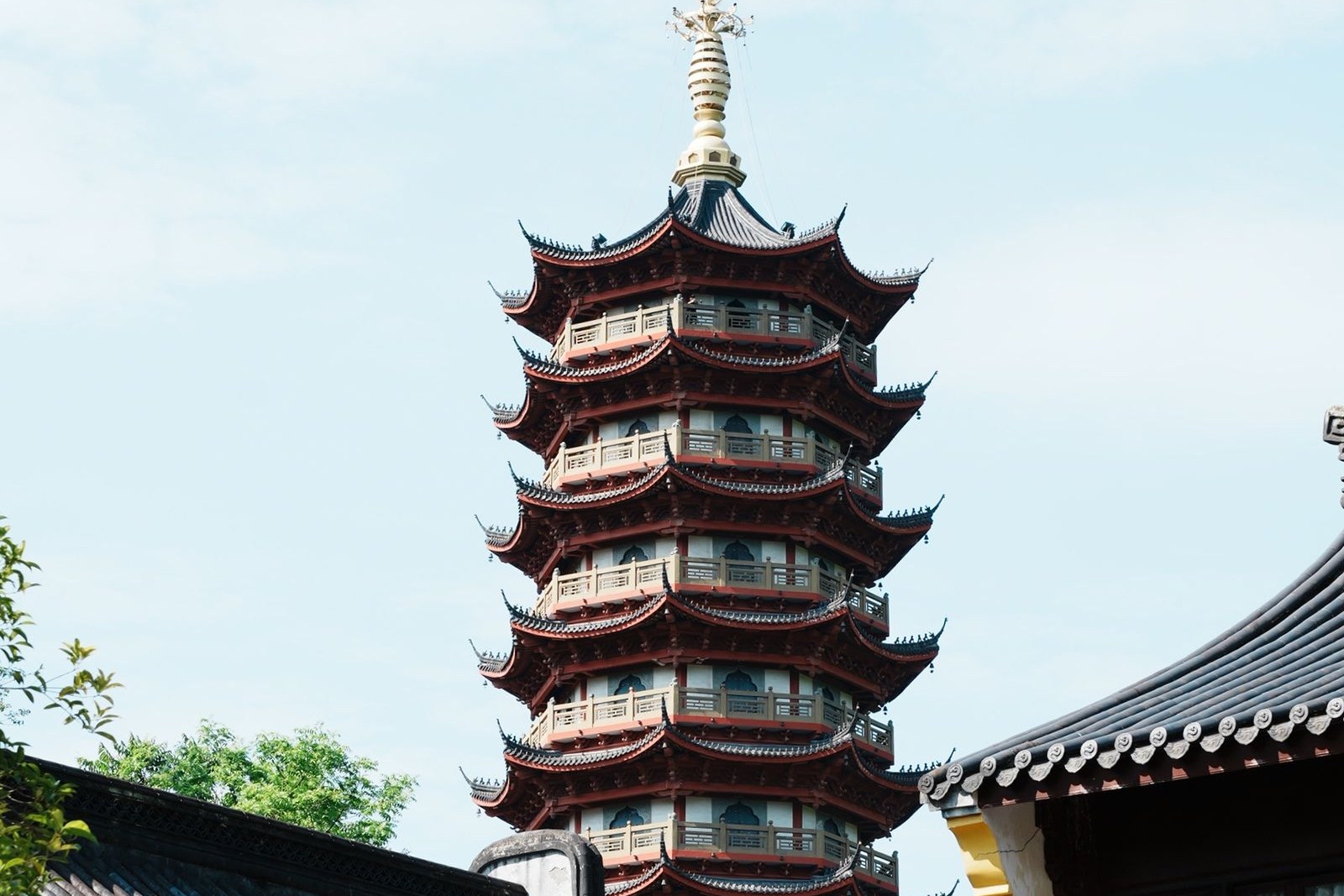
The documented history begins in the Northern Song: the temple was established in the 乾德 Qiándé era of 宋太祖 Sòng Tàizǔ, in the 960s, on the authority of a dream or a local report depending on which version you read, and from then on it received imperial sacrifice on a regular schedule. It has been destroyed and rebuilt repeatedly — by war, by fire, and once by the Taiping — and the present complex dates largely from a reconstruction completed in 1993, with the halls, the spirit path, the steles and the burial mound laid out in the classical manner. What is genuinely old is the practice: the 公祭炎帝 gōngjì Yándì ceremony, held here on the ninth day of the ninth lunar month, has been revived at state level and is now a major event with provincial and national participation, and the incense around the mound is thick on any ordinary day of the year.
The setting does a lot of the work. The site sits in a valley of low wooded hills with a stream running past, and the approach through the village is through farmland — this is a rural shrine rather than a monument in a car park, and the walk from the car park to the mound is a few hundred metres of path through trees. The county around it is also worth an afternoon: 炎陵 Yánlíng is the most heavily Hakka county in Hunan, its villages have the Hakka ancestral halls and the 酿豆腐 niàng dòufu to prove it, and in August the hills are covered in 炎陵黄桃 Yánlíng huángtáo, the yellow peaches that have become the county’s second famous product after the emperor.
Practicalities
Tickets. Around ¥60–90 for the mausoleum complex and its grounds. The larger scenic area including the surrounding hills is ticketed separately, and combination tickets are sold at the gate.
Opening hours. Roughly 08:00–17:30, with the busiest period around the 重阳 Chóngyáng festival in the ninth lunar month, when the public sacrifice is held and the site is genuinely crowded.
Closing day. No closing day; open every day of the year.
Getting there. 炎陵站 Yánlíng Zhàn on the high-speed line is about 40 minutes and ¥80–120 by taxi from the mausoleum, or there are shuttle buses on the ceremonial days. From 株洲 Zhūzhōu city it is about three hours by road, and from 长沙 Chángshā about four.
What People Get Wrong
They come for the ceremony, which happens once a year, and find an ordinary quiet shrine the rest of the time — and then leave without walking the village or eating the local Hakka food. The tomb is a twenty-minute visit; the county is a day.
Getting there
By high-speed rail to 炎陵 Yánlíng and then a taxi, or by car if you are combining it with 神农谷 Shénnóng Gǔ forty minutes away and 云阳山 Yúnyáng Shān in the next county. Two days is right: the mausoleum and the Hakka villages on one, the forest park on the other. Come in August for the peaches.
flowcloud would say that a shrine to the emperor who died discovering which plants were safe to eat is a very Chinese kind of monument — the sacrifice is not to a ruler but to the person who did the experiments, and the incense is gratitude for the results.
Getting there: 炎帝陵 (Yándì Líng), 炎陵县 (Yánlíng Xiàn), 株洲市 (Zhūzhōushì), 湖南 (Húnán). Open daily 08:00–17:30, no closing day; entry ¥60–90. About 40 minutes and ¥80–120 by taxi from 炎陵站 (Yánlíng Zhàn), three hours by road from 株洲 (Zhūzhōu). Visit in August for the peaches and the ninth lunar month for the state sacrifice.