
大澳渔村 Dà’ào yú cūn is an old fishing village on the coast of 阳东 Yángdōng, in the eastern part of 阳江市 Yángjiāng, and it is one of the last places on this coast where you can still see the shape of a working fishing settlement rather than a resort. The village sits at the back of a sheltered little bay beside 东平镇 Dōngpíng zhèn, with stone lanes running down to a harbour of moored boats, old houses of stone and brick packed along the water, and the sea in front of it all. The name means the great bay, and it has been a fishing harbour for a very long time.
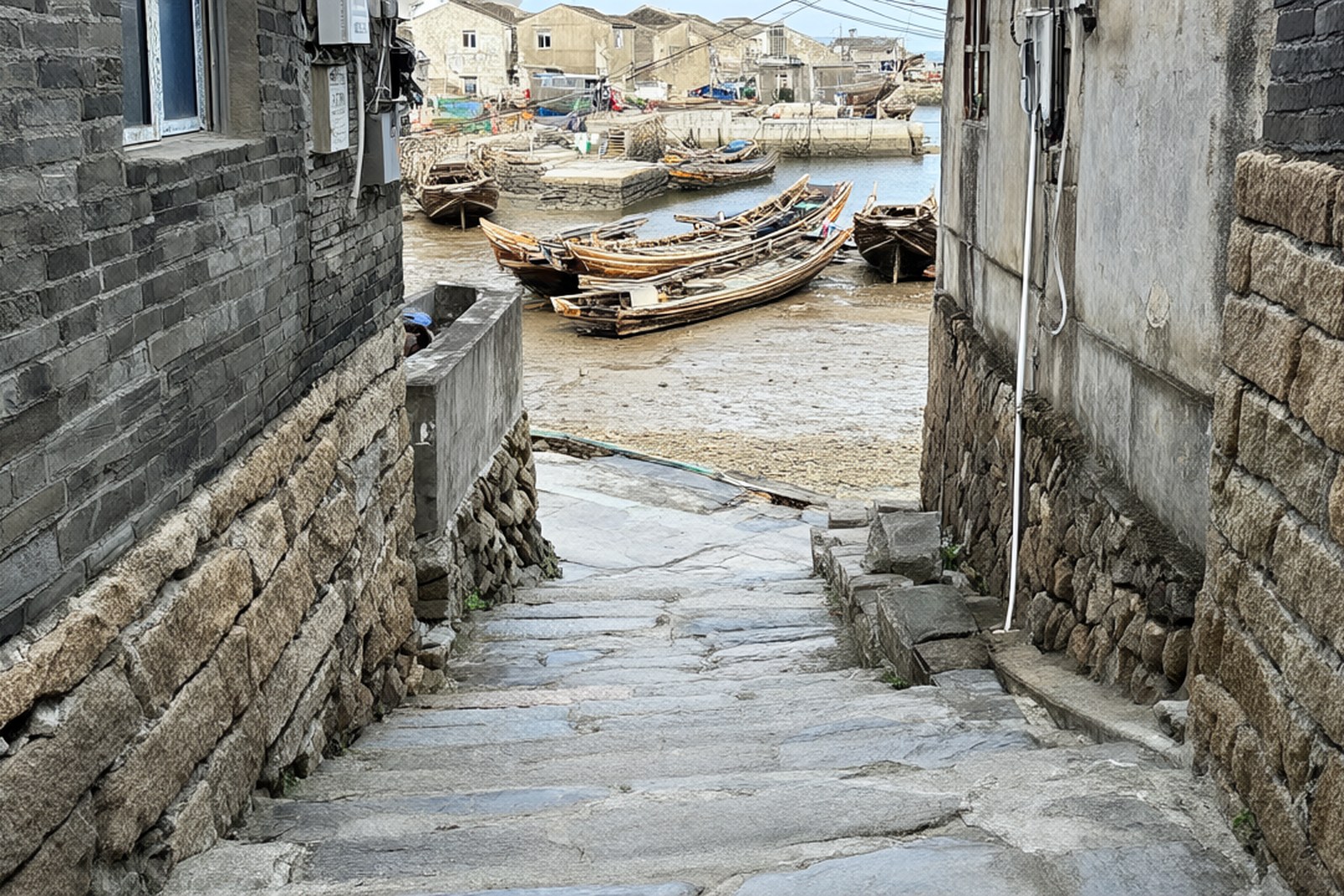
What is left of the old village is the attraction, and it is not a reconstruction. The lanes are paved in stone and worn smooth, the houses on either side are low, of grey brick and stone with tiled roofs, and many of them still belong to fishing families. Nets are mended on the quay, the catch is landed and sold at the small market by the water, and the smell of the place is salt and fuel and drying fish. There is a modest heritage house or two kept open to visitors and a scatter of signs, but the village is mostly itself, and walking its lanes at the hour the boats come in is the whole reason to be here.
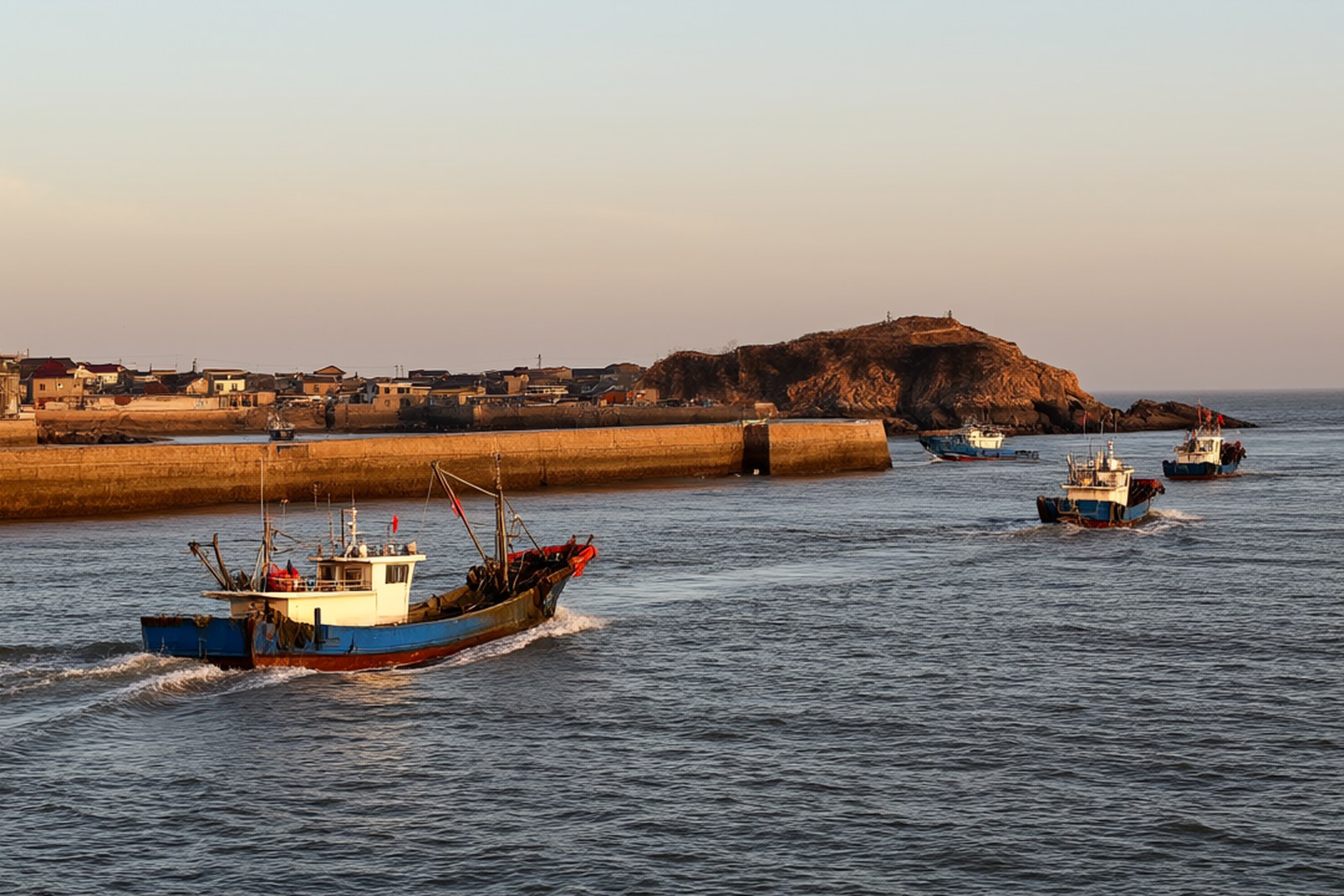
The harbour is the heart of it, and the rhythm of the place is the tide. At low water the boats sit over on their sides in the mud of the bay; as the water comes back they lift and float, and the fishermen go out or come in with their catch. Wooden boats, some of them old, are moored along the quay, and the small fish market by the harbour sells what has just been landed. A few shore-side eating houses cook it simply, and the walk along the sea wall and out to the headland gives you the whole bay and the boats in it. It is not a big visit; it is a quiet one, and it is worth an afternoon.

大澳 is also a reminder of how fast this coast is changing. Elsewhere along the Yangjiang shore the villages have become resorts and the beaches have grown hotels; here the fishing is still the day’s business and the old lanes have largely survived. It is the counterpoint to a stay on 海陵岛 or a week on 沙扒: come to see the coast as it was worked before it was visited, eat fish at a table by the water, and walk the stone lanes while the boats are still there. It is best in the late afternoon, when the light is low and the fleet comes home.
Practicalities
Tickets. The village itself is free to walk, and there is no entrance charge for the lanes or the harbour. One or two of the old houses kept as small museums may ask a token ¥10 to ¥20.
Opening hours. The village is open and walkable at all hours. The fishing and the market are busiest at dawn and in the late afternoon with the tides, and the shore-side eating houses serve through the day and into the evening.
Getting there. 大澳渔村 is by 东平镇 in the 阳东 part of 阳江市, reached by road from 阳江 city in about an hour. There is no rail station at the village; 阳江站 Yángjiāng zhàn is the nearest, from which you hire a car or a taxi.
Closing day. The village has no closing day and is open every day of the year. The small house museums keep their own hours, and the fish market is quiet on the days the weather keeps the boats in.
flowcloud would say that a village which has kept its stone lanes, its quay and its morning market while the coast around it turned into hotels, is a place that never had to decide to be interesting, and that the unhurried business of catching fish is still the best thing to watch on a coast.
Getting there: 阳江 city is the base, about an hour by road, and 阳江站 Yángjiāng zhàn is the rail gateway; from there a car or a taxi out to 东平镇 and the old village is the way in.