
Yangjiaoling Yáng jiǎo lǐng is a low green hill just south of the Tunchang county town, two to four kilometres out depending on which source measures it, with a county road running past the foot of the ridge. It looks like every other hill in 屯昌县 Tún chāng xiàn, an inland county in the middle of Hainan with no coast and no port, only reservoirs and low ground. It is not like the other hills. The rock under it is a skarn carrying quartz veins, and the quartz was of a quality that made this hill a national secret for the best part of thirty years. The workings cover about five hundred mu of ground and are held by the provincial institute of comprehensive geological survey and design. What a visitor sees now is a heritage site rather than a park.
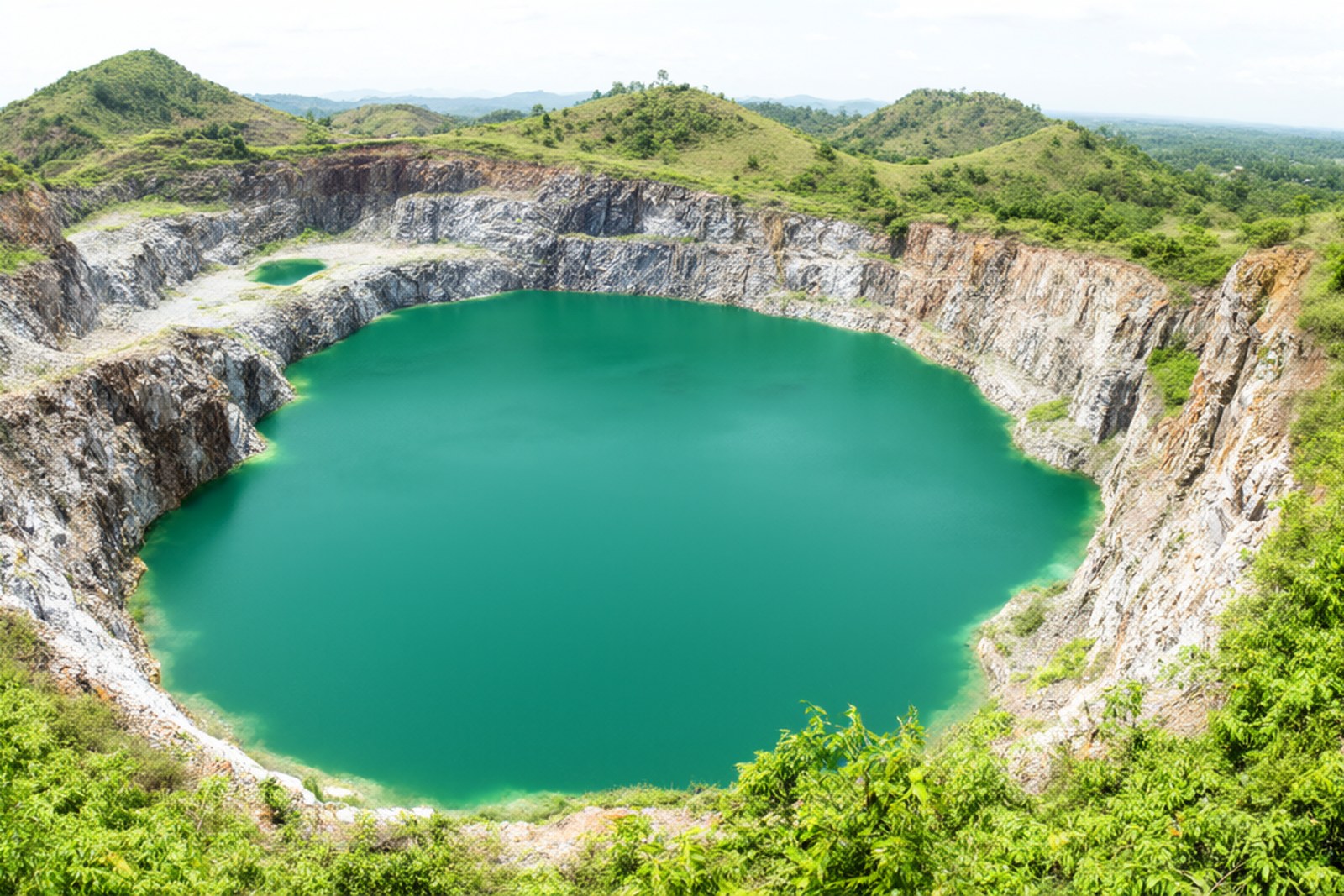
The first chapter is the shortest and the worst. Japanese forces occupying Hainan began mining the hill in 1942, after the ore body was found during work on the island’s roads; one encyclopaedia entry says 1939, but the national and provincial press and the county’s own heritage record all give 1942, and that is the date used here. The concession to Mitsubishi Mining was worked mechanically, and by the surrender in 1945 it had produced 138.351 tonnes of crystal, of which 93.266 tonnes were shipped to Japan. The labour was local and it was forced: more than two thousand men a year were conscripted, and more than sixteen hundred of them died. Two memorial mounds stand on the site, and they are the reason this is a place of remembrance as much as a place of geology. After the surrender the Nationalist government seized a further stockpile and took over the mine.
The second chapter is the secret one, and it is why the hill has two names. In December 1953 the communications department of the Central Military Commission took over the workings, and because the material was for national defence, the name Yangjiaoling was struck off the maps and the site became simply Mine 701 qī líng yī kuàng, sometimes written as the First Letterbox. In September 1955 a geology team numbered 418, ancestor of today’s provincial geology bureau, began a formal survey, and at the height of the work more than a thousand people lived on two square kilometres of ground. Proven reserves of piezoelectric-grade crystal came to nearly eighty tonnes, which by the industry’s own yardstick is forty large deposits at once, and smelting-grade crystal to more than two thousand tonnes, or ten large deposits. A 2025 news report quotes a deputy county head giving two hundred tonnes for the second figure, almost certainly a dropped digit, and the provincial government’s account of the same numbers keeps the larger one. Between 1953 and 1981 the mine produced 56.07 tonnes of piezoelectric single crystal and 2,092.5 tonnes of smelting crystal.
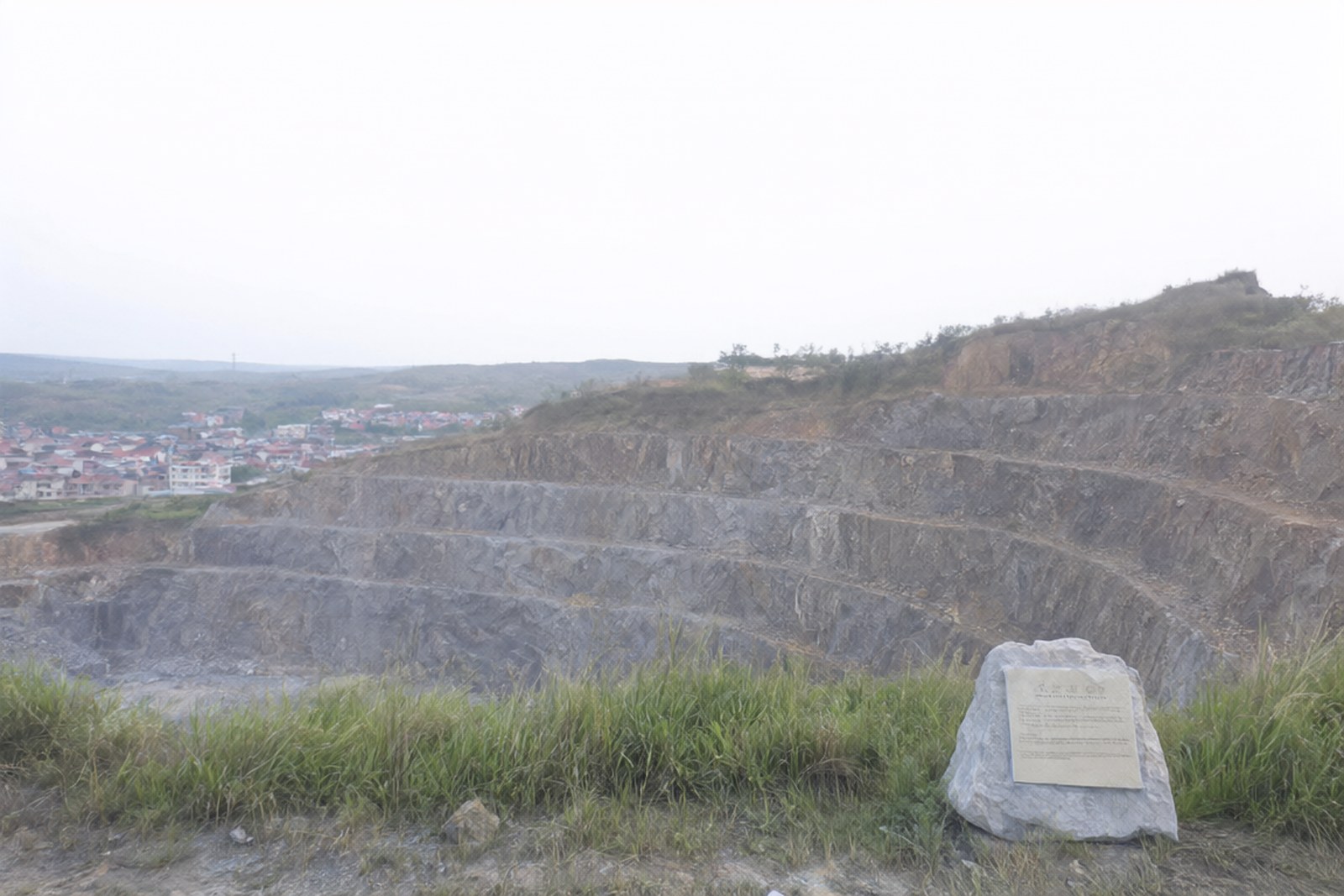
What the crystal was for explains the secrecy. Piezoelectric quartz went into radios, and the output of Mine 701 was flown to Beijing in the month it was produced, allocated directly by the Central Military Commission, with no other body entitled to call on it. The provincial geology bureau’s specimen notes list the uses as optical instruments, piezoelectric elements, jewellery and collector-grade pieces, with the best material going to lenses, prisms and laser technology. In the 1950s and 1960s four Soviet experts in ore dressing and mining worked here; the deal was that the Soviets bought raw crystal and the Chinese bought back the finished product, and Soviet buyers habitually graded first-class material down to second or third, which had to be accepted because the processing technology was theirs. The most famous consignment came in 1976, when the mine supplied ten tonnes of selected high-grade crystal as material for the coffin of Mao Zedong, not the whole of it.
The end came from a laboratory rather than a depletion. Synthetic quartz matured in 1975 and national defence stopped needing the natural article, so output wound down and stopped altogether in 1981, partly because reserves were exhausted. The third chapter opened in 2007, when the county began a geological park project at the hill and repaired the two memorial mounds, and it accelerated recently: the site was listed as a county-level protected relic on 3 December 2021, recommended for the provincial fifth batch in August 2024, and raised to provincial protection in March 2025. In June 2025 the county government and the provincial geology bureau signed a memorandum on conserving and developing the site, and a seminar that July announced plans for a crystal museum, a study route linking crystal origins, volcanic scenery and hot springs, and a brand built around 水晶之乡 晶彩屯昌. None of it is built yet.
Practicalities
Tickets. No ticket price is published, by anyone, because the site is not operating as an attraction. It is a provincial protected relic and an abandoned industrial site, and the county’s plans for a museum were still at the planning stage in the second half of 2025. A travel listing shows a price of zero, but no official announcement confirms it, so do not plan on either a fee or a formal visit.
Opening hours. No opening hours are published for the site. The only closely related fixed point in the county is the intangible heritage exhibition hall, which opened free to the public in December 2025 and holds crystal pieces among its displays, but no reliable source gives its daily hours. Whether visitors may currently walk onto the mine ground is not settled by any official notice; a travel page says they may, and nothing official confirms it, so ask at the county’s culture and tourism office before setting out.
Closing day. No closing day is reported, and none can be, since there is no venue with a schedule. The practical caveat is different: this is a former mine on a working hill with unstable ground, broken benches and a very deep flooded pit, so even if access is granted it is not a place to wander unaccompanied or to swim. Treat a closed gate as the default and a guided arrangement as the exception.
Getting there. The hill is just south of the county town, reported variously as two, two and a half or four kilometres from it, with a county road passing the foot of the ridge; two to four kilometres is the sensible planning figure. There is no published bus route, no car park, no guide service and no official telephone number, so the practical approach is to drive to the ridge, look for the geological relic steles, and ask in town first whether entry is being allowed that week. Tunchang itself is about forty minutes from Haikou on the central expressway.
Stand where the benches break off and the pit opens below you, and the whole of the twentieth century is laid out in one view. A farmer’s hill became a Japanese quarry; the quarry became a state secret with no name on any map; the secret fed the radios of an army and put ten tonnes of crystal into a coffin; and then a laboratory in 1975 made the whole operation redundant in a single stroke. What is left is water in a hole, two memorial mounds, a few steles and a county that now wants to build a museum on the spot. Be careful on the edges, do not go alone, and go knowing that the most important thing here is invisible: for thirty years this hill was not on the map.
Getting there: Yangjiaoling lies 2 to 4 km south of Tunchang town, in the Guangming village area, with a county road at the foot of the ridge; the county town is about 40 minutes from Haikou on the central expressway, no bus route, car park, guide service or telephone number is published, no ticket or hours exist because the site is an abandoned mine and a provincial protected relic, and access should be confirmed locally.