
The River That Rears Up: Yanguan Tide Watching
八月十八潮头立,一线横江万马来 Bāyuè shíbā cháotóu lì, yīxiàn héng jiāng wànmǎ lái – On the eighteenth of the eighth month the tide stands tall; one white line crosses the river and ten thousand horses arrive
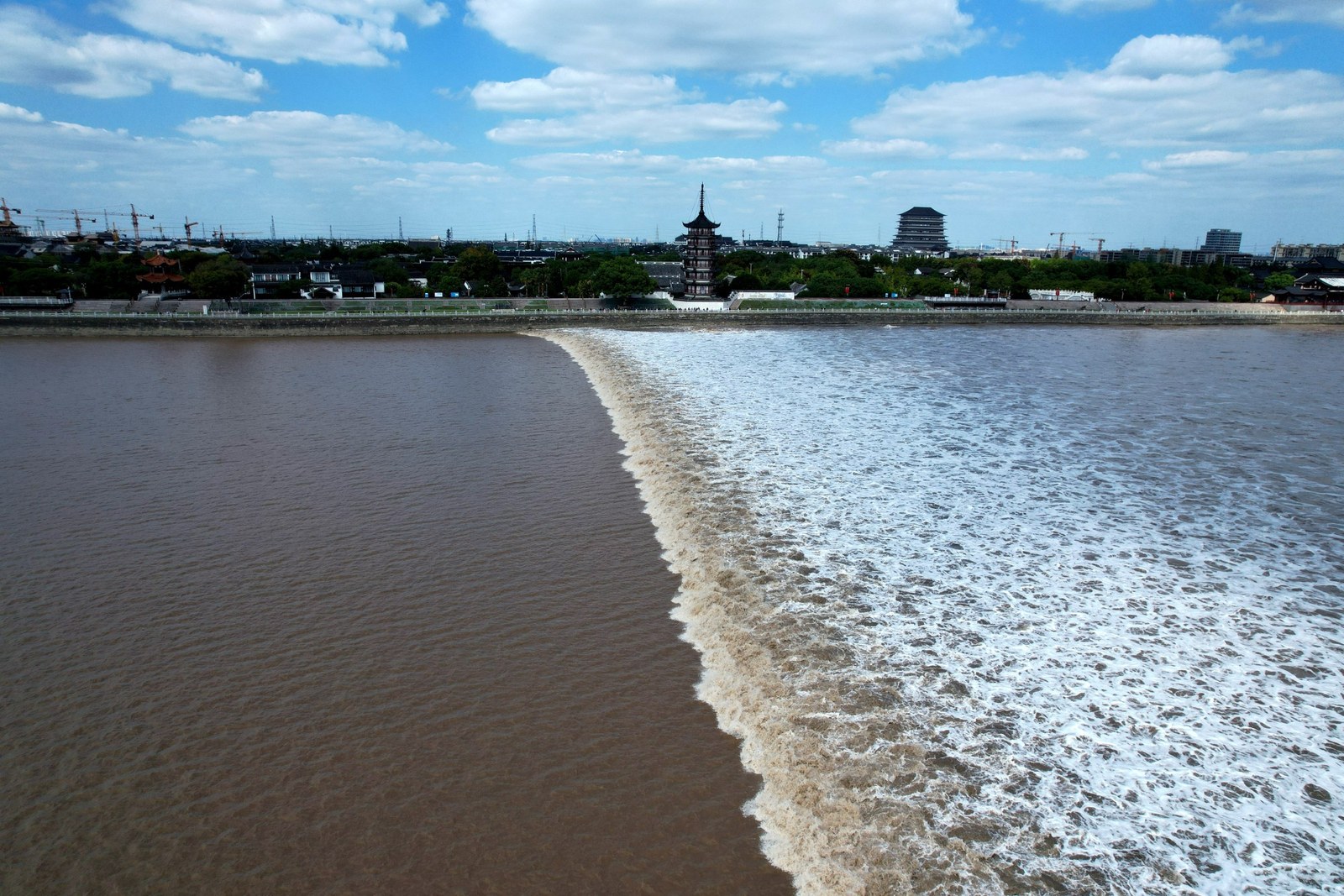
盐官 Yánguān Yanguan, on the Qiantang estuary in 海宁市 Hǎiníng Shì Haining, owns the strangest scheduled spectacle in Chinese nature: the 钱塘潮 Qiántáng cháo Qiantang bore, a standing wave that rolls up the funnel-shaped river mouth twice a day, every day of the year, growing to its famous height around the eighth lunar month. At Yanguan the classic form is 一线潮 yīxiàn cháo the line tide – the entire bore arriving at once as a white rope across the full width of the river, tall as a low wall, loud before it is visible.
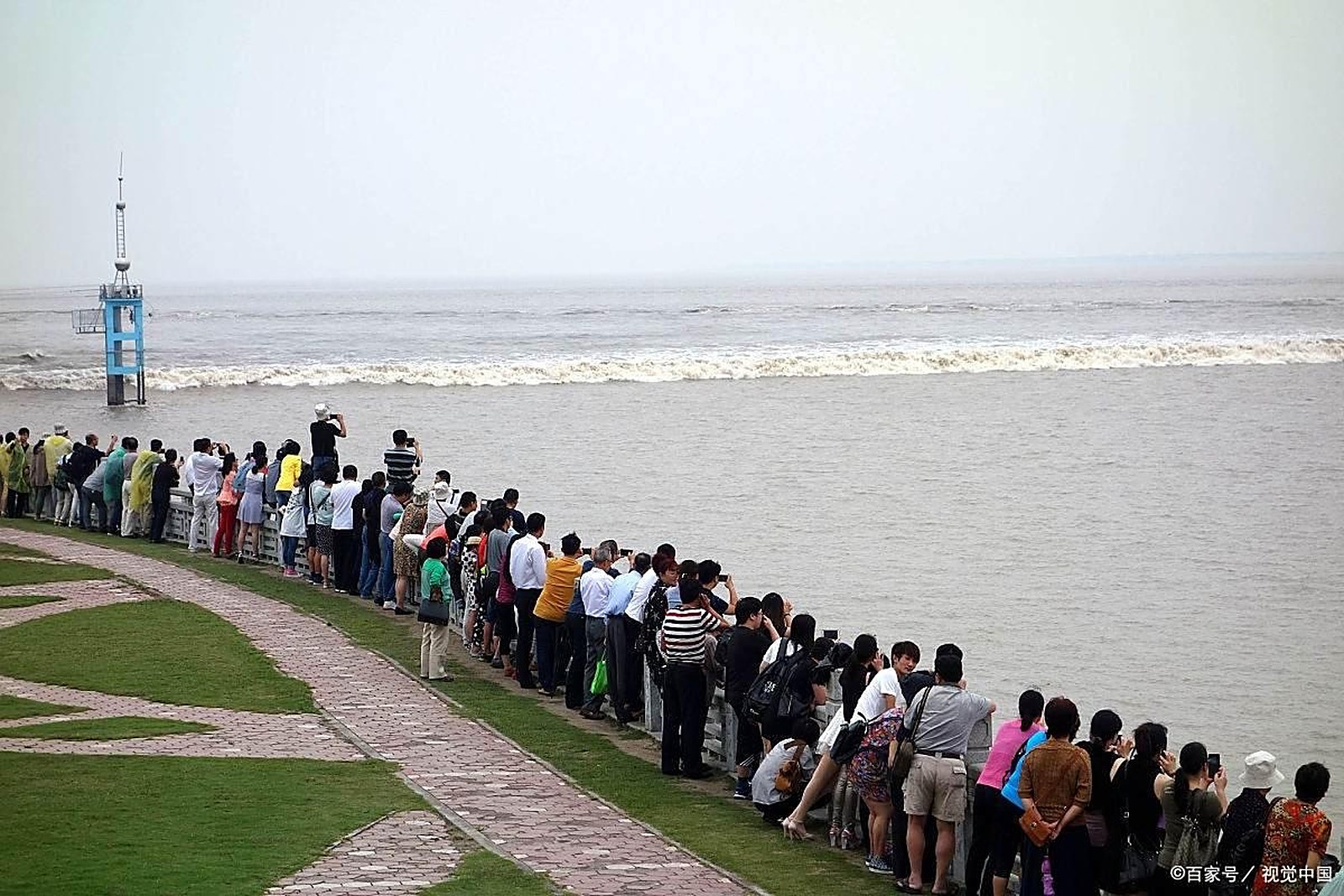
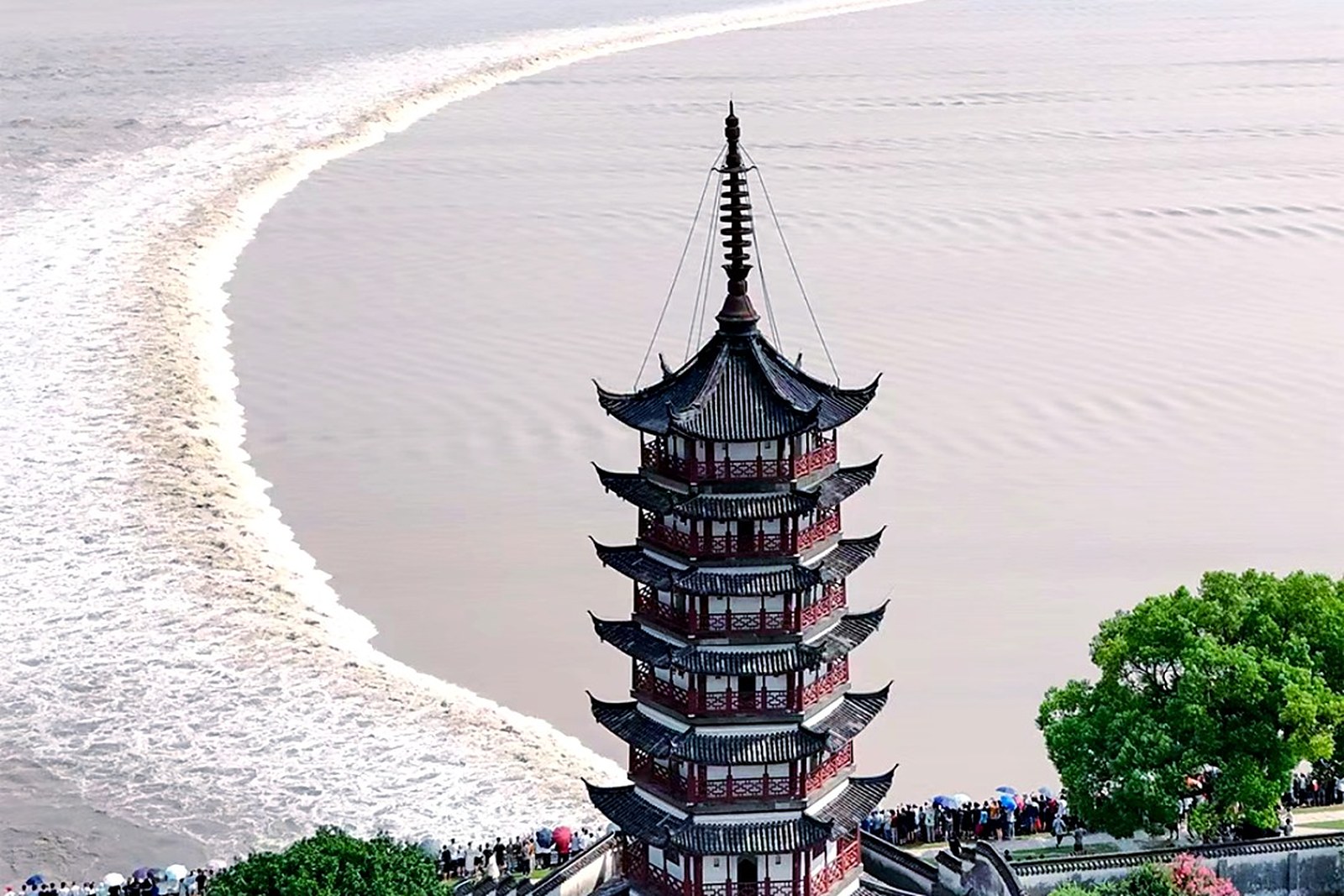
The mechanics are the drama: the estuary narrows from sea to river like a trumpet, the incoming tide piles faster than the outgoing water can drain, and the front steepens into a traveling wall – in the eighth-month spring tides, measured higher than a man. The ancient seawall at Yanguan, built of stone blocks clamped with iron, has held the line for centuries, and 占鳌塔 Zhàn’áo Tǎ Zhanguan Pagoda rose beside it expressly to watch the water do its trick.
Tide-watching here is a social ritual as old as the Song dynasty: the promenade fills with families, the vendors sell tide schedules beside the tea, and when the line appears – a silver thread first, then a sound like distant traffic, then the wall itself – the whole seawall gasps in unison. Crowds recede a respectful step, phones go up, and the river sweeps past as if nothing extraordinary had just happened, twice a day, punctual as a train.
The town around the wall fills the between-tide hours: the 海神庙 Hǎishén Miào Sea God Temple built by imperial decree to apologize to the water, the old streets of the salt-trade town, and the bore museum that explains why this river alone produces a wave you can watch from a park bench. The practical magic is reliability – no other natural wonder in China keeps a twice-daily timetable – and the practical warning is respect: the bore outruns sprinters, and the wall, not the mudflat, is where watching happens.
Practicalities
- The bore runs twice daily every day; heights peak around the eighth lunar month (and the Mid-Autumn week above all) – check the local tide table the night before.
- The tide-watching park on the seawall is the classic viewing stand; arrive half an hour early for the front rail.
- The line tide is Yanguan’s classic; the upstream bends show the cross and returning bores for tide chasers with a car.
- Trains reach Haining station; buses and taxis cover the last leg to the park – crowd crush is real on festival days.
Words and Names
盐官 Yánguān Yanguan, the tide town; 钱塘潮 Qiántáng cháo the Qiantang bore; 一线潮 yīxiàn cháo the line tide, the full-width wave; 占鳌塔 Zhàn’áo Tǎ Zhanguan Pagoda, the tide tower; 海宁 Hǎiníng Haining, the county city. Beyond the bore, the same 嘉兴市 Jiāxīng Shì Jiaxing City keeps more places worth the detour: 南湖 Nán Hú the red-boat lake, 乌镇 Wūzhèn the two-zone water town, 西塘 Xītáng the covered-corridor town, or 南北湖 Nánběi Hú the mountain-sea-lake reserve – four more doors into the same 嘉兴市 Jiāxīng Shì Jiaxing City. Once the river has had its tide, our Jiaxing food map fills the table.
flowcloud would say Yanguan is a town that watches a river keep an appointment: twice a day, on time, a wall of water arrives like a train you can see from a park bench – and the whole seawall checks its watch and applauds. All checked November 2026.
Getting there: Yanguan lies on the Qiantang in Haining – trains reach Haining station, then buses run to the tide-watching park; the bore times shift daily with the lunar calendar, so check the local tide table the night before and stand on the seawall half an hour early. All checked November 2026.