
椰田古寨 Yētián gǔ zhài is a Li and Miao cultural village on the road between 陵水 Língshuǐ and 三亚, and it is a particular kind of place: a working reconstruction of a 黎族 Lí zú and 苗族 Miáo zú settlement, built to show the two peoples’ ways of life, their handicrafts, their houses and their food, and visited in the hundreds of thousands of day trippers who pass along the coast. As a visit it is part theme park and part living museum, and it succeeds best at the second of those. The village is not a real village that happens to be on the tourist trail; it is a stage set, but one made with genuine materials and by people who know the craft.
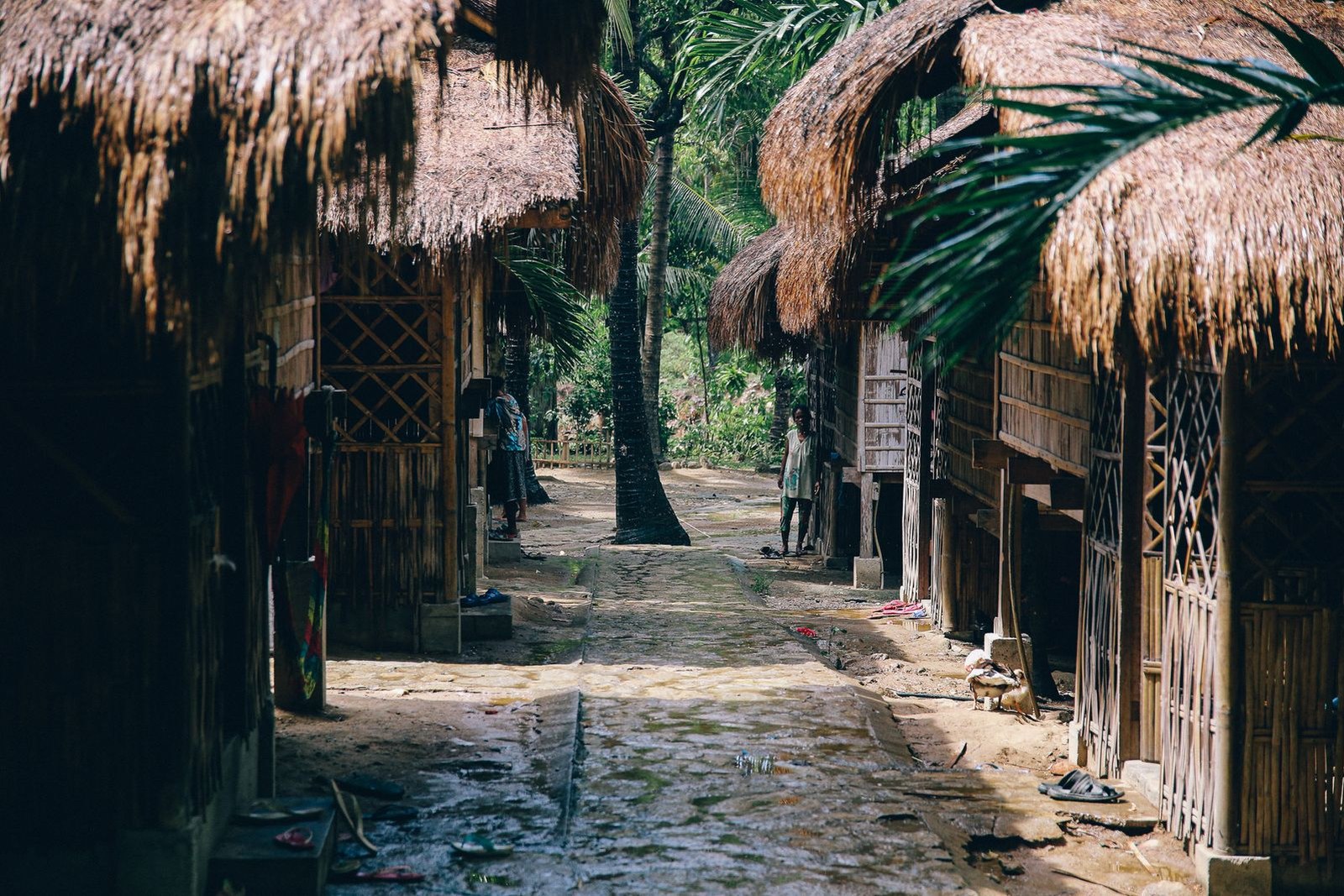
The core of the place is the 船形屋 chuán xíng wū, the boat-shaped house, the traditional dwelling of the Li, built on short stilts with a roof of thatch that curves down to the ground at each end like an upturned boat. In 椰田 you can walk into a full-scale example and see how it is divided – the living space, the sleeping platform, the hearth – and how the low roof and the raised floor keep the tropical heat and the damp out. Around it are the 吊脚楼 diào jiǎo lóu of the Miao, the taller stilt houses, and between them the craftspeople at work: they are weaving the 黎锦 Lí jǐn, the Li brocade whose patterns are older than the dynasties, on a foot-treadle loom, the weaver sitting on the floor and the warp stretched out.
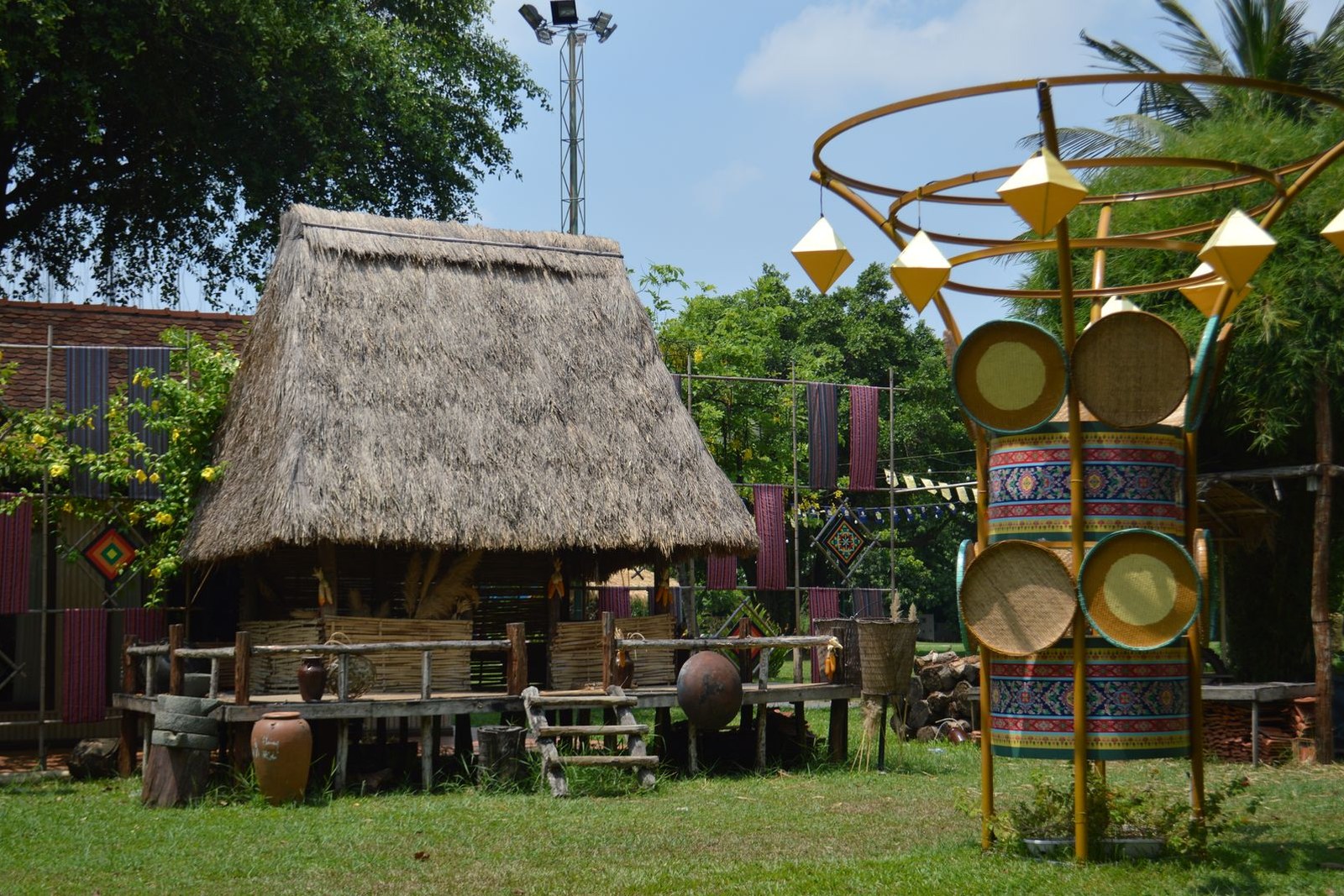
There is also the food and the music. The village has a 银饰 yín shì workshop where the Miao silver is made, and a courtyard where a bowl of 山栏酒 shān lán jiǔ, the Li rice wine, or a hand of 竹筒饭 zhú tǒng fàn, bamboo-tube rice, is offered. The 舂米 chōng mǐ, the rice-pounding, is demonstrated to a rhythm, and a 竹竿舞 zhú gān wǔ, the bamboo pole dance, is put on for the visitors, with the poles clapping shut and open as the dancers step between them. If you want to try it, they will slow the rhythm down. It is all a performance, but it is a performance of real things, done by people who still know how to do them.
Practicalities
Tickets. The village charges an entrance ticket, in the region of ¥50 to ¥80 depending on season and what is on. Some guided tours and shows are included; a few hands-on workshops and the 山栏酒 tasting may carry a small extra charge.
Opening hours. The village is open roughly 08:00 to 18:00, and the scheduled shows – the bamboo dance, the rice-pounding, the silver workshop – run at set times through the day, so check the board on arrival and plan your route around them.
Getting there. 椰田古寨 is on the main coastal road between 陵水 and 三亚, about half an hour from either by car. The 环岛高铁 ring railway stops at 陵水站 Língshuǐ zhàn, from which a bus or taxi runs towards the village.
Closing day. The village is open every day of the year with no weekly closing day. The indoor workshops and the museum rooms follow the same daily hours, and the outdoor shows continue through the day.
Getting there: the coastal road between 陵水 and 三亚 is the route, and 陵水站 on the ring railway is the station to aim for, each about half an hour away.
flowcloud would say that a stage set built of real materials and worked by people who still know the craft is closer to the truth than a preserved ruin that nobody has touched, because it keeps the skill alive rather than merely remembering it.