
Yiheyuan Summer Palace: The Qing Dynasty Imperial Garden, Kunming Lake and Foxiang Pavilion of Haidian District, Beijing
昆明湖光涵塔影,佛香阁上俯千帆。Kūnmíng Hú guāng hán tǎ yǐng, Fóxiāng Gé shàng fǔ qiān fān – Kunming Lake’s light holds the pagoda’s image; from the Tower of Buddhist Incense one looks down on a thousand sails.
颐和园 Yíhéyuán Yiheyuan, the Summer Palace, is not a park with a boating lake — it is, plainly put, the last and grandest of the Qing imperial gardens, a hill-and-water composition of some three thousand halls, pavilions and covered walks built around 昆明湖 Kūnmíng Hú Kunming Lake and beneath 万寿山 Wànshòu Shān Longevity Hill, in the north-west of 海淀区 Hǎidiàn Qū Haidian District, Beijing. The work began in 1750, when the 乾隆 Qiánlóng Qianlong emperor rebuilt the old 瓮山 Wēng Shān Jar Hill as a birthday gift for his mother, renaming it Longevity Hill and widening the marshy pond below into a lake named for the reservoir where Han-dynasty admirals once drilled — 清漪园 Qīngyī Yuán Qingyi Garden, one of the celebrated 三山五园 sān shān wǔ yuán “Three Hills and Five Gardens” of the western suburbs. In 1860 the Anglo-French forces burned it with the rest of the hills; in 1888 the 慈禧 Cíxǐ Empress Dowager Cixi had it rebuilt — with money, legend insists, diverted from the navy — and renamed it 颐和园, the Garden of Nurtured Harmony, running the court here in summer while the young 光绪 Guāngxù Guangxu emperor sat, and was later kept, under the watchful windows of 玉澜堂 Yùlántáng Yulan Hall. The grounds joined the UNESCO World Heritage list in 1998, and what you actually visit is that listed landscape whole — hill, lake, causeway and tower composed like a sentence, the water filling most of the frame, so that the walk is a walk through an eighteenth-century painting that happens to sell tickets.
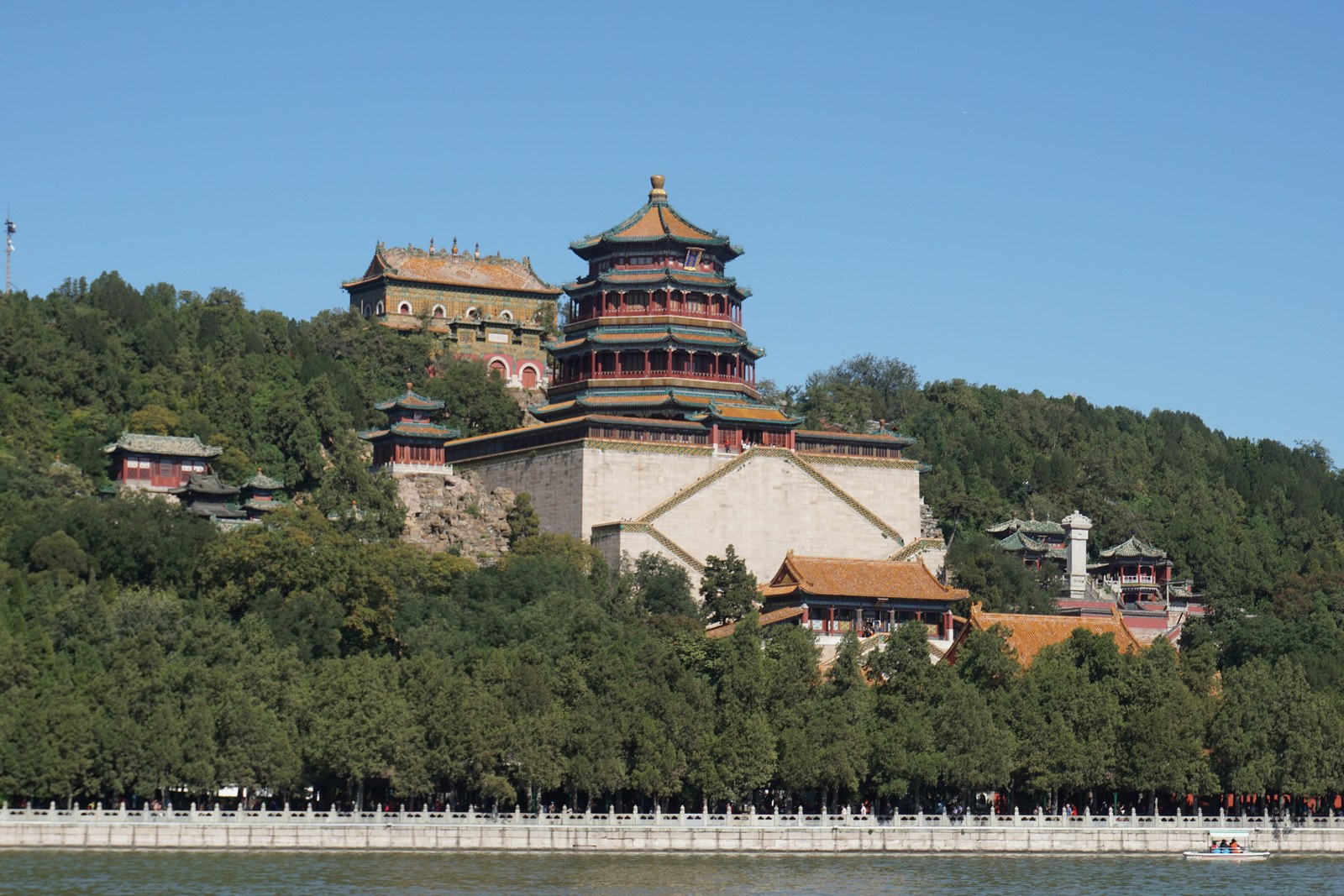
Call it honestly: a ticketed garden whose gate is only the first counter. Entry to the park itself is ticketed and the current rate is worth confirming the details before you go; inside, the showpieces — 佛香阁 Fóxiāng Gé Foxiang Pavilion, the octagonal tower on the hill’s stone base, 德和园 Déhéyuán the Great Opera Court where Cixi watched her plays, and 苏州街 Sūzhōu Jiē Suzhou Street, the canal bazaar rebuilt beneath the north gate — are ticketed again, singly or as a combined pass that shifts by season (worth confirming the details). Opening hours follow the light, with the gates closing earlier through the winter (worth confirming the details), and the lake ferries and rowing boats run only in the warm months (worth confirming the details). The crowds are the real price: the 东宫门 Dōnggōngmén East Palace Gate corridor at midday is a procession of umbrellas, so the honest moves are an opening-time entry or an arrival by the 北宫门 Běigōngmén North Palace Gate, which drops you on the quiet back hill with the lake still to come. Budget a full morning, wear shoes for stone causeways, and leave the souvenir strip by the gates for the way out.
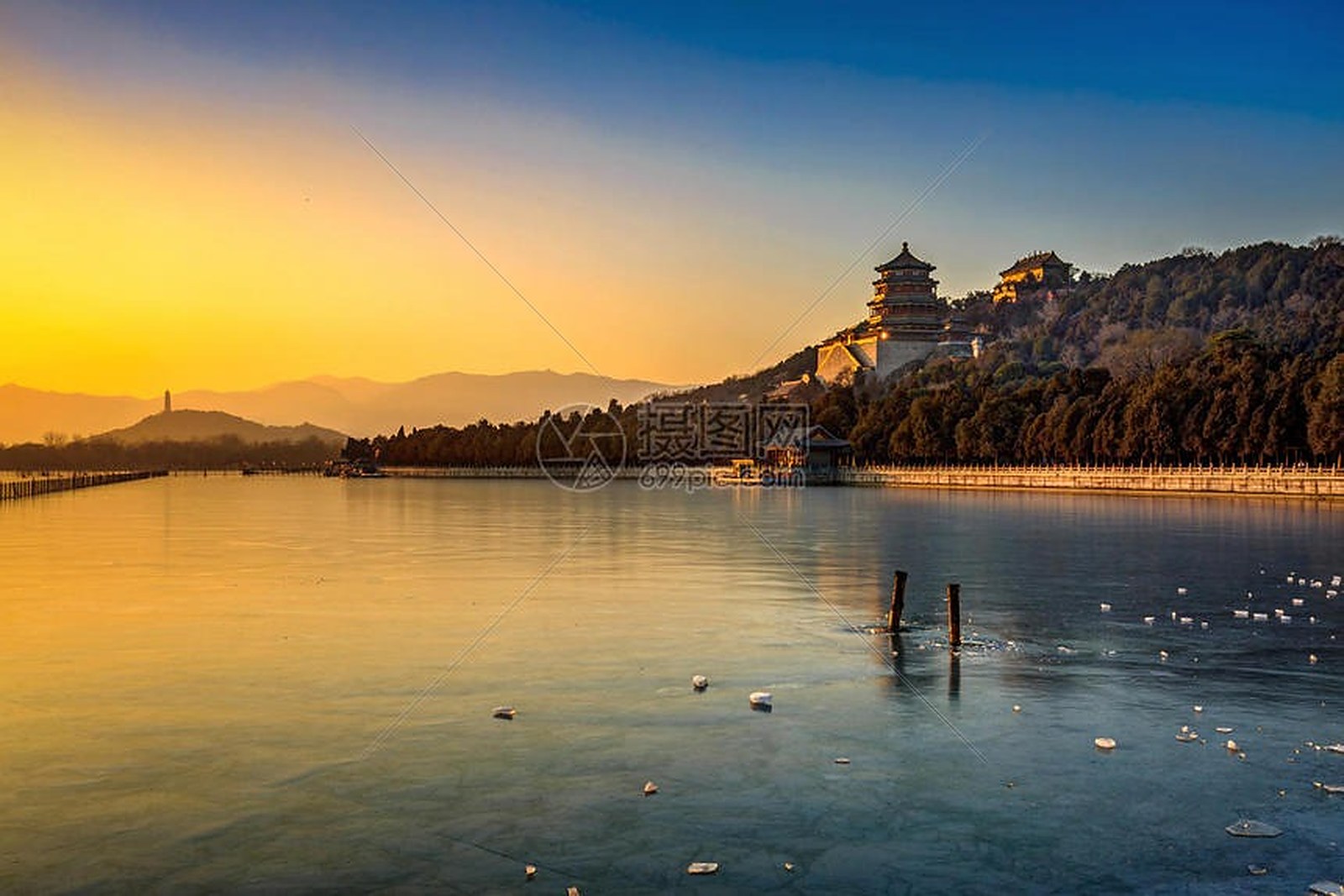
The honest star is the lake at its edges, not the tower at its top. A slow circuit of 昆明湖 Kūnmíng Hú — along the 长廊 Cháng Láng Long Corridor, some seven hundred metres of painted beams held above the water, past the 石舫 Shí Fǎng Marble Boat that has never sailed, and out along 西堤 Xī Dī the West Dyke, a willow causeway modelled on Hangzhou’s West Lake — repays the hours more than any single hall, because the composition is the exhibit: hill against water, tower against dyke, and on a clear evening the 玉泉山 Yùquán Shān Jade Spring pagoda borrowed into the view like a stamp of the old panorama. What gets oversold is the 十七孔桥 Shíqīkǒng Qiáo Seventeen-Arch Bridge at noon, a line of selfie sticks marching toward 南湖岛 Nánhú Dǎo South Lake Island that the postcards sell as the palace but that any resident will tell you is the crowded half; what repays the effort is the same bridge at eight in the morning, when the seventeen arches frame mist instead of tour groups. Climb to 佛香阁 Fóxiāng Gé once for the classic map view of the lake, then give the back hill and its 四大部洲 Sìdàbùzhōu Tibetan-style terraces a quiet hour. Come for the geometry of the place: hill, then water, then dyke — the whole landscape a court moved outdoors.
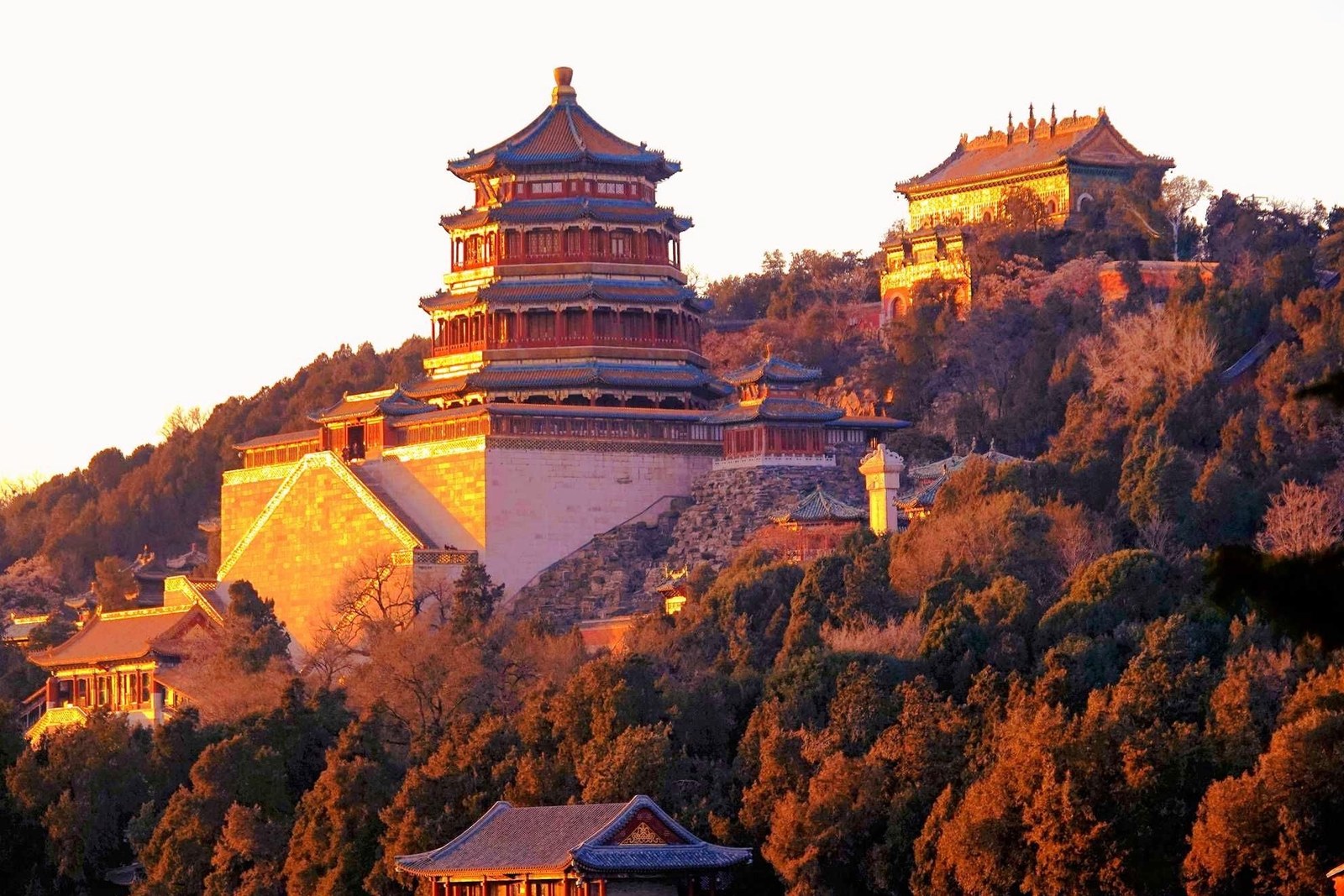
The self-aware postscript: I queued to the Marble Boat at noon in a river of umbrellas, saw the lake only over shoulders, and came back at six, walking the West Dyke as the herons worked the shallows and the Tower of Buddhist Incense lit gold above the willows — and realised the lake was the palace and the buildings merely its punctuation. That is the visit in miniature. 颐和园 Yíhéyuán suits whoever treats it as a water-garden first and a monument second — arrive at opening, walk the dyke early, climb the tower late — and exhausts whoever sprints the East Gate strip for one photograph. Everything else on this Haidian list lies within a short ride: the ruins of 圆明园 Yuánmíngyuán to the north-east, the red slopes of 香山公园 Xiāngshān Gōngyuán to the west, the temple valley of 北京植物园 Běijīng Zhíwùyuán beside it, and the cherry lakes of 玉渊潭公园 Yùyuāntán Gōngyuán to the south-east, all in the same 海淀区 Hǎidiàn Qū Haidian District the emperors chose for their summers.
Practicalities
- Rating: ★★★★☆ — the finest imperial landscape garden in the capital; the lake circuit and West Dyke outrank the gate-strip crowds; go at opening and the palace stays a painting.
- Tickets: Ticketed park entry, with separate or combined tickets for Foxiang Pavilion, Deheyuan and Suzhou Street (worth confirming the details for current rates, the combined pass and seasonal hours); the boats run in the warm months only.
- Address: 颐和园 Yíhéyuán Summer Palace, 海淀区 Hǎidiàn Qū Haidian District, Beijing — north-west of the old city, between 昆明湖 Kūnmíng Hú Kunming Lake and the Western Hills, with the main gates on the east and north sides.
- Time needed: Three to four hours for the Long Corridor, the tower and one shore of the lake; a full day if you walk the West Dyke and the back hill as well.
Words and Names
颐和园 Yíhéyuán Summer Palace · the Qing “Garden of Nurtured Harmony” of north-west Haidian 昆明湖 Kūnmíng Hú Kunming Lake · the great lake that fills most of the grounds 万寿山 Wànshòu Shān Longevity Hill · the renamed hill rising behind the water 佛香阁 Fóxiāng Gé Foxiang Pavilion · the octagonal Tower of Buddhist Incense crowning the hill 长廊 Cháng Láng Long Corridor · the seven-hundred-metre painted gallery above the shore 十七孔桥 Shíqīkǒng Qiáo Seventeen-Arch Bridge · the arched causeway to 南湖岛 South Lake Island 西堤 Xī Dī West Dyke · the willow causeway modelled on Hangzhou’s West Lake 苏州街 Sūzhōu Jiē Suzhou Street · the canal bazaar rebuilt beneath the north gate
flowcloud would say that 颐和园 Yíhéyuán is Haidian’s imperial masterpiece — 清漪园 Qīngyī Yuán rebuilt by 慈禧 Cíxǐ in 1888 around 昆明湖 Kūnmíng Hú and 万寿山 Wànshòu Shān, its 长廊 Cháng Láng and 西堤 Xī Dī composing hill against water under 佛香阁 Fóxiāng Gé — and that the honest move is an opening-hour entry by the 北宫门 Běigōngmén or 东宫门 Dōnggōngmén, because the gate fee and the pavilion, theatre and bazaar tickets all shift by season (worth confirming the details), the Seventeen-Arch Bridge at noon is the crowded half, and the lake repays whoever walks the dyke first and climbs the tower second while losing whoever sprints the East Gate strip for one photo. All checked October 2026.
Getting there: Metro Line 4 to 北宫门 Běigōngmén Beigongmen then a short walk to the North Gate, or the 西郊线 Xījiāo Xiàn Xijiao Line tourist tram to 颐和园西门 Yíhéyuán Xīmén Summer Palace West Gate; the palace sits in north-west Haidian beside 昆明湖 Kūnmíng Hú Kunming Lake and 万寿山 Wànshòu Shān Longevity Hill (worth confirming the details for the current North Gate and West Gate hours). All checked October 2026.