
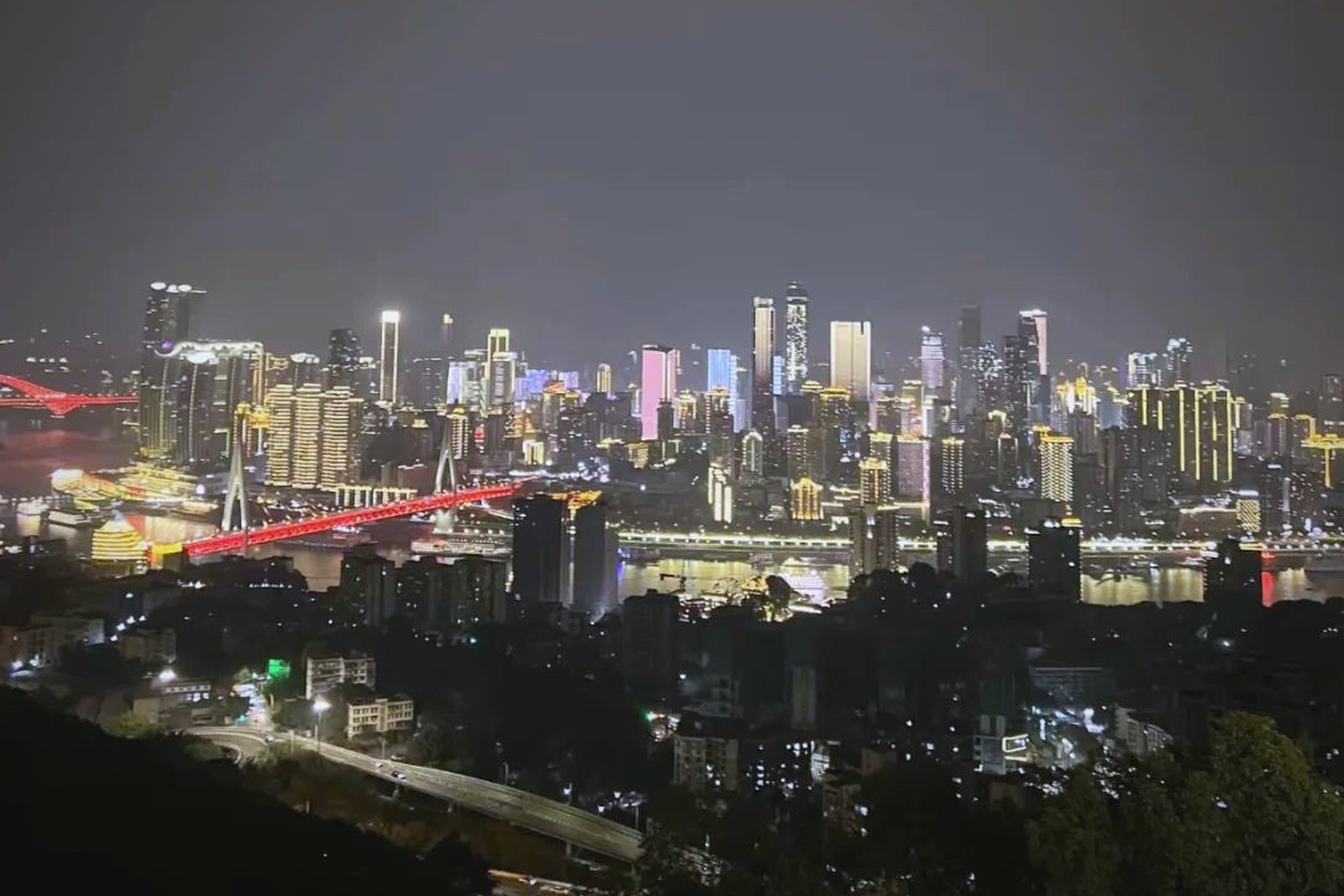
After dark the ridge of 南山 Nánshān, Nanshan, goes quiet, and the city across the water does precisely the opposite. Chongqing is a municipality of southwest China, and 南岸区 Nán’àn Qū, Nan’an District, is its south bank: the river frontage that faces the old 渝中半岛 Yúzhōng Bàndǎo, Yuzhong Peninsula, straight across the Yangtze. On a mid-slope of the ridge, wrapped around one enormous old huangjue tree, stands a circular viewing deck where the whole evening performance of Chongqing plays out across the water – ten thousand hillside lights, the gold of Hongyadong far off to the left, the light-trails of the bridges stitching both banks together. This is the classic across-the-river vantage, the place the city goes to see itself whole, and it belongs to the south bank rather than to any tower downtown: the picture is framed by distance, by the river sliding between viewer and viewed, and by the dark mass of the ridge behind you.
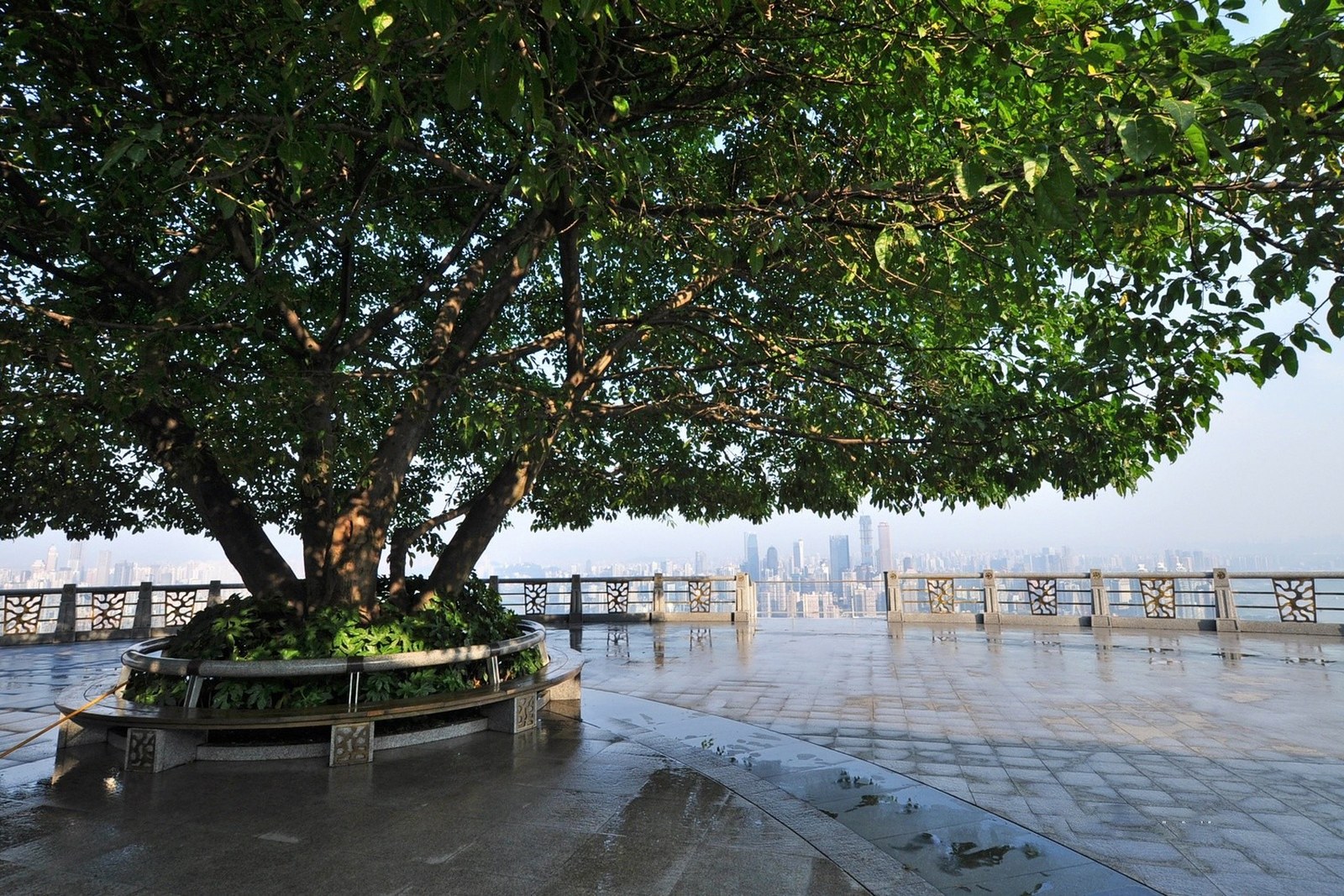
The viewpoint sits on the wooded mid-slope of the ridge above 龙黄公路 Lónghuáng Gōnglù, Longhuang Road, inside the Nanshan scenic area, and it is a young institution with an old centrepiece. Local tourism records put its opening in 1997, when the city began building formal viewing facilities on the ridge, and the name is exactly what it says: the layout kept one great huangjue tree, Ficus virens, the spreading fig that Chongqing treats as its signature street tree, and the platform took its name from that single survivor – 一棵树 Yīkē Shù, One Tree. The design is described as a front deck and a rear pavilion: the terraced galleries stack down the slope so that every level gets an unobstructed line across the river, and behind them a six-storey pavilion, about 28 metres tall, climbs into the trees with room for more than five hundred night watchers on a busy evening. The mountain behind the deck is the rest of the south bank’s portfolio – a temple, a botanical garden, the old post road and the wartime villas – but at dusk the whole ridge narrows to one activity.
What the deck actually shows you deserves a catalogue, because Chongqing’s skyline is not a wall of towers but a topography. The Yuzhong Peninsula lies opposite like a ship at anchor, its buildings stacked up a steep spine with the Yangtze on one side and the Jialing on the other; the confluence glitters at its downstream tip; and the bridges – each a bowed string of lights – connect the peninsula to both banks. Come at blue hour rather than full dark: the twenty minutes after sunset leave the river and the sky still holding colour while the city’s lights come on district by district, and the photographs from that window beat anything taken later. Tour buses climb the mountain road nightly for exactly this half hour, so the deck fills, empties and fills again on the rhythm of the arrivals; the calm moments are the gaps between them, and the weekday evenings that have no gaps at all.
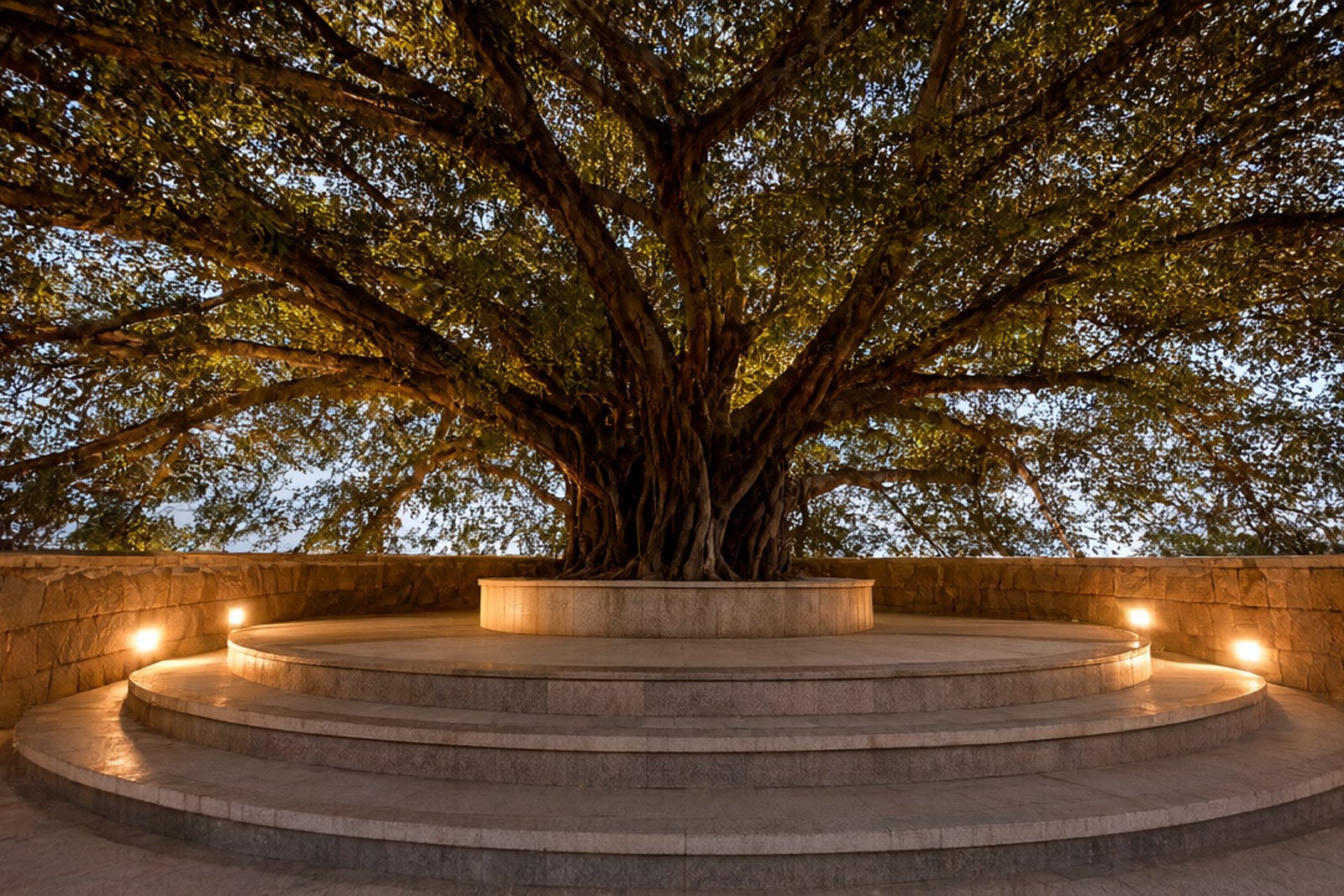
Timing is the whole art of the visit. Arrive ninety minutes before full dark, watch the afternoon haze thin into dusk, take the blue hour and stay through the first hour of lights; the whole show runs about two hours, longer if the night is clear enough to keep the camera out. Weather is the honest caveat – Chongqing’s famous fog and winter haze can flatten the far bank to a smear, and a hazy evening trades the postcard for atmosphere, which is its own consolation but not the one you climbed for. The ridge makes the trip easy to fold into a day: the old street at Huangjueya and the hillside temple both sit within a short ride, and a morning of gardens followed by a dusk at the deck is the classic south-bank shape. Foggy nights are not wasted ones, but check the sky from the river front before committing the climb.
Practicalities
Tickets. The gate price is around 30 yuan for adults, with concessions of roughly 14 yuan for children, students and seniors; the online platforms sell the adult ticket for a little less, around 28 yuan. As of October 2026, subject to change – check before you go.
Opening hours. The viewpoint opens at 9:00 am and closes in the late evening; reported closing times vary between about 10 pm and 11 pm, so confirm with the scenic area’s official WeChat account before a night visit rather than planning to the minute.
Closing day. There is no fixed closing day: the viewpoint is treated as open daily year-round, weather permitting, with fog or storm closures announced on the spot.
Getting there. Buses 329 and 384 climb the mountain to the 崇文路 Chóngwén Lù, Chongwen Road, stop, from which the deck is a short walk up Longhuang Road; or take metro Loop Line to 上浩 Shànghào, Shanghao, Station exit 3C, transfer to bus 347 at Shangxinjie, and ride it to the Chongwen Road crossing for the same short walk.
flowcloud would say that Yikeshu is the seat the city saved for its own admirers – one tree kept standing, a deck built around it, and the whole peninsula hung on the wall opposite – and that the finest review of Chongqing is written nightly, in lights, on the far bank.
Getting there: Yikeshu, the One Tree viewpoint, stands on the mid-slope of the Nanshan ridge in Nan’an District, Chongqing, a municipality of southwest China, facing the Yuzhong Peninsula across the Yangtze; it opened in 1997, took its name from the single huangjue tree the design kept, and stacks its viewing galleries and a six-storey, 28-metre rear pavilion down the slope for a capacity of more than five hundred; admission runs about 30 yuan at the gate and a little less online, it opens at 9:00 am and closes in the late evening with reported times varying, there is no fixed closing day, and the climb is made by buses 329 or 384 to the Chongwen Road stop or metro Loop Line to Shanghao and bus 347 (checked October 2026, subject to change).