
The Wide River Walk: Levees, Bridges and Bridge-Light on the Yili at Keketokala
长河落日圆,桥影入城斜 Chánghé luòrì yuán, qiáoyǐng rù chéng xié – The long river rounds its setting sun; the bridge’s shadow leans into town
正文:伊犁河畔 Yīlí Hé Pàn the Yili river banks run along the western edge of 可克达拉市 Kěkèdálā Shì Keketokala City, where the widest river in Xinjiang slows past poplar-lined levees and the city’s great cable-stayed bridge steps across in one clean stride. This is a working river that behaves like a park: ferry crossings once stitched the valley farms together here, sandbanks shift with every spring flood, and the evening light on the water is the reason the promenade exists at all. For a new city still growing into its avenues, the river is the oldest thing in view – and the view knows it.
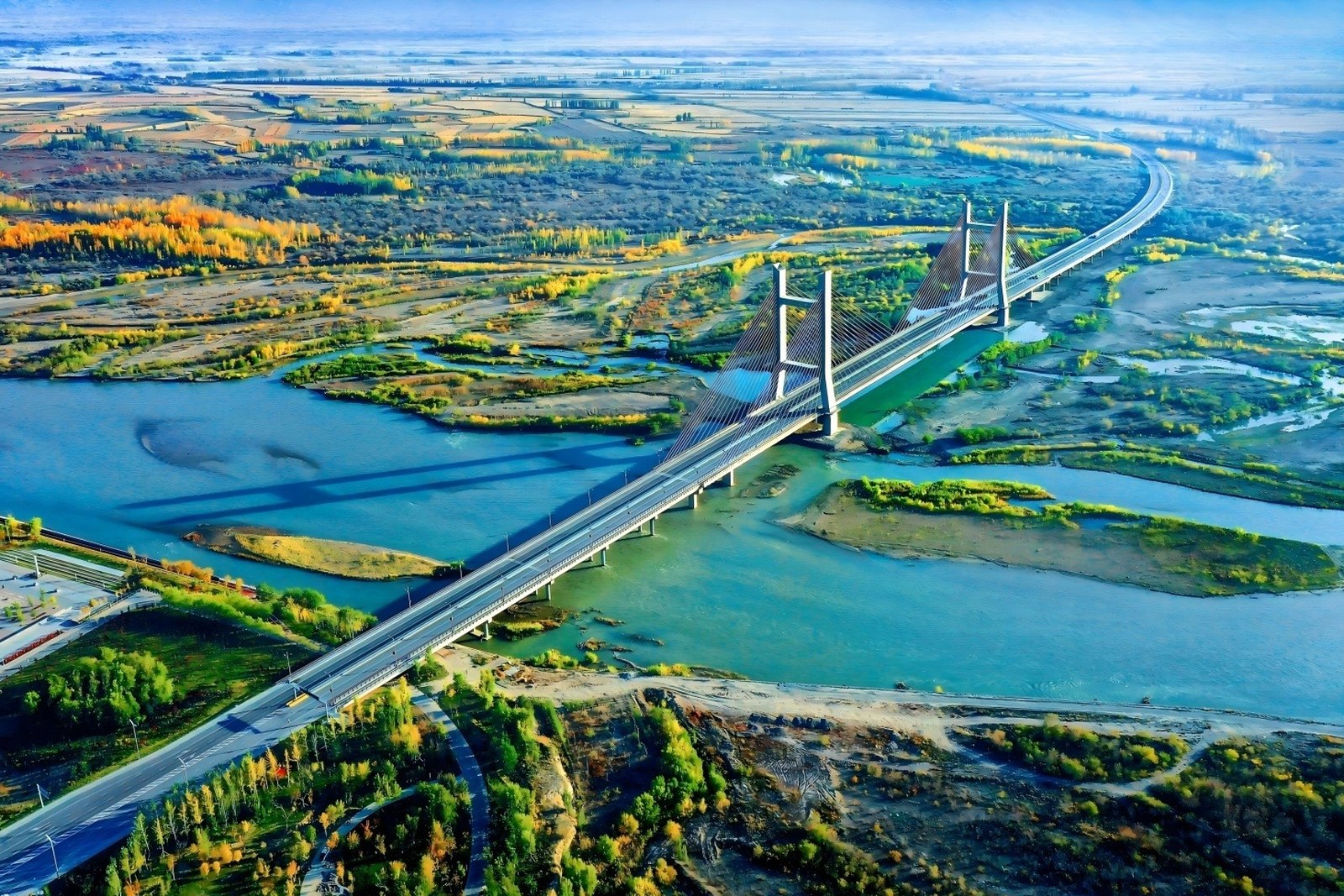
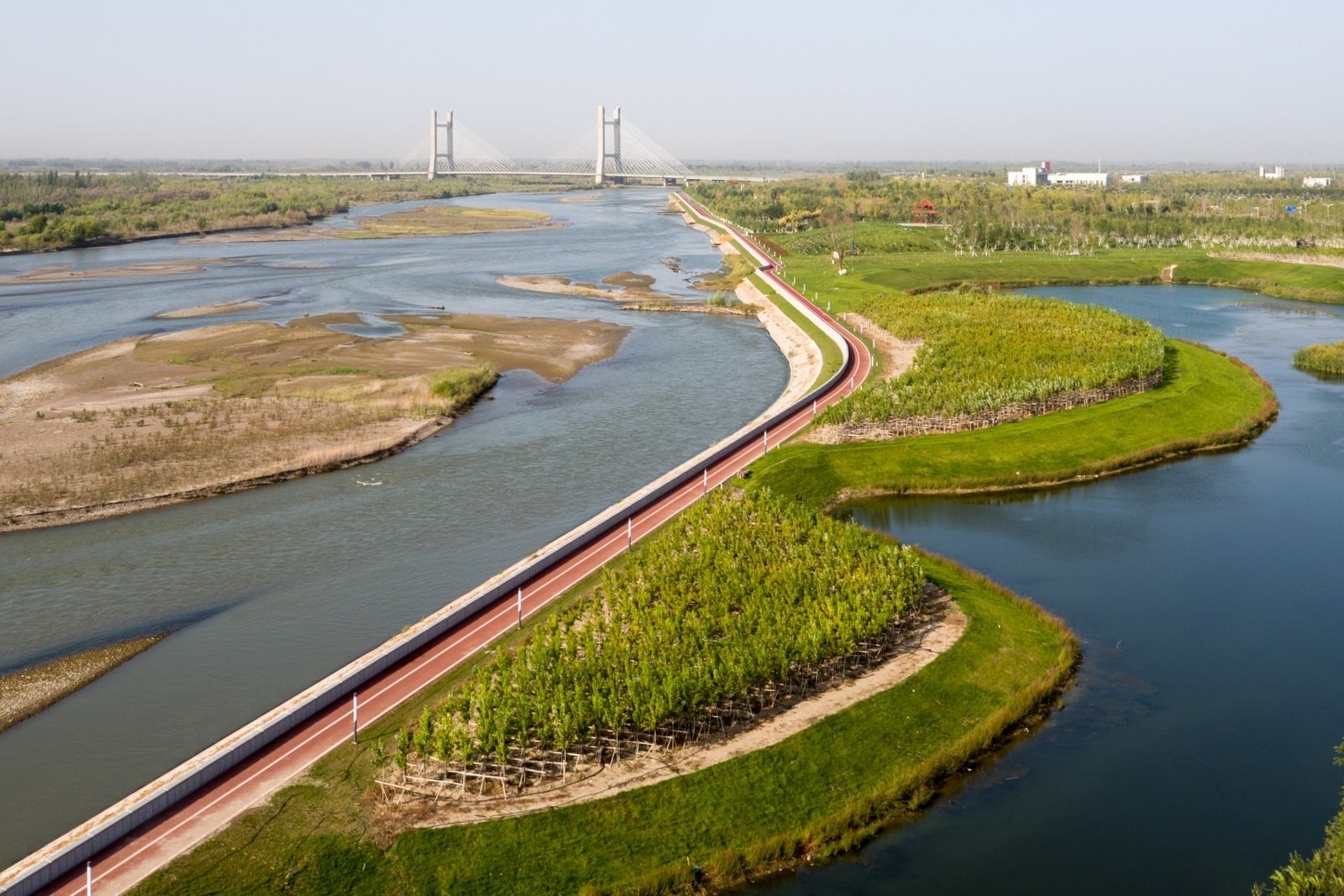
Walk the levee path and the river stages itself in scenes. Upstream, the braided channels split and rejoin around reeded islands where cormorants dry their wings; midstream, the bridge pylons carry traffic between the city and the far bank in a single silhouette; and downstream, the currents braid into shallows that glow like hammered brass an hour before sunset. Anglers hold the concrete aprons, couriers cut across the bicycle lane, and the poplars – planted in the disciplined rows the bingtuan loves – keep the whole composition in order.
The bridges are the headline act. The cable-stayed crossing beside the city reads best from the levee at golden hour, when the stays catch the last light and the river runs rose-gold beneath; the older downstream crossing wears its age in rust and repair, still carrying the farm traffic that built it. Between them the promenade curls past lawns and reading benches, and the city’s evening crowd arrives with the cooling air – this is Keketokala’s shared front porch, and everyone uses it.
Beyond the bridge light, the same 可克达拉市 Kěkèdálā Shì Keketokala City holds other waterside pleasures: 草原之夜纪念馆 Cǎoyuán zhī Yè Jìniànguǎn the Grassland Night memorial in the cultural quarter, 滨河公园 Bīnhé Gōngyuán the riverside park belt, 伊犁河湿地 Yīlí Hé Shīdì the wetlands on the oxbow side, and the June blue of 薰衣草田 Xūnyīcǎo Tián the lavender fields inland – four more doors into the same 可克达拉市 Kěkèdálā Shì Keketokala City. With the river walked, our Keketokala food map fills the day.

Practicalities first. The banks lie minutes from any central hotel by taxi, the promenade runs flat and shaded, and late afternoon gives the bridge its best light – bring a windbreaker, since the valley’s evening breeze arrives on schedule whether or not the sunset does. The levee is stroller-friendly for its whole length, drinking fountains are scarce, and the sandbank shallows look inviting but stay off them: the currents braid faster than they appear.
What stays with you is the scale. Most new cities grow away from their rivers; Keketokala was drawn toward one. The grid points at the water, the parks drain into it, and the evening crowd faces it – a young bingtuan city that treats a very old river as its main square.
Practicalities
Practicalities
Words and Names
flowcloud would say the Yili at Keketokala is a river doing city planning: the water writes the avenue grid a broad slow line, and every evening the whole town reads along. All checked November 2026.
Getting there: The river banks lie at the western edge of the city; taxis reach the levee in minutes and the promenade runs flat and shaded – late afternoon gives the bridge its best light. All checked November 2026.