
盈滨半岛 yíng bīn bàn dǎo is the best walk on this coast and almost nobody treats it as one. It is a headland on the extreme north-west of 澄迈县 Chéng mài xiàn, belonging to 老城镇 lǎo chéng zhèn but sitting immediately east of 海口市 Hǎi kǒu shì, and it has water on three sides – the 琼州海峡 Qióng zhōu hǎi xiá out west, the shelter of the inner bay on the north and east, and the neck of land at the south-east where the road comes in. The county’s description of the shape is 形似弯月 xíng sì wān yuè, shaped like a crescent moon, and that is what it is: a curve of sand and casuarina with a shallow bay on the inside of the curve and the open strait on the outside.
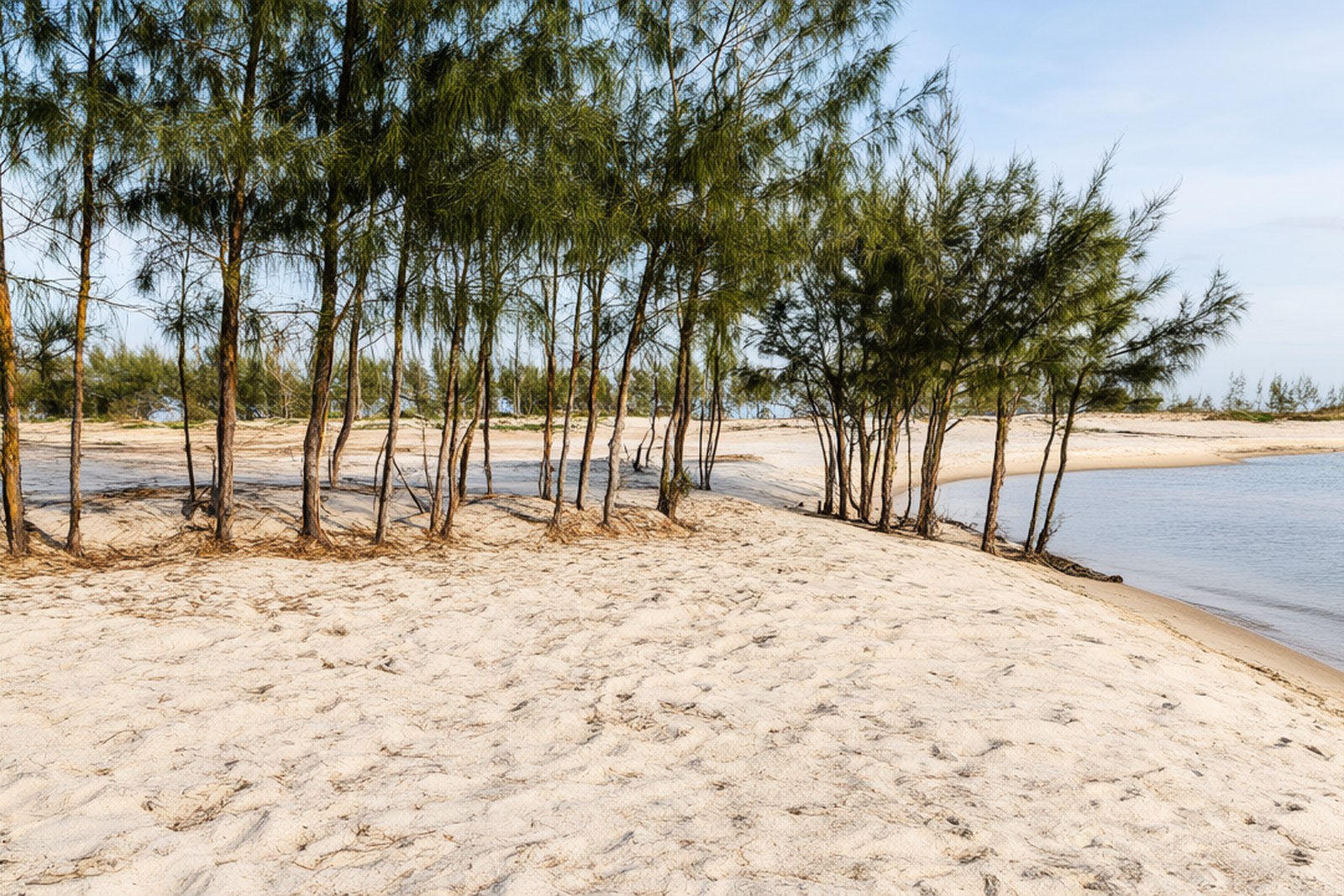
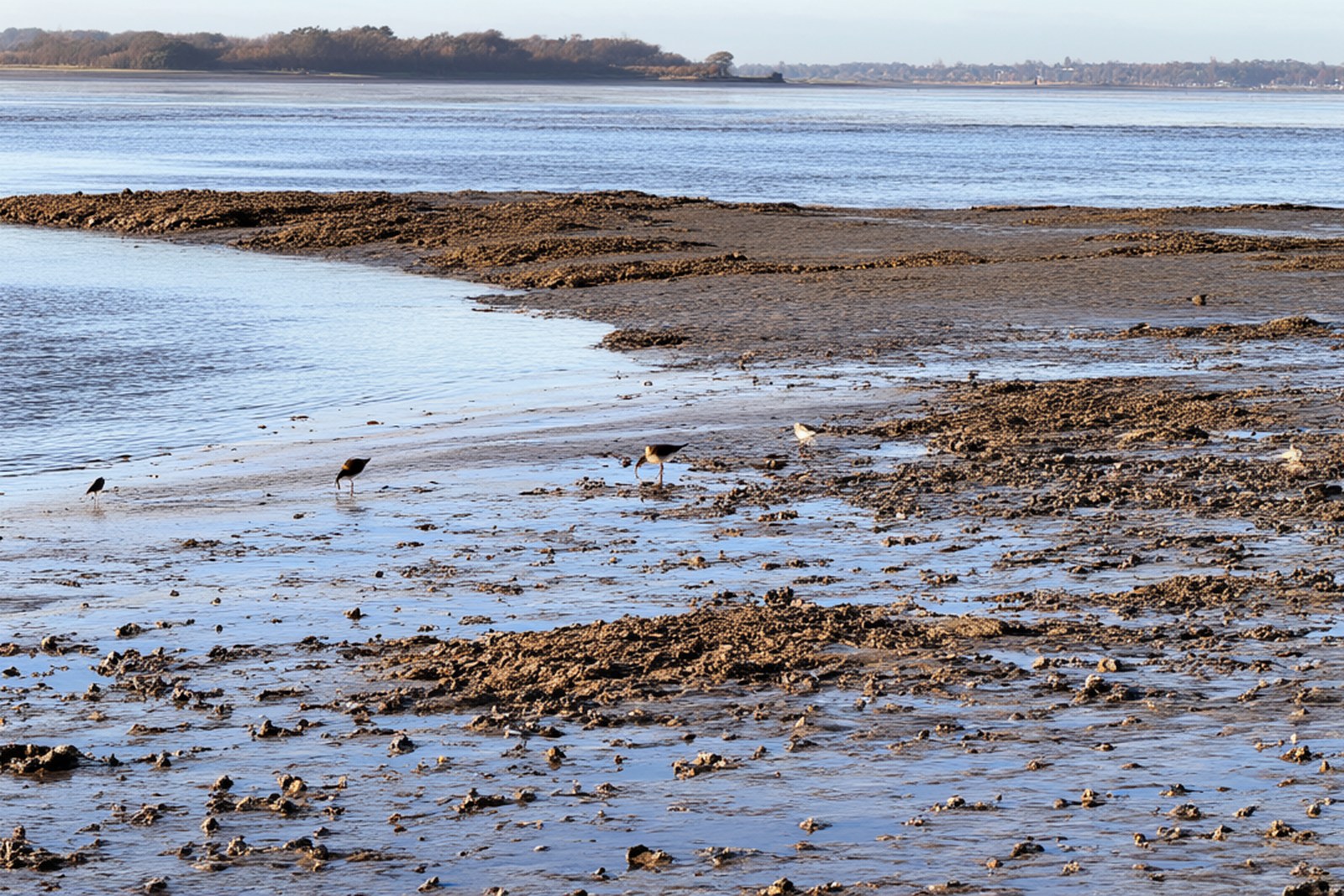
Walking it is a matter of picking a side. The inner shore is flat, shallow and quick to warm, with the mud and sand flats exposed a long way at low water and the boats of 东水港 dōng shuǐ gǎng working off the eastern end; the outer shore faces the strait and takes the swell, which is why the sand out there is steeper and the water colder, and why the two kilometres at the western tip are the ones people photograph. The trees are casuarina, planted in a belt along the crest, and the light comes through them in the middle of the afternoon in a way that makes the whole peninsula look like a park rather than a coast. At low tide the inner bay empties into a mirror and the wading birds work the flats; at high water the beach narrows to a strip and the same walk takes half the time.
The built-up part of the peninsula is at the eastern end, where the 老城经济开发区 lǎo chéng jīng jì kāi fā qū has put up hotels, apartment blocks and restaurants behind the sand, and it is worth knowing that the county’s own tourism literature pairs the peninsula with the monastery on its western shore rather than with the beach clubs – the two are a few minutes apart and the walk between them, along the casuarina belt, is the single best thing to do here. The headland’s history is a harbour history rather than a resort one: this was the landing place for the mainland crossing, where 苏东坡 Sū Dōng pō came ashore in 1097 and where 鉴真 Jiàn zhēn was carried back out on his way north after being blown off course, and the old town on the neck takes its name, 老城 lǎo chéng, literally the old city, from having been the county seat before anywhere else was.
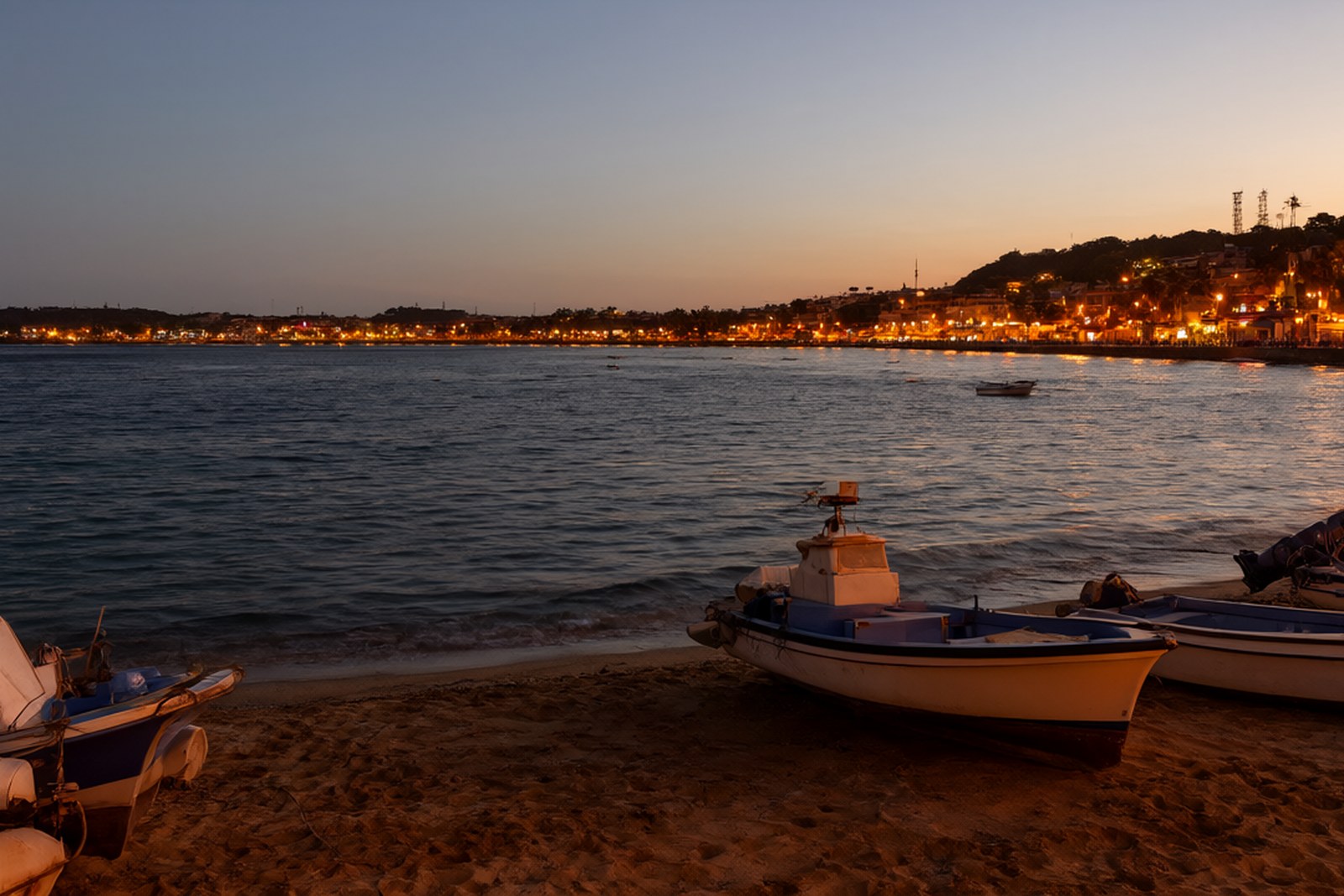
The practical point of the peninsula is its position. It is the only place in 澄迈 that is close to 海口 without being in it, so it works as a coast for the capital’s residents and as a base for anyone who wants the county’s food and the city’s museums in the same day. It is free, it is open at every hour, and it has no gate, no ticket and no vendor working the sand – a rare thing on a shore twenty minutes from a provincial capital. The evening is the best of it: the sun sets over the water on the western side, the hotels light up along the inner bay, and the walk back along the crest with the strait on one hand and the flat calm of the bay on the other is the reason to come.
Practicalities
Tickets. Nothing on the peninsula is ticketed. The beaches are free and open, the casuarina belt is free to walk through, and the only charges anywhere are for parking at the built-up eastern end and for whatever you eat. The monastery on the western shore is also free to enter.
Opening hours. The peninsula is open at all hours and has no closing time; swimming is unsupervised and there are no lifeguards, which matters more on the outer shore than on the sheltered inner one, where the water is shallow for a long way out. Low tide is worth planning around, because the inner bay empties a considerable distance and the flats are the interesting part of the walk.
Getting there. The peninsula is in 老城镇, 澄迈县, immediately west of 海口市 Hǎi kǒu shì and about twenty to thirty minutes from the city centre by the coast road, forty minutes from 海口美兰国际机场 Hǎi kǒu měi lán guó jì jī chǎng; the island’s west-ring high-speed railway stops at 老城镇 lǎo chéng zhèn, which is inland of the headland and a short taxi ride from the sand. Local buses run along the coast road and the peninsula is flat and walkable end to end in an afternoon.
Closing day. There is no closing day and no seasonal closure. The only days that change anything are the big public holidays, when the eastern end fills with 海口 day-trippers and the parking runs out, and the typhoon days in late summer, when the sea closes the outer shore and the county puts up warning flags on the inner one.
flowcloud would say that the county’s most valuable coast is the one it has never tried to sell: no ticket, no gate, no boardwalk, no vendor – just a crescent of casuarina twenty minutes from a provincial capital and a monastery at the far end of it where a shipwrecked poet once wrote the best line anybody ever wrote about being exiled to 海南.
Getting there: the 盈滨半岛 is in 老城镇, 澄迈县, on the coast immediately west of 海口市, twenty to thirty minutes from the city by the coast road; the west-ring high-speed railway’s 老城镇 station and the harbour at 东水港 are both within a few kilometres, and local buses run along the coast road. Come for the late afternoon, walk the casuarina crest between the sheltered bay and the open strait, and go out to the western shore for the sunset and the monastery.