
Yinggehai Salt Field lies on Ledong’s southwest coast, backed by the rainforest ridge of Jianfengling and looking out to sea, its pans spread between Huangliu town and Yinggehai town. The county government calls it the largest sea-salt field in southern China, and that is the usual billing; it is counted alongside Changlu in the north and Budai in Taiwan among China’s three historic sea-salt works. In February 1962, a little over two years after the first crude salt left the pans, the poet and scholar Guo Moruo visited and left a couplet the field still quotes: drive the sunlight as charcoal, boil the sea into silver mountains. The line survives because it describes what the place actually looks like at midday.
The field’s modern history starts with a survey. During the Japanese occupation of Hainan, planners identified the quality of the local seawater and drafted a scheme for what they called the largest salt works in East Asia, which was never built; after 1955, when the then Guangdong party secretary Tao Zhu inspected the site, a preparatory office opened in Guangzhou, construction followed, and the field went into production in 1958. Its first salt shipped at the end of November 1959. Control passed to the Hainan salt authority in April 1988, to the provincial development holding company in February 2008, and a higher-grade sea-salt base was built on site in July 2016.
The works cover some 3,800 hectares, roughly 38 square kilometres, and produce more than 80 per cent of Hainan’s crude salt; the field also holds national status as a designated edible-salt producer. It is still a working landscape rather than a museum piece, though well below the output of its mid-century peak – in the first half of 2025 it turned out close to 40,000 tonnes, its best six months in a decade, and rain damage to the curing salt was cut sharply. What makes the tradition distinctive is its slowness: the old-salt sun-drying technique, added to the provincial intangible cultural heritage list in 2023, uses saturated brine, deep-water evaporation and long crystallisation, taking more than a hundred days against the month or so of ordinary salt, and pushing sodium chloride purity above 95 per cent. Note the level carefully: this is provincial heritage, not a national listing.
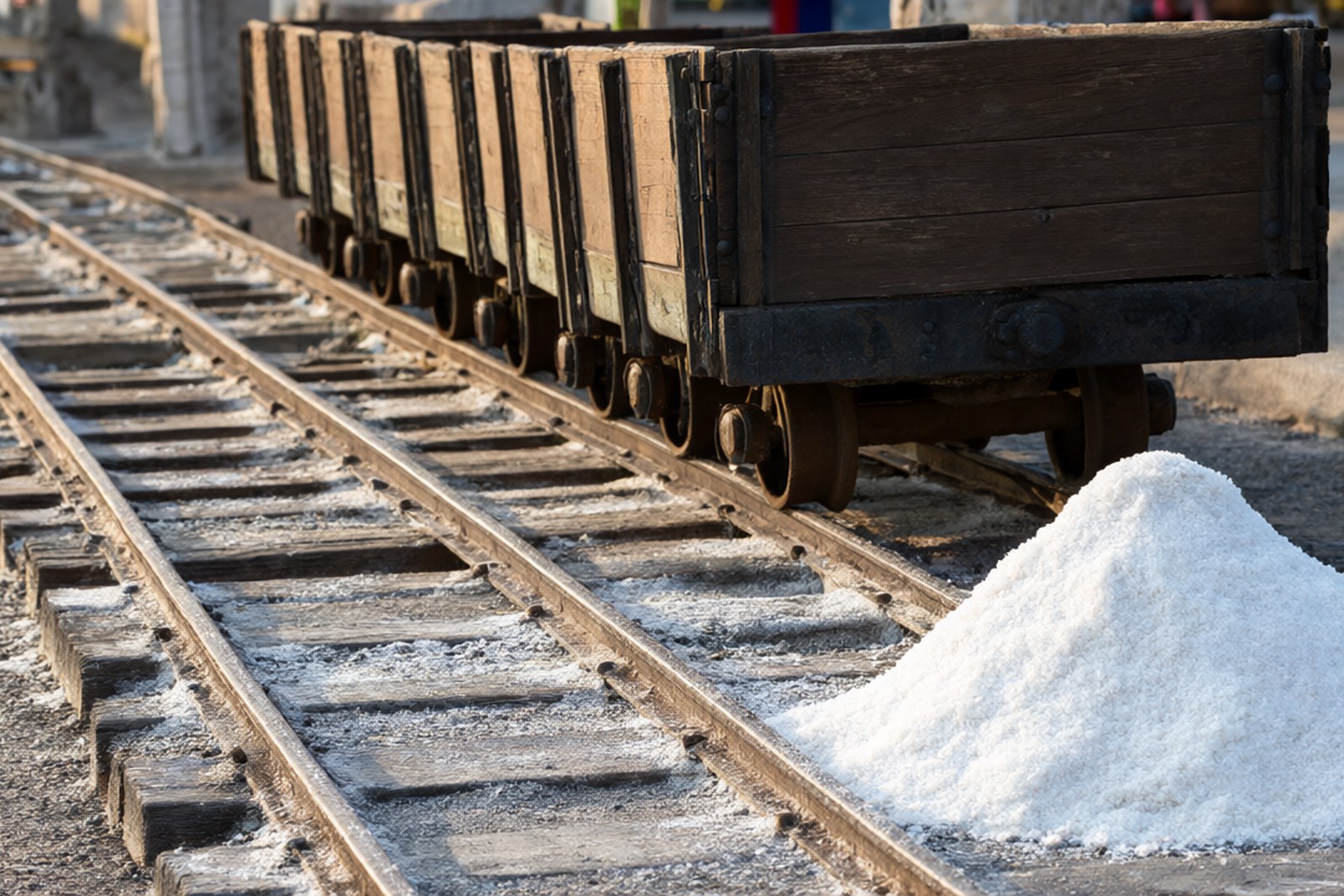
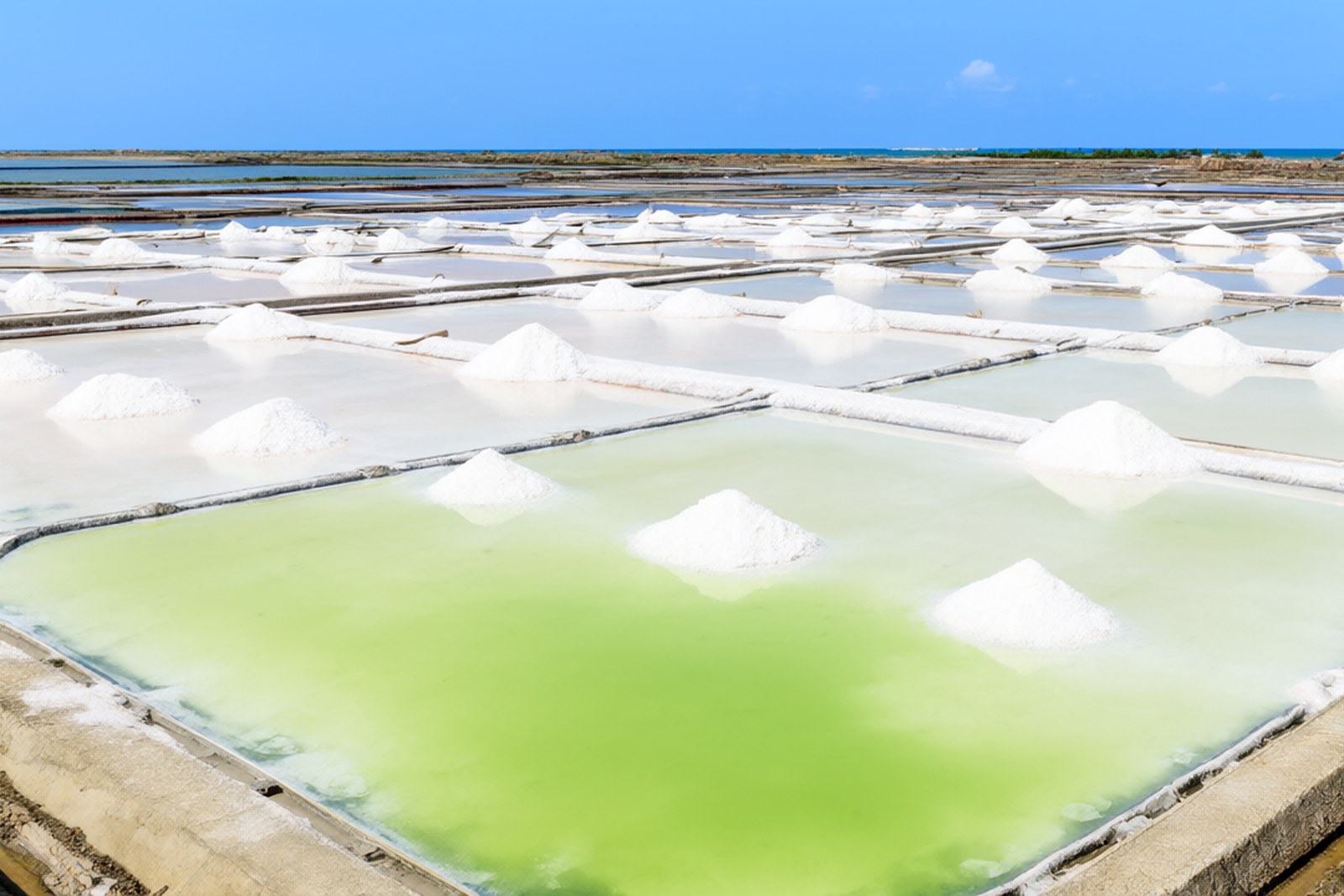
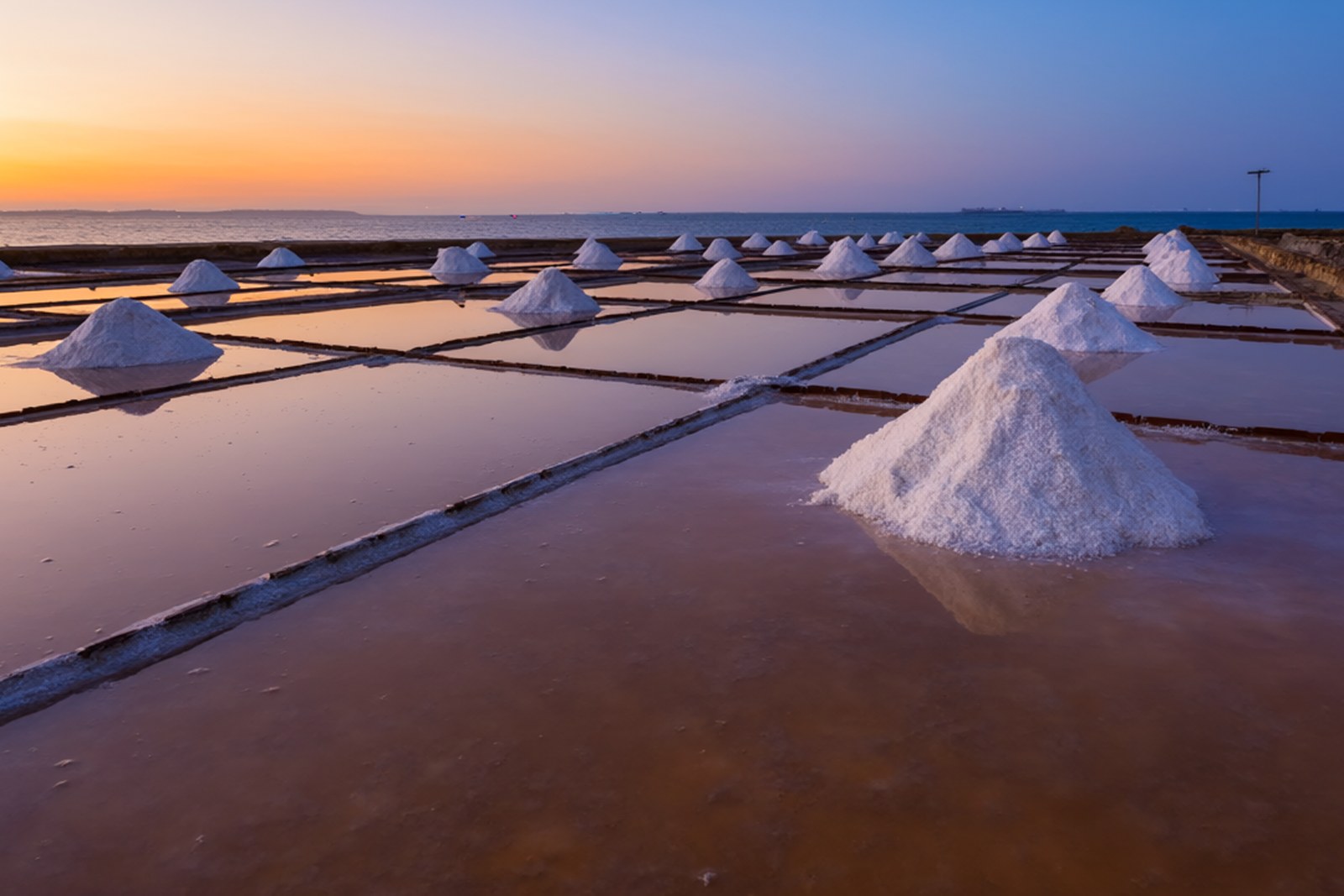
On the ground the field reads as a grid of shallow ponds whose brine shifts from jade green to amber to white as the salt thickens, with white salt piles the size of small hills and a vintage narrow-gauge line and old salt carts left in place. The county and the local press describe the effect as a mirror of the sky, and late afternoon, when the light softens, is the time to see it. The Sea Salt Culture Museum on site is free and covers more than sixty years of the field’s history, its tools and its salt carvings. About five kilometres away, in Huangliu town and roughly 700 metres back from the sea, the Yingge Talang Rest Stop opened with the island scenic highway on 18 December 2023, designed by the architect Li Xinggang and themed sunrise over Jianfeng, sunset over the silver mountains.
Two cautions matter here. The brine in the crystallisation ponds is far saltier than seawater and can burn skin, so walk the edges rather than wading into the pans; there is also almost no shade, and the reflected light is fierce, so hats, water and sun protection are not optional. The field shares its road with the new photovoltaic array on the intake lake and with the fishing port beyond, which is why the place is best taken slowly as part of a coastal day. It pairs naturally with the ridge behind it and with the sunset beaches further down the coast, though the beds and the boat-shaped rooms beside the pans are a matter for the stay column rather than this one.
Practicalities
Tickets. Free. The salt field charges no admission, and the working pans and the Sea Salt Culture Museum are open to walkers at no cost. Guided experiences and the rest stop’s own commercial offers are priced separately. Checked October 2026, subject to change.
Opening hours. The field has no fixed visiting hours and can be walked through the day, but the light is best from about four in the afternoon until sunset. The Sea Salt Culture Museum keeps shorter hours of its own, and the rest stop trades to its own schedule.
Closing day. No closing day – there is no gate and no rest day across the pans. The best window is the dry season from November into April, when the sky is clearest and the reflections strongest.
Getting there. Self-drive is the practical route. The Ledong section of the island scenic highway runs straight through the salt works and opened on 18 December 2023; from Sanya the drive is around an hour and a half, from Haikou about three hours, and parking on site is free – navigating to the Sea Salt Culture Museum is more precise than searching for the field. By rail, Huangliu Station on the West Ring line is the stop, a short three-wheeled ride of about ten yuan from the platforms, but public bus links to the pans themselves are poor.
flowcloud would say that Yinggehai is a working landscape that learned to look like a mirror – a field where sunlight is still the furnace and the sea is still boiled into silver – and that its hundred-day salt is best tasted one slow afternoon at a time.
Getting there: Yinggehai Salt Field lies on the coast between Huangliu and Yinggehai towns in Ledong Li Autonomous County, Hainan, reached by the island scenic highway (Ledong section opened 18 December 2023) or by Huangliu Station on the West Ring high-speed line; entry is free with the Sea Salt Culture Museum also free, there are no fixed hours and no closing day, and self-drive is the practical option (checked October 2026, subject to change).