
英西峰林 Yīngxī fēng lín is the karst country of western 英德市 Yīngdé shì, east of 清远市 Qīngyuǎn shì, and it is the landscape the county is known for: a valley of rice fields, villages, orchards and tea bushes threaded between hundreds of limestone peaks. The 英西峰林走廊 Yīngxī fēng lín zǒu láng, the Yingxi peak-forest corridor, is the road that runs through the middle of it, and the whole pleasure of the place is being at field level among the peaks rather than looking down on them from a viewpoint. It is the greenest and gentlest of the region’s karst landscapes, and it is meant to be walked or cycled.
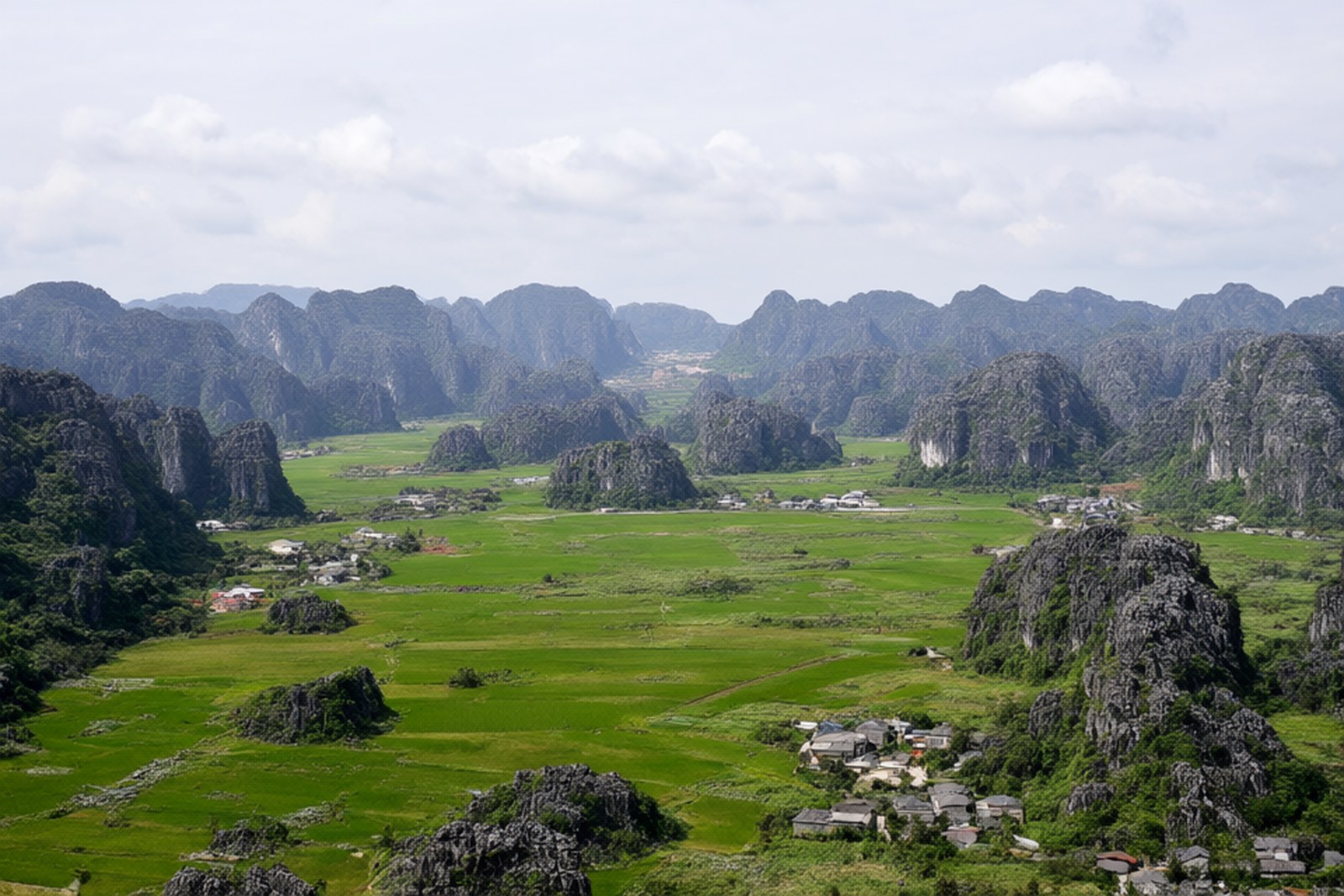
The peaks are the same limestone as everywhere else in this part of Guangdong, but here they stand as isolated towers and cones all over a flat, well-watered plain, rather than as a range. Where the land is soft it is planted, and the fields run right up to the foot of the rock, so the valley is a grid of green paddies and vegetable plots with a grey peak standing in the middle of each view. The villages sit among the fields, the lanes run between the peaks, and the tea slopes are on the higher ground. It is a landscape that has been farmed for a very long time and shows it.
What to do here is slow travel. The corridor road runs the length of the valley, and the classic way to see it is by bicycle, stopping at the villages and walking out along the field paths; there are viewpoints on the small hills and at the cave entrances that open in some of the peaks, and a few of the villages have kept their old houses and ancestral halls. 英德 is also the home of 英德红茶 Yīngdé hóng chá, Yingde black tea, so a tea farm on the slopes is worth a stop, and the 英石 yīng shí, the Yingde garden stone, is cut and sold in the towns. Between them the valley fills a day or two.
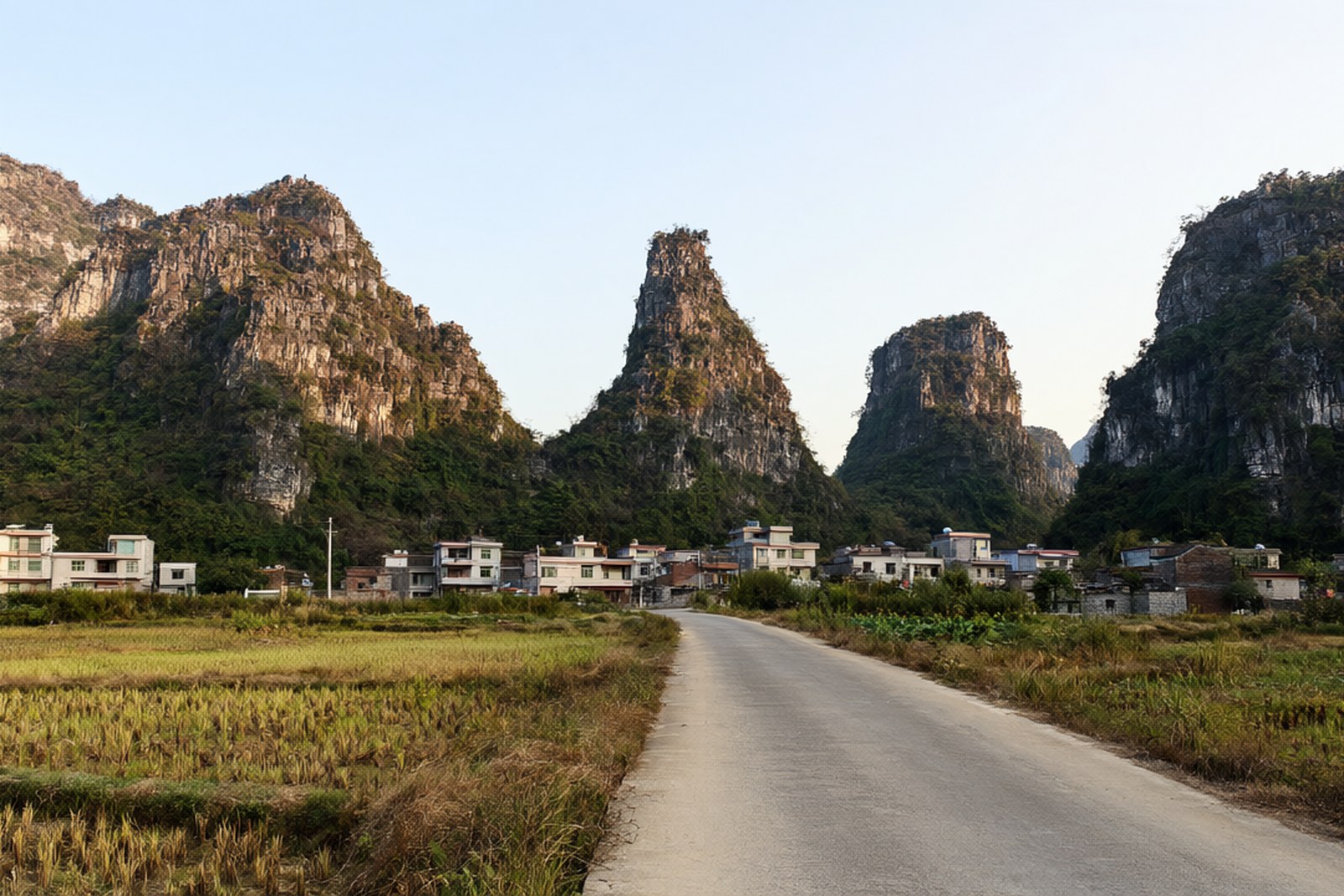
The 英西 country is the quieter, greener counterpart to the region’s larger karst sights: not a single spectacle but a whole valley of them, with none of the crowds that the famous places carry. You eat in the village restaurants and the farmstays, sleep in a farmhouse among the fields, and spend the days walking and cycling the lanes. Come in the spring, when the paddies are flooded and the valley mirrors the peaks, or in the autumn, when the rice is gold and the air is clear. It is a landscape for a slow couple of days rather than a stop.
Practicalities
Tickets. The corridor is open country and free to travel, though a few of the individual sights along it – a cave entrance, a viewpoint, an old house – charge an entrance of ¥20 to ¥60 each. The bicycle hire in the villages is a small daily rate.
Opening hours. The valley is open all day and all year, and the lanes are public roads. The individual caves and viewpoints keep roughly 08:30 to 17:30 hours, and the light is best in the morning and late afternoon when the peaks are modelled rather than flat.
Getting there. 英西峰林 is in the west of 英德市, reached by road from 英德 town in about an hour and from 清远市 in about two hours. 英德市 is on the rail line at 英德站 Yīngdé zhàn, from which you hire a car or a taxi into the valley.
Closing day. The valley has no closing day and the lanes are open every day of the year. The individual sights keep their own days, and some of the paths are muddy in the wet season, when the paddies are flooded and the riding is heavy.
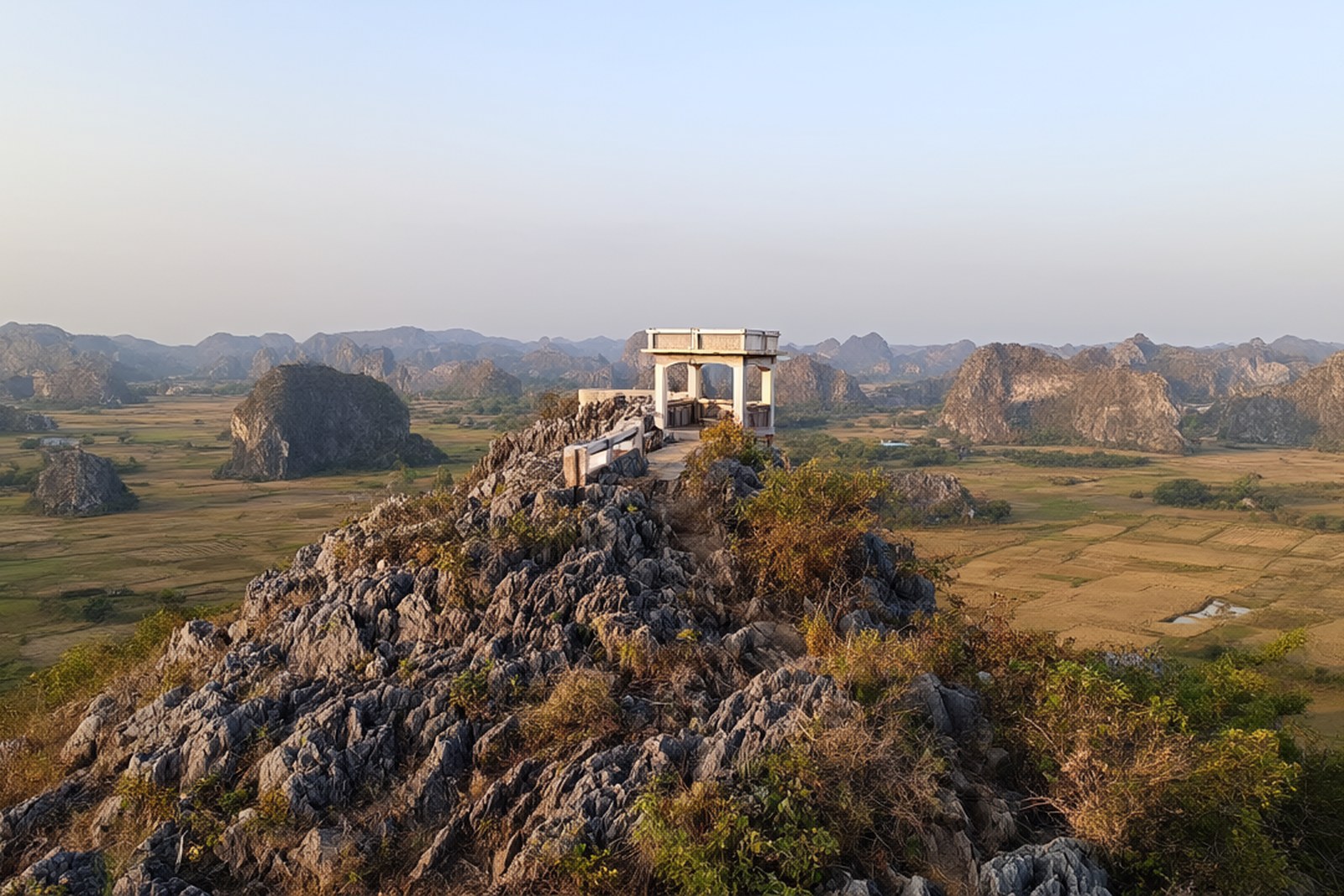
flowcloud would say that a valley of ordinary farm land, with a limestone tower standing in the middle of every field and a lane running between them, is a place that has no single thing to see and is the better for it, and that the best way to travel through a landscape is at the speed of a bicycle.
Getting there: 英德 town is the base, about an hour by road, and 英德站 Yīngdé zhàn is the rail gateway; from there a car or a taxi out into the 英西 valley is the way in.