
Yinshan Pagoda Forest: The Iron Wall and Silver Mountain, a Liao-and-Jin Grove of Monk Tomb Stupas and the Quietest Heritage Site in Changping District, Beijing
铁壁银山塔影长,辽金风雨证沧桑。Tiěbì Yínshān tǎ yǐng cháng, Liáo-Jīn fēngyǔ zhèng cāngsāng – Iron walls, silver mountain, and long pagoda shadows; the winds and rains of Liao and Jin attest the ages.
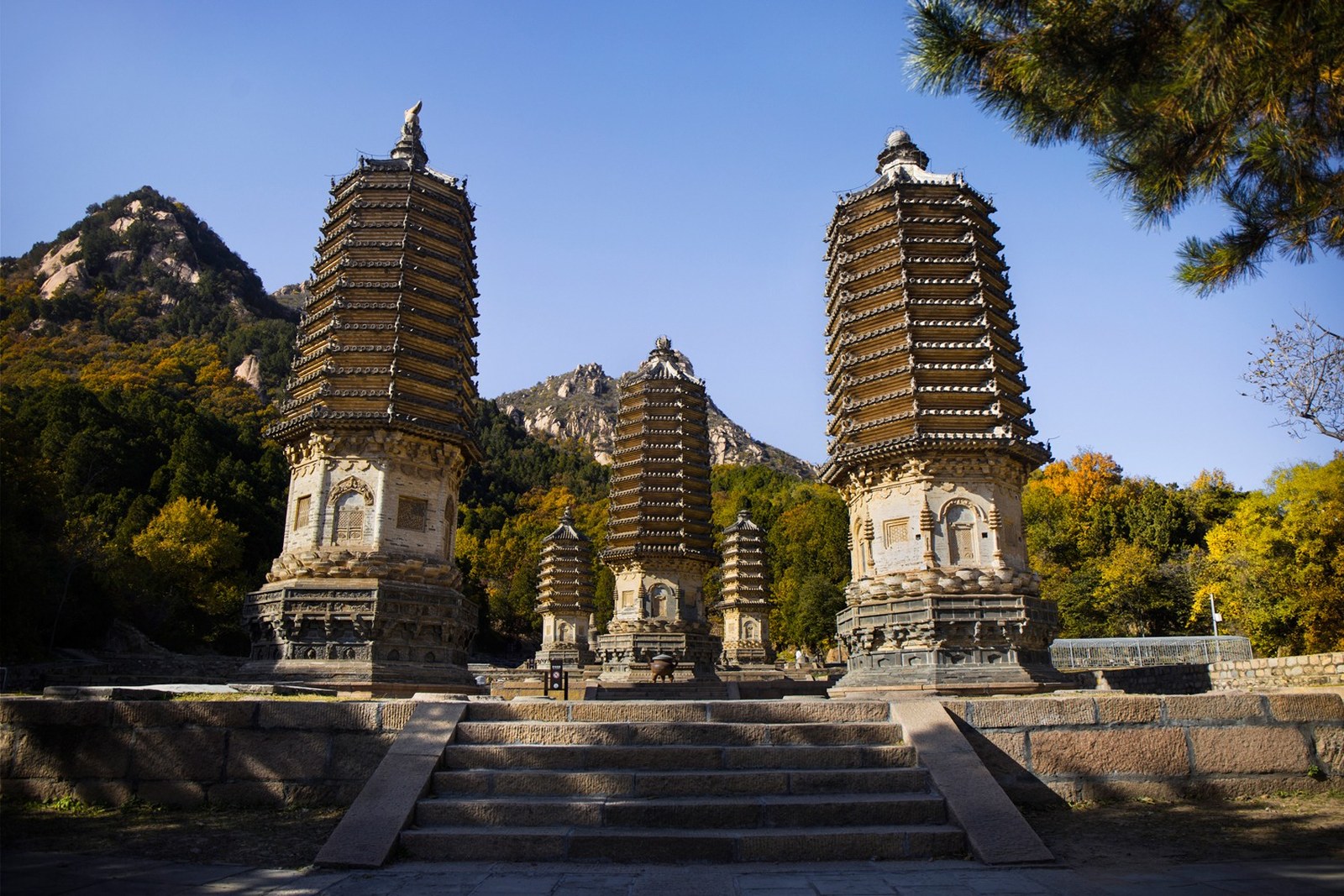
银山塔林 Yínshān Tǎlín the Yinshan Pagoda Forest is not a park with scattered pagodas — it is, plainly put, a monastic graveyard become a national monument: a grove of brick and stone funerary stupas at the foot of 银山 Yínshān Silver Mountain in 延寿镇 Yánshòu Zhèn Yanshou Town, in the 军都山 Jūndū Shān hills on Changping’s eastern side, where cliffs dark as iron and winter snow bright as silver gave the old label 铁壁银山 Tiěbì Yínshān — “Iron Wall, Silver Mountain” — counted among the old 燕平八景 Yànpíng bā jǐng Eight Scenes of Yanping, the old poetic name of Changping. The mountain was a Buddhist seat early: a 法华寺 Fǎhuá Sì Fahua Temple is said to date from the Tang, and by the Liao and Jin dynasties the 大延寿寺 Dàyánshòu Sì Great Yanshou Temple made the valley one of the famous chan centres north of the capital. The towers that survive — a reported seventeen of them, spanning Liao, Jin, Yuan and Ming — are 墓塔 mùtǎ tomb stupas raised for eminent monks, dense-eaved brick cones ranked on the slope, with five Jin-dynasty towers at the grove’s heart. In 1988 the site joined the 全国重点文物保护单位 quánguó zhòngdiǎn wénwù bǎohù dānwèi register of Major Historical and Cultural Sites Protected at the National Level. What you actually visit is a quiet stupa grove with a mountain stair behind it, half museum, half hike.
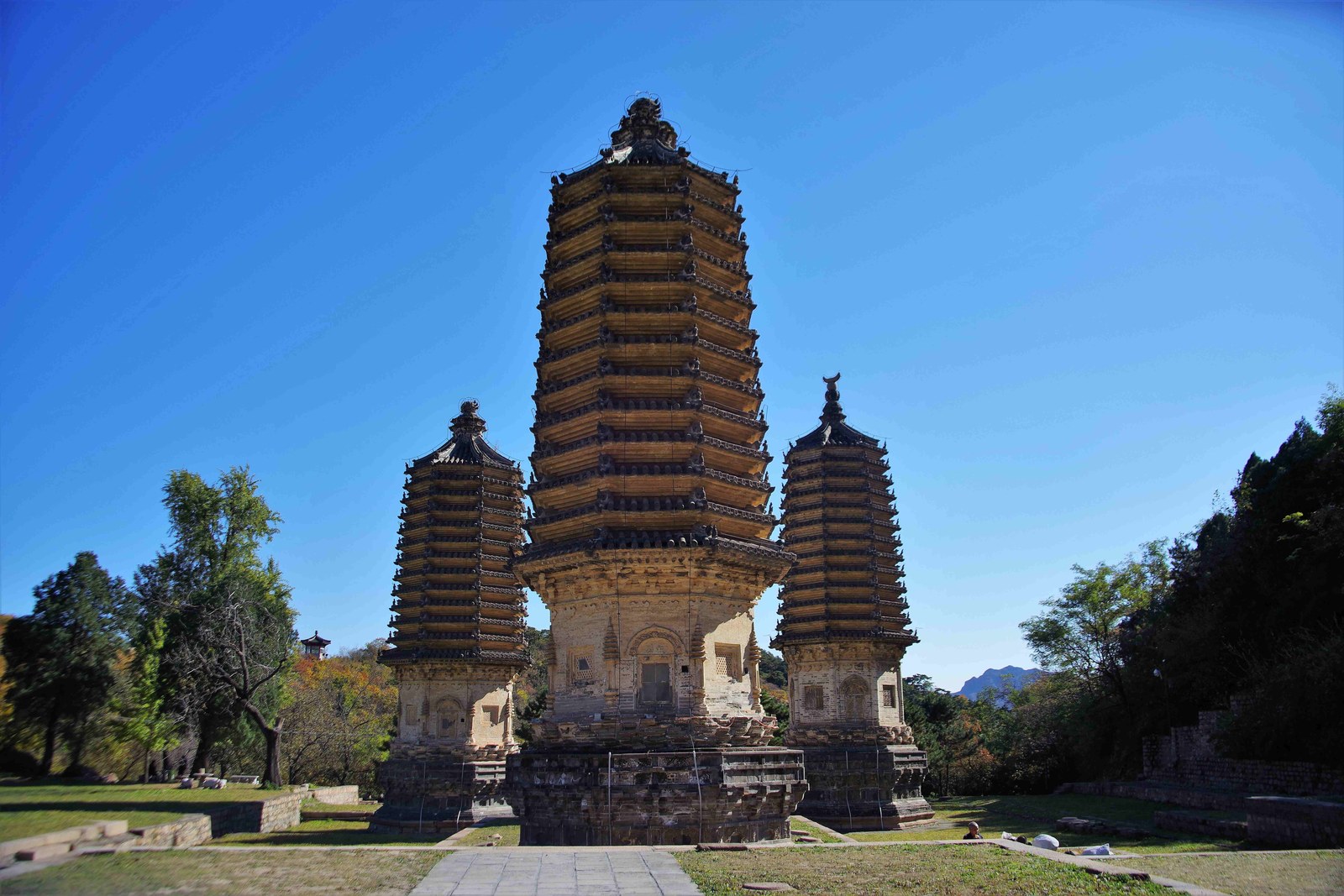
Call it honestly: this is the quietest ticket on the Changping list, and its quiet is earned by distance — the site sits deep in the hills east of the 十三陵 Shísānlíng valley, reachable by rural bus with patience or by car in about an hour, with buses thinning outside peak times (worth confirming the details for current rural bus numbers and schedules). Admission has run at a modest fee in the low tens of yuan, with country hours — roughly 8:00 to 16:30, shorter in winter — and the gate closes long before the light does, so come early. The stair up 银山 Yínshān is rough in places, several hundred metres of climbing to the ridge paths, and the summit is woods and views, not a monument — go up with water and daylight to spare. April brings wild apricot up the slopes, autumn sets the valley red-gold behind the dark towers, and after snow the old name 铁壁银山 Tiěbì Yínshān explains itself in one glance. Give the grove and lower climb half a day, and pair it with 明十三陵 Míng Shísān Líng by car.
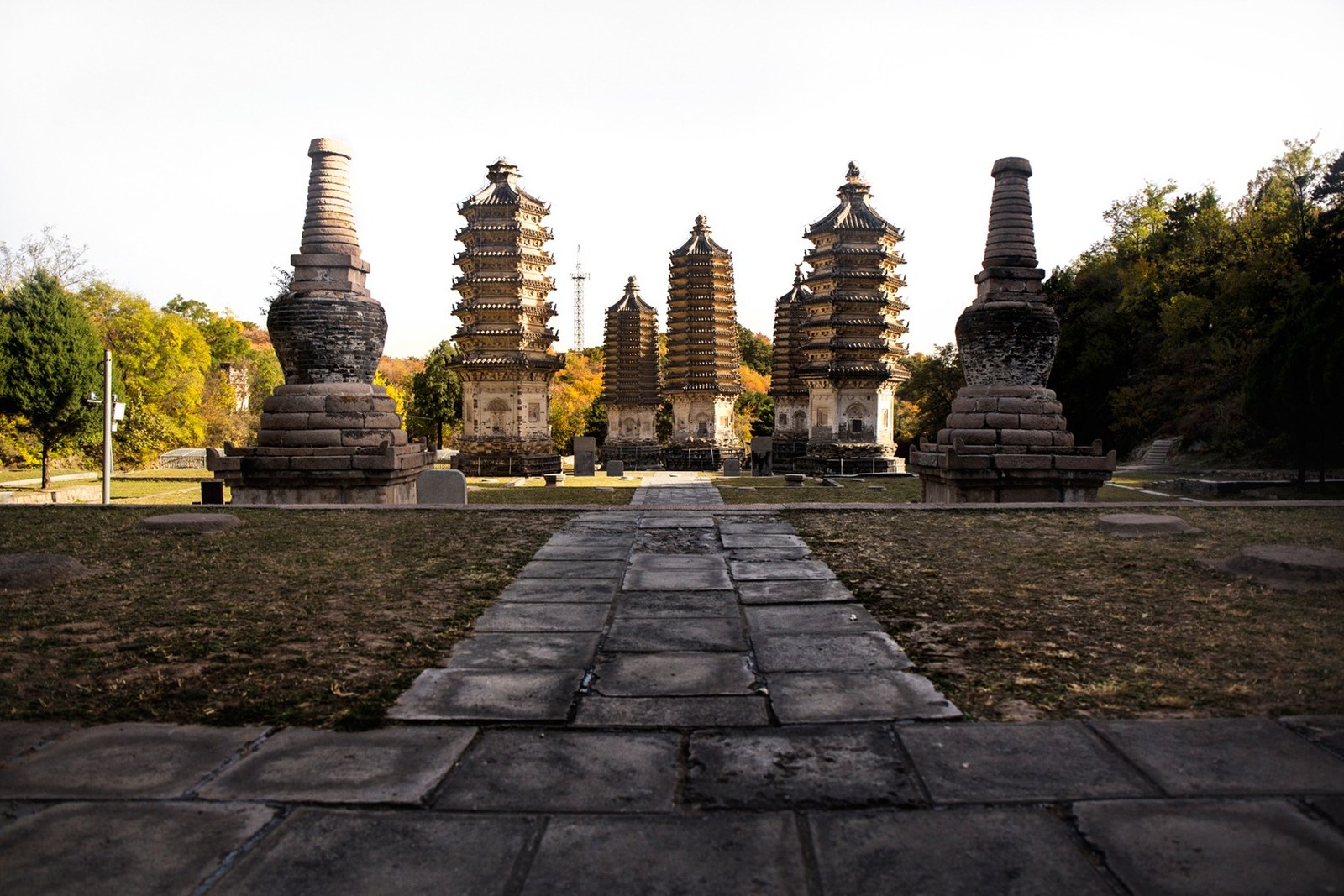
The honest star is the grove itself — five centuries of towers standing shoulder to shoulder, their brick eaves ranked tight as basketry, the names and dates of monk-masters still cut into the stone (worth confirming the details for which towers are fenced for conservation on your visit). What gets oversold is the word “forest”: this is a compact grove, not a hillside bristling with hundreds of towers, and the honest pleasure is in the close reading of a dozen rather than a count. What repays the effort is the silence — a weekday here can pass without another visitor — and the late-afternoon light, when the dark cliff does its iron trick and the brick goes honey-coloured. The climb adds a bonus the big parks cannot sell: the view back down on the 塔群 tǎqún tower grove from above, the cones clustered like a stone pinewood. Come for the layering of the place: grove, then stair, then the ridge and the reverse view.
The self-aware postscript: I found a retired teacher in the grove copying inscriptions into a notebook, and when I asked which tower he liked best he said, “a pagoda is a monk’s name card — the name is for us, the practice was for him”. That is the visit in miniature. 银山塔林 Yínshān Tǎlín suits whoever treats it as a slow stone-reading morning plus an honest leg-stretch first and a photo run second, and exhausts anyone expecting a large scenic area with shuttle buses and show halls. Everything else on this Changping list lies over the hills: the tomb valley of 明十三陵 Míng Shísān Líng to the west, the frontier pass of 居庸关长城 Jūyōngguān Chángchéng beyond the ridge line, the flight line of 中国航空博物馆 Zhōngguó Hángkōng Bówùguǎn on the plain to the south, and the pine stair of 蟒山国家森林公园 Mǎngshān Guójiā Sēnlín Gōngyuán by the reservoir — all in the same 昌平区 Chāngpíng Qū that keeps its oldest sanctuaries in its quietest corners.
Practicalities
- Rating: ★★★★☆ — a national-register stupa grove with mountain quiet; the Liao-and-Jin towers and the reverse view from the stair outrank the visitor furniture; go on a weekday, go early.
- Tickets: A modest gate fee reported in the low tens of yuan, with country hours running roughly 8:00 to 16:30 in season and shorter in winter (worth confirming the details for current prices, hours and reservation rules).
- Address: 银山塔林 Yínshān Tǎlín, 延寿镇 Yánshòu Zhèn, eastern hills of 昌平区 Chāngpíng Qū, Beijing — up the 安四路 Ānsì Lù valley road from 兴寿 Xīngshòu.
- Time needed: Half a day for the grove and the lower stair; a full day adding the ridge paths and a tomb-valley pairing.
Words and Names
银山塔林 Yínshān Tǎlín Yinshan Pagoda Forest · the stupa grove at the foot of Silver Mountain 铁壁银山 Tiěbì Yínshān Iron Wall, Silver Mountain · the old label of the dark cliffs and the snow 燕平八景 Yànpíng bā jǐng Eight Scenes of Yanping · the old poetic register of the Changping hills 大延寿寺 Dàyánshòu Sì Great Yanshou Temple · the Liao-and-Jin chan centre behind the towers 墓塔 mùtǎ tomb stupa · the funerary tower raised for an eminent monk 密檐塔 mìyán tǎ dense-eave pagoda · the tightly-tiered brick tower type of the grove 延寿镇 Yánshòu Zhèn Yanshou Town · the rural township that keeps the site 全国重点文物保护单位 quánguó zhòngdiǎn wénwù bǎohù dānwèi national key heritage site · the register the grove joined in 1988
flowcloud would say that 银山塔林 Yínshān Tǎlín is a graveyard that outlived its temple — the 大延寿寺 Dàyánshòu Sì of Liao-and-Jin fame is gone and its monk-masters’ 墓塔 mùtǎ tomb stupas remain, a reported seventeen towers from Liao to Ming under the cliffs called 铁壁银山 Tiěbì Yínshān, national register since 1988 — and that the honest move is a weekday morning with water and a slow eye, because the grove is compact, the stair is honest and the buses are few (worth confirming the details), the forest in the name is the poster half and the honey-coloured brick at four o’clock is the real half, and the mountain repays whoever reads twelve towers slowly. All checked October 2026.
Getting there: Beyond the metro’s reach this one favours a hired car: leave the 京新高速 Jīngxīn gāosù G7 and follow the signed hill roads northeast toward 银山塔林 Yínshān Tǎlín Yinshan Pagoda Forest; by transit, ride the 昌平线 Chāngpíng xiàn Changping Line out to 昌平东关 Chāngpíng Dōngguān and continue by local buses or a taxi, a reported thirty-to-forty-minute leg onto the northern lanes; coming from the city, some visitors pair bus 872’s G6 run toward the 明十三陵 Míng Shísānlíng Ming Tombs with a taxi leg east across the hills to the pagoda site (worth confirming the details for current bus numbers, site opening and hill-road conditions). All checked October 2026.