
The Yiwu Populus Euphratica Forest: The Thousand-Year Trees of Naomaohu, the Golden-Autumn Burning and the Desert’s Longest Memory in Hami, Xinjiang
千年不死胡杨骨,一秋烧尽大漠黄。Qiānnián bù sǐ húyáng gǔ, yī qiū shāo jìn dàmò huáng – The bones of the poplar that does not die in a thousand years; one autumn burns the desert’s yellow to the end.
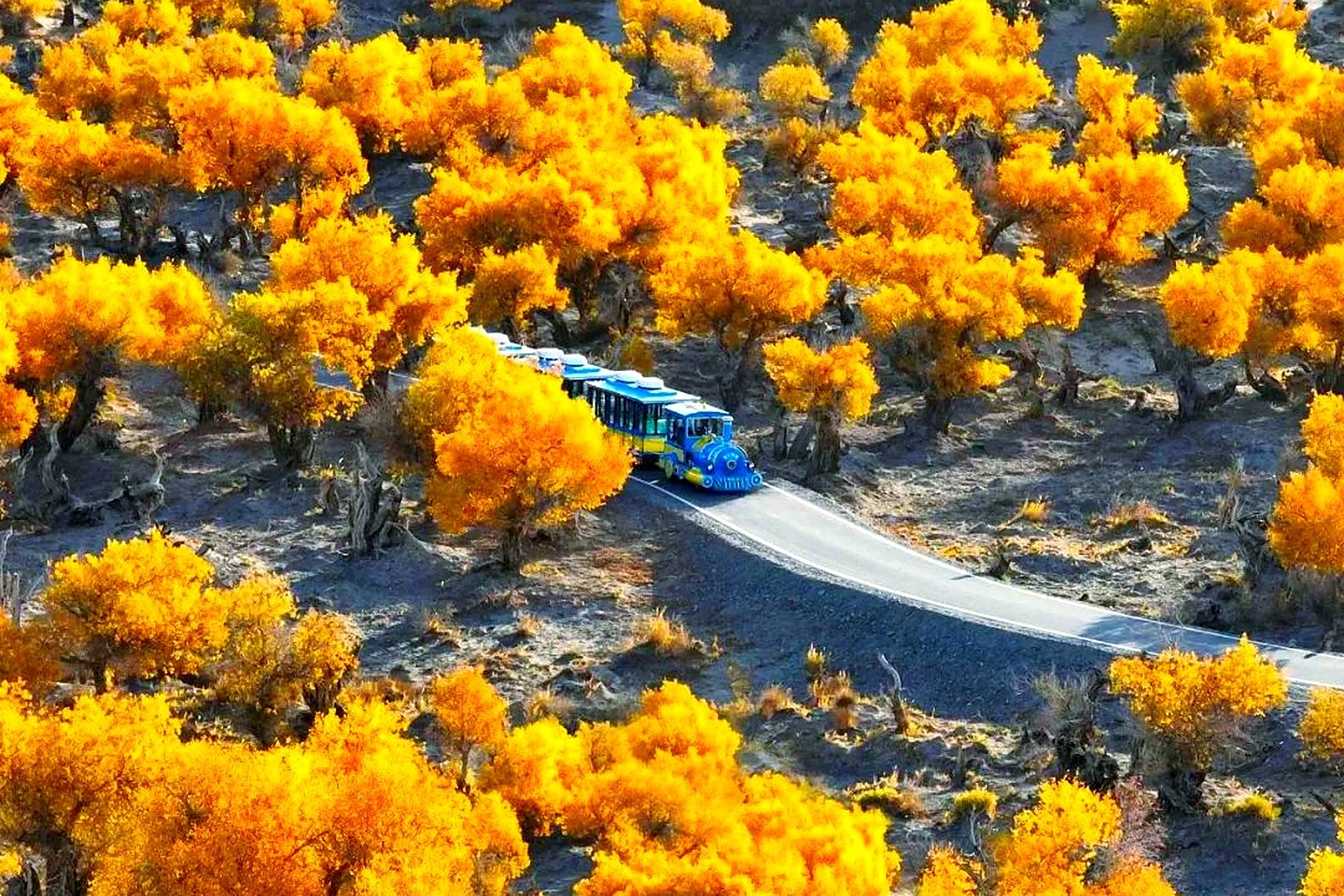
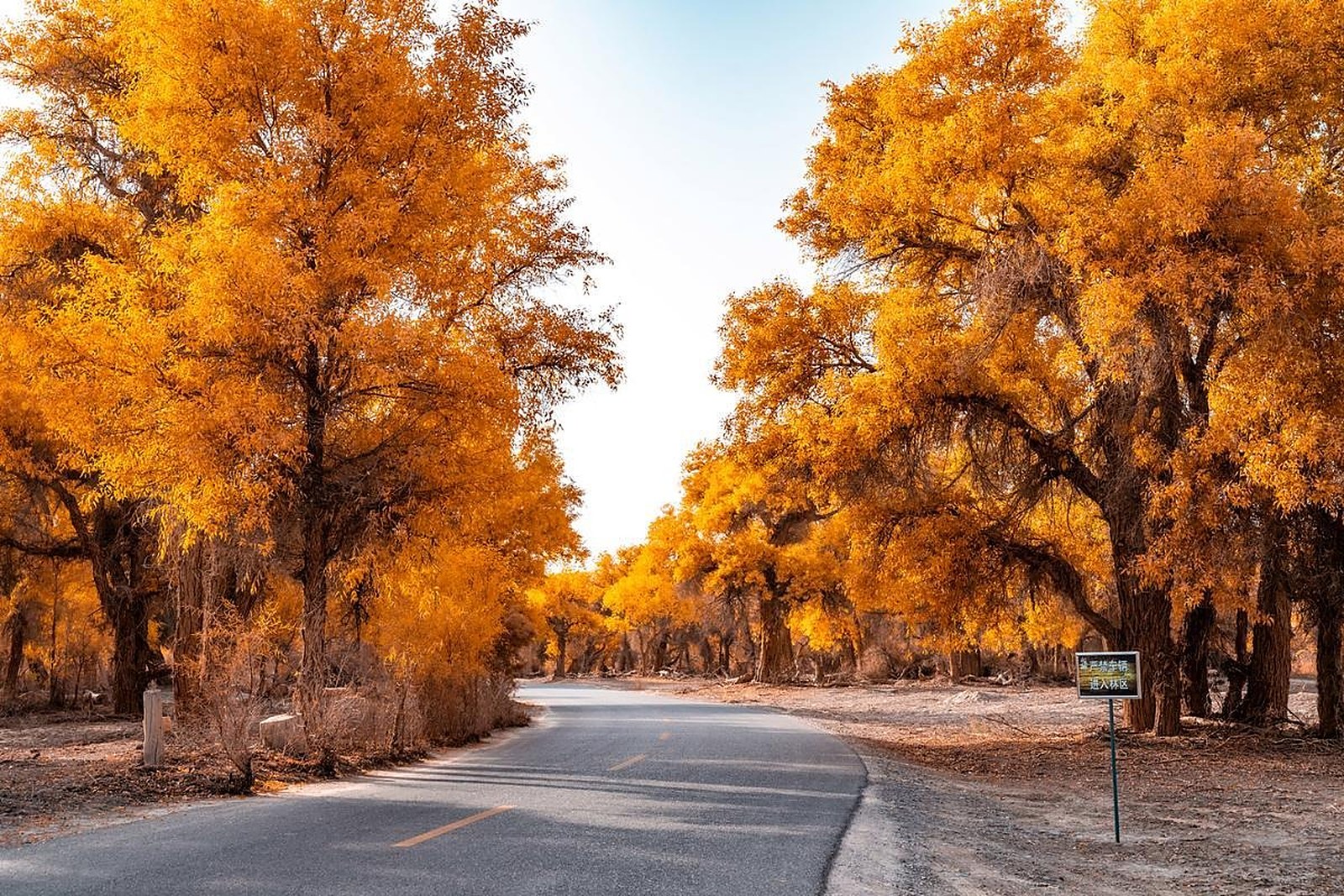
伊吾胡杨林 Yīwú Húyánglín the Yiwu Populus Euphratica Forest stands near 淖毛湖 Nàomáohú Naomaohu town in 伊吾县 Yīwú Xiàn Yiwu County, a long drive northeast of 哈密市 Hāmì Shì Hami City – one of the largest surviving stands of the desert poplar, the tree that Chinese botany and folklore agree lives a thousand years standing, a thousand years fallen and a thousand years even after that without rotting (worth confirming the details for the grove sectors, since the scenic area divides the forest into zones by tree age and the shuttle links them). The poplar fights salt, drought and sand with the same gnarled persistence, and in October the foliage turns a gold so total that the groves read like fire that lost its heat. The scenic walks boardwalk past specimens the signage dates in centuries, and the dead-and-standing groves at the driest end are the photographs travellers carry home. The register is endurance made visible: the desert’s longest memory, wearing gold for one month a year.
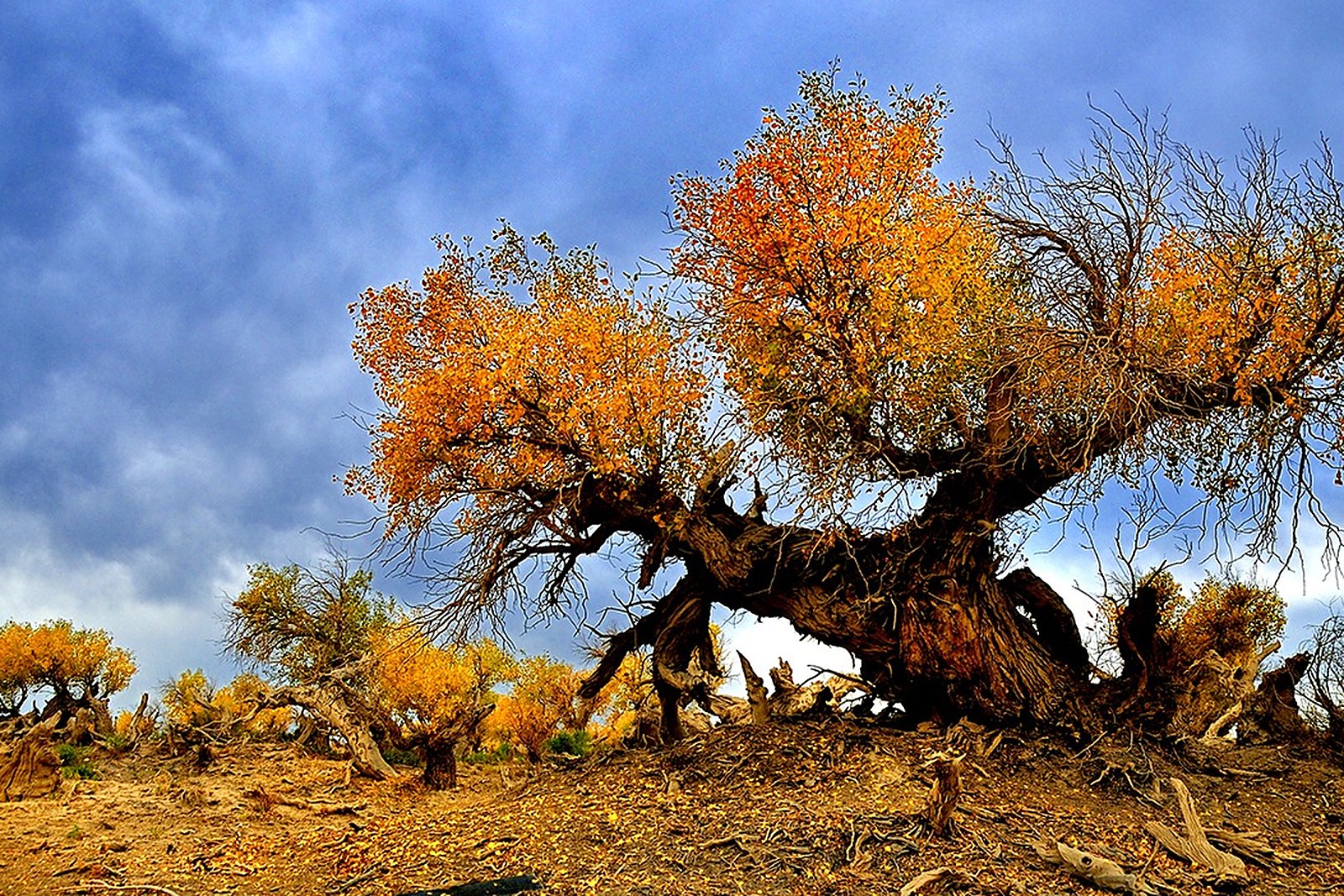
Two crowds make the drive: autumn photographers who time the foliage weeks exactly, and road-trippers working the northeast counties who find the forest the trip’s unexpected peak (worth confirming the details for the foliage peak, which shifts year to year with the frost). The stock answer in kind: the best poplar forest in the east of the region, a spectacle with a botany lesson attached, and a golden hour that lasts a golden month.
Call it honestly: the forest is a long way from anywhere – the drive from Hami city eats most of a day return, the surrounding county is thin on services, and outside the autumn weeks the foliage is dust-brown rather than golden (worth confirming the details for the visitor services at the gate, which the low season scales back). What the map repays is commitment: the groves are genuinely primeval, the boardwalks put you among trees older than the dynasties, and the autumn colour, once hit, beats any garden display in the region. Against that: the shuttle schedule rules the day, the wind off the Gobi carries grit, and the sun in the bare groves is merciless. Time the foliage, pack water and a scarf, and let the thousand-year trees make the pace feel generous.
Practicalities
Nearly everything else on this Hami list trades a different mood on the same prefecture: choose 哈密回王府 Hāmì Huíwángfǔ the Hami Royal Mansion for the frontier court, 巴里坤草原 Bālǐkūn Cǎoyuán the Barkol Grassland for the snow-line pasture, 庙尔沟 Miào’ěrgōu Miaoergou for the shaded valley and 东天山 Dōngtiānshān the East Tianshan for the high pass between them – four more doors into the same 哈密市 Hāmì Shì Hami City. Once the day is planned, our Hami food map fills the eating hours.
Practicalities
Words and Names
flowcloud would say that a poplar-forest day is bought for the gold and the stubbornness – burning groves to bare-board dusk in the November 2026 snapshot, all worth confirming the details – and that the honest move is to time the foliage rather than the calendar, because the trees set the schedule and have outlasted everyone who tried to keep it, keep the old-grove walk and the dead-standing sector as the plan, and let the desert do the aging. All checked November 2026.
Getting there: The forest lies near 淖毛湖 Nàomáohú Naomaohu town in 伊吾县 Yīwú Xiàn Yiwu County, a long drive northeast of Hami – self-driving is the practical way and the golden-autumn weeks draw the crowds (worth confirming the details for the scenic-area shuttle, which runs from the gate to the oldest groves). All checked November 2026.