
The City’s Wet Garden: Egrets and Reed Bays at Yong’an Lake
一湖涵碧水,万羽戏芦花 Yī hú hán bìshuǐ, wàn yǔ xì lúhuā – One lake holds the jade water; ten thousand wings play among the reed flowers
正文:永安湖 Yǒng’ān Hú Yong’an Lake is the ecological park on the Xiao Haizi water system at the edge of 图木舒克市 Túmùshūkè Shì Tumushuke City – calm bays, lotus shallows and bird blinds where egrets and cormorants work the reeds between the poplar farms. Where the great reservoir next door is infrastructure on a monumental scale, Yong’an is its domesticated sibling: a wet garden with boardwalks, a lakeside greenway and the easy access that makes it the city’s default evening walk. The water still works for a living – part of the same irrigation chain – but its public face is leisure, and the birds seem to have signed the arrangement.
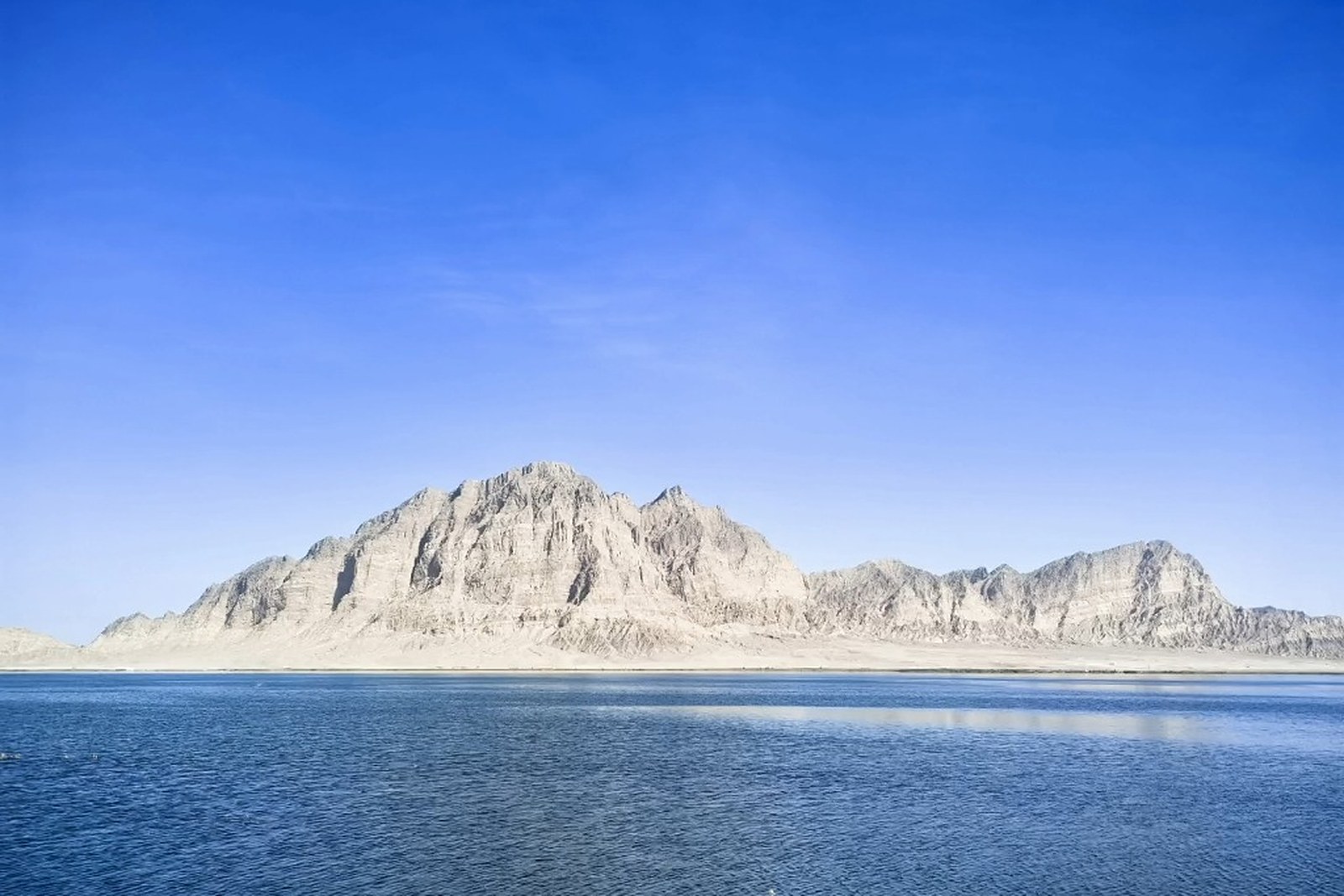
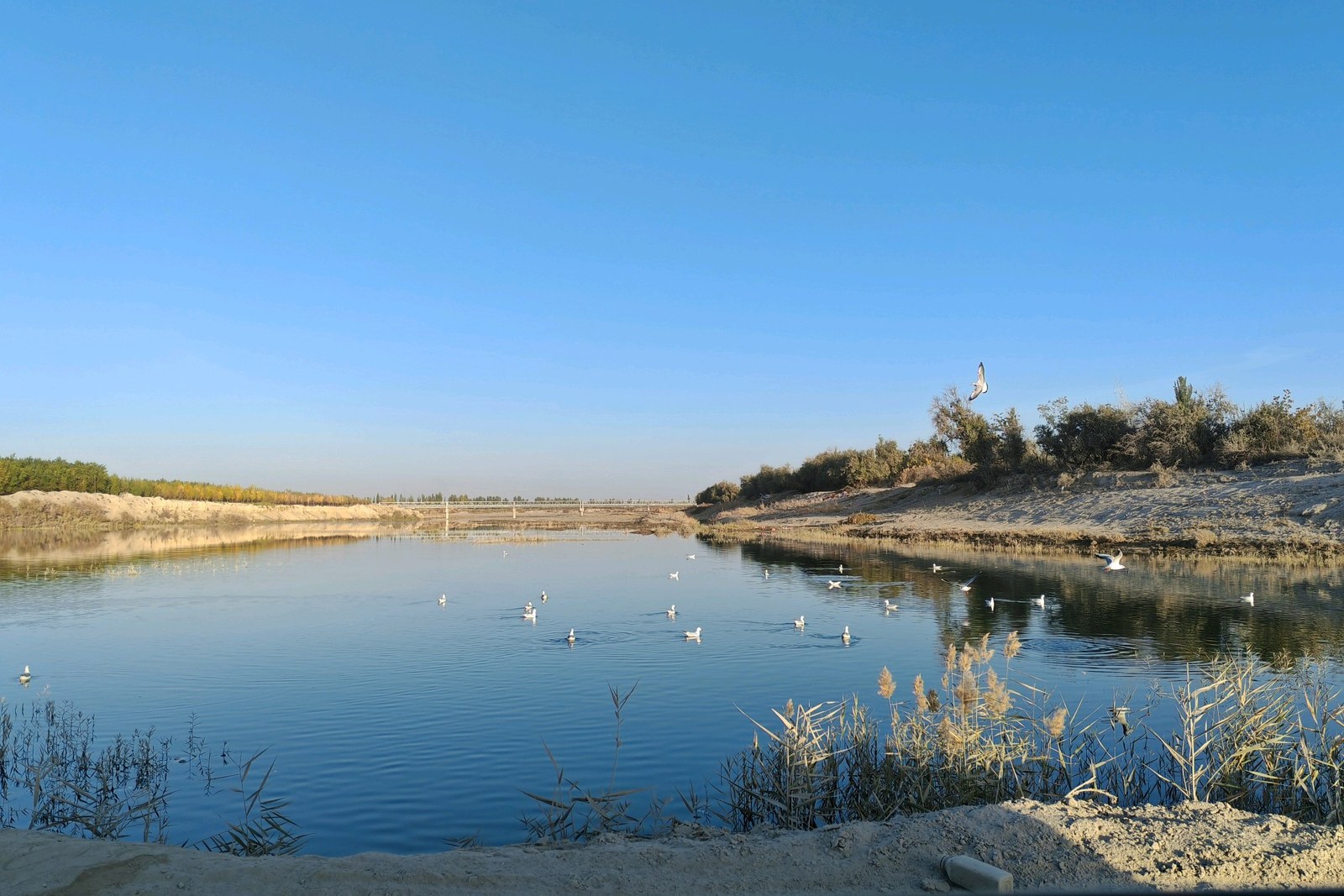
The park divides into moods by shore. The main frontage carries the promenade and the pavilions, kite-flying lawns and the pedal-boat jetty; the western bays are the bird sector, screened walks and viewing blinds looking over lotus shallows and reed islands; and the eastern arm runs beside the poplar farms where the water narrows into channels – the quietest water in the system and the herons’ favorite. A full loop takes an easy hour; the blind sector deserves a stool and a thermos.
Season writes the calendar. Spring runs the lotus leaf-up and the warbler passage; summer fills the shallows with bloom and the blinds with dragonflies; autumn stacks the reed plumes and brings the first diving ducks; winter thins the crowds and imports the gulls. Dawn is the birder’s slot and dusk the photographer’s – the lake lies open to the west, and its sunsets run the water copper behind the reed silhouettes.
Practicalities first. The lake park lies on the eastern water road out of town; taxis cost pocket change and the bird blinds sit a short walk from the parking. The greenway is flat and biked happily; boats run on the main frontage in season. Food lives at the park gate and back in town – the blind sector is deliberately facility-free – so carry what you need and let the birds keep the far shore.
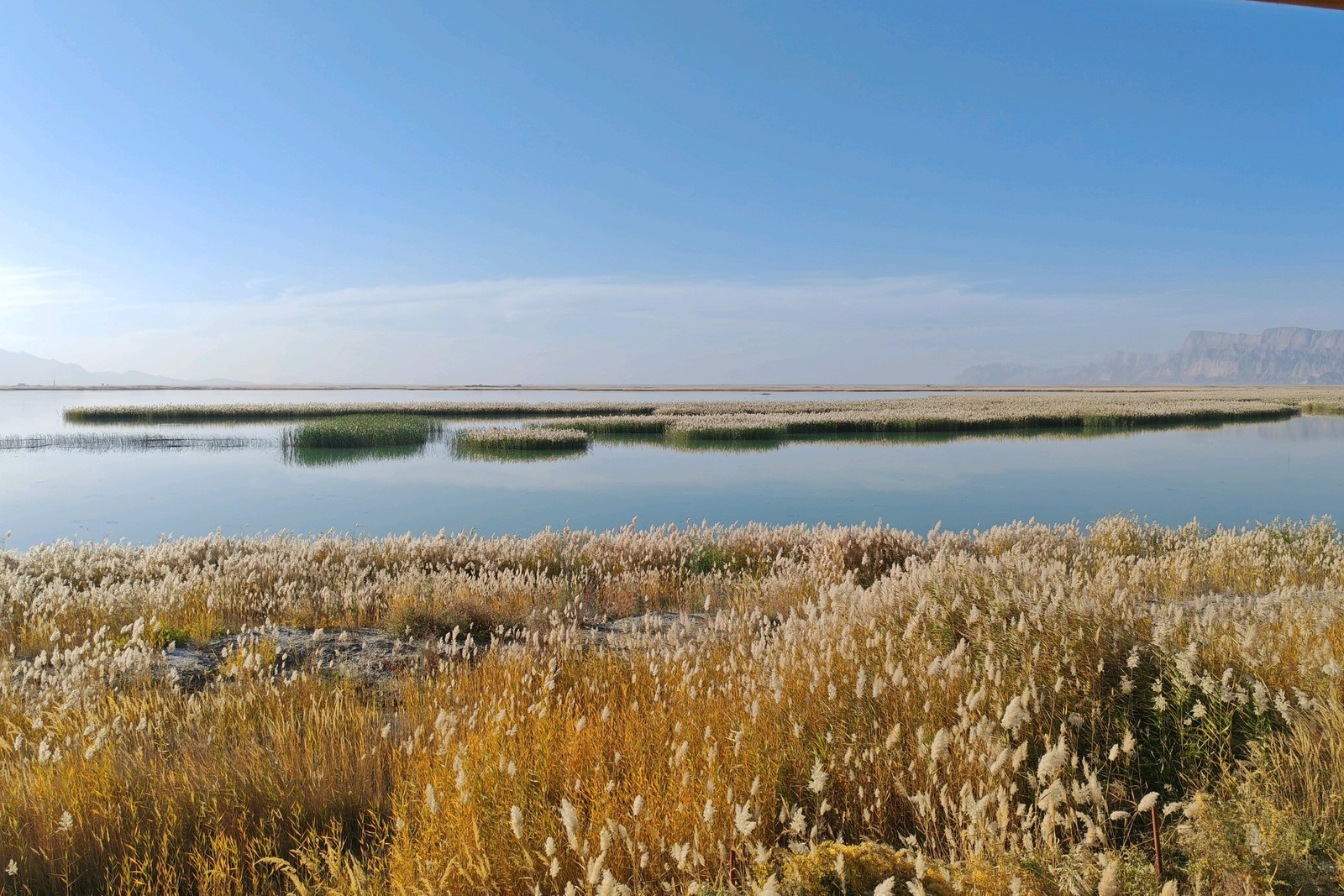
What the lake does well is teach the system. From its boardwalks you can see the whole water logic of the oasis in miniature: canal inlets metering supply, reed beds cleaning the return flow, poplar belts holding the wind, and the birds – the system’s auditors – voting with their feet. Yong’an is the quarter where 图木舒克市 Túmùshūkè Shì Tumushuke City goes to remember that its green is borrowed, and pays the interest daily in beauty.
Practicalities
Beyond the water, the same 图木舒克市 Túmùshūkè Shì Tumushuke City keeps more places worth the detour: 唐王城遗址 Tángwáng Chéng Yízhǐ the Tangwang City ruins for the Tang garrison earthworks, 小海子水库 Xiǎohǎizi Shuǐkù the Xiao Haizi reservoir for the great irrigation lake, 胡杨林公园 Húyáng Lín Gōngyuán the Huyang Forest Park for the October gold, or 图木舒克博物馆 Túmùshūkè Bówùguǎn the Tumushuke Museum for the oasis’s deep file – four more doors into the same 图木舒克市 Túmùshūkè Shì Tumushuke City. Once the bays are walked, our Tumushuke food map fills the day.
Practicalities
Words and Names
flowcloud would say Yong’an Lake is the irrigation chain’s front porch: blinds where the egrets clock in, boardwalks where the city unwinds, and sunsets that copper the whole reed margin – the working lake that learned to be lovely on its day off. All checked November 2026.
Getting there: The lake park lies on the eastern water road out of town; taxis cost pocket change and the bird blinds are a short walk from the parking. Come at dawn for the egrets or dusk for the lotus light. All checked November 2026.