
Yonghe Temple: A Prince’s Palace Turned Lamasery of the Sandalwood Buddha
檀香一炷绕经楼,万福阁中佛影长。Tánxiāng yī zhù rào jīng lóu, Wànfú Gé zhōng fó yǐng cháng – A single stick of sandalwood incense curls through the sutra halls; in the Wanfu Pavilion the Buddha’s shadow is long.
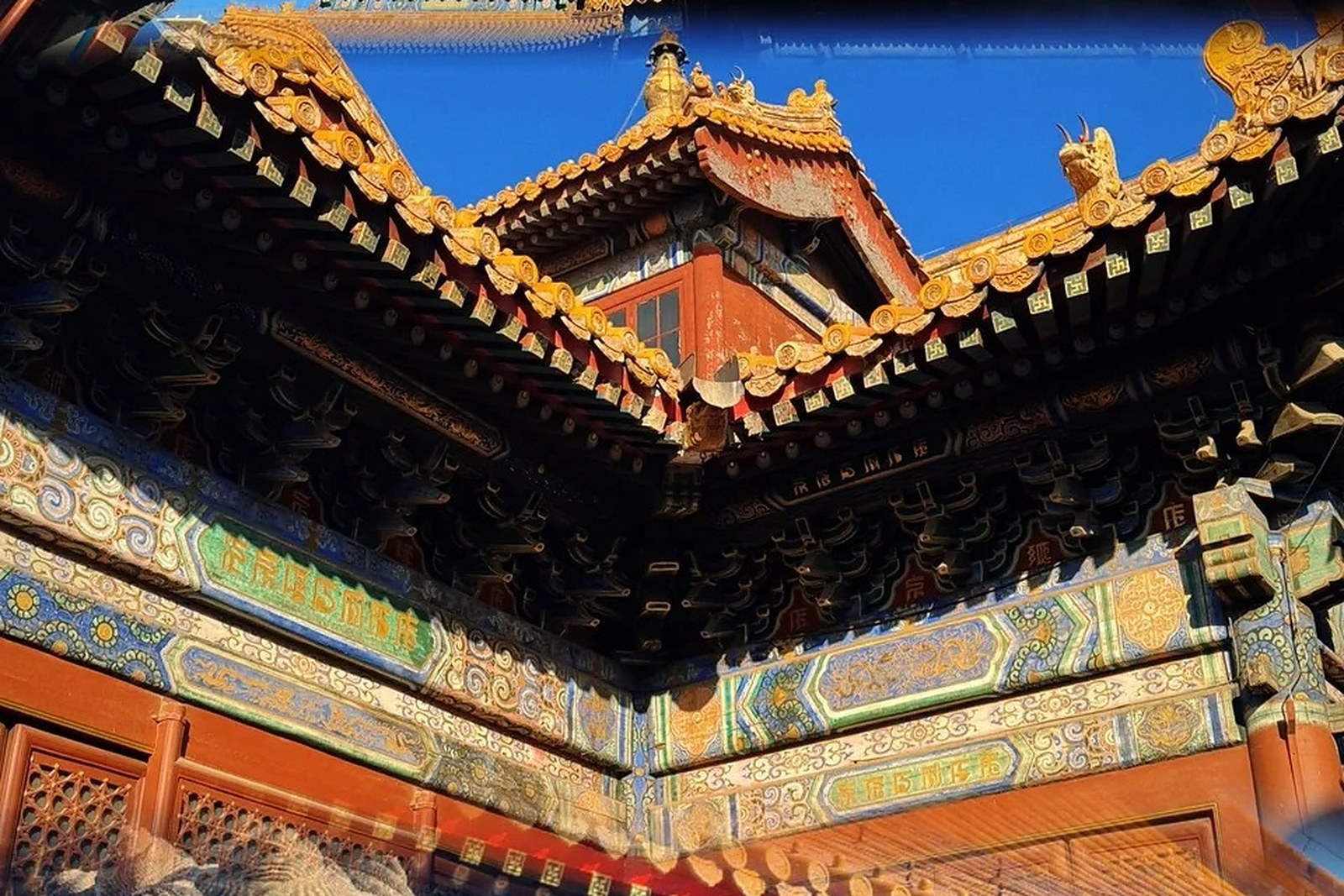
雍和宫 Yōnghé Gōng Yonghe Temple — the Lama Temple — is not a monastery grown from a village shrine — it is, to be precise, a former prince’s palace in northeastern 东城区 Dōngchéng Qū Dongcheng that became Beijing’s principal Tibetan Buddhist monastery of the 格鲁派 Gélūpài Gelug, or Yellow Hat, school. It began in 1694 as the residence of the 雍亲王 Yōngqīnwáng Prince Yong, who would ascend as the 雍正帝 Yōngzhèng Dì Yongzheng Emperor; after his death his son the Qianlong Emperor consecrated the compound as a lamasery in 1744. The imperial birth shows in the yellow glazed tiles a commoner’s temple could never wear, and the compound remains a working monastery: monks, scripture, a dense daily traffic of worshippers, all inside a wall the metro practically touches.
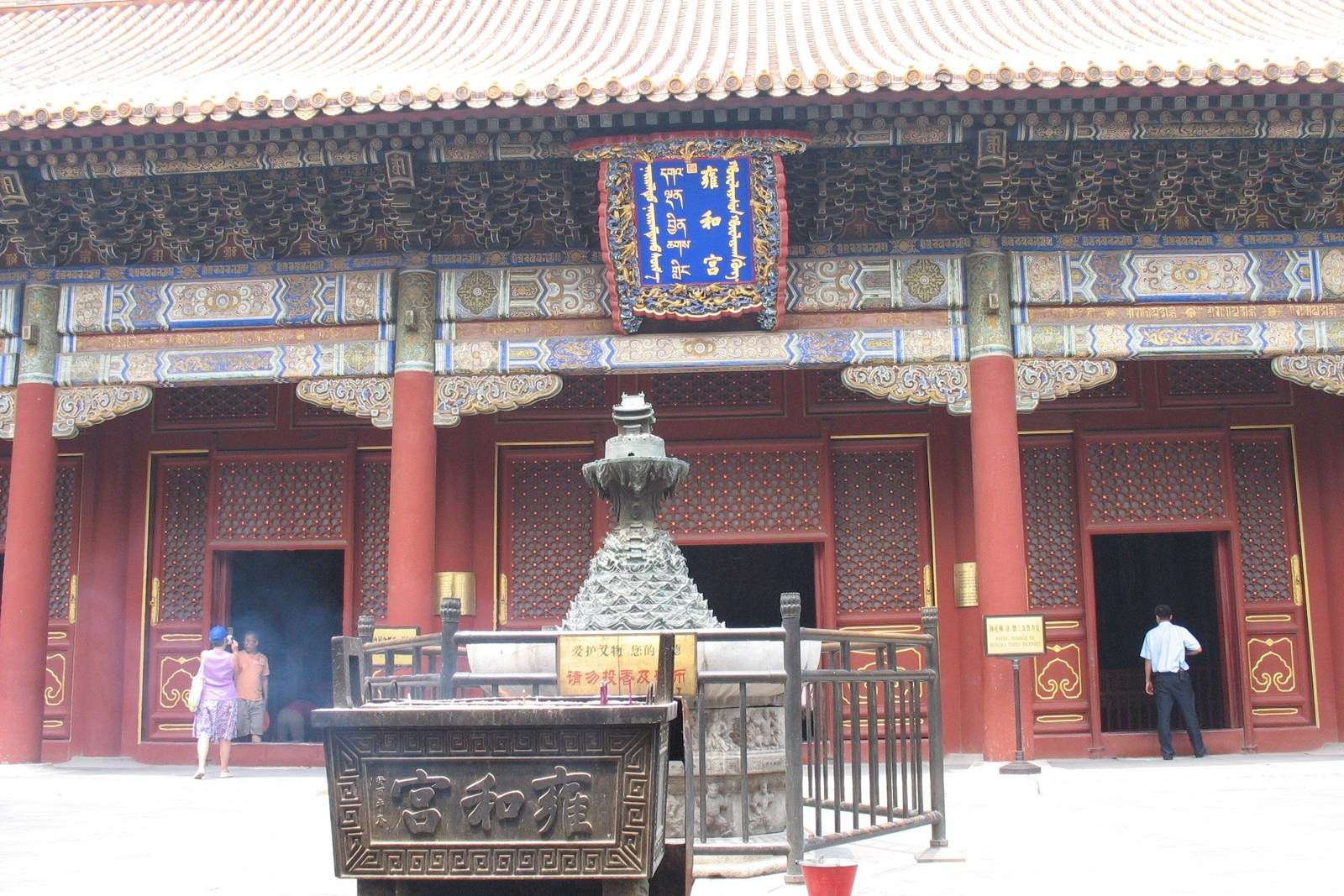
The building everyone remembers stands at the back. 万福阁 Wànfú Gé the Wanfu Pavilion enshrines a colossal 弥勒佛 Mílè Fó Maitreya carved — by the well-told account — from a single trunk of white sandalwood, sent as a gift from Tibet in the mid-1700s under the Seventh Dalai Lama, its body standing roughly eighteen metres above the floor (worth confirming the exact figure, which sources give differently above and below ground). Along the axis, 法轮殿 Fǎlún Diàn the Hall of the Wheel of Law holds the gilded altars and the famous 五百罗汉山 wǔbǎi luóhàn shān, a mountain crowded with five hundred arhat figures, and the axis runs on to a green garden that closes the visit with unexpected quiet. Read the route back to front in your mind: the pavilion is the crescendo the whole compound was built to deliver.
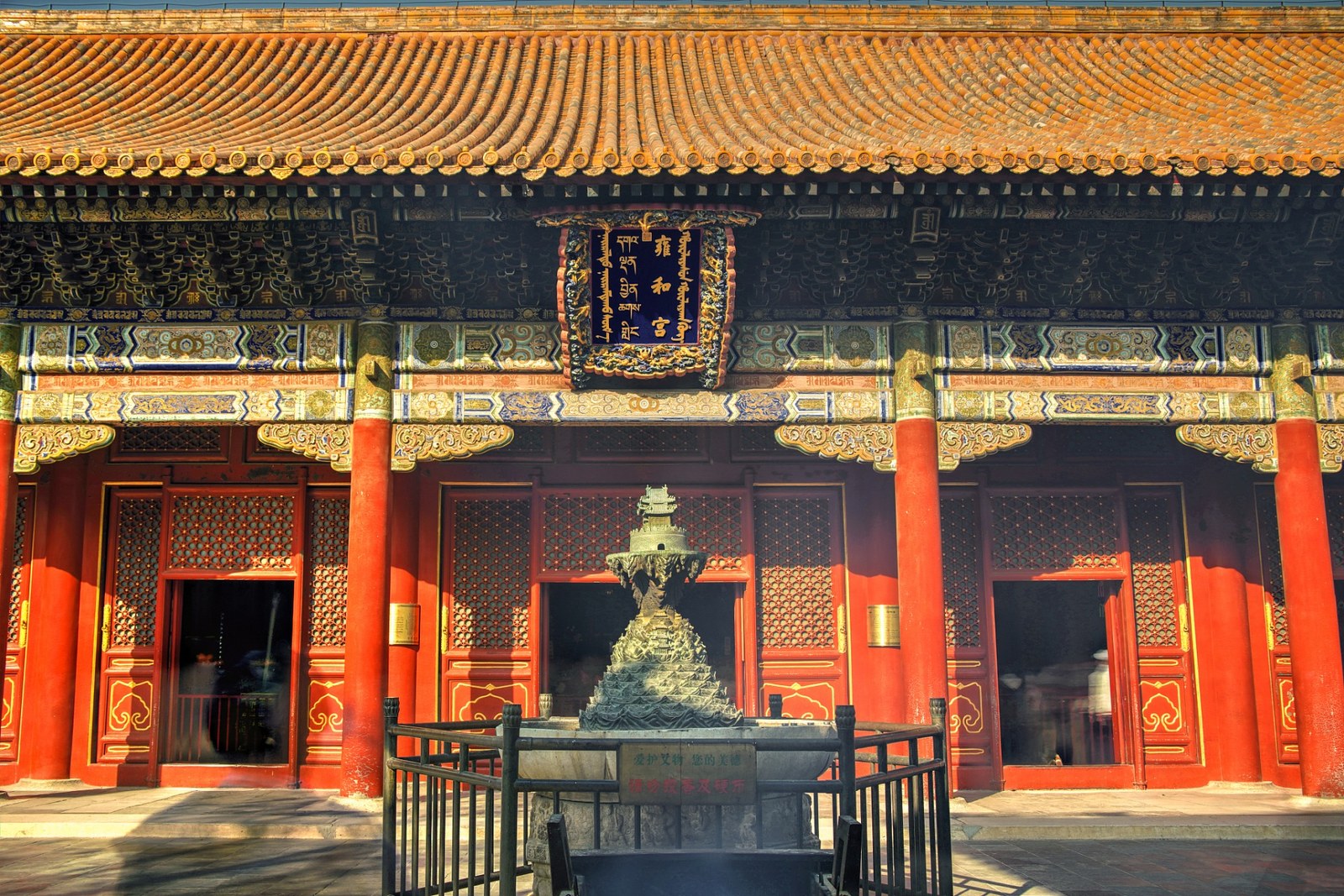
The visit has its own grammar. Historically the temple handed each arriving visitor a small bundle of free incense at the entrance — lighting it in the courtyards is part of the practice for many worshippers — though the policy has been adjusted over time (worth confirming the current incense rule and whether sticks are still distributed). The shop near the exit sells the blessed 手串 shǒuchuàn prayer-bead bracelets that have become the temple’s signature souvenir, queue and all. Tickets are inexpensive, bought on site or online (worth confirming the current price and channel), and hours run morning to late afternoon (worth confirming the details). Dress respectfully, keep the camera down inside the halls (worth confirming which halls allow photography), and expect the heaviest days around the lunar month’s first and fifteenth — 初一 chūyī and 十五 shíwǔ — and festivals, when the worshippers themselves set the tempo.
The self-aware postscript: I came for the architecture and found weather instead — a soft haze of sandalwood over the courtyards, chanting drifting from 法轮殿 Fǎlún Diàn, old women prostrating with a patience that outlasts any queue. 雍和宫 Yōnghé Gōng suits whoever lets it be a temple first and a sight second — stand at a hall’s back, breathe, and let the pavilion land as designed. It chains perfectly too: 孔庙 Kǒngmiào the Confucius Temple and 国子监 Guózǐjiàn the Imperial College lie one street south among shade trees, and the hutong quarters of this list begin just beyond. In compact 东城区 Dōngchéng Qū, one metro line can hold a morning of incense and an afternoon of cypress and lanes.
Practicalities
- Rating: ★★★★☆ — Beijing’s great Gelug lamasery in an imperial wrapper: yellow tiles, Tibetan iconography and a single-trunk sandalwood Maitreya unlike anything else in the city.
- Tickets: Historically around 25 yuan, on site or online (worth confirming current price, booking channel and the incense policy at entry).
- Address: 雍和宫大街 Yōnghé Gōng Dàjiē, 东城区 Dōngchéng Qū, Beijing — the walled compound just north of the 国子监 Guózǐjiàn quarter.
- Time needed: One to two hours for the axis of halls and the pavilion; add an hour to walk south to the Confucius Temple and Imperial College.
Words and Names
雍和宫 Yōnghé Gōng Yonghe Temple · the former prince’s palace turned Gelug monastery 格鲁派 Gélūpài Gelug school · the Tibetan Buddhist Yellow Hat order 万福阁 Wànfú Gé Wanfu Pavilion · the rear hall housing the giant sandalwood Buddha 弥勒佛 Mílè Fó Maitreya · the future Buddha carved from a single sandalwood trunk 法轮殿 Fǎlún Diàn Hall of the Wheel of Law · the chanting hall with the five-hundred-arhat mountain 手串 shǒuchuàn prayer-bead bracelet · the blessed souvenir that queues out the door
flowcloud would say that 雍和宫 Yōnghé Gōng is Dongcheng’s imperial lamasery — the 1694 residence of the future 雍正帝 Yōngzhèng Dì, consecrated for the 格鲁派 Gélūpài in 1744, with 万福阁 Wànfú Gé holding the single-trunk sandalwood 弥勒佛 Mílè Fó and 法轮殿 Fǎlún Diàn holding the chant — and that the honest move is a weekday morning, because lunar firsts, fifteenths and festivals crowd the courtyards, the incense and photography rules need verifying on arrival (worth confirming the details), and the temple repays whoever treats it as a living place of worship first and a sight second. All checked October 2026.
Getting there: the Yonghe Temple on Yonghegong Dajie in northeast Dongcheng, by Metro Line 2 or Line 5 to Yonghegong station, steps from the temple gate (worth confirming same-day hours, the on-site ticket channel and the incense policy at entry); a weekday morning avoids the pilgrim crowds of the lunar first and fifteenth, and the Confucius Temple and Imperial College one street south make an easy afternoon pair. All checked October 2026.