
The Red City of the Oasis: Yotkan’s Ramparts Above Two Thousand Years of Hotan
红城立绿洲,丝路千年梦 Hóngchéng lì lǜzhōu, Sīlù qiānnián mèng – A red city rises from the oasis; the Silk Road’s thousand-year dream
正文:约特干故城 Yuētègān Gùchéng the Yotkan ruins stand about ten kilometres south of central 和田地区 Hétián Dìqū Hotan Prefecture, where the oasis thins toward the desert and the white mulberry groves give way to a park of deep-red earthen ramparts. The original Yotkan – once read as the capital of the ancient kingdom of Khotan – lies buried in the fields around this spot, dismantled over centuries by farmers, flood and the famous jade-bearing mud of the rivers. What stands today is something rarer on the Silk Road circuit: a full-scale rebuilt city, thrown up in red concrete and packed earth in the 2020s, that stages the old kingdom’s streets, temples and bazaars at the scale the originals must have had.
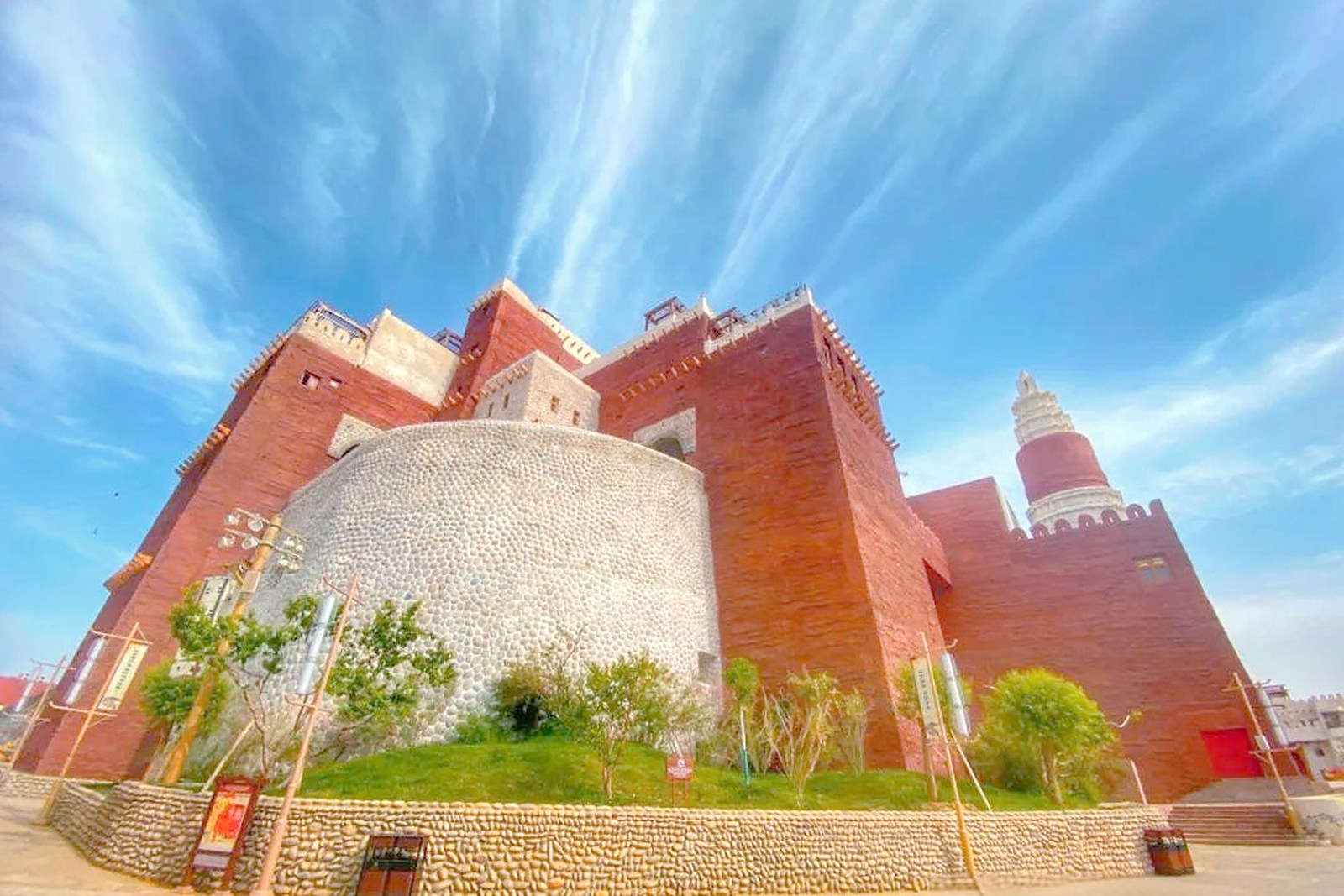
The rebuilt city is the draw. Red walls rise in stepped terraces; gate towers frame the visitor’s first courtyard; and the lanes inside run past performance stages, craft shops and the small museum rooms that carry the site’s scholarship. The colour is the design’s whole argument – every wall is the deep arterial red of Khotan’s famous ceramics, and against the blue desert sky the effect lands somewhere between a fortress and a film set. Children race the ramps, wedding parties pose at the gates, and on summer evenings the park fills with a light-and-music show that runs past midnight.
The archaeology stays honest about itself. Information boards explain that the original Yotkan mounds yielded ceramics, coins and terracottas for generations before the state fenced the site; the celebrated finds – including the painted wooden figures and the early Buddhist artifacts now in museum collections – came from these fields and from the sites up the Yurungkash valley. The rebuilt city does not pretend to be the ruin. It presents itself as a stage set for the ruin’s story, and it is a better story for being walkable: you cross the same distances, climb the same heights, and see the oasis the way the city’s garrison saw it.
The park earns its keep as an evening venue. When the heat drops the tour buses arrive, the fountain runs, and the stages fill with music and dance troupes whose costumes borrow straight from the museum cases – felt hats, embroidered boots, the long silk gowns of the court paintings. Food stalls ring the main square; families claim the shaded benches by the water garden; and the light show paints the ramparts in the colours of the murals. Travellers who planned a one-hour stop routinely stay until the last bus home.
Between shows, the park’s quieter corners reward the slow visitor. The crafts lanes hold workshops where woodcarvers and potters demonstrate the techniques their exhibits describe; the small gallery displays photographs of the excavation seasons that inspired the rebuild; and the viewing platforms frame the white mulberry country rolling away toward the Kunlun. For travellers assembling Hotan’s story – desert, river, jade, silk – the park is the chapter where the pieces first sit together in one place.
Practicalities first. Entry runs modest with extra tickets for the evening shows, the grounds are stroller-friendly after the renovation, and the park’s lanes are fully paved. Bring sun protection – the shade is young – and eat at the food street rather than the front-gate kiosks. Combine the visit with the river road back into town, which crosses the diggings and the jade stalls in one sweep.
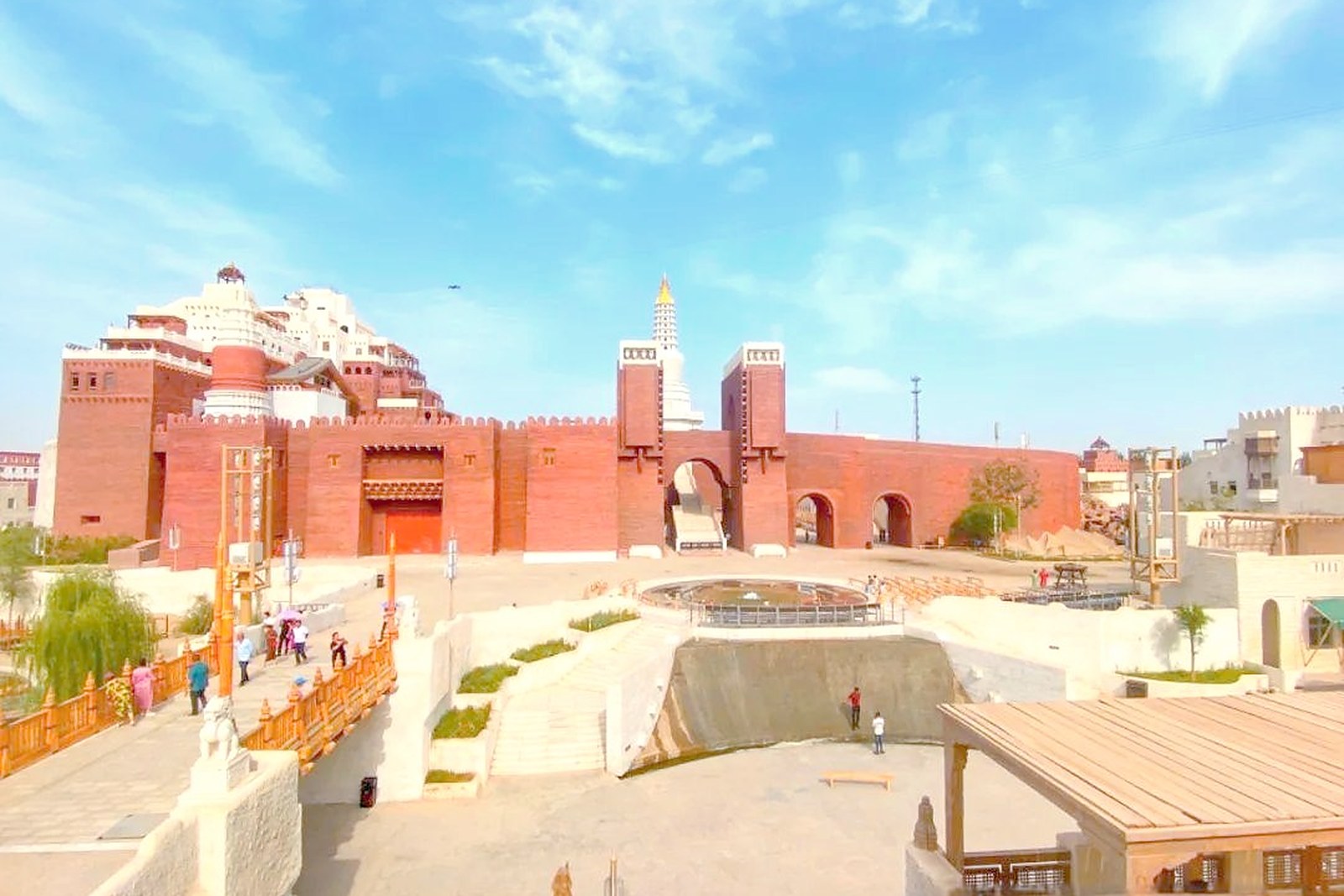
Widen the frame and Yotkan is the natural first stop of the oasis circuit – the museum holds what the ground gave up, the river shows where it came from, and the rebuilt city explains the kingdom that tied them together. Few sites anywhere compress a civilisation so legibly.
And that is the lasting impression: a city that knows it is new, telling an old story extremely well. The red walls catch the evening sun exactly as the originals did – and for a few minutes, at the top of the terraces, two thousand years line up in a single view.
Practicalities
Beyond the ruins, the same 和田地区 Hétián Dìqū Hotan Prefecture keeps more places worth the detour: 千里葡萄长廊 Qiānlǐ Pútao Chángláng the Grape Corridor for the green tunnels, 和田地区博物馆 Hétián Dìqū Bówùguǎn the Hotan Museum for the brocade, 团城老街 Tuánchéng Lǎojiē the Tuancheng old blocks for the restored lanes, or 玉龙喀什河 Yùlóngkāshī Hé the Yurungkash river for the jade diggings – four more doors into the same 和田地区 Hétián Dìqū Hotan Prefecture. Once the ruins are seen, our Hotan food map fills the day.
Practicalities
Words and Names
flowcloud would say Yotkan is the oasis story staged in red: a rebuilt Silk Road city where the ramparts catch the last light, the stages fill with costume and drum, and two thousand years of Khotan walk around in one evening. All checked November 2026.
Getting there: The park sits about 10 kilometres south of Hotan city on the old oasis edge; taxis negotiate round trips with waiting time for under fifty yuan, and the No. 2 bus runs part of the way. Visit in late afternoon for the light on the red ramparts – performances run most evenings in season. All checked November 2026.