
Wènjīn Tíng xià rù táoyuán, Tàigǔ Dòng zhōng wàn nián hán; Jìn-Shí tiándào yī jiǎng, Táo Yuānmíng yī piān. — Enter the spring below the Asking-Ford Pavilion, ten thousand years of cold in the Ancient Cave; one stretch of Jin-dynasty fields, one chapter of Tao Yuanming.
The Taoyuan Scenic Area (酉阳桃花源, Yǒuyáng Táohuāyuán) is a 5A-rated (graded January 2012), 100-yuan-a-head site at No. 7 Yuanquan New Road, Taoyuan Street — the county’s claim on the most famous retreat in Chinese literature: the Peach Blossom Spring of Tao Yuanming’s account (《桃花源记》), the utopia a Wuling fisherman found by boat through a cave mouth. The visit is built as the text was: you enter by the Asking-Ford Pavilion (问津亭), pass through the Ancient Cave (太古洞) with its stalactites and light show — about an hour inside, and cold enough that a jacket is the local advice ⚠️ — and emerge into the Qin-Jin pastoral (秦晋田园), the staged farming scenes of ploughing, weaving and well-water that close the account.
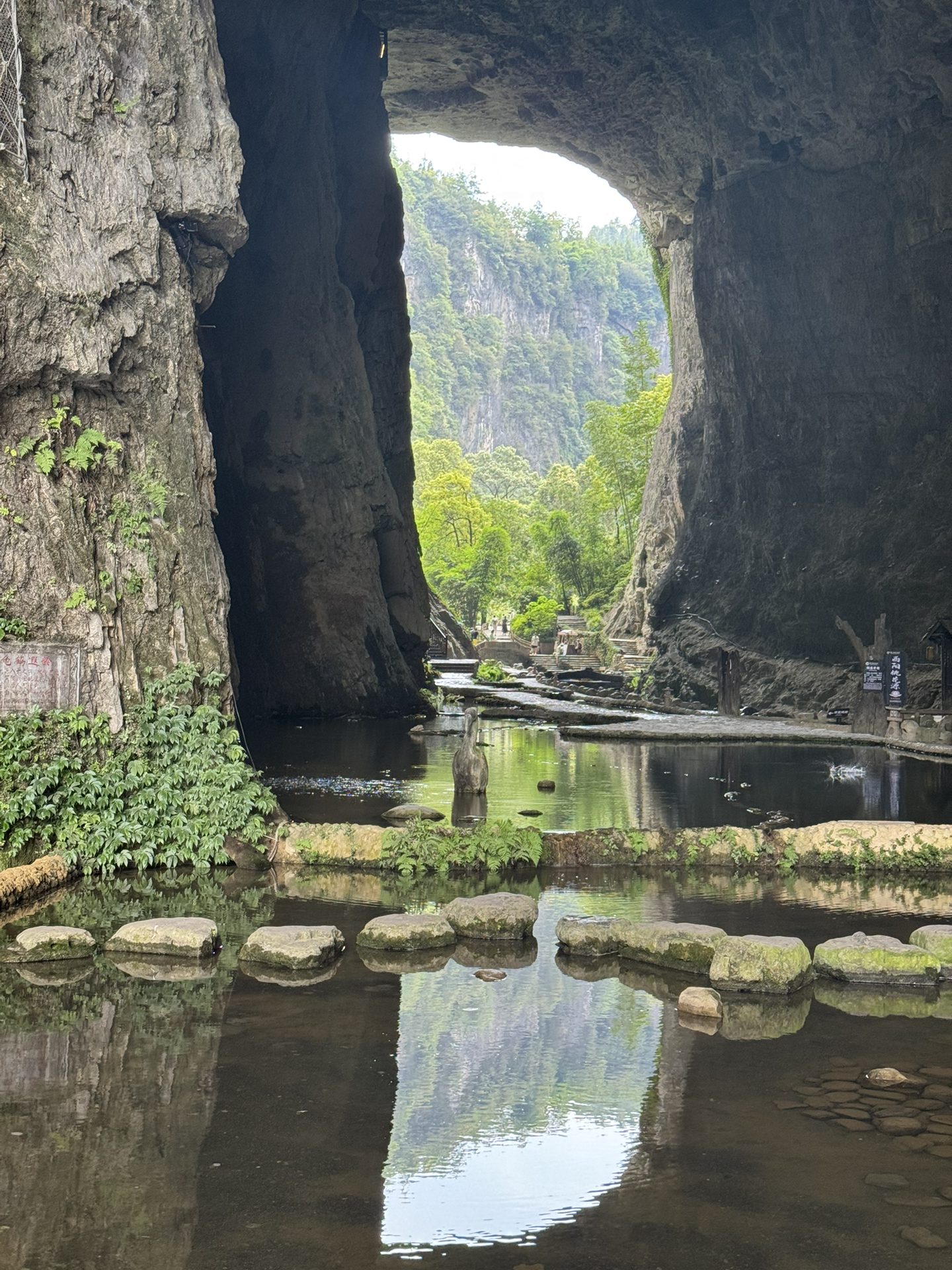
Half of China’s counties claim a Peach Blossom Spring; this one’s claim runs on geography. Tao’s fisherman was a man of Wuling (武陵), the mountain country the county sits in, and the account’s machinery — the narrow cave mouth, the sudden farmland, the village that asks the outside world what dynasty it is — matches the Wuling valleys’ actual habit of hidden basins behind rock. The scenic area’s wager is literal fidelity: the cave as the passage, the pastoral as the discovery, and the visitor walking the plot rather than reading it. The Ancient Cave supplies the geology the literary spring always had.
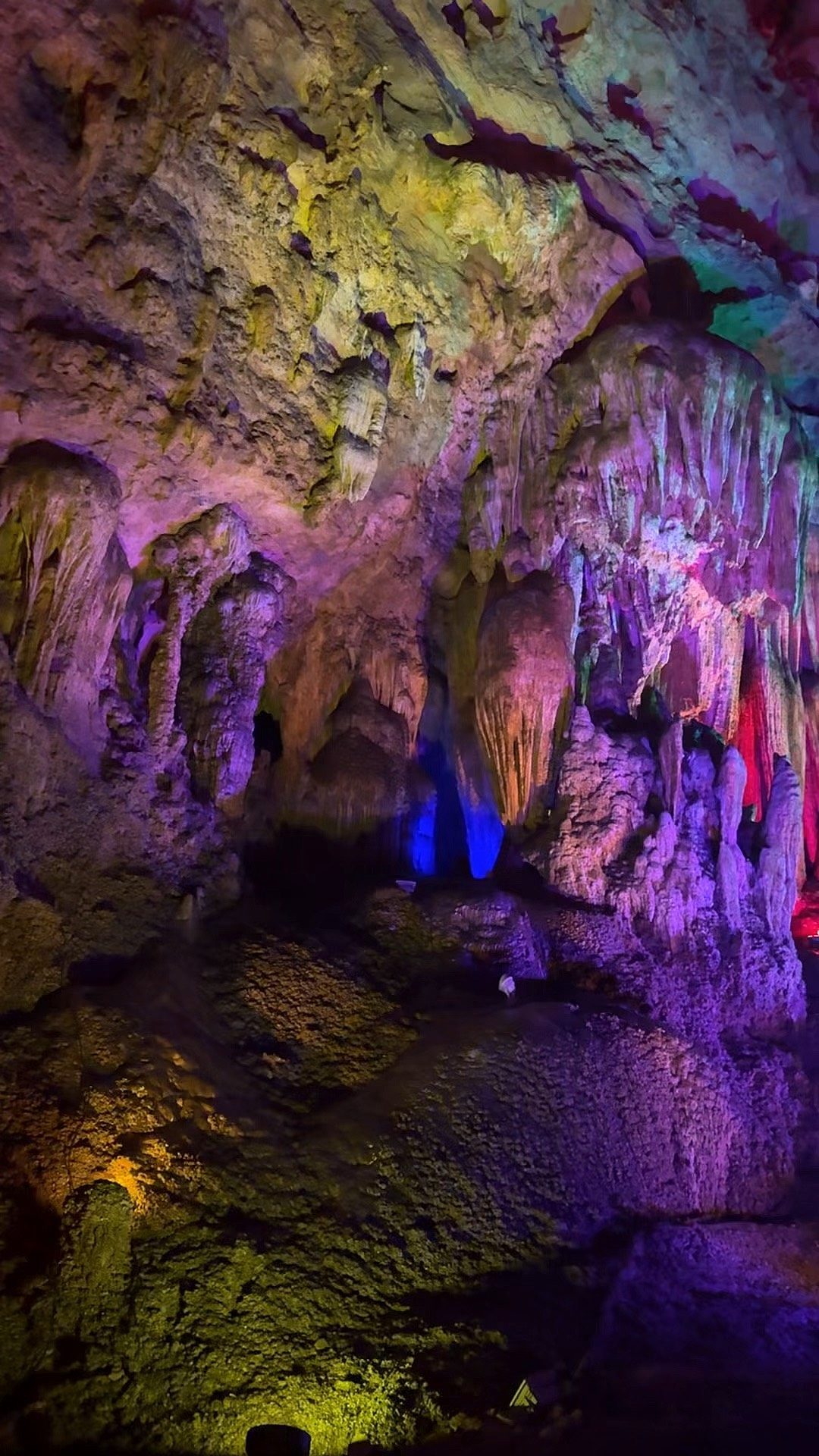
The cave is the temperature event — a jacket in summer, not in winter ⚠️ verify the cave’s light-show schedule and any seasonal closures before publishing. The pastoral is the photograph: the staged farming scenes work best in the morning light, before the tour buses. The two halves are one ticket, and the sensible order is cave first, fields second, the way the account reads. The site sits inside the county seat’s Taoyuan Street, so the day needs no road plan beyond a taxi.
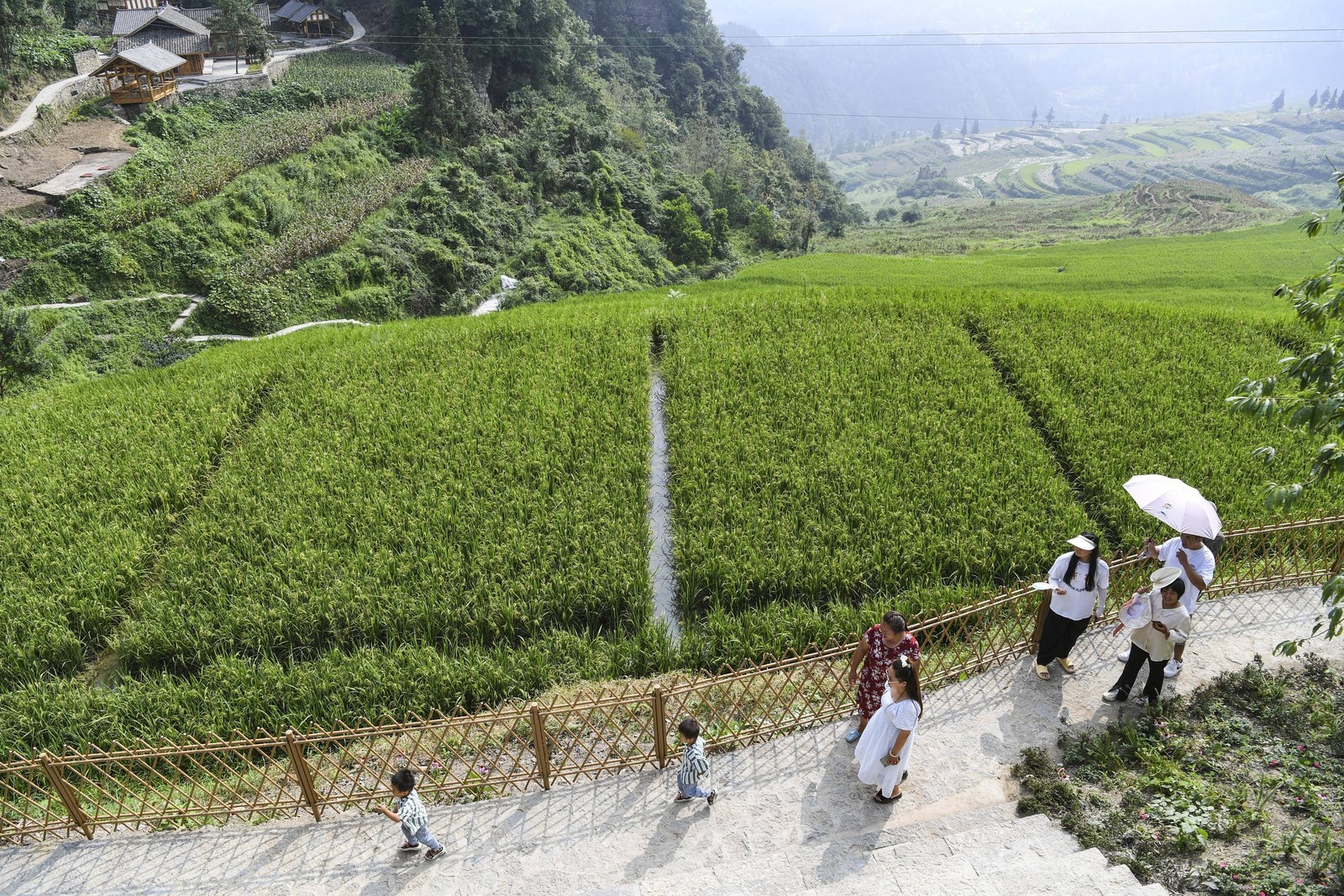
flowcloud would say that the county sells the most famous retreat in Chinese literature as a cave with a jacket warning at the door — and that the pastoral is the only utopia you can photograph with a bus ticket.
Practicalities
- Rating: 5A (graded January 2012)
- Tickets: 100 yuan (peak) / 100 yuan (off-peak)
- Address: No. 7 Yuanquan New Road, Taoyuan Street, the county seat
- Getting there: in-town; the seat’s addresses are taxi-distance (checked October 2026, subject to change)
- Time needed: 3–4 hours, the cave alone about one hour
Words and Names
桃花源 Táohuāyuán — the Peach Blossom Spring · 问津亭 Wènjīn Tíng — the Asking-Ford Pavilion, the entry gate’s name from the account’s closing question · 太古洞 Tàigǔ Dòng — the Ancient Cave, the stalactite passage · 秦晋田园 Qín-Jìn Tiányuán — the Qin-Jin pastoral, the staged farming scenes · 《桃花源记》Táohuāyuán Jì — Tao Yuanming’s account of the spring · 武陵 Wǔlíng — the Wuling mountains, the account’s setting