
Yuanmingyuan Old Summer Palace: The Ruined Garden of Gardens, Western Mansions and Fuhai Lake of Haidian District, Beijing
万园之园归一炬,残柱犹立咽秋风。Wàn yuán zhī yuán guī yī jù, cán zhù yóu lì yàn qiūfēng – The Garden of Gardens went to one torch; the broken columns still stand, swallowing the autumn wind.
圆明园 Yuánmíngyuán Yuanmingyuan, the Old Summer Palace, is not a palace with a gate — it is, to be exact, the ruin of the largest garden complex China ever assembled, three linked imperial gardens — 圆明园 Yuánmíngyuán proper, 长春园 Chángchūn Yuán the Garden of Eternal Spring and 绮春园 Qíchūn Yuán the Garden of Splendid Spring — spread across the flat north of 海淀区 Hǎidiàn Qū Haidian District, Beijing, a short ride north-east of the Summer Palace. The work ran for a century and a half from 1707, when the 康熙 Kāngxǐ Kangxi emperor gave a garden to his son, through the reigns of five emperors who kept adding scenes until the court painters and missionaries built the stone 西洋楼 Xīyáng Lóu Western Mansions for 乾隆 Qiánlóng Qianlong — European palaces, a labyrinth and fountains like the 大水法 Dàshuǐfǎ Great Fountain, designed in the 1740s and 1750s with 郎世宁 Láng Shìníng Giuseppe Castiglione. Contemporaries called the whole 万园之园 wàn yuán zhī yuán, the Garden of Gardens. In 1860 an Anglo-French expedition looted and burned it; the timber halls vanished in days, and only the stone Western Mansions kept their bones. Wrecked again in 1900 and opened in 1988 as a 遗址公园 yízhǐ gōngyuán ruins park, it is today a memorial green where lawn, lake and marble wreckage share one horizon.
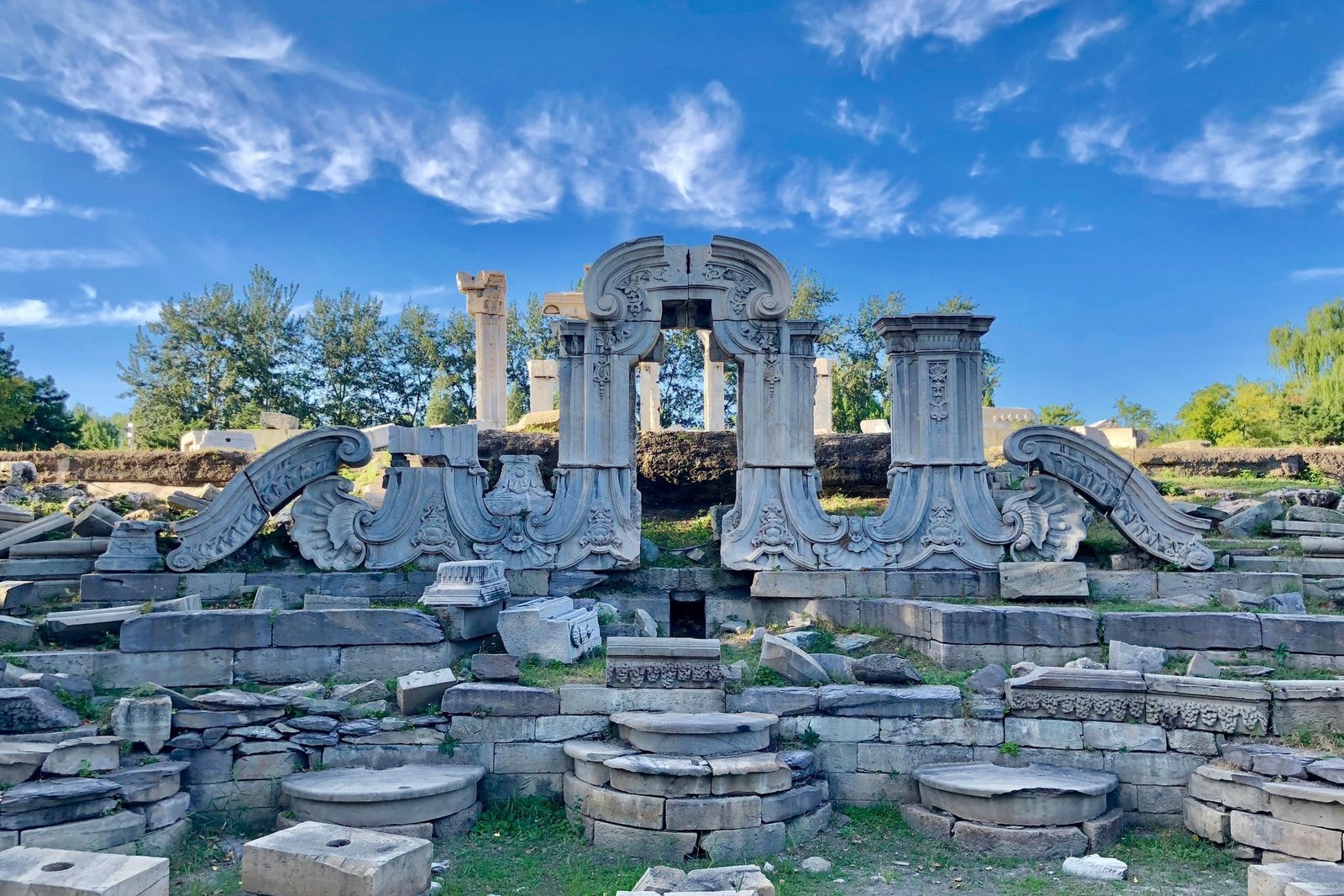
Call it honestly: a ticketed park whose most-photographed corner charges again. Entry to the grounds is ticketed and the current rate is worth confirming the details before you go; the 西洋楼遗址 Xīyáng Lóu yízhǐ Western Mansions ruins area — the one section the 1860 fire left standing in stone — is a separate ticket or combined pass (worth confirming the details), and the restored 正觉寺 Zhèngjué Sì Zhengjue Temple at the garden’s west end now holds exhibition halls whose arrangements shift (worth confirming the details). Opening hours follow the season (worth confirming the details), rowing boats drift 福海 Fú Hǎi Fuhai in the warm months (worth confirming the details), and electric sightseeing cars can shorten the long walk between the south gate and the ruins (worth confirming the details). The mistake is to arrive expecting a rebuilt palace: what you get is a vast green with ruins at its heart, so plan the visit around the Fuhai shore and the Western Mansions, and treat everything between as the public park it has honestly become.
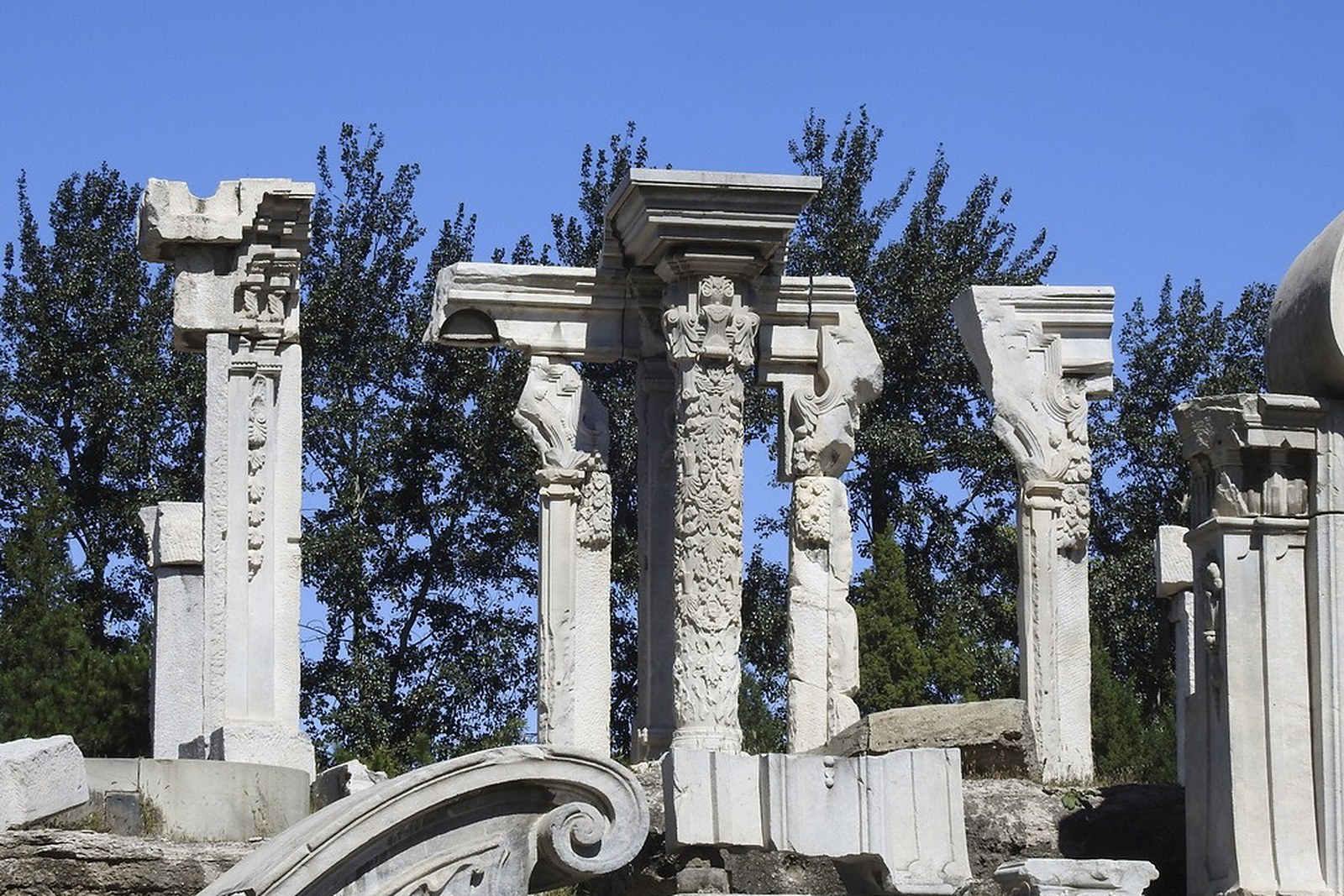
The honest star is the wreckage of 大水法 Dàshuǐfǎ at first light, not the postcard at noon. Stand before the collapsed fountain front — carved stone that survived because stone does not burn — and the 1860 story tells itself better than any plaque; walk on to the 海晏堂 Hǎiyàn Táng Hall of Calm Seas terraces and the zodiac-head story — the bronze fountain figures looted that year and returning, piecemeal, across the decades — becomes concrete rather than legend. What gets oversold is the expectation of grandeur: the timber glories are gone, and no reconstruction will photograph them back. What repays the effort is everything the ruin has quietly become — the 黑天鹅 hēitiān’é black swans riding the northern lakes, the summer 荷花 héhuā lotus blooming over the old garden paddies, the rebuilt 黄花阵 Huánghuā Zhèn hedge maze in the Western Mansions where children run the walls. Come for the mood of the place: garden, then ruin, then water — the whole composition a wound the city chose to keep open on purpose.
The self-aware postscript: I came for the famous columns and found them smaller than the postcards, then stayed for the swans, the lotus and the silence — sat by Fuhai while a student sketched the broken arch and an old man fished nothing in particular. That is the visit in miniature. 圆明园 Yuánmíngyuán suits whoever treats it as a memorial walk first and a park second — go early, read the stones, let the green do the rest — and exhausts whoever hunts one photograph of grandeur that no longer exists. Everything else on this Haidian list lies within a short ride: the water-garden of 颐和园 Yíhéyuán to the south-west, the red slopes of 香山公园 Xiāngshān Gōngyuán to the west, the temple valley of 北京植物园 Běijīng Zhíwùyuán beside it, and the cherry lakes of 玉渊潭公园 Yùyuāntán Gōngyuán to the south, all in the same 海淀区 Hǎidiàn Qū Haidian District where the Garden of Gardens burned.
Practicalities
- Rating: ★★★★☆ — a memorial green where the stone bones of the Western Mansions and the quiet of Fuhai outrank any hope of a rebuilt palace; go early and the ruin keeps its dignity.
- Tickets: Ticketed entry, with a separate or combined ticket for the Western Mansions ruins area (worth confirming the details for current rates, passes and seasonal hours); the boats run in the warm months.
- Address: 圆明园 Yuánmíngyuán Old Summer Palace Ruins Park, 海淀区 Hǎidiàn Qū Haidian District, Beijing — north of 颐和园 Yíhéyuán, a short ride inside the northern Fourth Ring, with the main 南门 Nánmén South Gate by the metro.
- Time needed: Three hours for the Western Mansions, the lakes and the lotus shore; a half day if you walk the full circle of the three gardens.
Words and Names
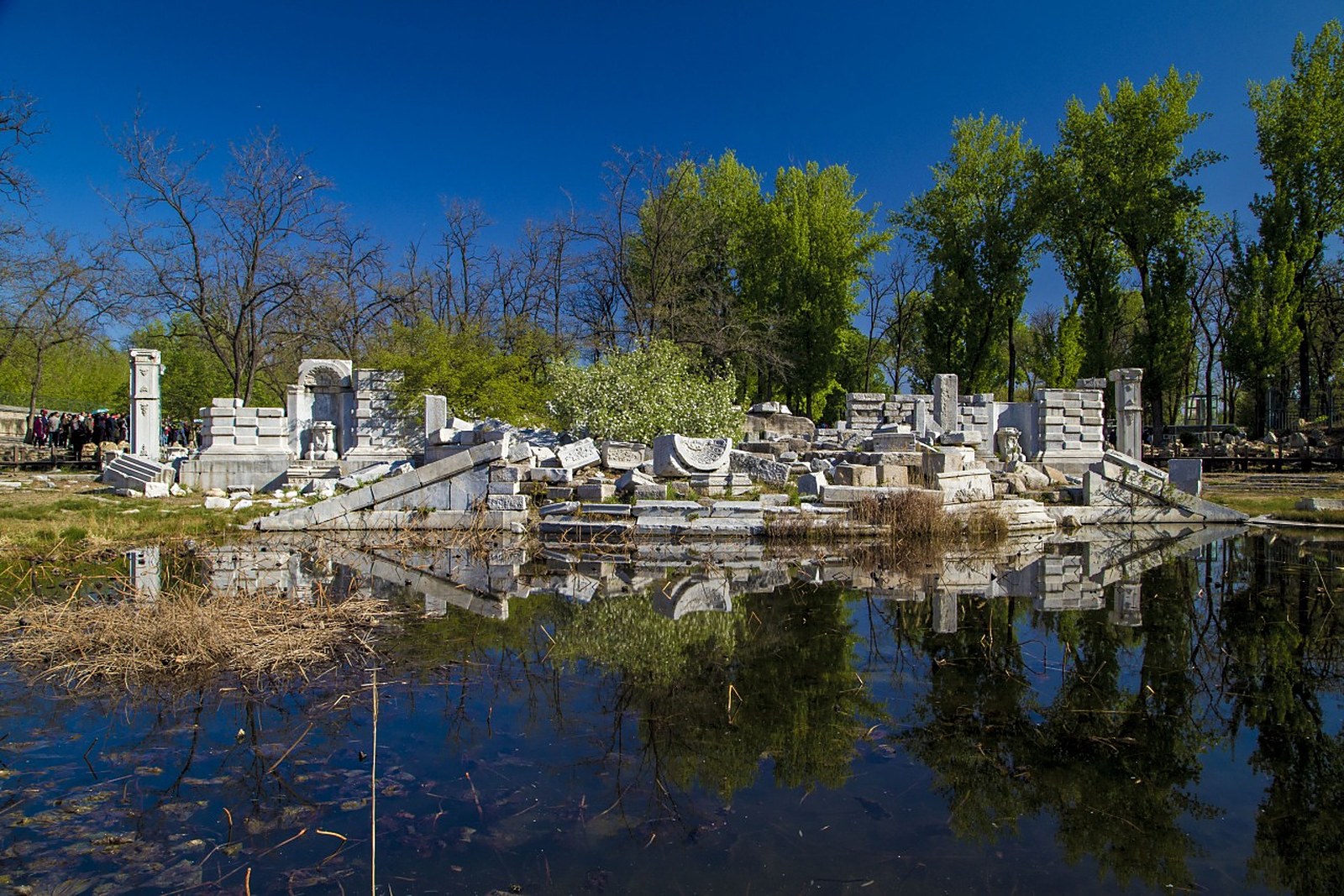
圆明园 Yuánmíngyuán Old Summer Palace · the ruined “Garden of Gardens” of north Haidian 长春园 Chángchūn Yuán Garden of Eternal Spring · the eastern garden that holds the Western Mansions 西洋楼 Xīyáng Lóu Western Mansions · the stone European palaces built for Qianlong 大水法 Dàshuǐfǎ Great Fountain · the broken fountain front that became the ruin’s icon 福海 Fú Hǎi Fuhai · the broad lake at the heart of the eastern garden 黑天鹅 hēitiān’é black swan · the resident birds gliding the ruin lakes 荷花 héhuā lotus · the summer bloom over the old garden paddies 正觉寺 Zhèngjué Sì Zhengjue Temple · the restored temple that outlived the fire and now houses exhibitions
flowcloud would say that 圆明园 Yuánmíngyuán is Haidian’s kept wound — the 万园之园 wàn yuán zhī yuán burned in 1860, its stone 西洋楼 Xīyáng Lóu and 大水法 Dàshuǐfǎ left standing as a 遗址公园 yízhǐ gōngyuán since 1988, ringed by the lotus and 黑天鹅 hēitiān’é of 福海 Fú Hǎi — and that the honest move is an early walk from the 南门 Nánmén straight to the Western Mansions, because the entry ticket and the ruins-area pass both shift with the season (worth confirming the details), the timber glories cannot be photographed back, and the park repays whoever reads the stones first and the swans second while losing whoever hunts a grandeur that no longer exists. All checked October 2026.
Getting there: Metro Line 4 to 圆明园 Yuánmíngyuán Yuanmingyuan, Exit B to the South (Qichun) Gate; the ruins park sits in north-west Haidian beside 清华大学 Qīnghuá Dàxué Tsinghua University and 颐和园 Yíhéyuán the Summer Palace (worth confirming the details for the current Western Mansions and lake-boat hours). All checked October 2026.