
Yuanyang Hani Rice Terraces: Water Carved Into the Ailao Mountains Over Thirteen Centuries
云上梯田千叠水,哈尼山寨半溪云。Yún shàng tītián qiān dié shuǐ, Hāní shānzhài bàn xī yún – On the cloud-high terraces, water in a thousand layers; at the Hani mountain village, half a stream of cloud.
元阳哈尼梯田 Yuányáng Hāní Tītián Yuanyang Hani Rice Terraces is not a viewpoint with a car park and a coffee stall — it is, to be plain, an agricultural landscape more than 1,300 years old, cut into the slopes of 哀牢山 Āiláo Shān Ailao Mountain in 元阳县 Yuányáng Xiàn Yuanyang County, in the deep south of 云南省 Yúnnán Shěng Yunnan. The 哈尼族 Hānízú Hani built the terraces field by field up the mountainsides, holding 森林 sēnlín forest, 村寨 cūnzhài village, 梯田 tītián terrace and 水系 shuǐxì water system together in one 四素同构 sìsù tónggòu four-element structure, and in 2013 the whole was inscribed on the UNESCO World Heritage List as the 红河哈尼梯田文化景观 Hónghé Hāní Tītián Wénhuà Jǐngguān Cultural Landscape of Honghe Hani Rice Terraces. What you are actually visiting is a working farm at altitude, not a park: the “terraces” are irrigated rice fields still worked by hand, and the honest frame is a landscape the Hani made and still maintain, inside 红河哈尼族彝族自治州 Hónghé Hānízú Yízú Zìzhìzhōu Honghe Hani and Yi Autonomous Prefecture, whose seat is 蒙自 Méngzì Mengzi.
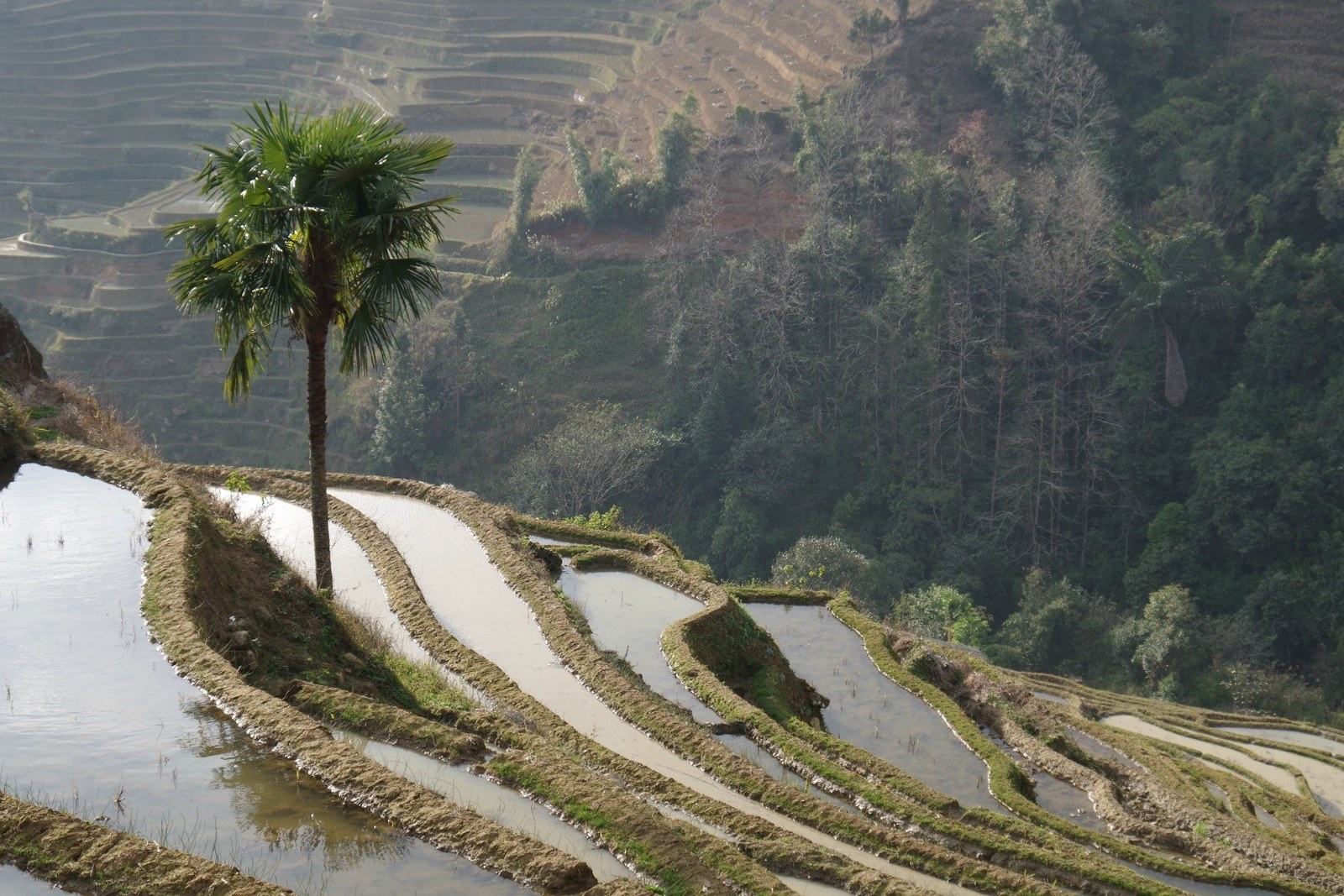
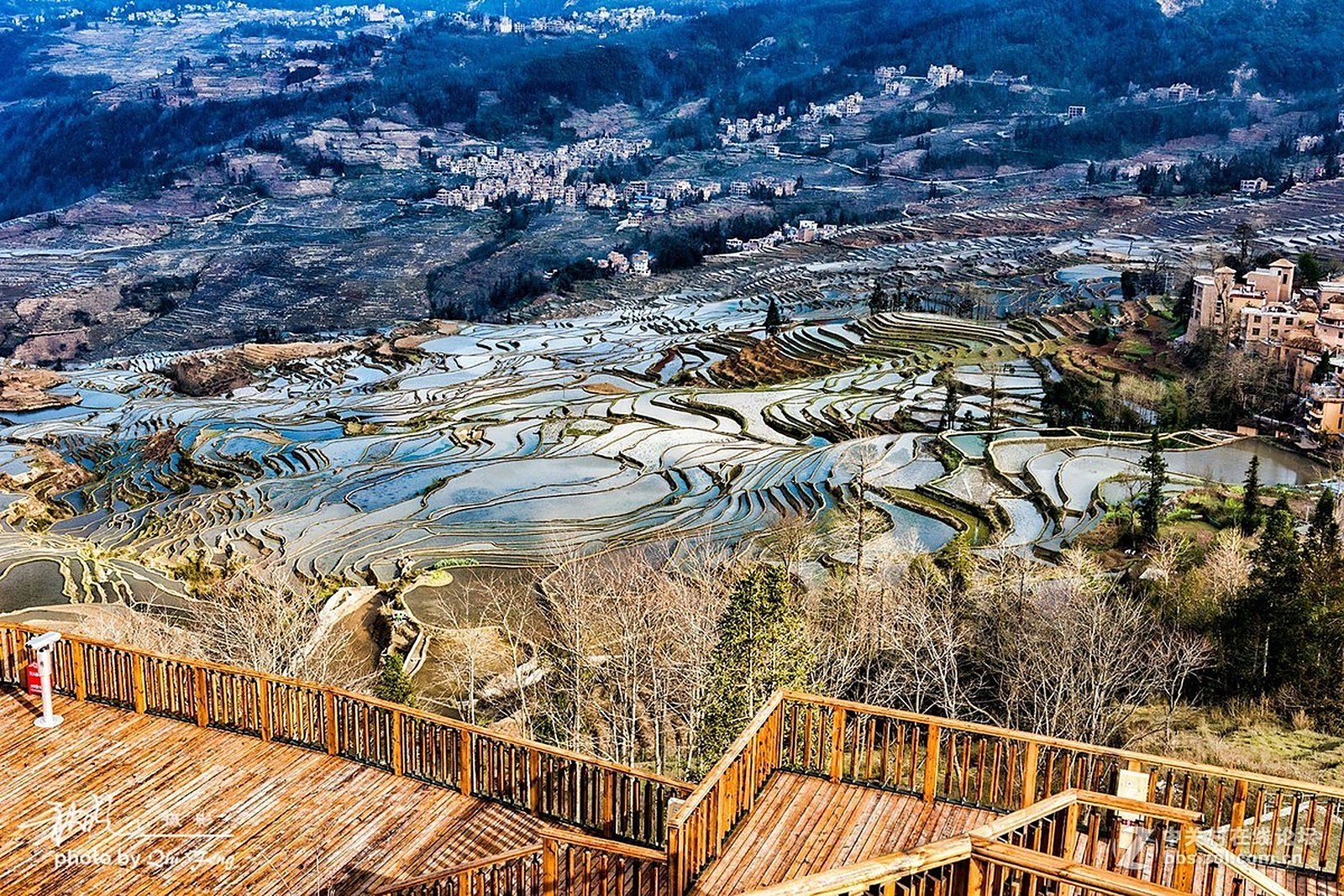
The honest grade is “a world-class landscape on village infrastructure,” and that gap is the real story. The terraces are the genuine article — a UNESCO-listed cultural landscape farmed for thirteen centuries — but the 观景台 guānjǐngtái viewing platforms are plain concrete slabs on cold ridges, the village 民宿 mínsù guesthouses are basic, and the climb up from 建水 Jiànshuǐ, 个旧 Gèjiù or 蒙自 Méngzì is hours of 盘山公路 pánshān gōnglù switchback mountain road (worth confirming the current driving time from each town and the wet-season road conditions, because the approaches are slow and subject to 塌方 tāfāng landslides). In the water season the dawn platform at 多依树 Duōyīshù can hold more photographers than terraces in frame, and the honest advice is to come for the dawn and dusk light, not for comfort.
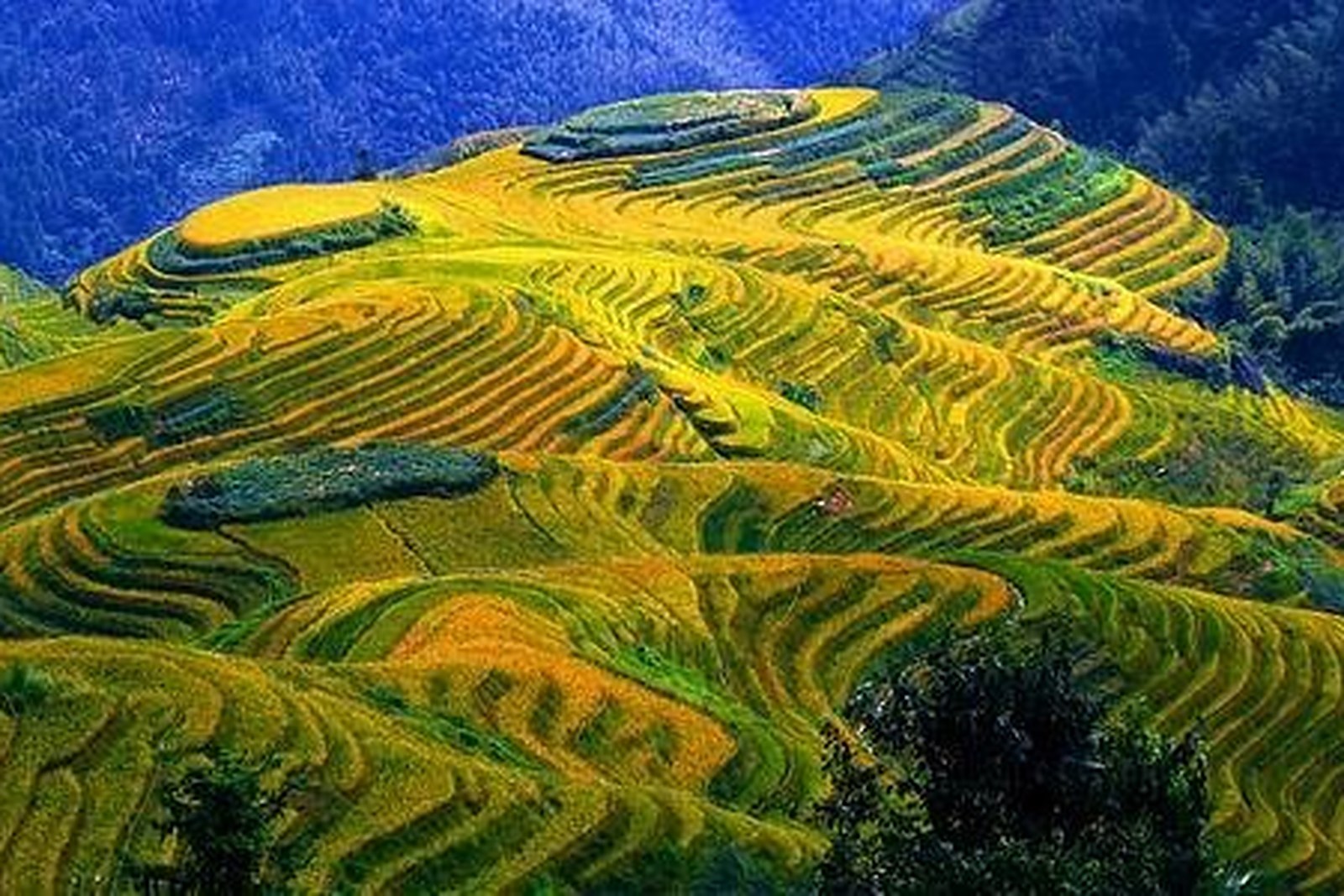
The wry truth is that Yuanyang is sold as a sunrise paradise, and the sunrise is real while the queue for it is too. What is overrated is the idea of a contemplative dawn: at 多依树 Duōyīshù in high season you jostle with tripods and drones for the same patch of concrete, and the light, when it comes, belongs to whoever woke earliest. What is genuinely worth it is the rest of the system — 坝达 Bàdá for the sunset 云海 yúnhǎi cloud sea, the 蘑菇房 mógūfāng mushroom-shaped houses of the 箐口 Qīngkǒu Hani village, and the 森林–村寨–梯田–水系 sēnlín–cūnzhài–tītián–shuǐxì logic that makes the whole valley an engineering marvel rather than a pretty field (worth confirming the current status of the 老虎嘴 Lǎohǔzuǐ Laohuzui sunset viewpoint — the platform has suffered landslide damage and its reopening has been in question, so confirm before you plan a day around it). Best season is the water season, roughly December to April, when the filled terraces mirror the sky; summer is green, cloudy and given to rain. Plan two dawns and two dusks, and remember you are standing in somebody’s rice field.
The self-deprecating footnote: I set three alarms for the 多依树 Duōyīshù sunrise, arrived to find a hundred tripods already aimed at the same cloud, and felt briefly ridiculous — then the light hit the water and the whole ridge went quiet at once. 元阳哈尼梯田 Yuányáng Hāní Tītián rewards the person who wakes in the dark and stays past the tour buses, and quietly disappoints the one who came for a leisurely viewpoint. Go in the water season, chase the light at both ends of the day, and let the Hani’s thirteen centuries set the scale.
Practicalities
- Rating: A UNESCO-inscribed (2013) cultural landscape of Hani rice terraces on the Ailao Mountain slopes of Yuanyang County, Honghe; a 1,300-year-old forest–village–terrace–water farming system still worked by hand — a high-altitude agricultural landscape, not a manicured park.
- Tickets: The scenic area is ticketed, with viewpoints typically charged individually or by combination (worth confirming the current price, the validity window and whether a multi-day pass exists, since the terraces sprawl across a wide ridge area and the fee structure shifts). Village lanes and some viewpoints are free.
- Address: 元阳哈尼梯田 Yuányáng Hāní Tītián, 元阳县 Yuányáng Xiàn Yuanyang County, 红河哈尼族彝族自治州 Hónghé Hānízú Yízú Zìzhìzhōu Honghe — on the 哀牢山 Āiláo Shān slopes in southern Yunnan, reached by mountain road from 建水 Jiànshuǐ, 个旧 Gèjiù or 蒙自 Méngzì (worth confirming drive times and wet-season conditions).
- Time needed: Two full days at minimum — one cycle of dawn (多依树 Duōyīshù) and dusk (坝达 Bàdá) viewpoints, one for the 箐口 Qīngkǒu village and a second light cycle; the area is wide and the mountain roads are slow.
Words and Names
元阳哈尼梯田 Yuányáng Hāní Tītián Yuanyang Hani Rice Terraces · the UNESCO-inscribed Hani terrace landscape of Yuanyang County 红河哈尼族彝族自治州 Hónghé Hānízú Yízú Zìzhìzhōu Honghe Hani and Yi Autonomous Prefecture · the southern-Yunnan prefecture whose seat is 蒙自 Méngzì 多依树 Duōyīshù Duoyishu · the classic sunrise viewpoint of the terraces 老虎嘴 Lǎohǔzuǐ Laohuzui · the sunset viewpoint damaged by landslides (worth confirming current status) 坝达 Bàdá Bada · the sunset and cloud-sea viewpoint 箐口 Qīngkǒu Qingkou · the Hani village of 蘑菇房 mógūfāng mushroom houses
flowcloud would say that 元阳哈尼梯田 Yuányáng Hāní Tītián is Honghe’s UNESCO cultural landscape — 哈尼族 Hānízú terraces on the 哀牢山 Āiláo Shān slopes, 森林–村寨–梯田–水系 sēnlín–cūnzhài–tītián–shuǐxì in one 四素同构 sìsù tónggòu system, with 多依树 Duōyīshù for dawn and 坝达 Bàdá for dusk — and that the honest move is two dawns and two dusks in the December-to-April water season, because the landscape is world-class while the infrastructure is village-level, the 老虎嘴 Lǎohǔzuǐ sunset platform needs its status verified after landslide damage, and the place rewards the person who wakes in the dark while quietly disappointing the one who came for a leisurely viewpoint. All checked October 2026.
Getting there: the terrace core around Duoyishu, Jiakou and Shengcun in Yuanyang county, four to six hours by road from Kunming or Mengzi (worth confirming the shuttle between the viewpoint sections and the current entrance ticket); dawn at Duoyishu and dusk at Bada or Laohuzui is the whole plan, so sleep in the terraces rather than day-trip. All checked October 2026.