
Two small museums, one civic and one folk, sit within about a kilometre of each other in the north of this city, and between them they hold the most heavily carved bed and the most heavily carved household shrine the region can put a name to. The one to make the detour for is 渝北博物馆 Yùběi Bówùguǎn, the Yubei Museum, also catalogued as the Chongqing Bayu Folk Museum, on 二支巷 Èrzhī Xiàng, Erzhi Lane, off 双龙大道 Shuānglóng Dàdào, Shuanglong Avenue. It opened in 1997, holds 2,337 square metres, and is a national second-grade museum of the social-science kind, that is, of folk customs, re-rated at that grade in 2024. The building is a concrete-frame pseudo-palace hall joined to a wedding courtyard in the eastern-Chongqing house style, and it charges nothing.
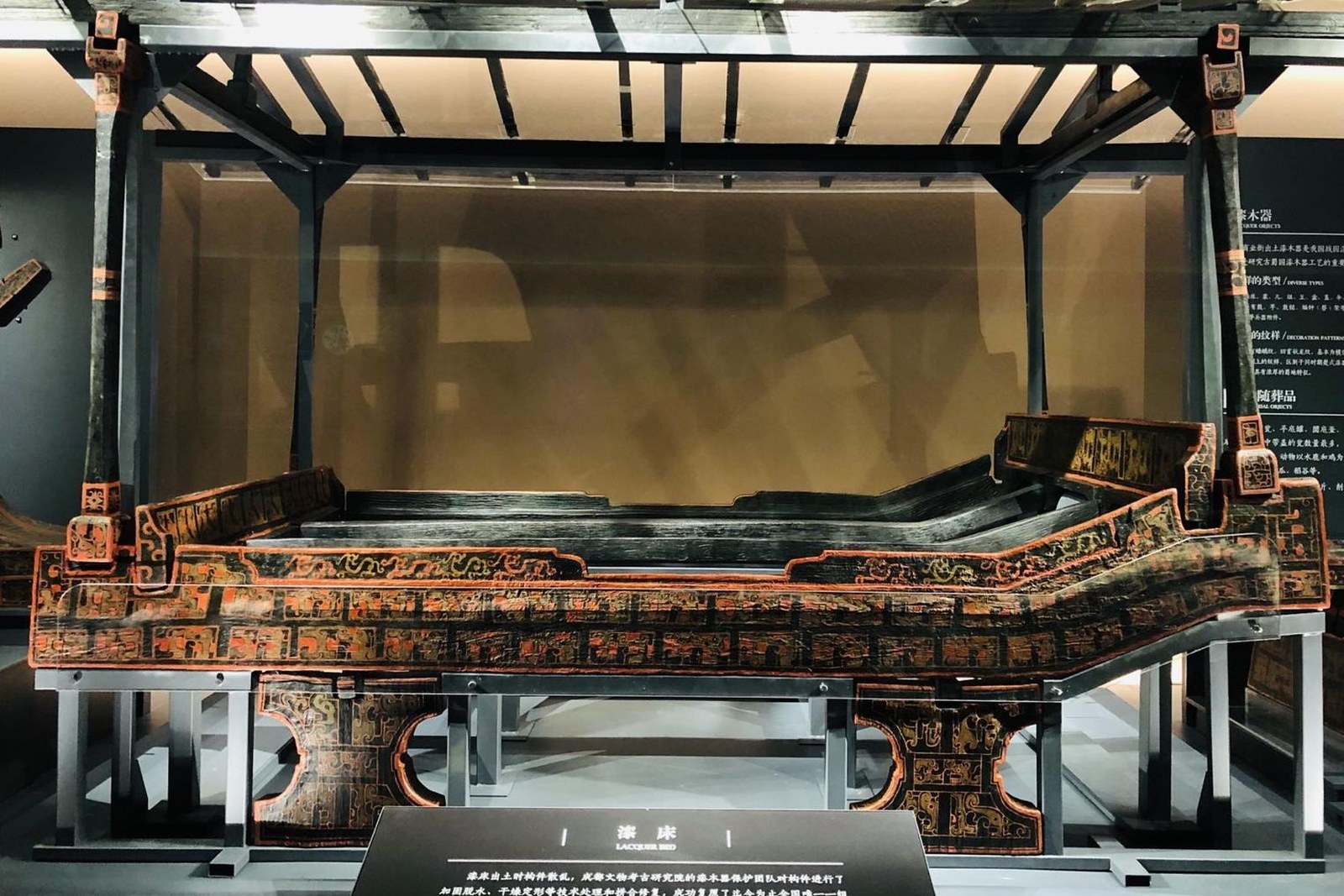
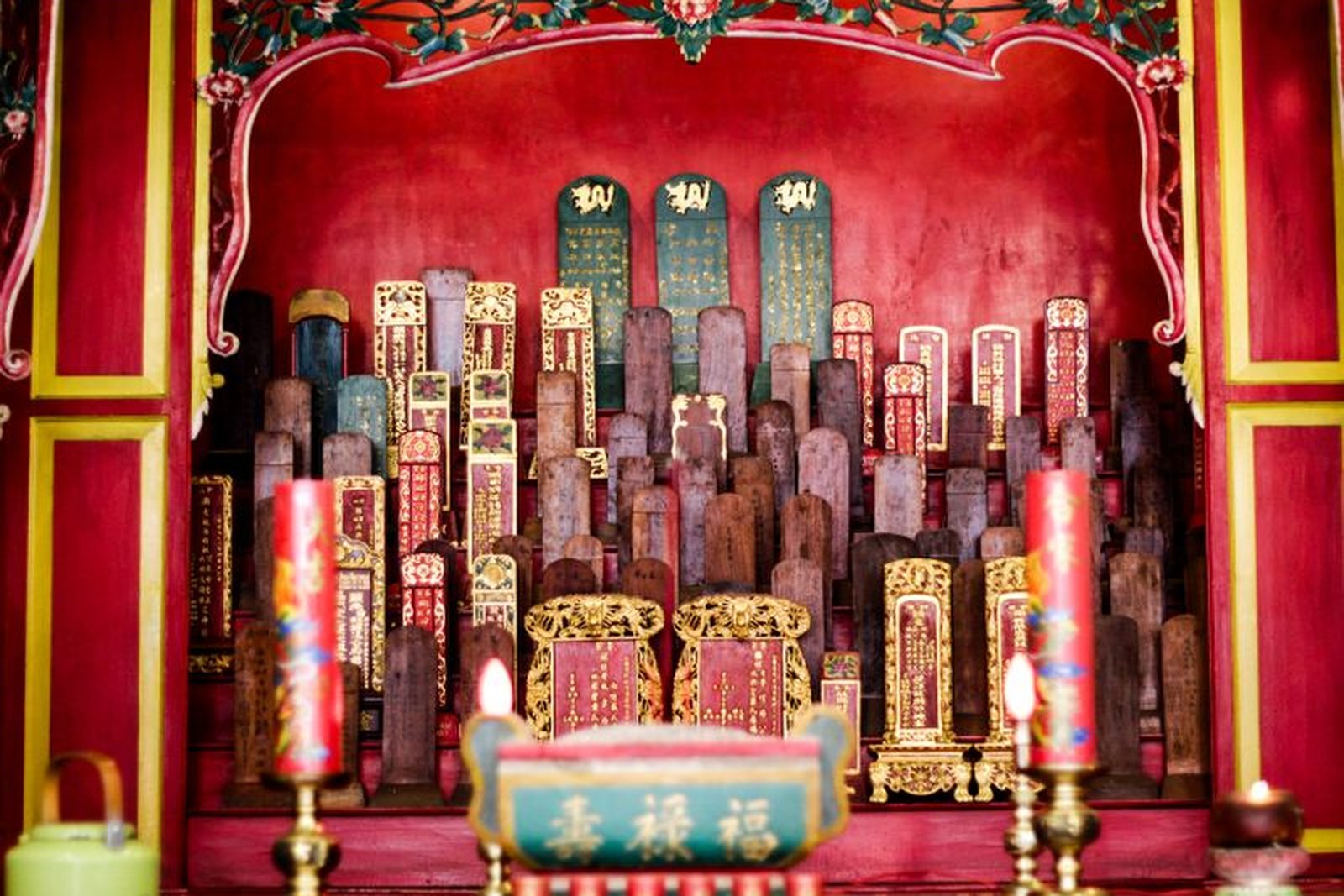
What it is known for is two objects from the Qing and Republican periods: a six-post, five-eave bed, carved and gilded all over, and a fully gilded carved household shrine, which the museum’s own descriptions call the best bed and the best shrine under heaven. Both are about the same thing, which is that a family with money spent it in two places – on the bed, and on the shrine where the household’s faces sit. The permanent show 渝北简史 Yùběi Jiǎnshǐ, the Yubei Brief History, runs in three parts called Open Frontier, Industrial Town and Livable City, and begins in 1759 with the Jiang-Ba partition, the event the district’s whole administrative history turns on.
The second venue is a different museum in a different building, and keeping the two apart is the single most useful thing this article can do. 重庆渝北历史文化陈列馆, the Chongqing Yubei History and Culture Exhibition Hall, stands at 双龙大道 Shuānglóng Dàdào 46, on the far side of the road from the main gate of 碧津公园 Bìjīn Gōngyuán, Bijin Park; it opened on 18 December 2018, is 2,610 square metres of building with 1,529 square metres of exhibition, and is free. Its show runs in three parts, ancient, modern and contemporary Yubei, and one of its treasures is a gilt wood-carved 看枋 kànfáng, the ornamental beam that sat above a hall, about ten metres long and half a metre wide. Treat the address as the identity: number 46 is not the museum on Erzhi Lane.
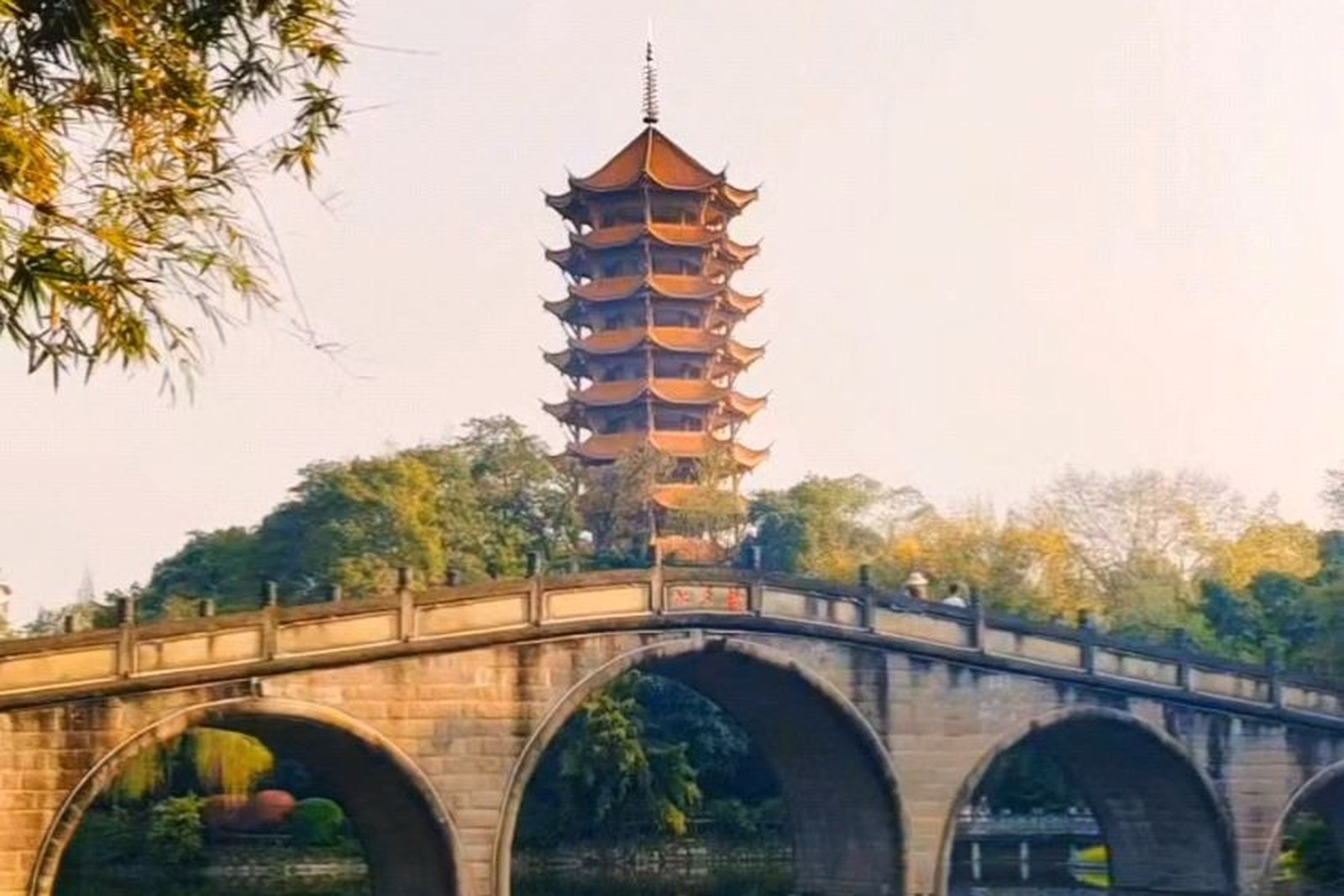
The third is not a museum at all but a park that contains several. Bijin Park was laid out in 1987, enlarged in 1993 and rebuilt in 2010, covers close to 300 mu, sits 19 kilometres from the centre of the city, right against the airport, and was named a key park by the municipal government in 2023. Its own list of institutions inside the gates is where the naming turns soft: the Bayu Folk Culture Village, the Bayu Ancient Bed Museum – which holds a Qing stepping-bed carved in openwork, fully gilt, with floral and bird patterns – and the Bijin Art Museum are the three the name refers to, though ticketing pages also list a Bayu folk museum at 双龙大道 97 inside the park. The park’s own furniture is worth as much as its museums: a lake, a lotus pond, a seven-arch stone bridge, and a 54-metre pagoda for 3 yuan.
Practicalities
Tickets. All three venues are free and none of them sells a ticket, which is the single most useful fact for a half-day here. The Yubei Museum on Erzhi Lane is free to the public; the history and culture exhibition hall at 46 Shuanglong Avenue is free; Bijin Park is free and open all day. What does charge inside the park is ordinary infrastructure rather than entry: climbing the 54-metre Bijing pagoda costs 3 yuan and a pedal boat on the lake 40 yuan for half an hour.
Opening hours. Here the sources disagree, and the disagreement is the thing to carry rather than resolve. The Yubei Museum is the straightforward one: Tuesday to Sunday, 09:00 to 17:00, closed Mondays, with step-free access by lift. The history and culture exhibition hall is published one way as 08:00 to 11:00 and 14:00 to 16:00 with Mondays closed, and described by visitors as 09:00 to 17:00, and a reader has left a comment saying that with the district gone it is not clear the hall is still open at all. This page does not pick a side: check the current status and hours of 重庆渝北历史文化陈列馆 before you set out, and go to Bijin Park either way.
Closing day. The two museums close on Mondays, which is the one to plan around, and the park has none – it is open every day of the year, which is why it works as the fallback when a hall is shut. Beyond that the honest summary is that the hall at 46 Shuanglong Avenue is in a transitional state whose opening this page cannot vouch for, so treat a planned visit to it as something to confirm rather than assume, and the museum on Erzhi Lane as the reliable one of the pair.
Getting there. There is no station at the museums themselves, so this is a bus and a walk. Line 10’s 渝北广场 Yúběi Guǎngchǎng, Yubei Square, station is a walk of some ten minutes from the hall at 46 Shuanglong Avenue, and bus 68 stops at Bijin Park, which puts you at the park’s gate with the hall across the road. Line 3’s 碧津 Bìjīn station exit 2B is about five minutes on foot from the park’s east gate, and the museum on Erzhi Lane is off the airport road, so a taxi from the T3 terminal is the fastest approach (checked October 2026, subject to change).
flowcloud would say that the whole north side of this city has one great object, a fully gilded Qing bed with six posts and five eaves that a small free municipal museum has put under glass, and that the trap here is administrative rather than aesthetic – three museums within a kilometre, each with its own name, address and uncertainties, and only the park open whatever the day is.
Getting there: the three venues are the Yubei Museum on 二支巷 off 双龙大道, opened 1997 and a national second-grade folk museum of 2,337 square metres; the Chongqing Yubei History and Culture Exhibition Hall at 双龙大道 46 opposite the main gate of Bijin Park, opened 18 December 2018 with 1,529 square metres of exhibition; and, inside that 1987 park, the Bayu Folk Culture Village, the Bayu Ancient Bed Museum and the Bijin Art Museum, together with a 54-metre pagoda that charges 3 yuan to climb. All three are free, the two museums close on Mondays and the park is open every day, but the history hall’s hours are given two different ways in the sources, so check its status before travelling. Line 3’s Bijin station exit 2B is five minutes from the park’s east gate, and bus 68 stops at the park gate (checked October 2026, subject to change).