
Almost everyone who comes to 岳阳 Yuèyáng comes for one building, and the building earns it. 岳阳楼 Yuèyáng Lóu stands on the old west wall of the city, directly above the water of 洞庭湖 Dòngtíng Hú, three storeys of dark timber under a pair of upturned roofs, held together without a single nail. From the top floor the lake opens out to the horizon on one side and the city closes in on the other, and the 洞庭湖大桥 Dòngtíng Hú Dàqiáo runs away across the water to the north. It is not the oldest thing in China and it is not the biggest, but it is the one that a Chinese schoolchild can recite an essay about, and that is what has kept it standing through more than thirty rebuildings.
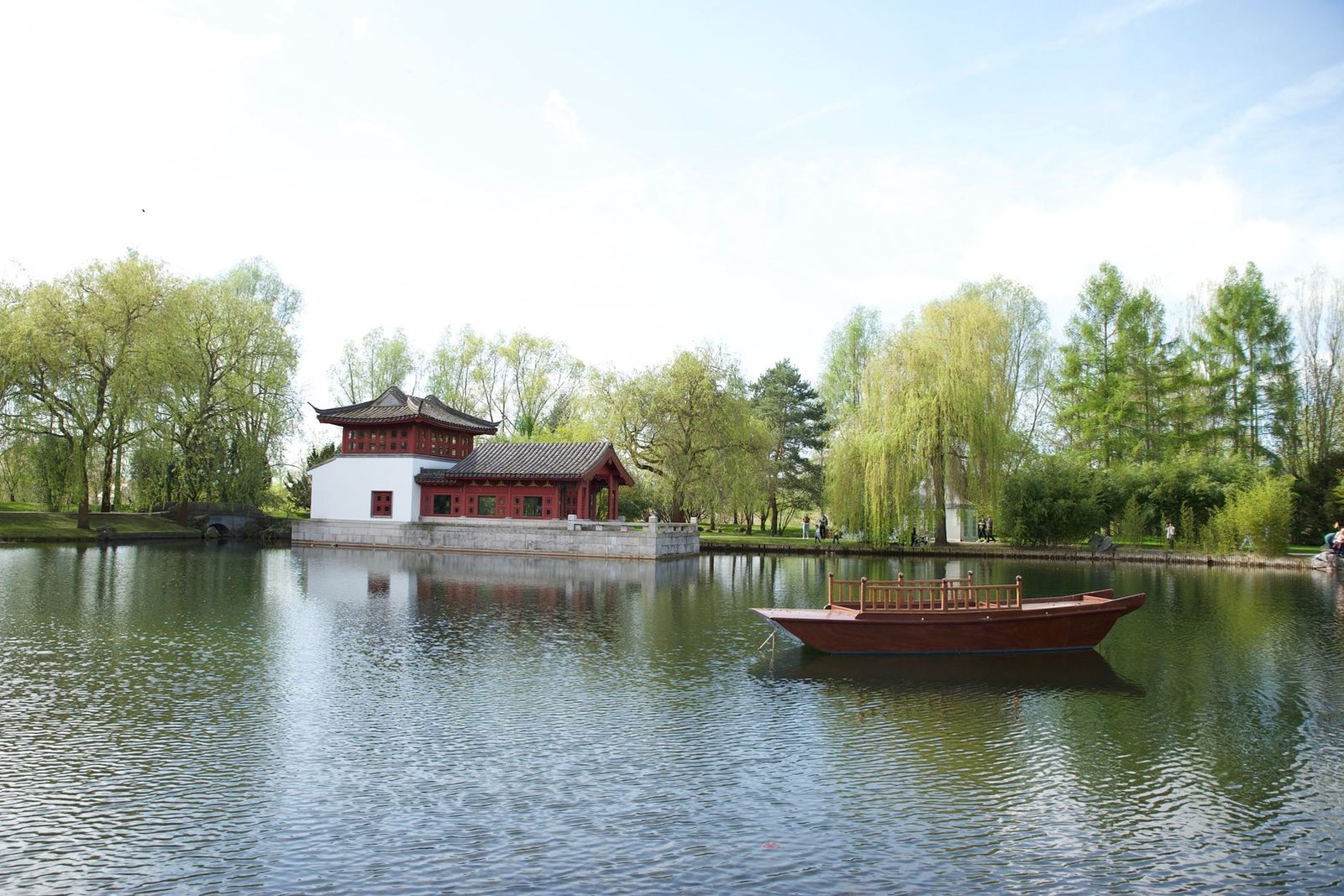
The building’s history is the point rather than its timbers. The first structure on this spot is said to have been a review stand built for the general 鲁肃 Lǔ Sù around 220 AD, when this was the western gate of a walled town on the lake. What made Yueyang Tower famous, though, happened in 1046, when a local official named 滕子京 Téng Zǐjīng rebuilt the tower and sent a painting of it to his friend 范仲淹 Fàn Zhòngyān, asking for an essay. Fan had never been here; he wrote it anyway, and the 岳阳楼记 Yuèyáng Lóu Jì, the record of Yueyang Tower, became one of the most quoted pieces of classical Chinese prose. Its closing line, about being the first to worry and the last to enjoy oneself, is still what the guides say to visitors, and the tower’s reputation rests on it far more than on anything structural.
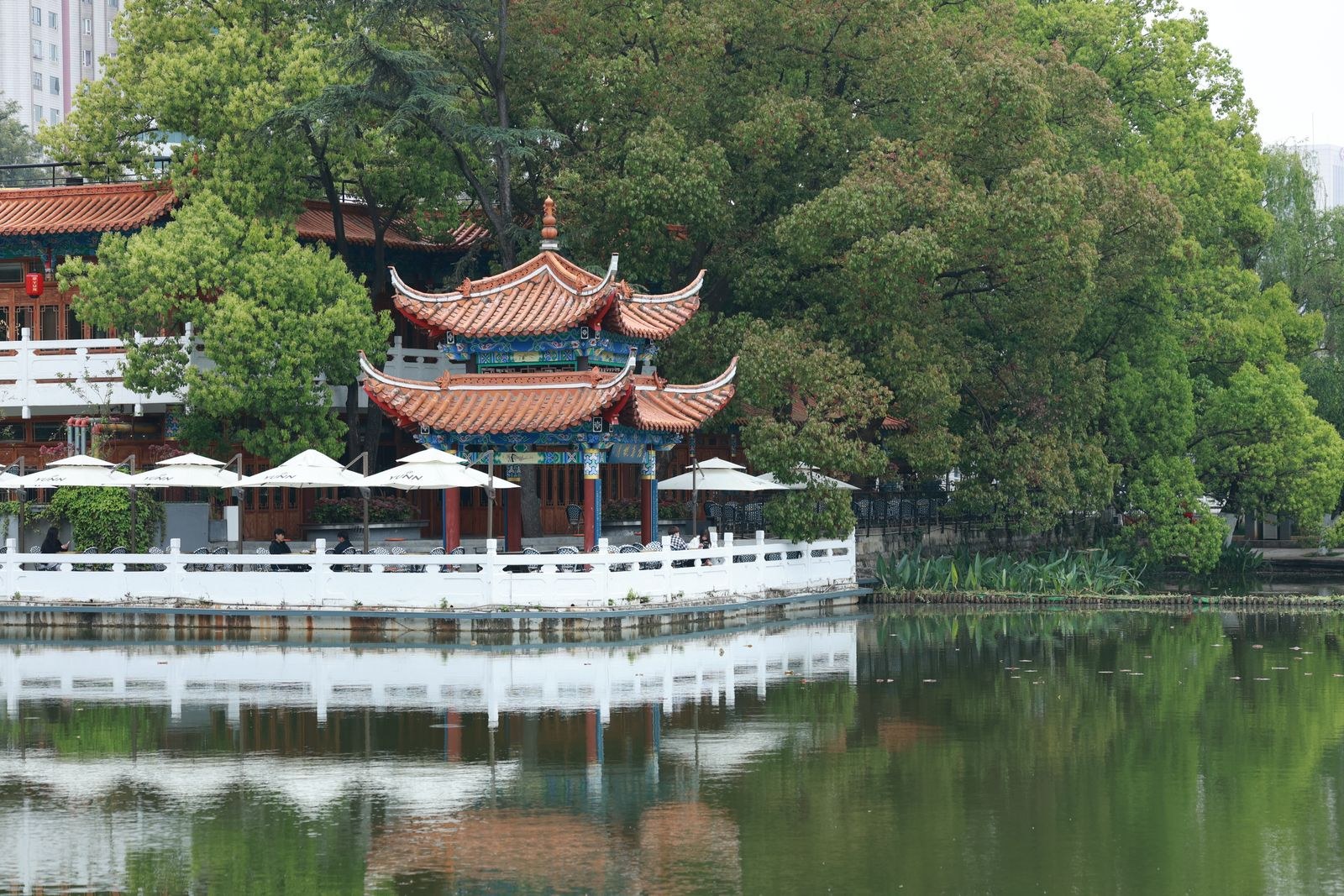
What You Actually See
The tower is three storeys with a double roof, about nineteen metres tall, built of timber in a 穿斗式 chuāndòu shì frame with brackets instead of fastenings, and the current version is a careful reconstruction completed in 1984 based on the Qing building of 1880 and on old woodblock images. Inside, each floor has a carved screen, calligraphy of Fan Zhongyan’s essay by later hands, and a good deal of restoration furniture. The irony is that the interior matters least. The reason to pay the entrance fee is the top floor and the view from it, which is over open water on one side and over the city and its embankment on the other, and the reason to walk slowly along the wall below is to see how the building sits on the rampart rather than beside it.
Practicalities
Tickets. Admission to the tower complex is around ¥70, which covers the tower itself plus the surrounding 岳阳楼景区 Yuèyáng Lóu Jǐngqū — the wall, the 小乔墓 Xiǎoqiáo Mù, the tomb of Xiao Qiao, and 汴河街 Biànhé Jiē, the reconstructed street of shops below the wall. Discounted and free admission applies to students, children, and adults over a stated age on production of ID. There is a separate charge for the boat to Junshan Island, sold at the pier rather than here.
Opening hours. The gate opens at 07:00. Closing is seasonal, roughly 18:30 in summer and 17:30 in winter, and the last admission is sold half an hour or so before. Early morning is the best hour for the view and the worst for the light, since the lake faces east and the sun is in your eyes; late afternoon is the reverse.
Closing day. There is no closing day. The tower is open every day of the year, though it shuts the whole complex for a few hours on some public holidays and takes far more visitors than it can comfortably hold during the 国庆 Guóqìng week.
Getting there. The tower is in 岳阳楼区 Yuèyánglóu Qū, the old part of the city, and is walkable from most of the riverside hotels. 岳阳站 Yuèyáng Zhàn on the ordinary rail line is a little over three kilometres away and 岳阳东站 Yuèyáng Dōng Zhàn on the high-speed line is about ten kilometres, with bus and taxi connections from both. From 长沙 Chángshā the high-speed train takes roughly an hour and a half.
flowcloud would say that Yueyang Tower is the rare monument that is better than the essay about it, since Fan Zhongyan wrote his lines about a painting and the three-storey view from the top is the only argument he needed.
Getting there: come at opening, go straight to the top floor before the tour groups assemble, then work down and out along the wall to the old street below. Look for the mortise-and-tenon frame and the absence of nails on the second floor, read the calligraphy screens on the way down rather than on the way up, and allow two hours with the grounds.