
鱼鳞洲 Yúlínzhōu – Yulinzhou – is the rocky cape that closes the south-west corner of 八所镇 Bāsuǒ Zhèn, Basuo town, in 东方 Dōngfāng, Dongfang, the county-level city on Hainan’s western shore. It stands at the western end of Jiefang West Road, on the seaward side of 八所港 Bāsuǒ Gǎng, Basuo Port, inside the small bay that the provincial government lists among the city’s seven named bays. The name means fish-scale islet, taken from the layered reef that stacks up the hillside like scales, and at roughly ninety metres the little stone peak carries a white lighthouse the city treats as its own emblem. This is not a wilderness headland far from anywhere: it is a working port city’s front window, aimed straight at the 北部湾 Běibù Wān, the Beibu Gulf, and at the sunset that comes with it.
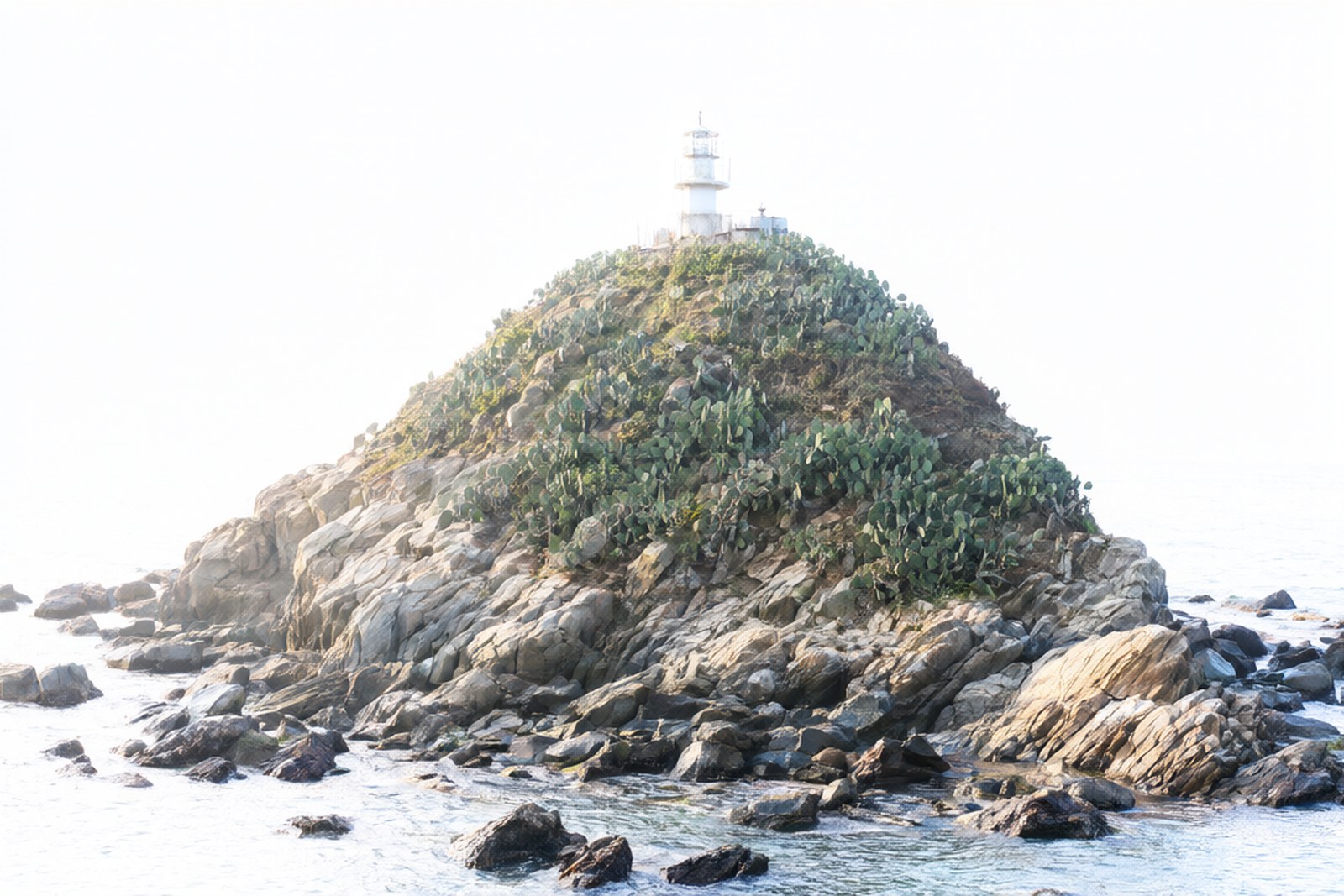
The cape has a longer paper trail than most beaches. In 1494, the seventh year of the Hongzhi reign of the Ming, a Hainan guard commander named 张翊 Zhāng Yì built a small military fort on the hill against pirates and raiders, which is why it is also called Navy Mountain. In 1701, the fortieth year of the Kangxi reign, local gazetteers recorded it among the island’s Eight Scenes, with a Qing couplet about the fish-scale height brushing the clouds – a listing carried in local gazetteers rather than in any official scenic register. The modern damage is on record too: in 1940 the occupying Japanese army blasted the hill for stone to build Basuo Port, and a spring that had never been known to run dry disappeared with the blasting. Concrete steps were laid from the foot to the summit in 1957 for the port works, and a lookout tower and a navigation light followed in 1964.
One correction matters before anything else. Yulinzhou is often described online as a 4A or 3A scenic area, and that is wrong. On the provincial tourism and culture department’s list of A-grade attractions dated 7 September 2026, Dongfang holds only four graded sites – Hainan Huali Valley and Exianling at 4A, the Natural Treasure Garden and the E-zhen Crocodile Park at 3A – and Yulinzhou is not one of them. Read it as what it is: a free, open stretch of coast rather than a graded attraction. The city itself keeps it on a working list, having named Yulinzhou among the sites it intends to upgrade in a 2026 briefing. The shape of the place is specific too: a small rock hill with white lighthouse, reef, sheet cactus, a coarse pebble-sand beach, surf and a line of wind turbines on the ridge, with the ruin of the old fort still traceable. A local folk tale explains the name with a loyal wife who turned into a sea swallow and heaped mud over her murdered husband until it formed a scaled hill; it is folklore rather than history, and it is best left at that.
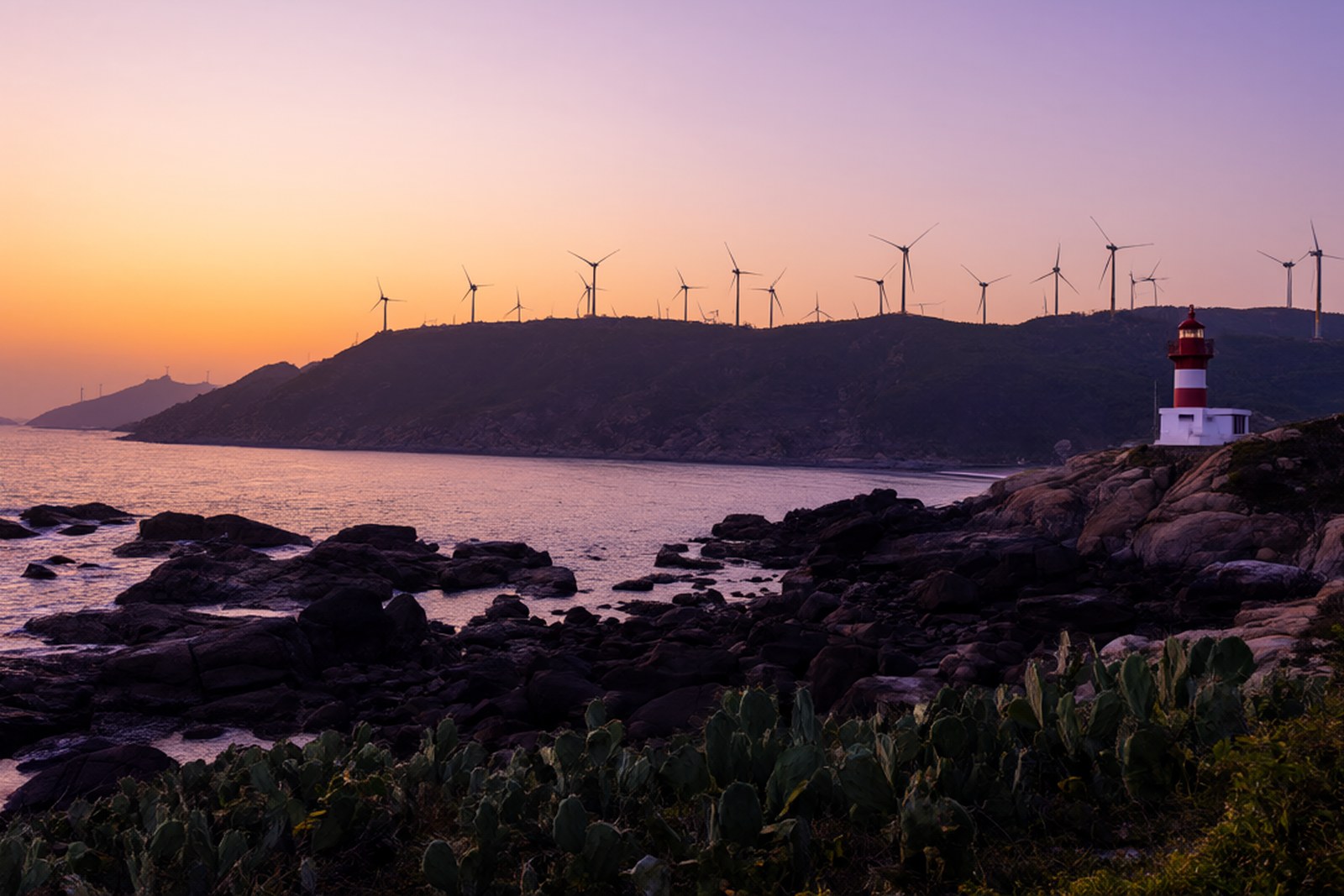
Go for the two hours around sunset. Platform guides put the best light between about 16:30 and 19:00, when the gulf turns the water to what visitors call an orange sea, and the practical order is to arrive mid-afternoon, walk the reef terrace, find the wind turbines, climb to the lighthouse platform and then simply wait. Tide matters more than most people expect, so check it before setting out, and treat the wet rocks as off limits – this is not a swimming beach, the reef is sharp and the water is working port water. Bring sun protection even late in the day, and remember that the dry, bright months from November into April are the comfortable window, while a summer afternoon here is punishingly hot.
Two honest notes keep the visit level. Through 2025 and into 2026, visitor reviews described the western end as visibly worn, with the beach leisure buildings close to abandoned, which is exactly why the city has announced the upgrade; go expecting a lived-in cape rather than a polished resort lawn. Keep the neighbouring sights distinct as well. This is a lighthouse headland set inside a working port city, not the open cape at 临高角 Língāo Jiǎo, Lingao Point, far up the west coast, and not the surf-and-sunset bays at 棋子湾 Qízǐ Wān, Qizi Bay, over in Changjiang. The pairings that do make sense are the port itself, the seafood market at Basuo Port where you buy your fish and have it cooked, the free seaside park a little up the road, and the night stalls near the border-trade quarter.
Practicalities
Tickets. Free to walk the coast – there is no gate and no admission charge. Climbing the lighthouse viewing deck is a small optional add-on, 29.9 yuan in a 2026 platform snapshot and paid separately, and showers at the beach area are charged too. As of October 2026, subject to change.
Opening hours. Open around the clock; both major Chinese booking platforms list it as all-day. The window that matters is the sunset, roughly 16:30 to 19:00, and the calmest, clearest months run from November into April.
Closing day. No closing day – the cape never shuts, being open coastline rather than a ticketed park. The only seasonal line is the summer heat and the afternoon storm risk set against the dry winter and spring.
Getting there. By high-speed rail, 东方站 Dōngfāng Zhàn, Dongfang Railway Station, sits in Basuo town and is about fifteen minutes away by taxi; it is the city’s West Ring stop, opened to passengers with the line in December 2015. Several city bus routes reach the area – sources list route 17 on one page and routes 18 and 29 on another, and service on all of them is sparse – so a taxi or a rental e-bike is the reliable plan. There is a free public car park at the square, which fills at sunset; do not park on the roadside.
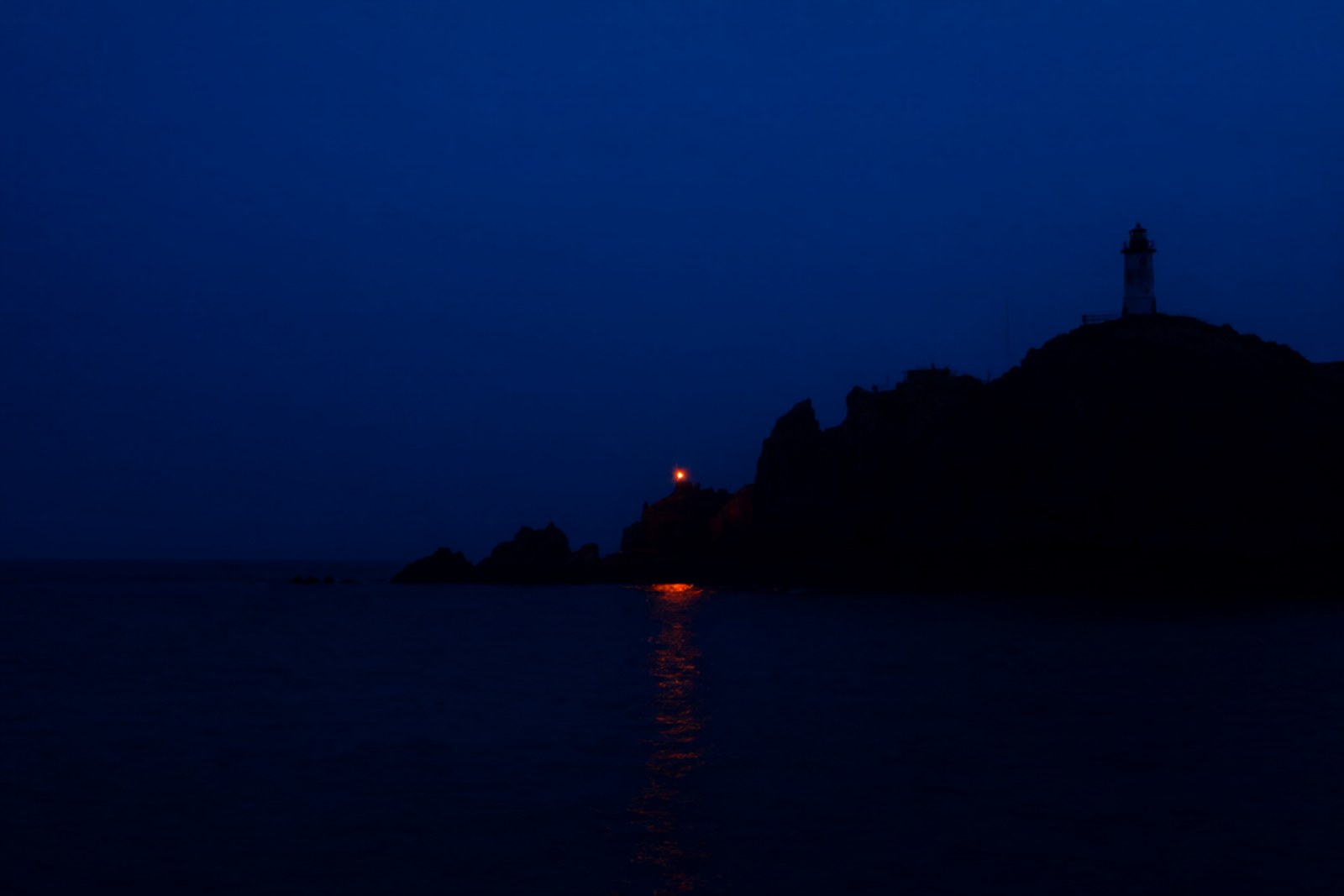
flowcloud would say that Yulinzhou is the rare city emblem that stays a working place – a fort hill, a quarry scar, a navigation light and a field of cactus doing the job of a postcard – and that the best thing about a free cape is that nobody can sell you the sunset.
Getting there: Yulinzhou is the lighthouse cape at the western end of Jiefang West Road in Basuo town, Dongfang, Hainan, about fifteen minutes by taxi from Dongfang Railway Station on the West Ring high-speed line or a short ride on sparse city buses, with a free public car park at the square; the coast is free to walk, the lighthouse viewing deck is an optional paid add-on (29.9 yuan in a 2026 snapshot), it is open around the clock with no closing day and reads best at sunset, roughly 16:30-19:00 (checked October 2026, subject to change).