
Yumbulagang — Tibet’s First Palace Above the Barley Fields
山巅碉楼第一宫,雅砻田上岁岁风 Shān diān diāolóu dì yī gōng, yǎlóng tián shàng suì suì fēng – The first palace stands as a tower on the hilltop; over the Yarlung fields the wind blows year after year
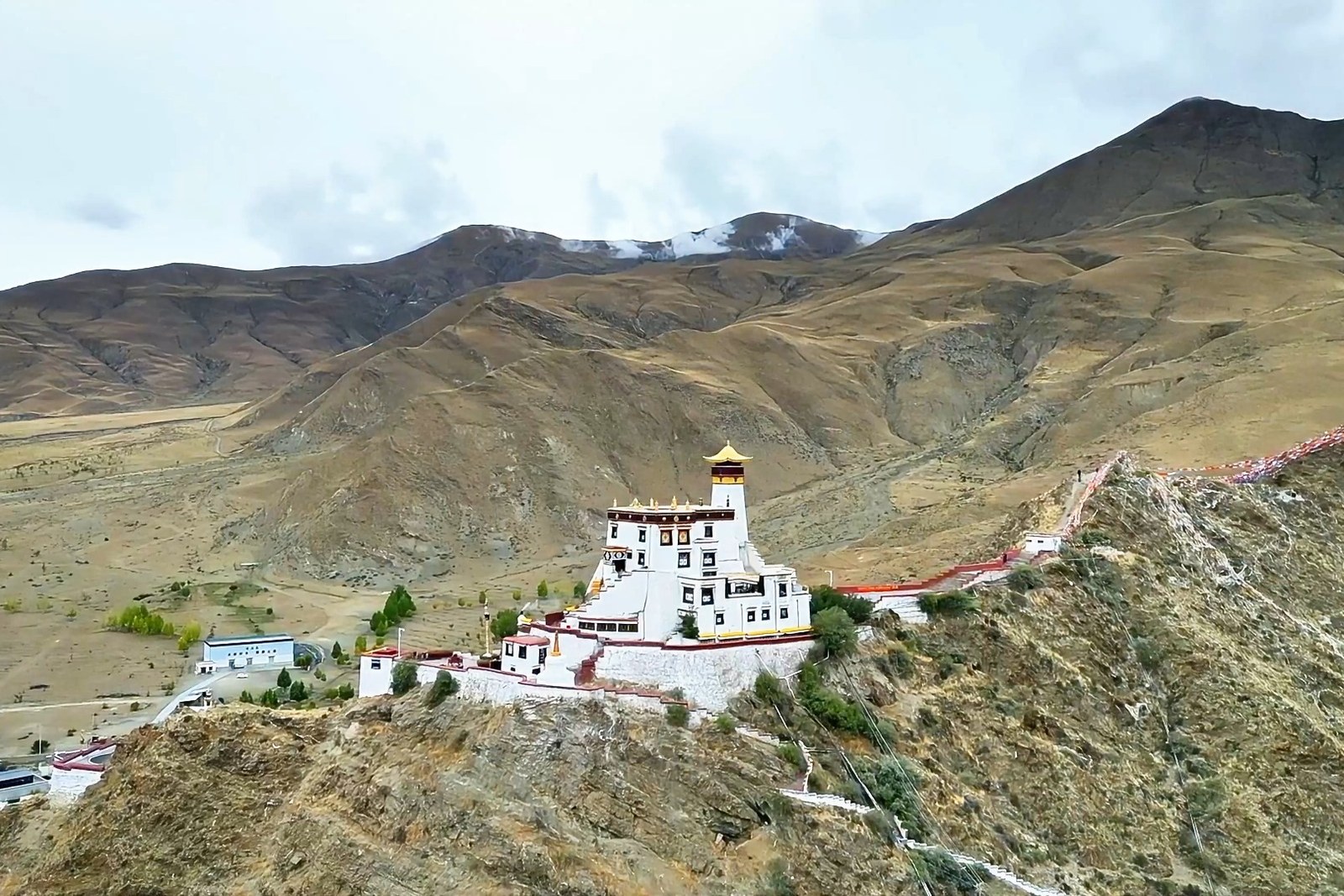
雍布拉康 Yōngbùlākāng Yumbulagang rises the way a stamp rises off a page: a single white citadel on a single steep hill, floating above the barley fields of the 雅砻河谷 Yǎlóng Hégǔ Yarlung valley. Tradition makes it the first building of Tibet – the palace of 聂赤赞普 Nièchì Zànpǔ Nyatri Tsenpo, the first king – and whatever the archaeology says, the hill has been a place of origin stories for more than two thousand years.
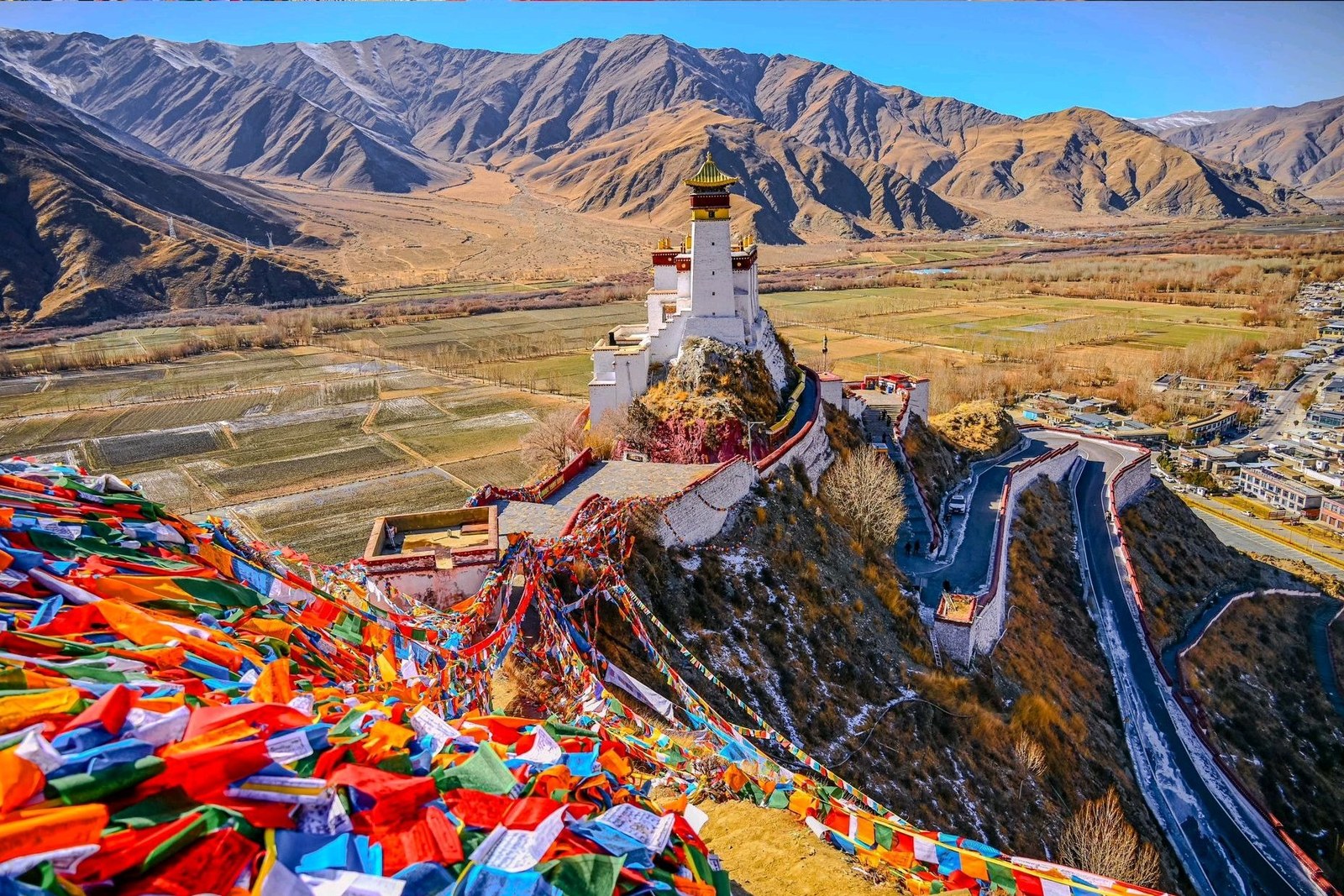
The building itself is compact: a tapering tower of stone and whitewash with a small temple behind it, reached by a spiral of steps that climbs straight up the hill’s spine. Locals call the shape a fortress; guides add that it later served as a monastery and that every era left a room. From the flat roof the valley unrolls in every direction – barley green in summer, stubble gold by autumn, and the long line of the 雅鲁藏布江 Yǎlǔzàngbù Jiāng Tsangpo glinting to the north.
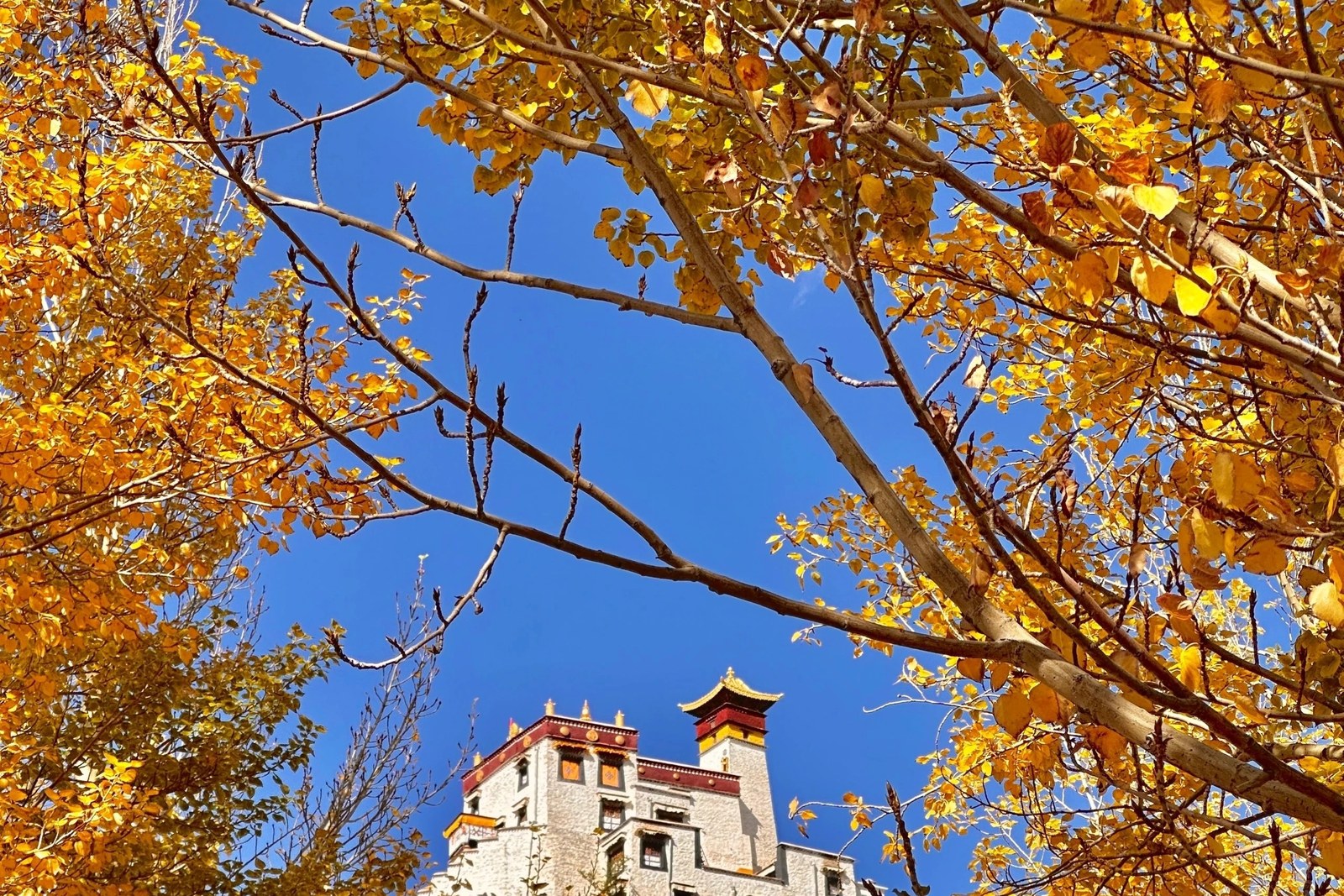
The climb is the ritual. Pilgrims start the circuit at the base and tie prayer flags as they go; visitors on horseback trot past with a guide leading; and near the top everyone pauses where the steps steepen, the way travelers on every plateau pilgrimage do. Halfway up, the wind carries the sound of the valley – threshing, motors, distant temple horns – while the palace above does its quiet work of framing the sky.
What Yumbulagang gives its visitors is proportion. The cradle of Tibetan kingship is not a vast ruin but a human-scale tower, and the valley it watches is still farmed the old way, village after village between the river and the hills. Come at opening hour and you may have the rooftop almost to yourself; come at dusk and the whitewash turns honey-colored above the stubble. Either way you understand why this corner of 山南市 Shānnán Shì Shannan calls itself the cradle – it keeps its history on hilltops.
Practicalities
- The palace stands about thirteen kilometers southeast of Zetang, the Shannan city seat – a short taxi ride or a hired car.
- The steps to the top are short but steep at around 3,600 meters; go slowly and let the altitude set the pace.
- Horse rides cover most of the climb if the steps feel like too much on a first plateau day.
- Mornings are clearest and coolest; the rooftop view over the Yarlung valley is the reason to come early.
Words and Names
雍布拉康 Yōngbùlākāng Yumbulagang, tradition’s first palace of Tibet; 聂赤赞普 Nièchì Zànpǔ Nyatri Tsenpo, the first king of the founding legends; 雅砻河谷 Yǎlóng Hégǔ the Yarlung valley, cradle region of early Tibetan kingship; 乃东区 Nǎidōng Qū Nedong district, whose hill the palace crowns; 碉楼 diāolóu the watchtower style of stone architecture the building shows. Beyond the palace, the same 山南市 Shānnán Shì Shannan keeps more places worth the detour: 桑耶寺 Sāngyē Sì the plateau’s first monastery across the river, 羊卓雍措 Yángzhuó Yōngcuò the great turquoise holy lake, 拉姆拉措 Lāmǔlācuò the oracle lake of the high ridges, or 藏王墓 Zàngwáng Mù the royal tomb mounds of Qonggyai – four more doors into the same Shannan. Once the rooftop is behind you, our Shannan food map fills the table.
flowcloud would say Yumbulagang is the valley’s paperweight – a small heavy thing that holds two thousand years of story flat on a hilltop. All checked November 2026.
Getting there: The palace stands about thirteen kilometers southeast of Tsetang in Nedong district – twenty minutes by car or a short bus ride, with the final climb on foot. Allow half a day with the drive. All checked November 2026.