
A Thousand Years Stacked in Water: The Yunhe Rice Terraces
九曲云环层层镜,一坡田水落日熔 Jiǔqū Yúnhuán céng céng jìng, yī pō tián shuǐ luò rì róng – Nine bends of cloud-rings stack mirror on mirror; one slope of flooded fields melts in the setting sun
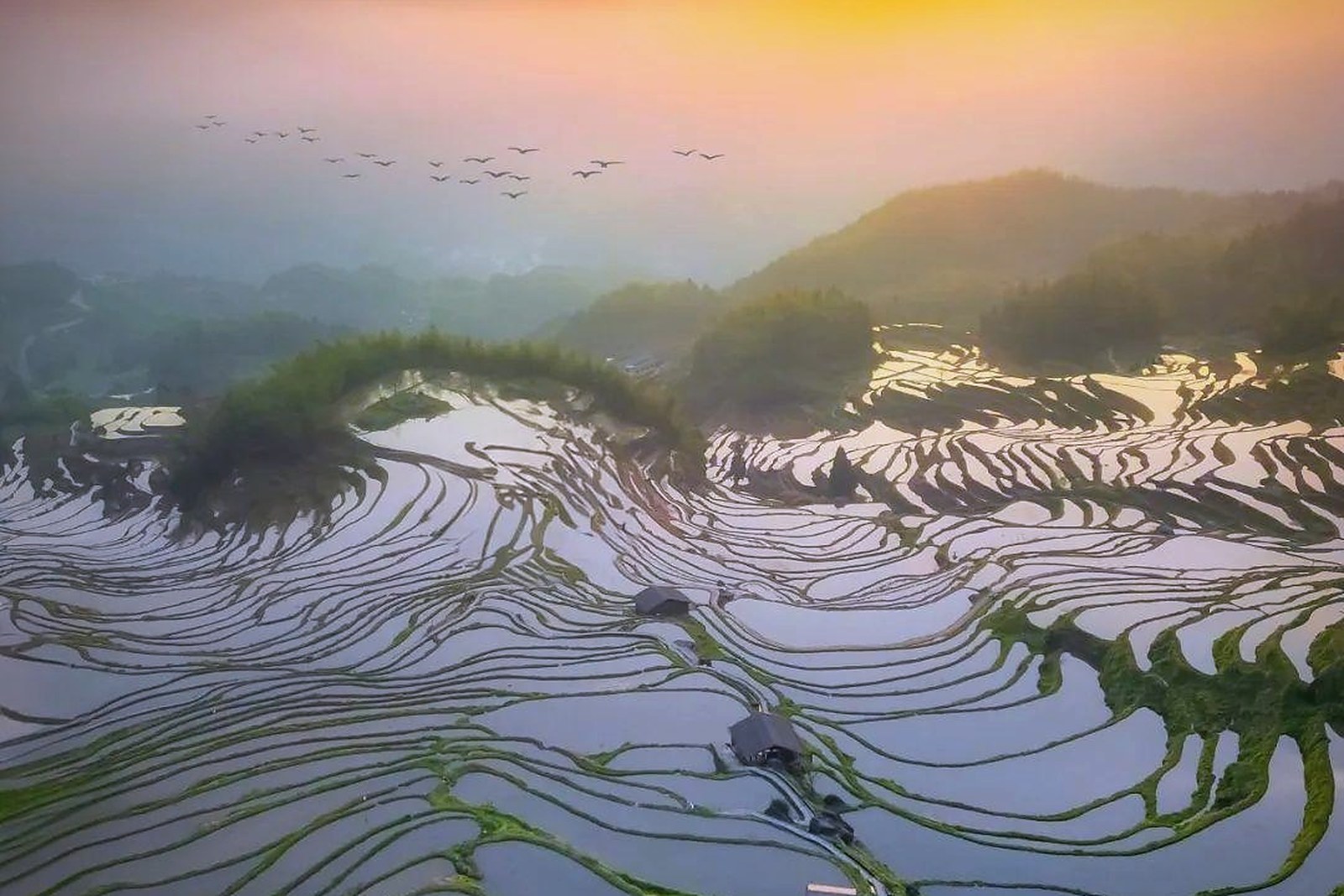
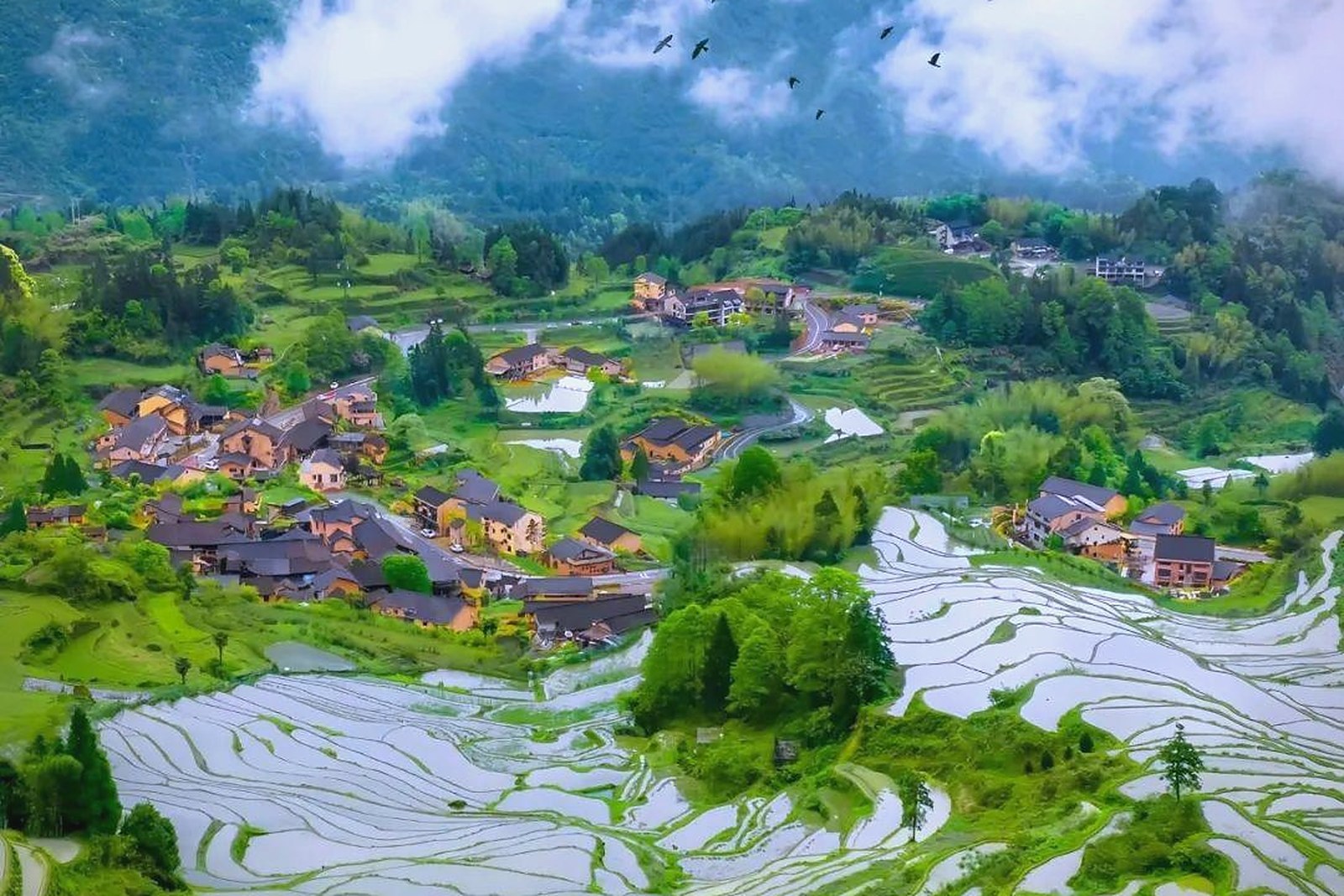
正文:云和梯田 Yúnhé Tītián the Yunhe rice terraces are the largest stacked paddy system in East China – a thousand years of digging that climbed the mountains between 200 and 1,400 meters, turning whole ridgelines above 丽水市 Lìshuǐ Shì Lishui City into flights of stone-edged fields. The scale reads as geometry from the viewing decks at 九曲云环 Jiǔqū Yúnhuán Nine-Bend Cloud Ring, where spring flooding turns every terrace into a separate mirror; but the valley below carries the older story, for the 白银谷 Báiyín Gǔ Silver Valley keeps the stone hamlet of Kenggen and the mine adits where Ming dynasts once smelted the ore that named the place. Farmers still transplant by hand along the upper benches, herons fish the flooded paddies, and on mist mornings the whole staircase floats above a white sea with only the rooflines of Kenggen showing.
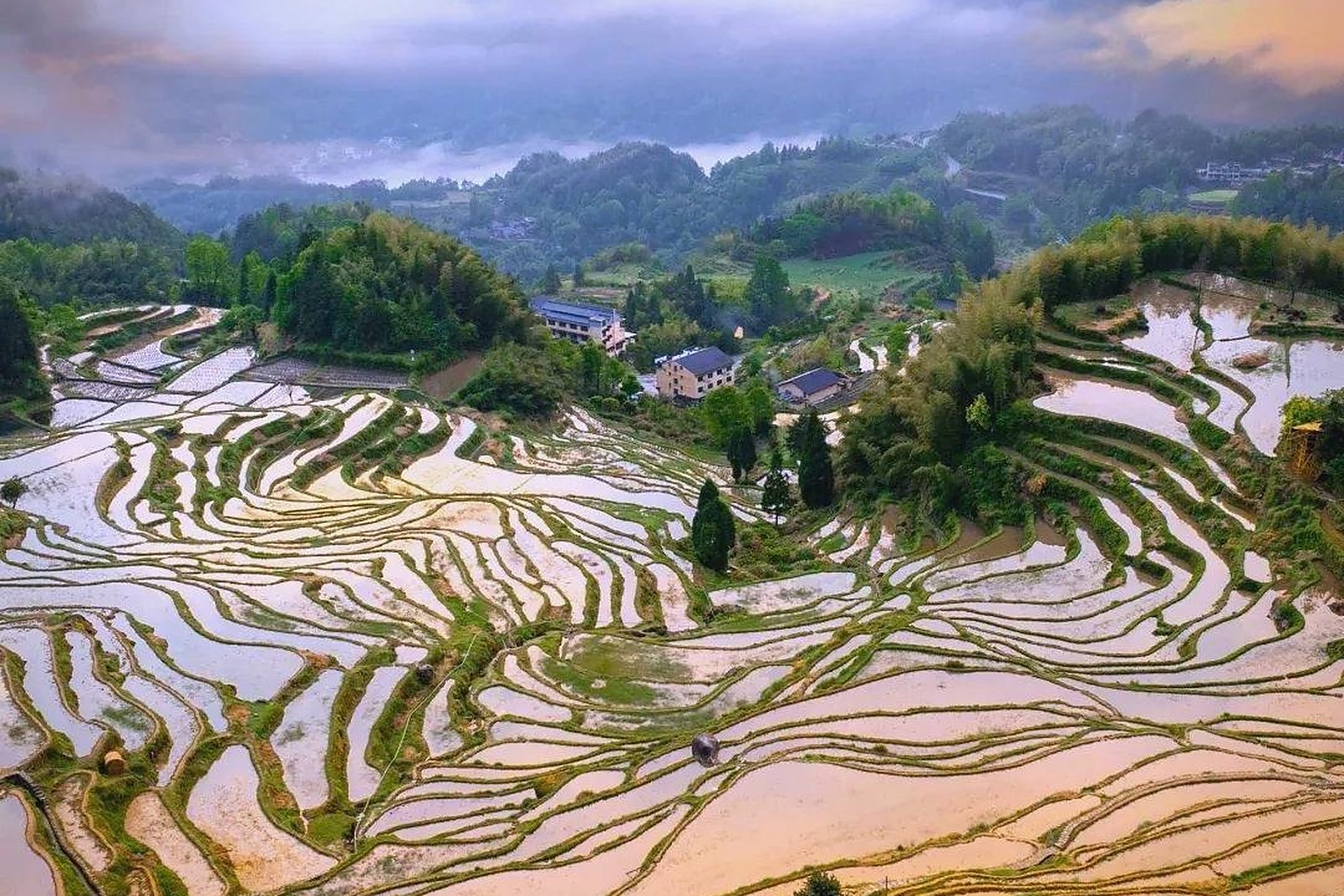
Sunrise at Nine-Bend Cloud Ring is the appointment locals keep: before the light the valley fills with cloud, then the sun lifts the fog off terrace by terrace until the water-carrying fields flash gold in sequence down the mountain. Photographers mark the bench seats an hour early; the show runs differently every single morning.
The season decides the palette. In late May the fields hold water – mirror season, all sky and cloud repeated a thousand times; by October the same slopes burn amber with the rice harvest; winter lays frost lace over the stubble. The terraces are a working farm, not a set piece, and the farmers’ calendar is the scenery.
The valley walk completes the day: descend through Silver Valley to Kenggen’s stone-slab lanes and water-spinning mill houses, where the Ming silver trade left smelting stones you can still put a hand on. Tea houses in the hamlet pour locally, and the climb back up by shuttle shows the whole engineered staircase from below – the view that explains the view.
Practicalities
Beyond the stacked water, the same 丽水市 Lìshuǐ Shì Lishui City keeps more places worth the detour: 缙云仙都 Jìnyún Xiāndū the stone pillar and imperial shrine of Xiandu, 松阳古村落 Sōngyáng Gǔcūnluò the ancient villages of Songyang, 庆元廊桥 Qìngyuán Lángqiáo the timber lounge bridges of Qingyuan, or 遂昌金矿 Suìchāng Jīnkuàng the miners’ tunnels of the Suichang gold mine – four more doors into the same 丽水市 Lìshuǐ Shì Lishui City. Once the terraces have shown their morning, our Lishui food map fills the table.
Practicalities
Words and Names
flowcloud would say Yunhe is agriculture performing as landscape: a thousand years of patient digging stacked into mirrors, a silver valley that funded dynasties, and a sunrise that repeats itself differently forever. All checked November 2026.
Getting there: The terraces sit in Yunhe county’s highlands, about an hour from the city – entry is ticketed with viewpoint parking, the Nine-Curve loop and thecloud-sea platforms fill a half day, and the spring-flood mirror season books out the homestays. All checked November 2026.