
Yunju Temple: The Stone Sutra Library, the Buddha’s Relics and the Liao Pagodas of Fangshan District, Beijing
石经镌就千年卷,舍利深藏一洞光。Shíjīng juān jiù qiānnián juàn, shèlì shēn cáng yī dòng guāng – The stone sutras, cut and finished, make a thousand-year canon; the relics lie deeply kept in one cave of light.
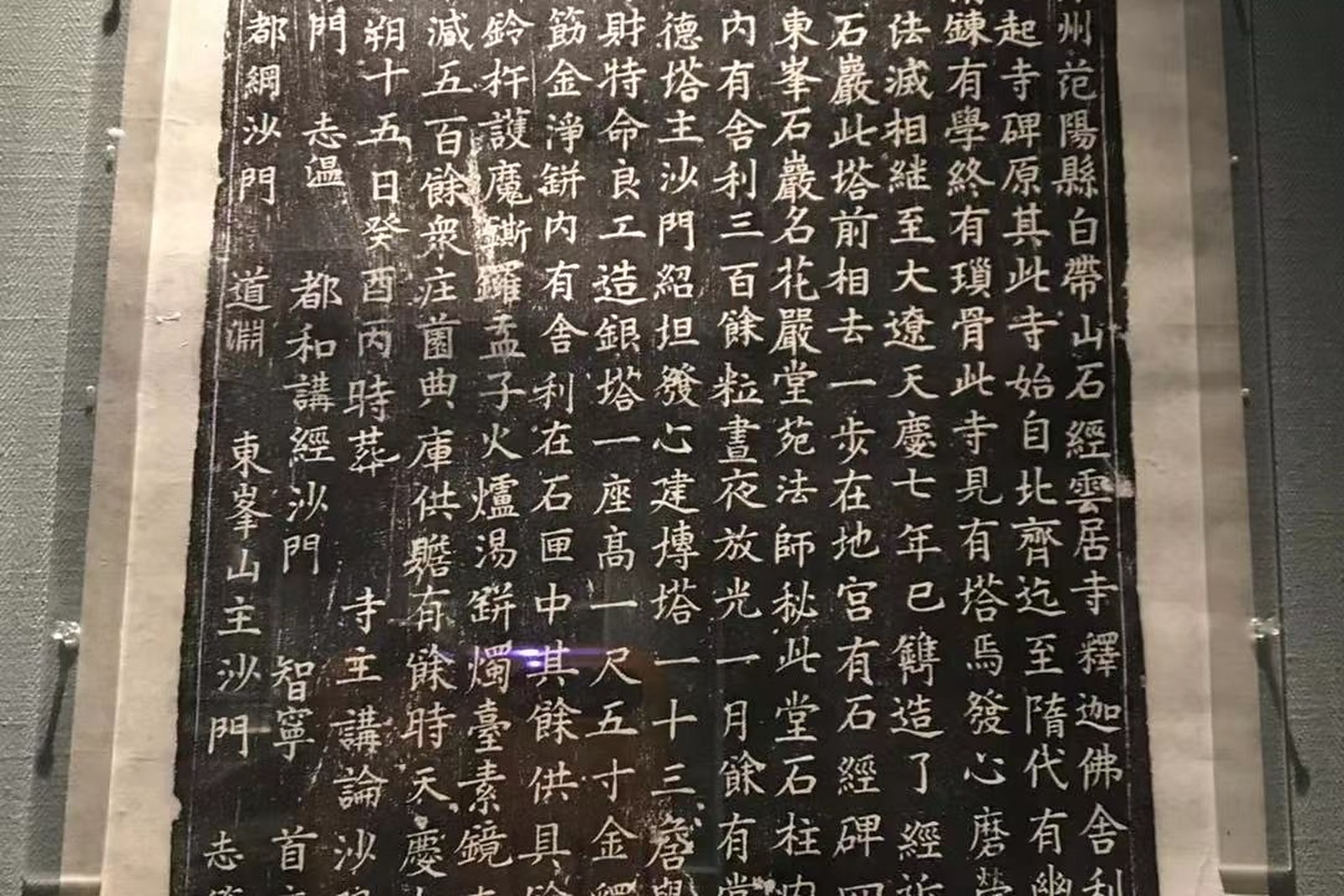
云居寺 Yúnjū Sì Yunju Temple is not one more hill monastery — it is, plainly put, a canon carved into stone: at the foot of 白带山 Báidài Shān Baidai Mountain, better known as 石经山 Shíjīng Shān Sutra Mountain, in 大石窝镇 Dàshíwō Zhèn Dashiwo town of 房山区 Fángshān Qū Fangshan District, Beijing, the temple guards the 房山石经 Fángshān Shíjīng Fangshan Stone Sutras — a Buddhist canon cut into stone begun around the year 605 by the monk 静琬 Jìng Wǎn Jingwan and carried on across six dynasties for more than a thousand years, until it amounted to some 14,278 engraved slabs, reckoned the largest corpus of carved scripture preserved anywhere. The slabs rest in the temple’s sutra cellar and in nine storage caves up the mountain; the courts keep the “three wonders” of 石经、纸经、木版经 shíjīng, zhǐjīng, mùbǎn jīng stone, paper and woodblock scriptures; and the reliquaries hold 舍利 shèlì relics of the Buddha found in 1981 in the 雷音洞 Léiyīn Dòng Leiyin Cave. Around the courts stand towers of Tang and Liao date. What you actually visit is a long, low temple of courts, pagodas and a mountain of scripture above it.
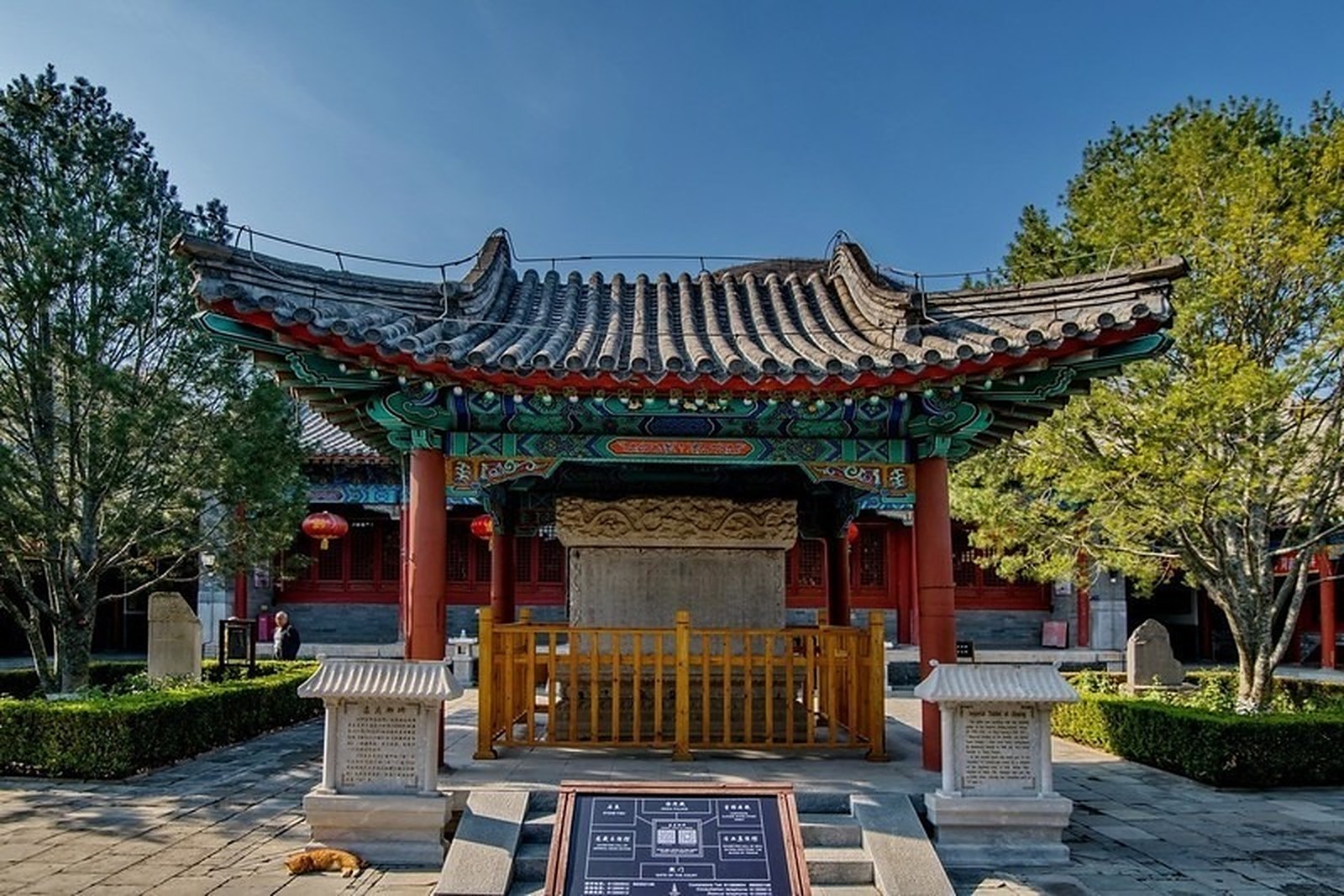
Call it honestly: a far south-west temple that asks for the better part of a day’s travel and gives back quiet. Entry has been around forty yuan in recent seasons, generally bundling the 石经山 Shíjīng Shān mountain above (worth confirming the details for current rates and hours); Monday closing and seasonal hour shifts apply (worth confirming the details); and the mountain climb — nine storage caves, the open 雷音洞 Léiyīn Dòng among them — adds an hour or two of stone steps, with a cableway having run from the valley in the past (worth confirming the details for what operates now). The honest moves are a weekday morning, the sutra cellar before the crowds, and shoes for the climb if you add the mountain. The courts are long and low; give the pagodas their slow look; and treat the whole as one temple-plus-mountain day rather than a roadside stop.
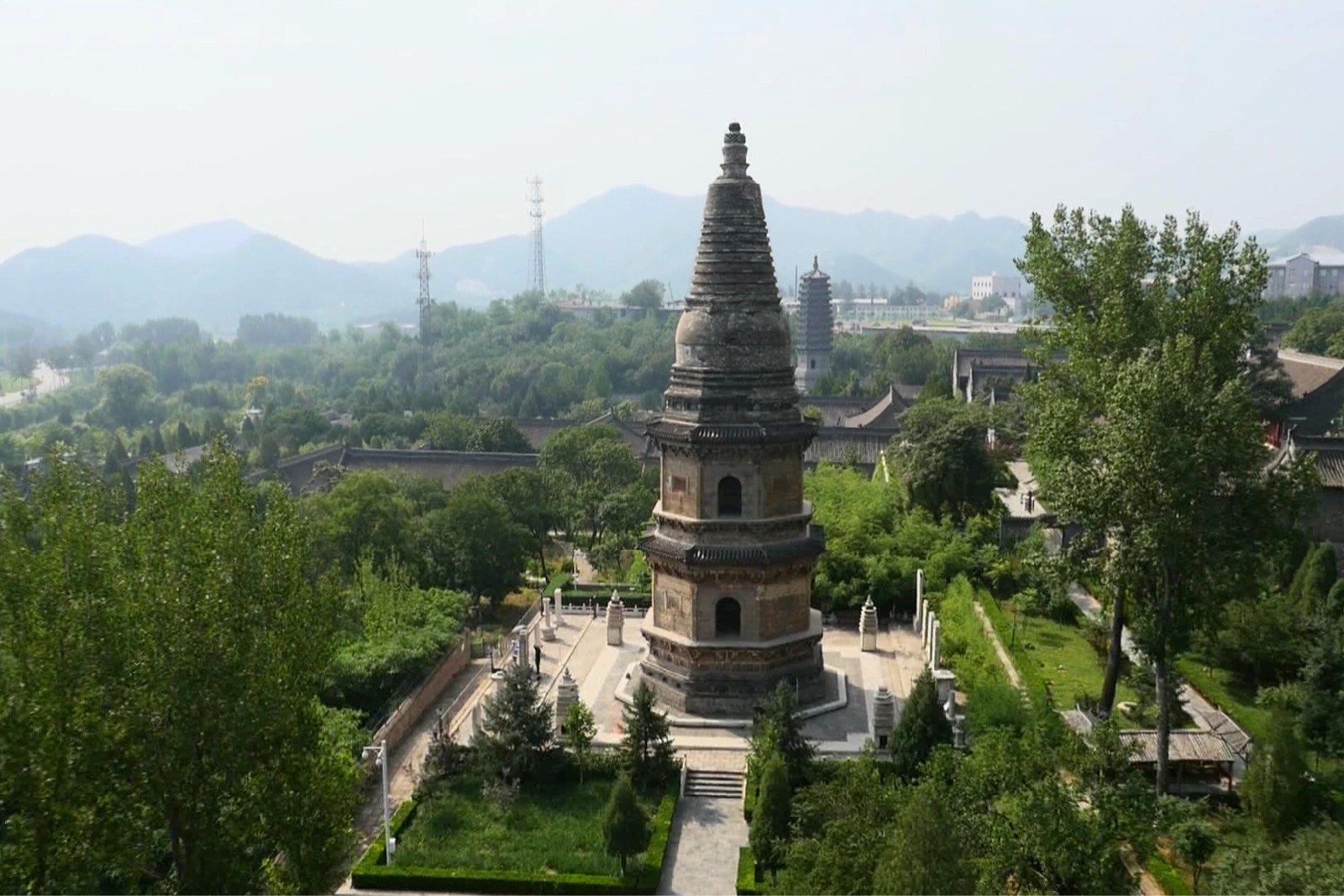
The honest star is the 北塔 Běi Tǎ North Pagoda — the early-twelfth-century Liao tower shaped, unusually, like a drum crowned with a small pavilion, its brick faces crowded with carved figures — not the relic case. Around it the courts keep Tang towers, including a tiny stone pagoda of the year 711 counted among the oldest in the Beijing region, and in the cellar the sutra slabs stand in ranks like books shelved by giants (worth confirming the details for which halls are open when). What gets oversold is the relic business: the temple’s Buddha relics are genuinely rare and revered, and the devotional queue is not a photo opportunity — read the labels and let believers have their calm. What repays the effort is the writing itself — a thousand-odd years of cut characters, dynasty by dynasty, in the cellar and up the mountain. Come for the layering of the place: court, then pagoda, then mountain of sutras.
The self-aware postscript: I stood in the sutra cellar reading a slab’s donor inscription while a volunteer docent waited, and when I finally looked up she said only, “everyone stops there — that donor paid for his mother”. That is the visit in miniature. 云居寺 Yúnjū Sì suits whoever treats it as a reading kind of temple first and a pagoda garden second — cellar, courts, then the mountain caves — and exhausts anyone expecting a single great hall on a coach timetable. Everything else on this Fangshan list makes a natural circuit of the south-west: the World Heritage hill of 周口店北京人遗址 Zhōukǒudiàn Běijīngrén Yízhǐ at 周口店镇 Zhōukǒudiàn Zhèn, the seven-storey stone flowers of 石花洞 Shíhuā Dòng Shihua Cave in the 河北镇 Héběi Zhèn hills, the ferry-crossed gorges of 十渡 Shídù Shidu up the 拒马河 Jùmǎ Hé, and the cloud ladder of 上方山国家森林公园 Shàngfāngshān Guójiā Sēnlín Gōngyuán — all in the same 房山区 Fángshān Qū that kept its scriptures in stone.
Practicalities
- Rating: ★★★★★ — the stone canon alone would carry it, and the Liao North Pagoda and the mountain caves come with the ticket; the sutra cellar and the 711 Tang tower outrank the souvenir courts; a weekday morning belongs to the readers.
- Tickets: Around forty yuan in recent seasons, generally including 石经山 Shíjīng Shān admission (worth confirming the details for current rates, Monday closing and seasonal hours).
- Address: 云居寺 Yúnjū Sì Yunju Temple, 水头村 Shuǐtóu Cūn, 大石窝镇 Dàshíwō Zhèn, 房山区 Fángshān Qū Fangshan District, Beijing — roughly seventy kilometres south-west of the city centre.
- Time needed: Two to three hours for the courts, cellar and pagodas; half a day adding the 石经山 Shíjīng Shān cave climb.
Words and Names
云居寺 Yúnjū Sì Yunju Temple · the “Temple of Dwelling Clouds” at Sutra Mountain 房山石经 Fángshān Shíjīng Fangshan Stone Sutras · the 14,278-slab carved Buddhist canon 静琬 Jìng Wǎn Jingwan · the Sui-dynasty monk who began the carving 石经山 Shíjīng Shān Sutra Mountain · the mountain of the nine storage caves 雷音洞 Léiyīn Dòng Leiyin Cave · the open cave-hall where the relics were found 北塔 Běi Tǎ North Pagoda · the drum-shaped Liao pagoda of the early 1100s 舍利 shèlì relics · the Buddha relics kept in the temple’s halls 三绝 sān jué three wonders · stone sutras, paper sutras and woodblock scriptures
flowcloud would say that 云居寺 Yúnjū Sì is a library you can walk into — the 房山石经 Fángshān Shíjīng begun by 静琬 Jìng Wǎn around 605 and carried across six dynasties to some 14,278 slabs, the nine caves of 石经山 Shíjīng Shān above with the 雷音洞 Léiyīn Dòng where the 舍利 shèlì relics surfaced in 1981, and the Liao 北塔 Běi Tǎ standing over courts full of Tang towers — and that the honest move is a weekday morning and the cellar before the crowds, because tickets, Monday closing, cableway state and hall openings all shift (worth confirming the details), the relic queue is the faith half and the cut characters are the reading half, and the temple repays whoever treats it as scripture while losing anyone wanting a quick photo garden. All checked October 2026.
Getting there: Buses from the city toward 良乡 Liángxiāng and the 房山 Fángshān town area connect to local routes or a taxi ride out toward 大石窝镇 Dàshíwō Zhèn and the 水头村 Shuǐtóu Cūn valley lane where the temple stands; self-drive follows the G5 京昆高速 Jīngkūn gāosù or the 京港澳高速 Jīnggǎng’ào gāosù onto the district roads (worth confirming the details for current bus routes, connections and parking). All checked October 2026.