
Pu’an Dinosaur Fossil Site
Yǐn yán: Pǔ ān huà shí, lóng gǔ chéng shān. — At Pu’an the dinosaur bones lie in the stone like a buried mountain.
In the hills of southern Yunyang County, around the township of Pu’an (普安), lies one of the most significant dinosaur discoveries of recent decades in China. The Pu’an dinosaur fossil group (普安恐龙化石群) is a concentrated bed of Jurassic-age bones and tracks, so densely packed across the local strata that researchers have called it a “dinosaur tomb” (恐龙公墓). What began as a chance find by local people has grown, through systematic excavation, into a site of global importance — a place where the rock itself is a museum, and the exhibits have been lying in wait for some 160 million years.
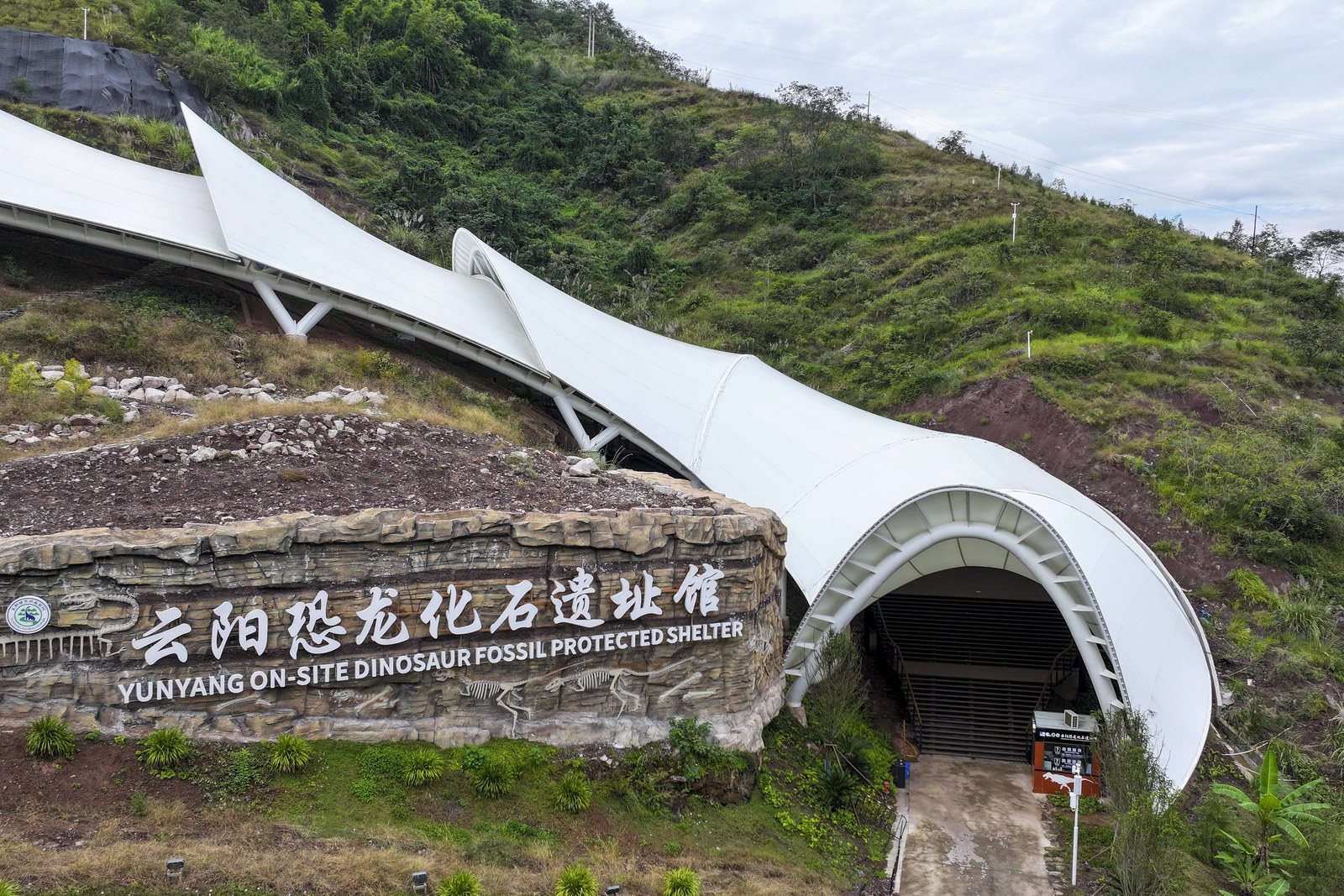
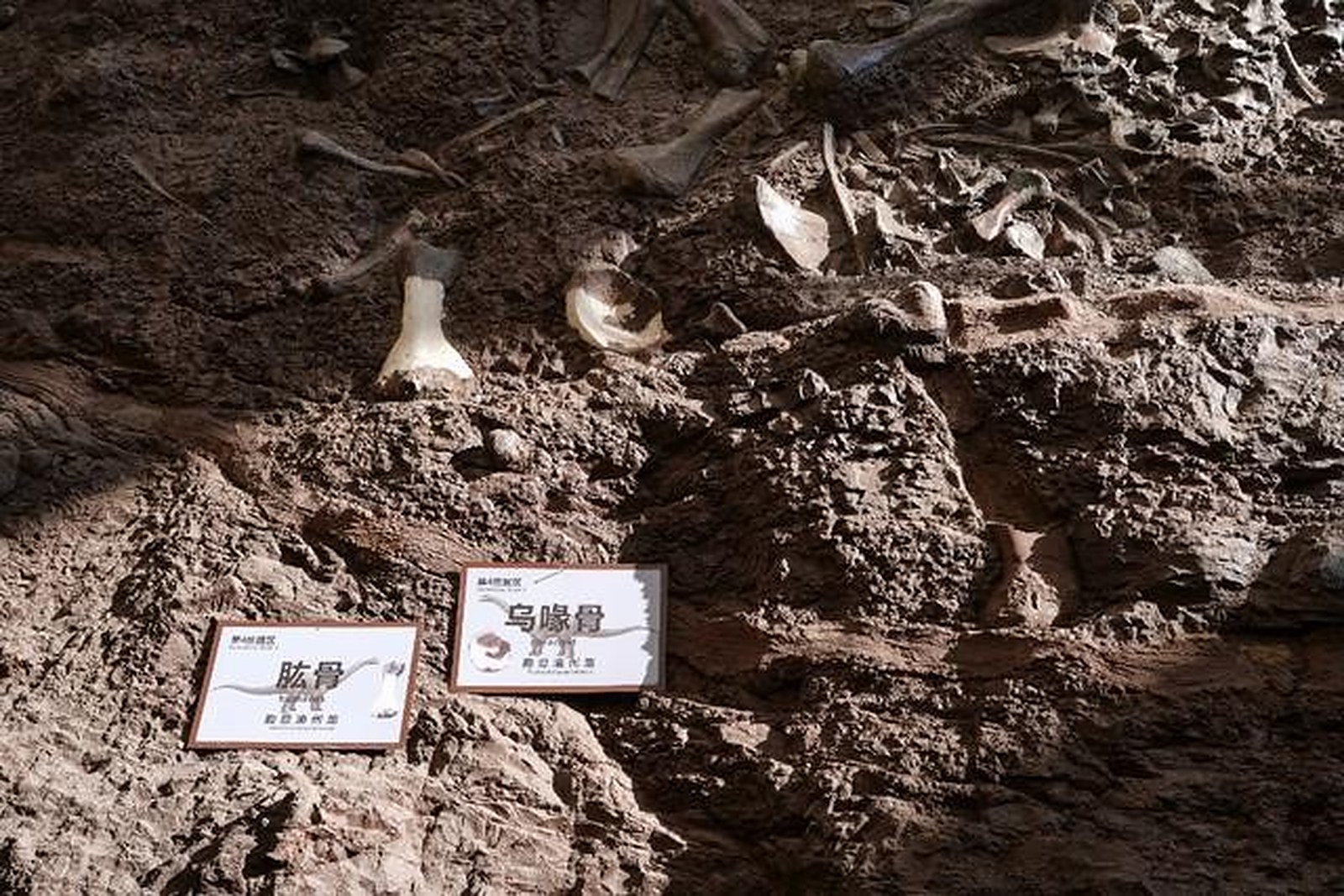
The fossils belong chiefly to the Middle Jurassic, and the assemblage is remarkable for both its variety and its sheer quantity. Excavations have recovered the bones of large sauropods — the long-necked plant-eaters whose limb bones and vertebrae are among the most imposing finds — alongside theropod remains and a wealth of fossilised footprints pressed into what was once lakeside or riverside mud. The trackways are especially evocative: you can stand above a slab where, in the Jurassic, a dinosaur walked, and read the pace and direction of an animal that left no other trace. Because so many individuals are represented in so small an area, the site has yielded new species and given researchers a rare window onto a whole ecosystem rather than a single spectacular skeleton.
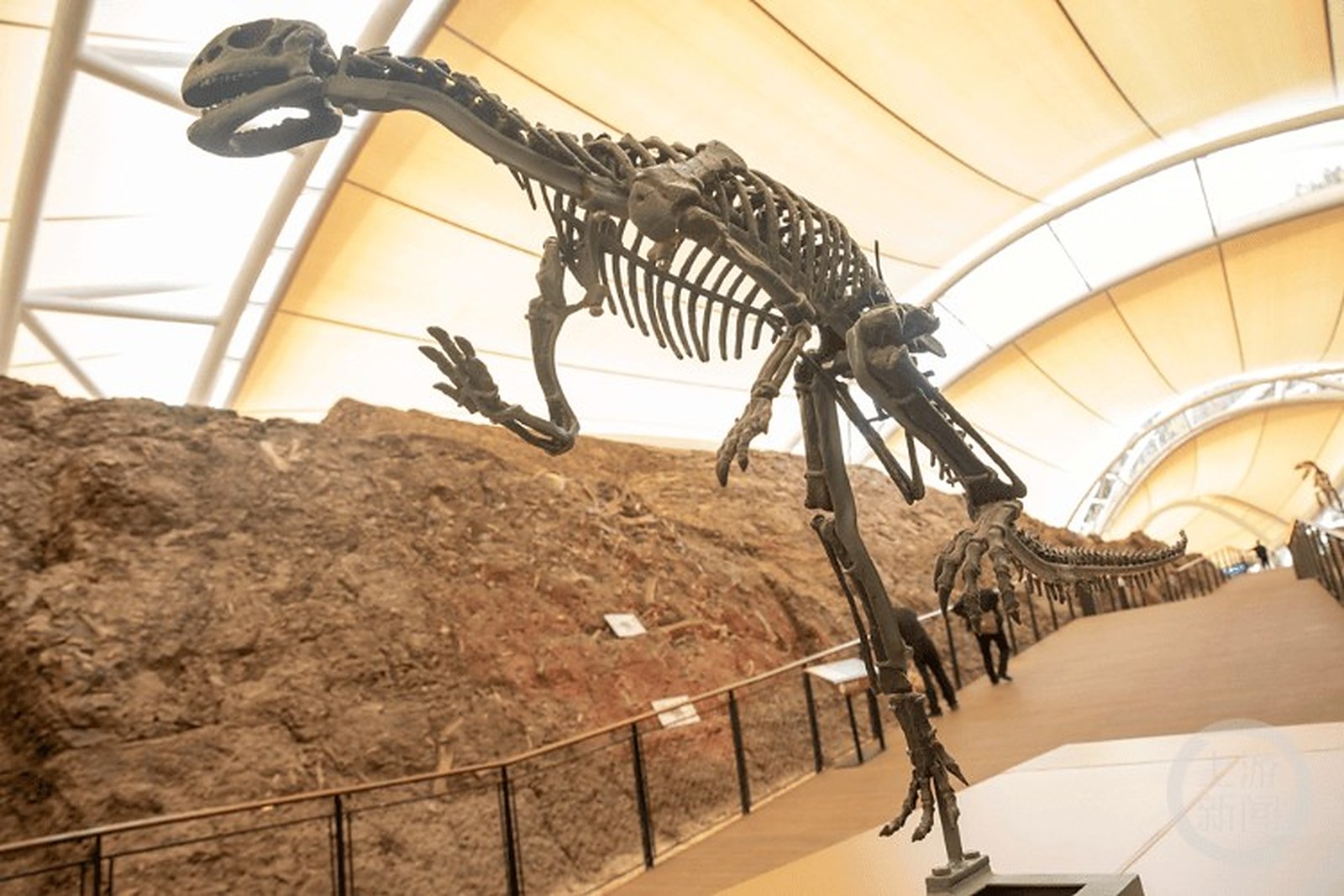
The local celebrity to come out of the digs is the “Yunyang dinosaur” (云阳恐龙), a name now attached to the discoveries that have put this corner of Chongqing on the palaeontology map. A purpose-built fossil hall and exhibition space lets visitors see the bones and tracks close up, with the excavated strata displayed much as they were found, so that the science stays connected to the hillside it came from. For travellers, Pu’an is the unexpected counterpart to Yunyang’s river-and-cliff scenery: after the Yangtze and the temples, here is deep time, the county’s story reaching back not centuries but epochs. The site is still active, with new material coming to light, so what you see may be only a fraction of what the mountain holds. Reach it as a day trip from the county seat into the south; pair it with Qishan Grassland or Longgang if you are already exploring that high country, and leave room in your imagination for the fact that, beneath the green hills of Yunyang, a Jurassic world is only just being uncovered.
Words and Names
普安 Pǔ’ān — Pu’an township in southern Yunyang, where the fossil group was found 恐龙化石群 kǒnglóng huàshí qún — the dinosaur fossil group, the concentrated Jurassic bed 侏罗纪 Zhūluójì — the Jurassic period, age of the Yunyang finds 恐龙公墓 kǒnglóng gōngmù — “dinosaur tomb”, the researchers’ name for the dense site 云阳恐龙 Yúnyáng kǒnglóng — the “Yunyang dinosaur”, the celebrated local discovery