
Yǐn yán: Zhāng fēi miào qián, cháng jiāng shuǐ hán. — Before Zhang Fei’s temple the Yangtze runs cold and green.
Zhangfei Temple (张飞庙) stands on the south bank of the Yangtze at Yunyang, a riverside shrine to Zhang Fei, the fierce and loyal general of the Shu-Han kingdom of the Three Kingdoms. Zhang Fei was one of the sworn brothers of Liu Bei and Guan Yu, and after his death in 221 AD legend placed his head and his spirit along this stretch of river; for more than seventeen hundred years a temple has kept his memory on the water’s edge. The present complex is a 4A-rated cultural site of halls, courtyards and — most prized of all — a great collection of stone steles, carved with the calligraphy of masters across the dynasties, so that the walls themselves read like a gallery of Chinese writing.
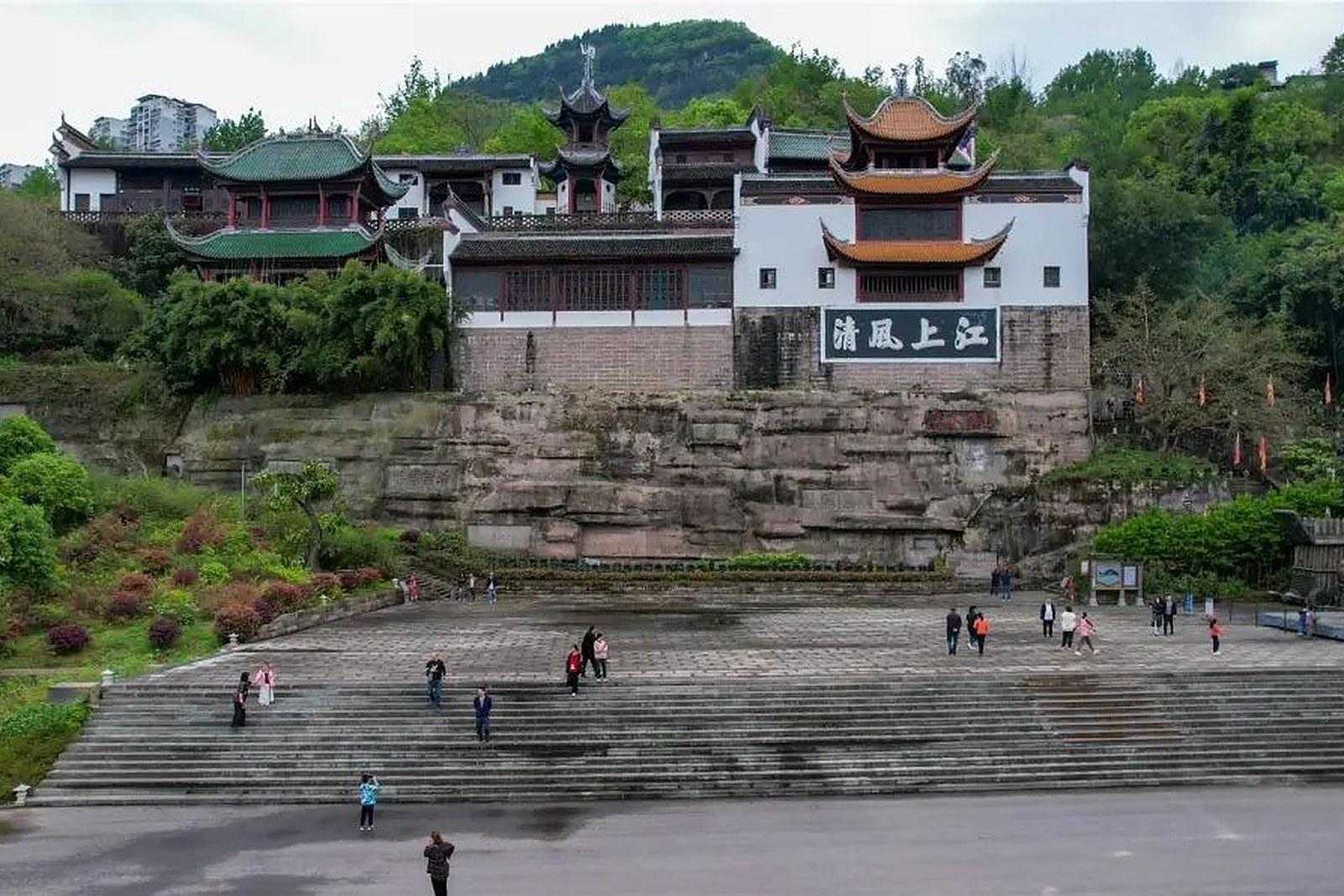
What makes this temple extraordinary is not only its age but its journey. The original Zhangfei Temple sat on the north bank at a place called Yunyang’s old ferry, on ground that had been sacred since the Shu-Han era. When the Three Gorges Dam raised the reservoir and the rising Yangtze began to swallow the low shoreline, the temple was condemned to flooding. Rather than abandon it, engineers and craftsmen took the buildings apart — timber, stone, tile and the irreplaceable carved steles — and rebuilt them stone by stone on a higher, safer site on the opposite bank. The relocation was a feat of conservation: every beam was numbered, every inscription catalogued, so that what stands today is the old temple in a new setting, facing the water it has always watched. To walk the courts now is to walk a 1,700-year continuity that was physically lifted and carried above the flood.
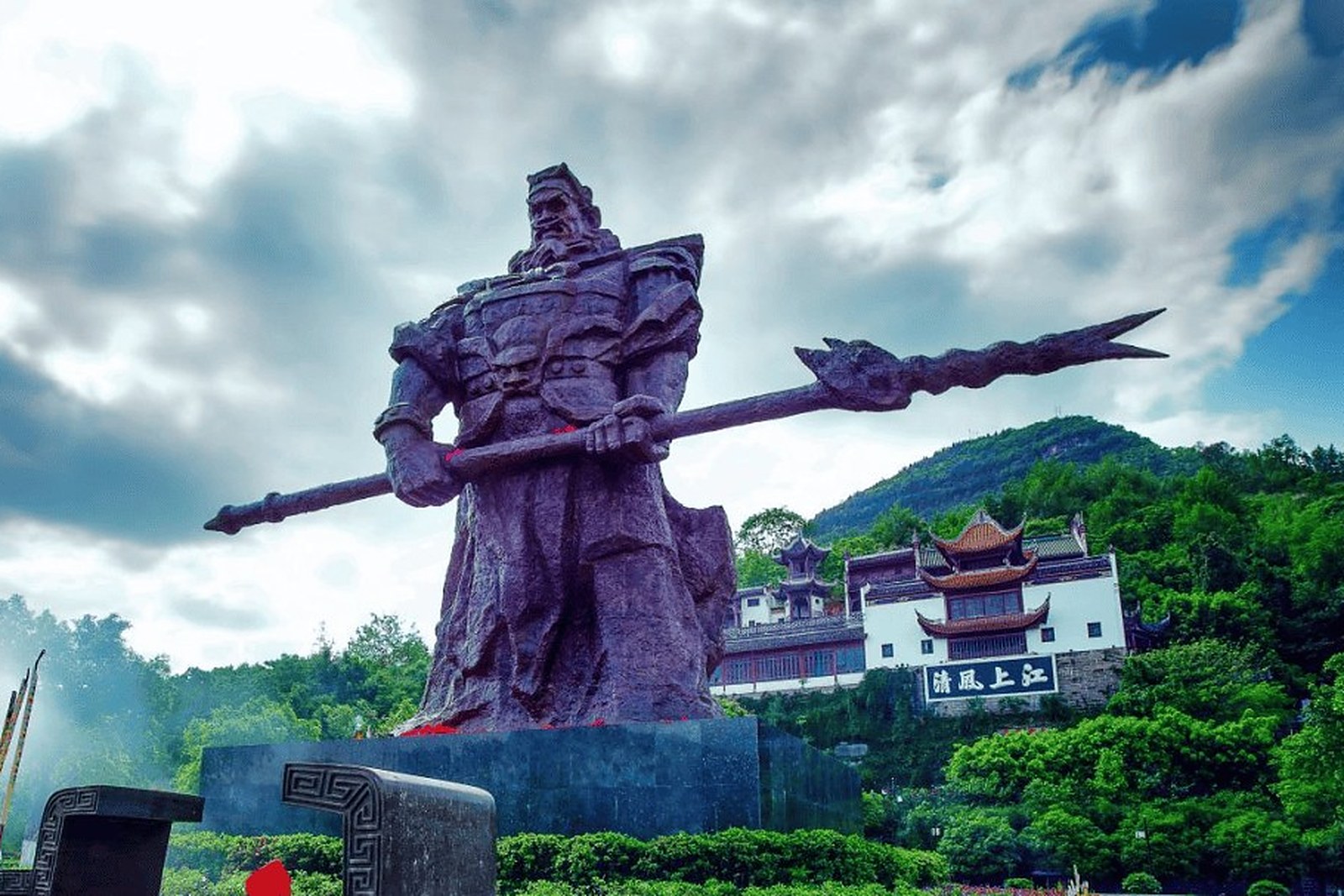
Inside, the halls are cool and dim, smelling of old wood and incense, and the central shrine holds the statue of the general — black-faced in the popular image, broad and fearsome, yet honoured here as a man of unbreakable loyalty. The courtyards open onto framed views of the river, and the river breeze moves through the eaves. At the water’s edge a small landing recalls the old ferry where pilgrims once stepped ashore, and where the temple’s spiritual geography still points. It is a place that wears its history plainly: you can read the Shu-Han founding in the lore, the Ming and Qing repairs in the timber, and the modern dam in the very fact of the temple’s survival. Allow an unhurried hour; the steles alone deserve it, and the Yangtze outside keeps its own slow time.
Words and Names
张飞庙 Zhāngfēi Miào — the temple shrine to the Shu-Han general Zhang Fei 张飞 Zhāng Fēi — Shu-Han general of the Three Kingdoms, famed for loyalty and valour 蜀汉 Shǔ Hàn — the Shu-Han kingdom of the Three Kingdoms period, Zhang Fei’s state 三峡大坝 Sānxiá Dàbà — the Three Gorges Dam, whose reservoir forced the temple’s relocation 碑林 bēilín — the forest of steles, the temple’s cherished carved calligraphy collection