
Yuyuantan Park: The Cherry Blossom Lakes, Reed Shores and CCTV Tower Skyline of Haidian District, Beijing
十里樱云迷晚渡,一塔擎天俯碧波。Shí lǐ yīng yún mí wǎn dù, yī tǎ qíng tiān fǔ bì bō – Ten li of cherry cloud confuse the evening ferry; one tower holds up the sky and looks down on the blue waves.
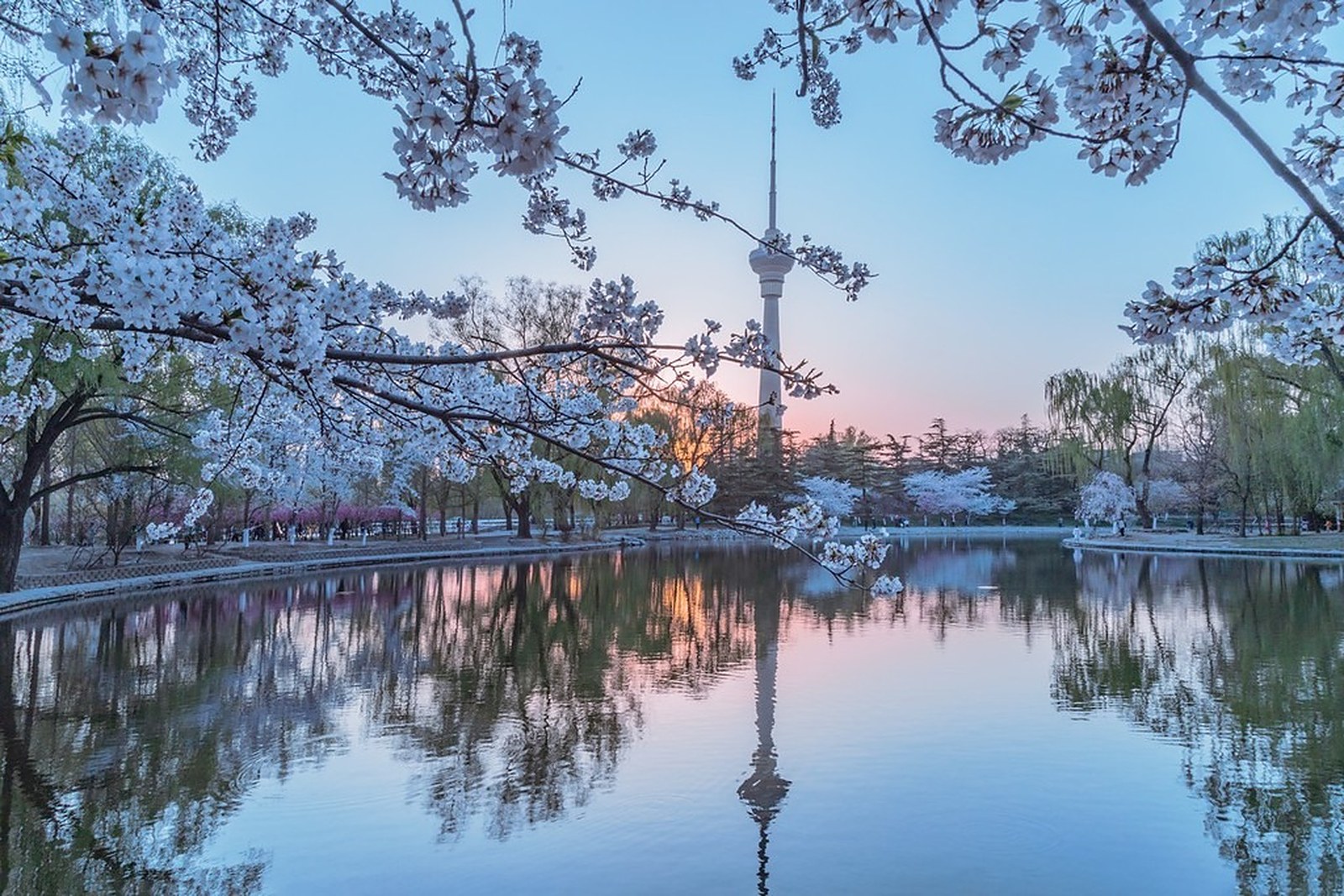
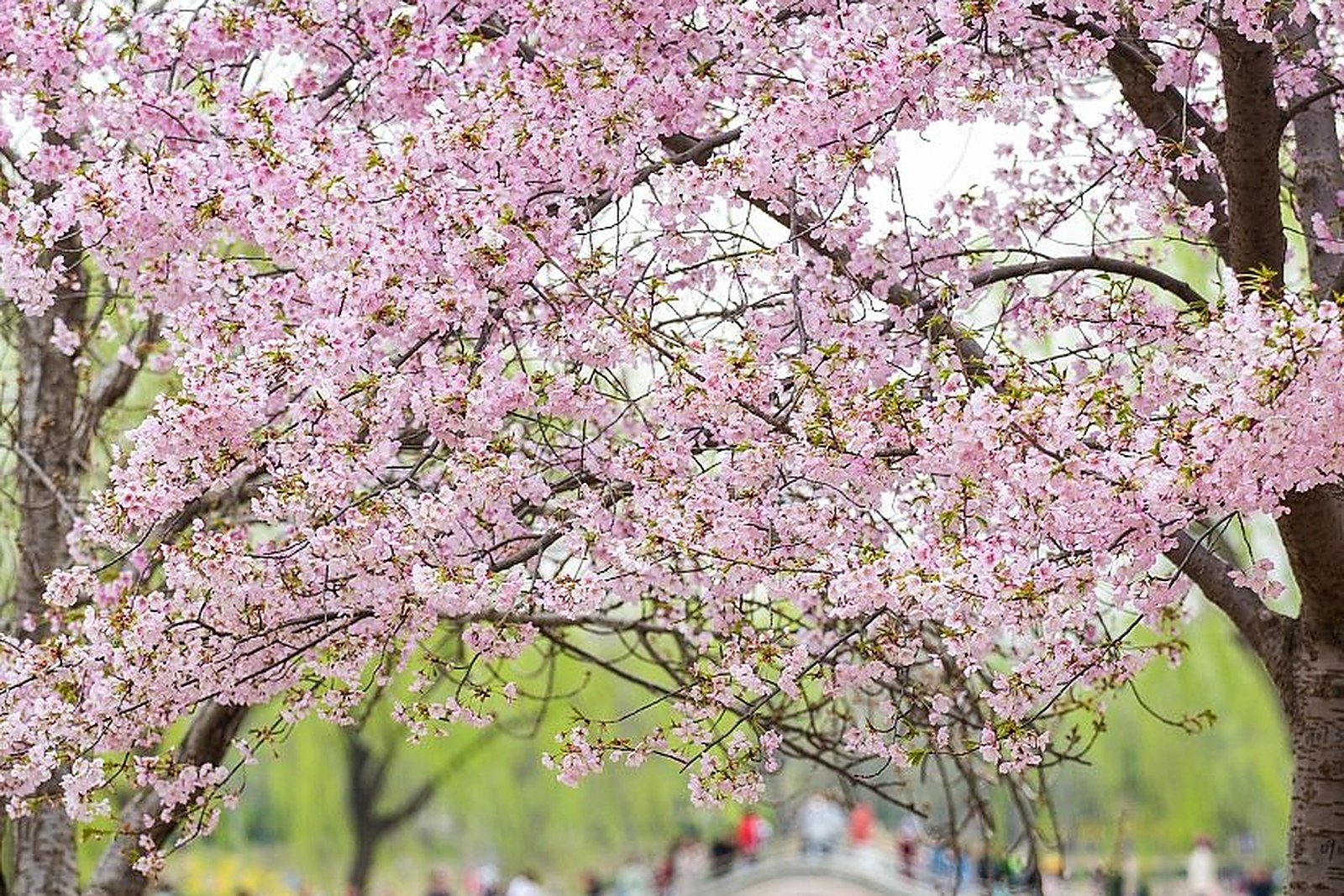
玉渊潭公园 Yùyuāntán Gōngyuán Yuyuantan Park is not a lake with a boathouse — it is, plainly put, the capital’s cherry-blossom capital, a broad pair of lakes strung along the 京密引水渠 Jīngmì Yǐnshuǐ Qú diversion canal in south-west 海淀区 Hǎidiàn Qū Haidian District, Beijing, with the 中央电视塔 Zhōngyāng Diànshì Tǎ Central Radio and TV Tower standing guard across the western water like the needle of a great instrument. The name — 玉渊 Yùyuān, “jade deep pool” — goes back to the Jin dynasty, when scholars came to this bend of the river to fish and drink; the pools stayed a water-meadow on the city’s edge until 1960, when the parks authority stitched the ponds into a public garden. The fame arrived in the 1970s, when cherry trees gifted from Japan after the two countries normalised relations were planted in the new 樱花园 Yīnghuā Yuán Cherry Blossom Garden and took, spectacularly, to the lakeside ground; thousands of trees of many varieties now open each March and April, and the 樱花节 Yīnghuā Jié Cherry Blossom Festival draws the whole city west. What you actually visit is a working civic park — willow shores, reed beds, boats on the water, old men swimming their winter laps — and the best tower-on-water composition in the district, because the spire is near enough to lean on.
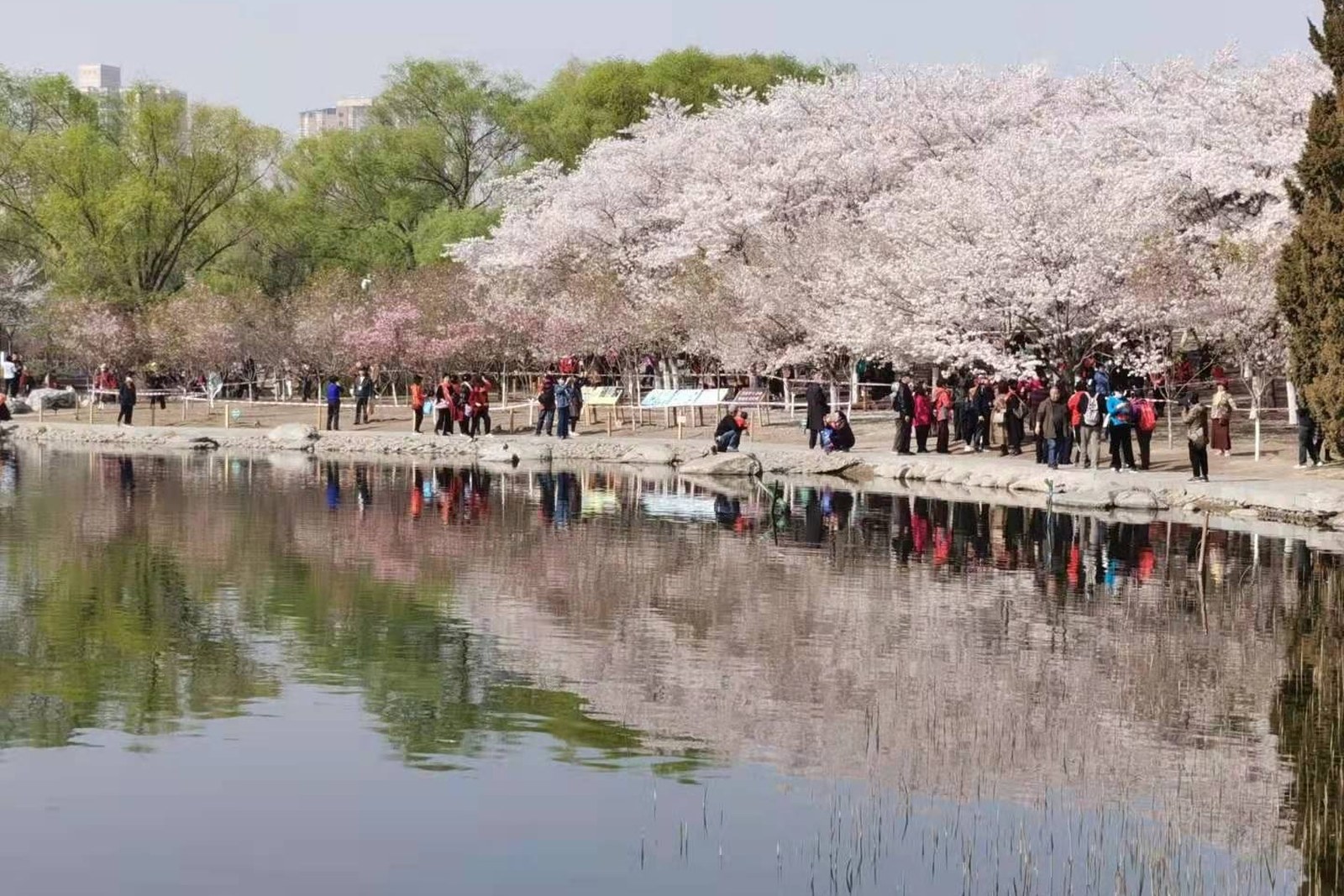
Call it honestly: a modest ticket with a famous crowd problem. Entry is ticketed and the current rate is worth confirming the details before you go; during the 樱花节 Yīnghuā Jié blossom weeks the park adds reservation systems and timed arrangements that shift year to year (worth confirming the details), the boats and pedal craft run seasonally (worth confirming the details), and the hours follow the season and the light (worth confirming the details). The mistake is to arrive at a festival weekend at noon: the cherry shore becomes a single moving queue, and the petals are photographed more than seen. The honest moves are a weekday dawn in early April, when the 早樱 zǎoyīng early varieties open over empty water, or a late-April evening after the buses have gone; and if there is no blossom at all, come anyway — the reed wetland, the winter swimmers and the tower at dusk do not need a festival to work.
The honest star is the western shore at dusk, not the blossom lane at noon. A slow circuit of the lakes — north past the reed beds where herons stand their watch, west along the water that mirrors 中央电视塔 Zhōngyāng Diànshì Tǎ, and back through the 樱花园 Yīnghuā Yuán plantings toward the old bridge — repays the walk more than any single blossom tree, because the composition is the exhibit: willows, water and that one spire, doubled in the lake. What gets oversold is the festival food strip near the south gate, a row of skewers and flags that the feeds sell as the season but that any resident will tell you is the crowded half; what repays the effort is the same shore at seven in the morning, petals on the water like a second blossom, and the odd sight of winter swimmers cutting a lane through the cold. On the eastern horizon the 中华世纪坛 Zhōnghuá Shìjì Tán China Millennium Monument and the museum quarter mark the edge of the next district. Come for the layering of the place: water, then blossom, then tower.
The self-aware postscript: I came at noon in the first blossom week, waded a crowd to the waterline, and left; I returned at dawn two days later, walked the western shore as the tower came out of the mist and a heron worked the reeds, and understood why the city forgives the park its April. That is the visit in miniature. 玉渊潭公园 Yùyuāntán Gōngyuán suits whoever treats it as a lake first and a spectacle second — arrive early, walk the west shore, let the tower keep the time — and exhausts whoever sprints the festival lane for one photo. Everything else on this Haidian list lies within a short ride: the water-garden of 颐和园 Yíhéyuán to the north-west, the ruins of 圆明园 Yuánmíngyuán to the north, and the red slopes of 香山公园 Xiāngshān Gōngyuán with the temple valley of 北京植物园 Běijīng Zhíwùyuán to the west, all in the same 海淀区 Hǎidiàn Qū Haidian District that blooms here first every spring.
Practicalities
- Rating: ★★★★☆ — the capital’s cherry-blossom lake and the best tower-on-water composition in the district; go at dawn in early April or any evening, and the park keeps its dignity.
- Tickets: Modest ticketed entry, with reservation arrangements during the Cherry Blossom Festival and seasonal charges for boats (worth confirming the details for current rates, festival rules and seasonal hours).
- Address: 玉渊潭公园 Yùyuāntán Gōngyuán Yuyuantan Park, 海淀区 Hǎidiàn Qū Haidian District, Beijing — south-west of the old city centre, with 中央电视塔 Zhōngyāng Diànshì Tǎ the Central Radio and TV Tower on its western shore.
- Time needed: Two to three hours for a full circuit of the lakes; add an hour at blossom pace in the festival weeks.
Words and Names
玉渊潭 Yùyuāntán Yuyuantan · the “jade deep pool” lakes of south-west Haidian 樱花 yīnghuā cherry blossom · the spring spectacle that made the park famous 樱花园 Yīnghuā Yuán Cherry Blossom Garden · the lakeside plantings begun with Japanese gift trees in the 1970s 樱花节 Yīnghuā Jié Cherry Blossom Festival · the March–April season that draws the whole city 早樱 zǎoyīng early cherry · the first varieties that open over empty water 中央电视塔 Zhōngyāng Diànshì Tǎ Central Radio and TV Tower · the spire watching over the western water 京密引水渠 Jīngmì Yǐnshuǐ Qú Jingmi Diversion Canal · the waterway that threads the lakes 中华世纪坛 Zhōnghuá Shìjì Tán China Millennium Monument · the landmark marking the park’s eastern edge
flowcloud would say that 玉渊潭公园 Yùyuāntán Gōngyuán is Haidian’s spring clock — Jin-dynasty pools stitched into a park in 1960, its 樱花园 Yīnghuā Yuán planted from Japanese gift trees in the 1970s, the 樱花节 Yīnghuā Jié opening thousands of 樱花 yīnghuā each April under 中央电视塔 Zhōngyāng Diànshì Tǎ — and that the honest move is a weekday dawn on the western shore, because the entry ticket, the festival reservations and the boats all shift with the season (worth confirming the details), the festival food strip is the crowded half, and the lakes repay whoever walks the reeds first and photographs the tower last while losing whoever sprints the blossom lane for one photo. All checked October 2026.
Getting there: Metro Line 9 to 白堆子 Báiduīzǐ Baiduizi then a walk to the North Gate, or Line 1 or Line 9 to 军事博物馆 Jūnshì Bówùguǎn Military Museum then a walk to the South Gate; the park sits in south-west Haidian beside 中央电视塔 Zhōngyāng Diànshì Tǎ the CCTV Tower and 昆玉河 Kūnyù Hé the Kunyu River (worth confirming the details for the current cherry-blossom and boat hours). All checked October 2026.