
A village that is really one house is hard to photograph, because there is no single view of it. 张谷英村 Zhānggǔyīng Cūn sits in a fold of hills in 岳阳县 Yuèyáng Xiàn, about seventy kilometres from the city, and from the outside it looks like a wall with roofs behind it. Inside, it is a labyrinth: courtyards, corridors, halls, side rooms, kitchens and store rooms, all connected, all built by the descendants of one man over four centuries, and all still in use by families who carry his name. The scale is difficult to convey in numbers — more than a thousand rooms in the main compounds, dozens of staircases, alleys that run between courtyards and covered passages that let you cross the whole place without stepping into the rain.
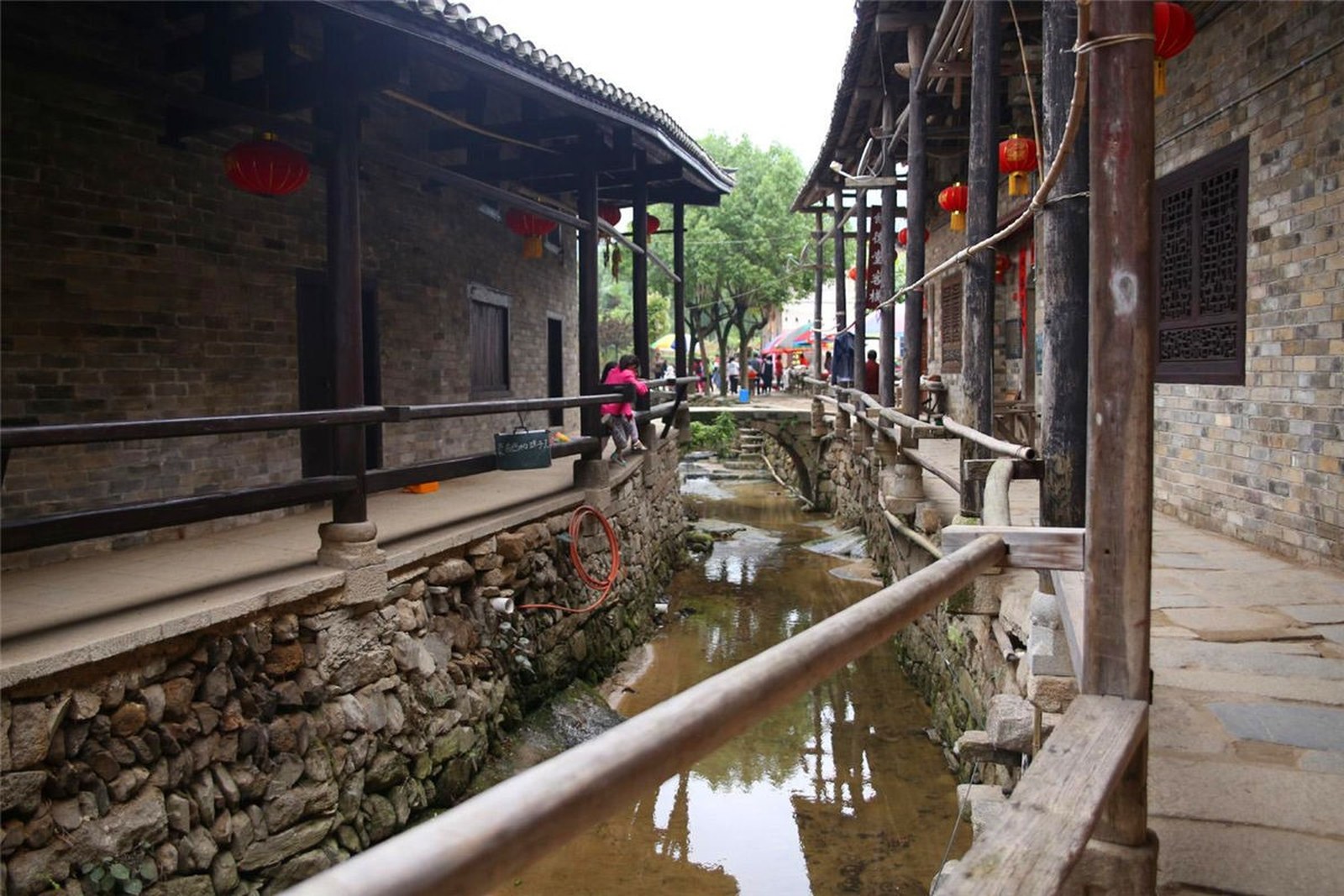
The village began with 张谷英 Zhāng Gǔyīng, an official from Jiangxi who is said to have moved his family here in the Ming dynasty and whose descendents built outward from a single 当大门 dāngdàmén, the main gate. The architecture is a response to two local facts: heavy rain, and a family that kept growing. Water is dealt with by turning the roofs inward, so that rain falls into the sky wells and drains through stone channels in the courtyard floors, and by covering every route between buildings. Growth is dealt with by repetition — the same courtyard module, built again and again, joined to the last one — which is why the plan reads as a maze from inside and as a single rectangle from above. Whether the family genuinely never needed to go outside in the rain is a matter of local pride rather than documentation, but the covered circulation is real and it is the most striking thing about the place.
What to Look For
Take the main gate first, then the three principal halls in sequence, then get lost deliberately in the lanes between courtyards, which is the only way to get a sense of the plan. The carving is worth attention: the stone drums and thresholds, the timber lattice screens, the 天井 tiānjǐng paving with its drainage basin, which doubles as a water store for fighting fires. Older residents still live in the outer courtyards and will sell you tea or a bowl of noodles; the inner halls are the ones with the labels and the visitors. On the outer edge, the 上新屋 Shàngxīnwū and 王家塅 Wángjiāduàn compounds are quieter than the core and, for many people, more interesting.
Practicalities
Tickets. Village admission is around ¥50, with discounts for students and free entry for children below a stated height and for residents of the county. Guides are available at the gate for a modest extra charge and are worth it for the plan, since without one the courtyards blur together after the third.
Opening hours. The village is open to visitors from around 08:00 to 17:30, and the ticket gate closes before the village does — residents come and go all evening. Staying overnight inside the walls is possible and is the best way to see the courtyards without crowds.
Closing day. There is no closing day, though the gatehouse reduces its hours in the winter months and the village is extremely busy during the 国庆 Guóqìng week and on spring weekends.
Getting there. By car from 岳阳市 Yuèyáng Shì takes a little over two hours, and from 长沙 Chángshā around the same, on roads that turn hilly for the last stretch. Public transport means a bus from Yueyang to 渭洞 Wèidòng, the nearby township, followed by a short taxi ride; the buses are not frequent, and the return timetable should be checked on arrival. There is no railway station of any use nearby.
flowcloud would say that Zhangguying is not a museum of a house but a working argument that a family can be organised like a building, and that the corridors are its clearest sentence.
Getting there: arrive early, hire a guide at the gate for the plan, walk the three main halls in order, and then wander the outer compounds where people actually live. Ask before photographing into a doorway, buy tea from whoever offers it, and if you can, sleep inside the village and walk the courtyards after the day visitors have gone.