
Zhenru Temple: A Rare Yuan-Dynasty Timber Hall and a New Pagoda Rising in the Old Town of Zhenru at Lanxi Road 399 in Putuo District, Shanghai
元代木构撑古殿,真如香火续人间。Yuándài mùgòu chēng gǔdiàn, Zhēnrú xiānghuǒ xù rénjiān – Yuan-dynasty timber holds up the ancient hall; the incense of Zhenru carries on through the human world.
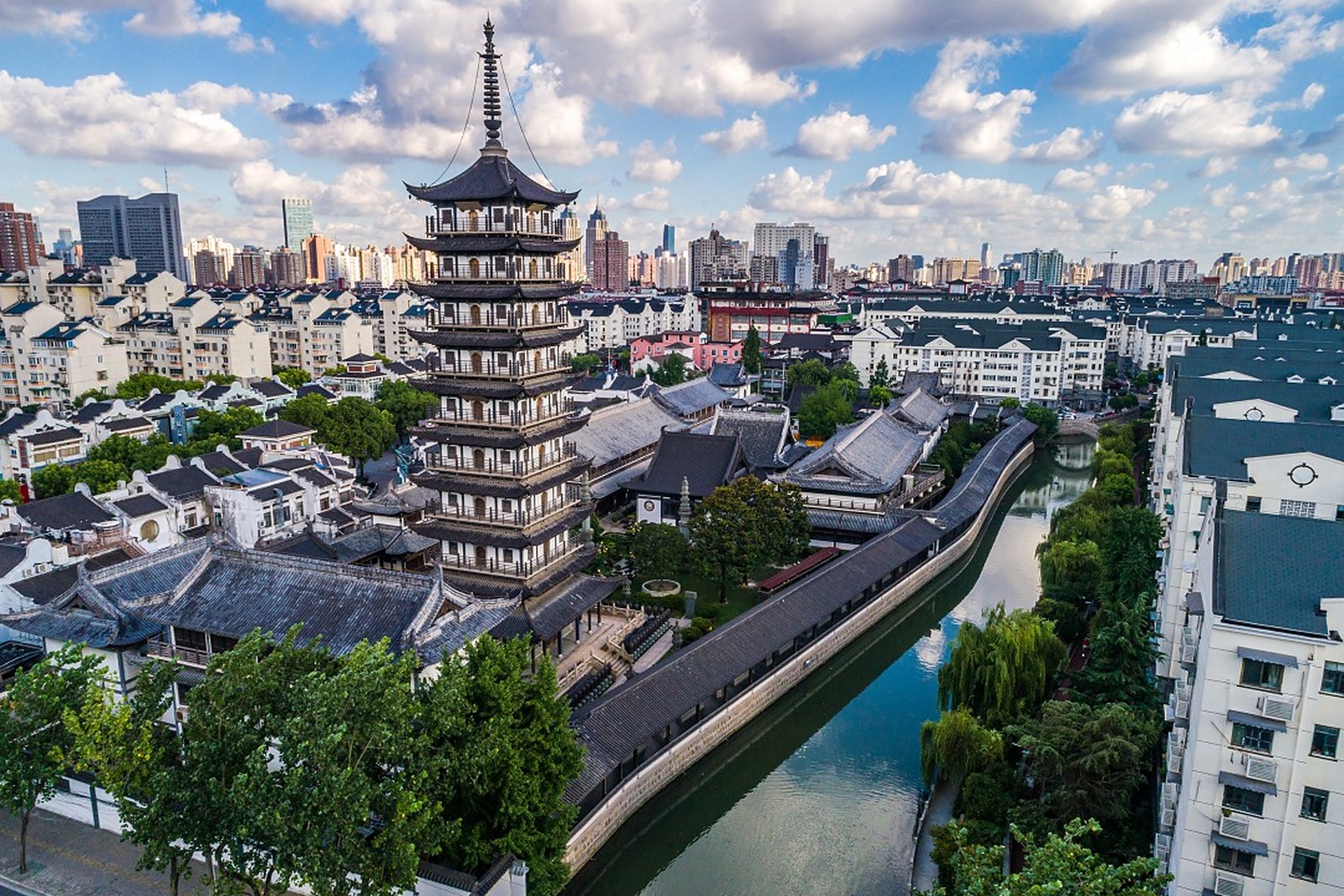
真如寺 Zhēnrú Sì Zhenru Temple is not another gilded city-centre monastery — it is, plainly put, the quiet keeper of Shanghai’s oldest timber: a working temple whose main hall at 兰溪路 Lánxī Lù Lanxi Road 399 in 普陀区 Pǔtuó Qū Putuo District, inside 真如古镇 Zhēnrú Gǔzhèn Zhenru Old Town, is a genuine Yuan-dynasty wooden structure — among the very few surviving timber buildings of the age anywhere in Shanghai, and protected as a national key cultural relic. The hall’s grey columns, thick bracket sets and plain, deep eaves belong to a building tradition seven centuries old, and scholars have dated the timber by inscriptions and by the joinery itself (worth confirming the details for the exact dating arguments, which visitors can enjoy second-hand). The temple’s origins reach back before that, and the neighbourhood it anchors — the old town of Zhenru, once a market village on the creek — takes its name from the temple’s own teaching, 真如 zhēnrú, the thusness of things as they truly are. In recent years the complex around the ancient hall has been rebuilt and extended, with a tall 真如塔 Zhēnrú Tǎ Zhenru Pagoda rising over the old-town rooflines. What you actually visit is a live temple built around one irreplaceable wooden room.
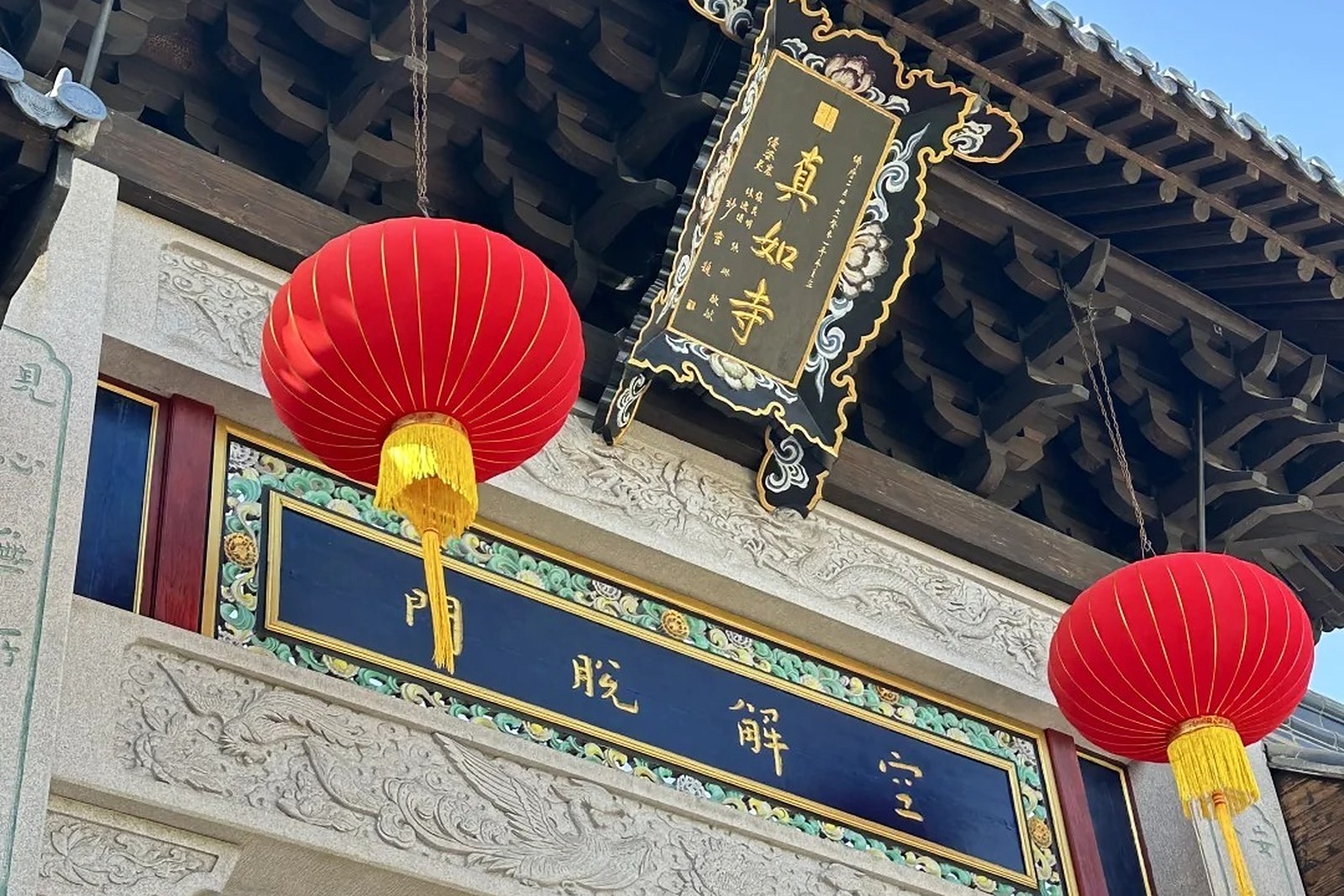
Call it honestly: admission is by a 香火券 xiānghuǒ quàn incense ticket, the traditional arrangement of a working temple (worth confirming the details for the current price and opening hours), and 真如站 Zhēnrú Zhàn Zhenru station on Metro Lines 11 and 14 sets you down within a short walk of the gate. The honest warning is symmetry, not cost: half the complex is seven hundred years old and half is brand new, and visitors must calibrate which half they came for — the ancient hall rewards close, slow looking, while the rebuilt pagoda courtyard reads as handsome newness. Weekday mornings keep the hall to worshippers and the odd architecture pilgrim; festival days fill the courtyards. Give it forty-five minutes to an hour, longer if you walk the old-town streets around it.
The honest star is the Yuan hall itself — the original timber frame, its columns slightly leaning with the centuries, its 斗拱 dǒugǒng bracket sets deep and shadowed in a way no Qing or modern building in the city can show, standing modestly amid newer courtyards like an elder among grandchildren. What gets oversold is the word “temple” as visitors usually spend it: apart from the ancient hall, most of what stands today — the pagoda and its courtyard among it — is recent reconstruction, and travellers expecting a hushed ancient compound meet a working complex in new dress (worth confirming the details for which structures are original and which rebuilt). What repays the effort is the close looking the hall invites: the joinery, the roof curve, the way the timber has greyed rather than fallen, plus the old-town lanes and lamb restaurants that keep Zhenru a neighbourhood instead of an attraction. Come for the layering of the place: lane, then new pagoda, then the old timber inside.
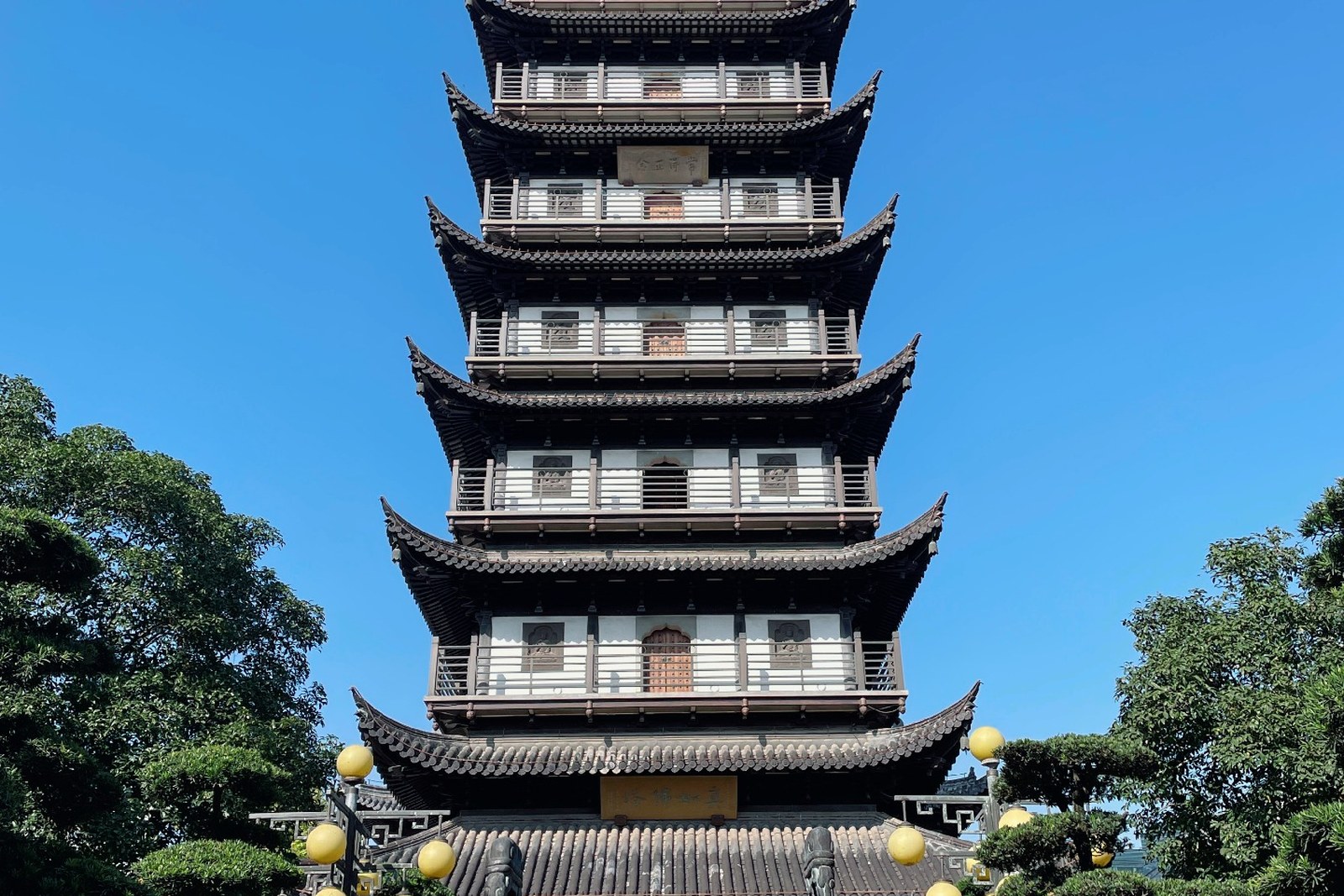
The self-aware postscript: I sat on a courtyard bench one weekday morning sketching the hall’s brackets while a carpenter-restorer on his break looked over my shoulder. “People photograph the pagoda and walk past this,” he said, pointing at the ancient beamwork with his teacup, “but every joint up there is a sentence from a builder seven hundred years dead — I have repaired modern halls for twenty years, and this one still teaches me”. That is the visit in miniature. From the courtyard’s corner, the new pagoda frames the low, dark, ancient roofline behind it, the one composition that tells the whole story of Chinese building in a single glance. 真如寺 Zhēnrú Sì suits whoever treats it as a serious stop for one of Shanghai’s rarest original buildings first and a neighbourhood temple stroll second, and disappoints anyone expecting the golden spectacle of a downtown showpiece temple.
Nearly everything else on this Putuo list lies within a short ride: the lake and boating lawns of 长风公园 Chángfēng Gōngyuán Changfeng Park open a short ride south, the galleries and graffiti walls of M50创意园 M50 Creative Park wait east along the 苏州河 Sūzhōu Hé Suzhou Creek, the jade halls of 玉佛寺 Yùfó Sì Jade Buddha Temple stand further east near 安远路 Ānyuǎn Lù Anyuan Road, and the old mill halls of 上海纺织博物馆 Shànghǎi Fǎngzhī Bówùguǎn the Shanghai Textile Museum sit by the creek at 澳门路 Àomén Lù Aomen Road — all inside the same 普陀区 Pǔtuó Qū Putuo District whose oldest roof beams this old-town temple keeps.
Practicalities
- Rating: ★★★★☆ — home to one of Shanghai’s very few surviving Yuan-dynasty timber halls, in a lived-in old town; go weekday morning and bring patience for the rebuilt half.
- Tickets: Admission by incense ticket (worth confirming the details for the current price and opening hours).
- Address: 真如寺 Zhēnrú Sì, 兰溪路 Lánxī Lù Lanxi Road 399, 真如古镇 Zhēnrú Gǔzhèn Zhenru Old Town, 普陀区 Pǔtuó Qū Putuo District, Shanghai — a short walk from Zhenru station on Metro Lines 11 and 14.
- Time needed: Forty-five minutes to an hour for the ancient hall and courtyards; half a morning adding the old-town lanes.
Words and Names
真如寺 Zhēnrú Sì Zhenru Temple · 真如 zhēnrú the thusness of things, the Buddhist teaching behind the name · 元代 Yuándài the Yuan dynasty, whose timber survives in the main hall · 大殿 dàdiàn main hall · 斗拱 dǒugǒng bracket sets, the interlocking wooden brackets of ancient Chinese roofs · 真如塔 Zhēnrú Tǎ Zhenru Pagoda, the recently rebuilt tower · 真如古镇 Zhēnrú Gǔzhèn Zhenru Old Town · 兰溪路 Lánxī Lù Lanxi Road · 真如站 Zhēnrú Zhàn Zhenru station · 普陀区 Pǔtuó Qū Putuo District
flowcloud would say that 真如寺 Zhēnrú Sì is the temple Shanghai’s architecture lovers whisper about — its main hall at 兰溪路 Lánxī Lù Lanxi Road 399 inside 真如古镇 Zhēnrú Gǔzhèn Zhenru Old Town is a genuine Yuan-dynasty timber structure, a national key cultural relic and one of the very few such buildings left in the city, now surrounded by a rebuilt complex and a new 真如塔 Zhēnrú Tǎ Zhenru Pagoda (worth confirming the details for the current incense-ticket price and opening hours) — and that the honest move is a weekday-morning visit entered through 真如站 Zhēnrú Zhàn Zhenru station on Metro Lines 11 or 14, because the ancient-compound expectation is the poster half and the single irreplaceable wooden room is the real half, and the temple repays whoever skips the pagoda selfies long enough to read the bracket sets the Yuan builders left. All checked October 2026.
Getting there: Metro Lines 11 or 14 to 真如 Zhēnrú Zhenru station, exit 5, then a walk into the old-town blocks on 兰溪路 Lánxī Lù Lanxi Road to the temple at 399 (worth confirming the details for hall-opening hours, the Yuan-dynasty main hall being the point of the visit); the pagoda rises over the low town roofs. All checked October 2026.