
The Biggest City Gate Left Standing: Zhonghua Gate on the Ming Wall
砖城十里锁江烟,瓮中自有六百年 Zhuān chéng shílǐ suǒ jiāng yān, wèng zhōng zì yǒu liùbǎi nián – Ten li of brick wall holds the river mist; inside the barbican, six hundred years keep their own counsel
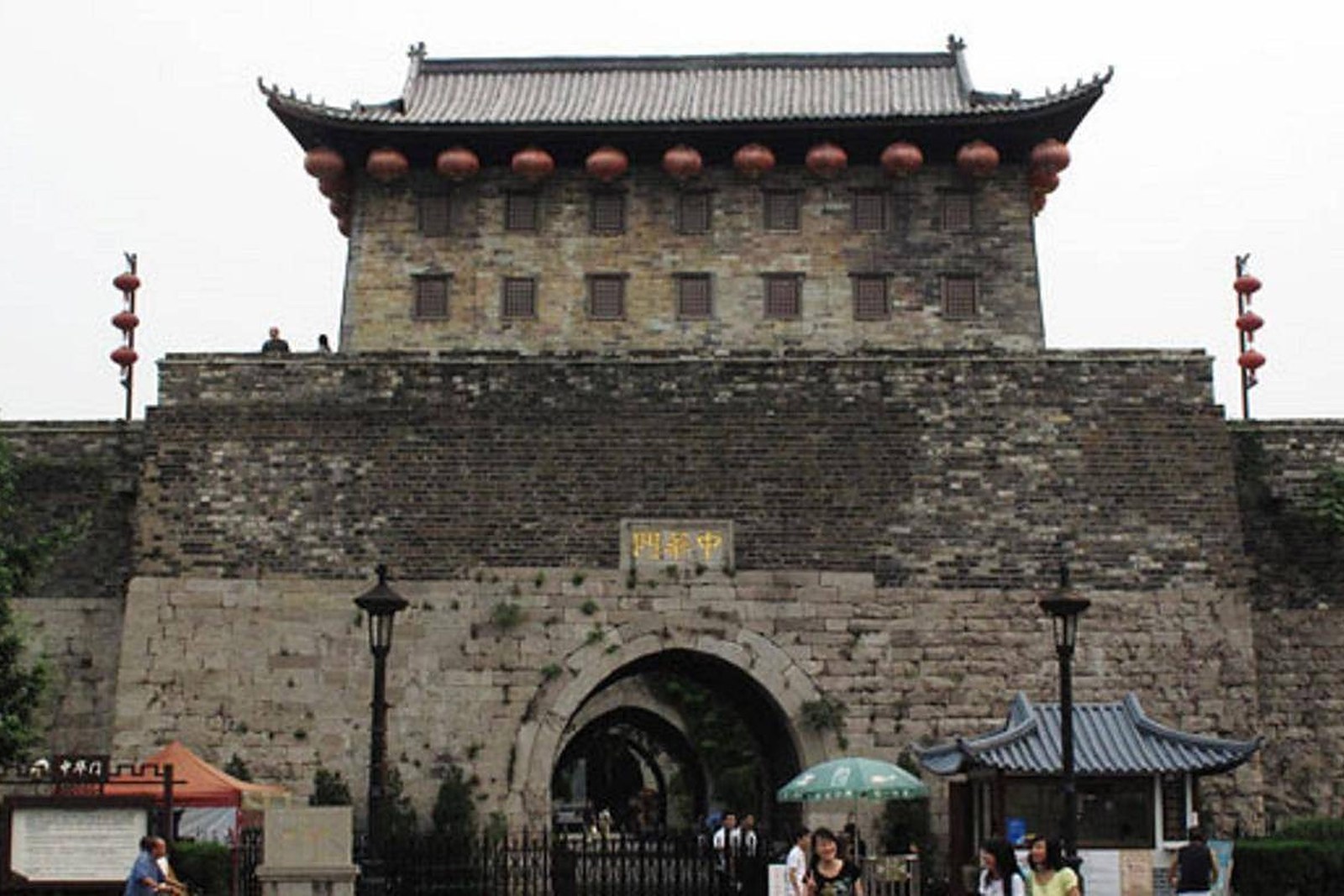
正文:中华门 Zhōnghuá Mén Zhonghua Gate is the largest surviving barbican gate of any city wall in China, the southern anchor of the Ming wall that wrapped Nanjing in thirty-odd kilometres of brick. Built under Zhu Yuanzhang in the late fourteenth century, it is less a gate than a trap: four sequential enclosures, each sealed by its own gate, so that an enemy breaking the outer arch found himself in a stone courtyard commanded from every side. Twenty-seven soldier hides in the walls’ headrooms held the troops that sprang the trap.
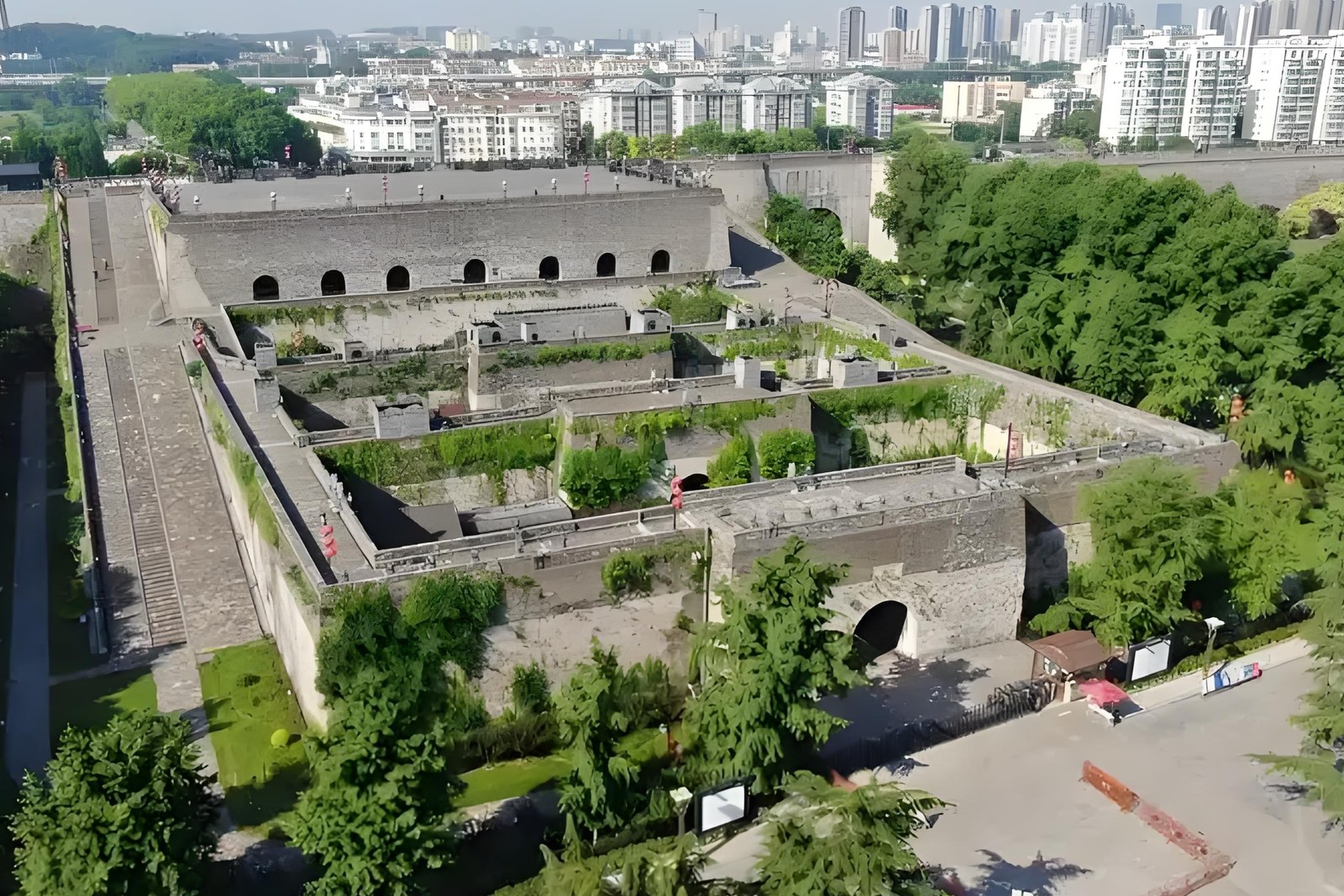
The scale reads best from above or from the courtyards themselves. Walk up the ramp onto the wall top and the geometry unfolds – enclosure within enclosure, the vast paved yards that once held a garrison, the modern city stretching away on every side. The bricks carry stamps naming every maker and county that fired them, a quality-control system from the 1380s that still holds the wall together six centuries on.
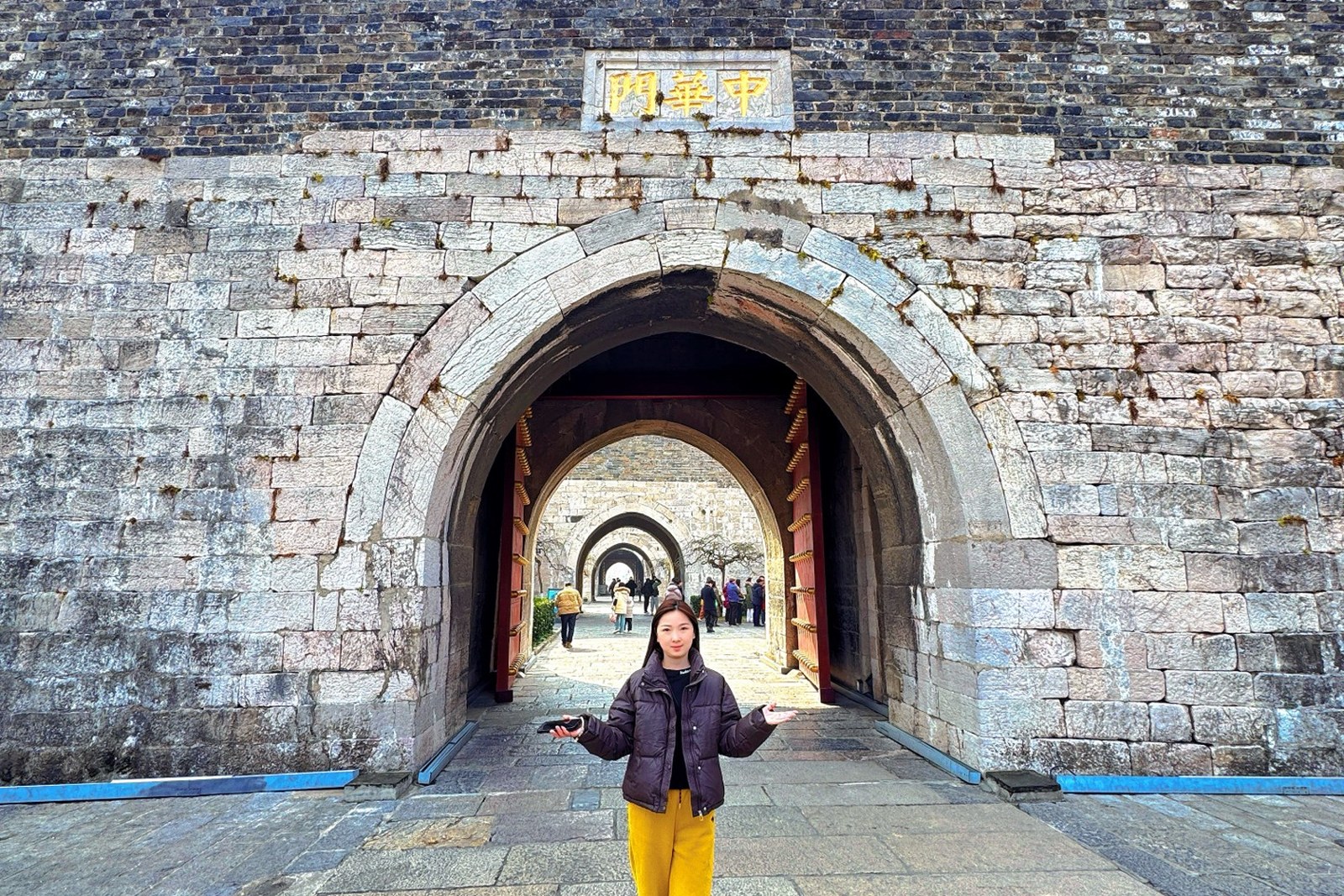
Inside, the gate rewards close attention as much as wide views. The arched tunnels stack in depth – stand in one courtyard and you see the next gate framing the one beyond it, the whole machine of the barbican laid bare. Stairways drop into the soldier hides, cool brick vaults where garrison men waited out sieges, and small exhibits explain the hydraulic hoists that once raised the timber gates by winch.
Allow an hour and a half, most of it on the wall top, where the walk between gate and battlements gives the best photographs of old rooflines against new towers. The gate anchors the city’s southern wall walks; cyclists and runners use the ramparts east and west, and the Qinhuai riverside of the Confucius Temple quarter lies twenty minutes north on foot – one loop can hold both.
Practicalities
Beyond the gate, the same 南京市 Nánjīng Shì Nanjing City keeps more places worth the detour: 夫子庙 Fūzǐ Miào the Confucius Temple quarter for the riverside lanterns, 玄武湖 Xuánwǔ Hú Xuanwu Lake for the imperial lake, 燕子矶 Yànzi Jī Yanzi Rock for the Yangtze crag, or 鸡鸣寺 Jīmíng Sì Jiming Temple for the wall-side pagoda – four more doors into the same 南京市 Nánjīng Shì Nanjing City. Once the barbican is walked, our Nanjing food map fills the day.
Practicalities
Words and Names
flowcloud would say Zhonghua Gate is defense turned architecture: a trap designed with a mason’s pride, bricks that sign their own names, and courtyards that once swallowed armies and now hold wedding photographs. All checked November 2026.
Getting there: Zhonghua Gate stands at the south end of Zhonghua Road; the metro reaches it directly, the entry ticket covers the wall top and the vaults, and the whole complex suits a morning visit before the midday heat – the courtyards are shadeless. All checked November 2026.